
In the current era, the rapid evolution of artificial intelligence has ushered in a new paradigm: embodied intelligence. Unlike traditional disembodied AI, embodied intelligence refers to a technological system that relies on a physical entity to perceive, understand, and interact with the real-world environment, achieving intelligent growth through this continuous loop of interaction. As a cutting-edge form of AI, its development and application have far transcended the realm of mere technical tools, permeating the fabric of daily life and socio-economic structures. I argue that this very process of integration endows embodied AI with distinct ideological attributes. The value orientations embedded in its algorithmic design, the cognitive biases present in its training data, and the implicit norms conveyed through its physical interactions transform the embodied AI robot from a neutral tool into a potent carrier and mediator of ideology. This essay explores the mechanisms through which ideology is operationalized within embodied intelligence, analyzes its novel modes of propagation, and proposes strategies for aligning this powerful technology with mainstream societal values, thereby securing what can be termed “embodied discourse power.”
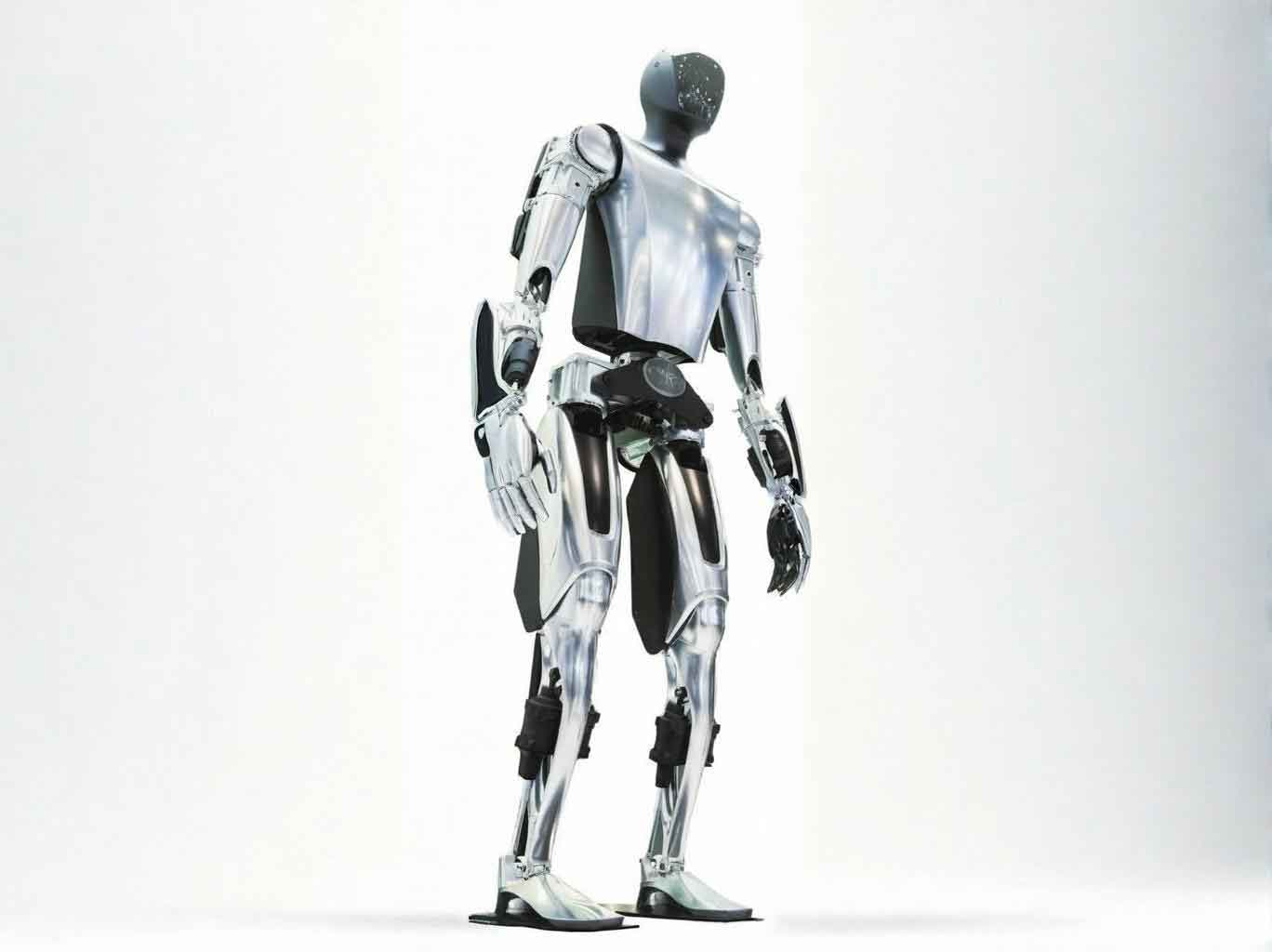
The core of an embodied AI robot‘s functionality lies in the closed-loop interaction of perception, decision-making, and action. This technical logic is not value-neutral; it is the primary channel through which ideology is technically embedded. We can analyze this embedding across three layers.
First, at the perception layer, value guidance is technically embedded through the parameterization of multi-modal sensing. An embodied AI robot integrates cameras, microphones, LiDAR, and tactile sensors to construct a model of its environment. However, the selection of sensor parameters, the filtering rules for raw data, and the fusion algorithms for combining visual, auditory, and haptic information all involve human choices that encode specific priorities and perspectives. For instance, the field of view of a camera or the sensitivity threshold of a microphone determines what information is “seen” or “heard” as significant, implicitly prioritizing certain aspects of reality over others. This initial data curation sets the foundational worldview for the intelligent system.
Second, at the decision-making layer, ideology is encoded into the very algorithms that govern action. The process where an embodied AI robot optimizes its behavior to achieve a goal is guided by a reward function or a set of constraints. The design of this function is an act of profound value-laden engineering. What is defined as “optimal” or “efficient” carries implicit ideological weight. Consider the decision-making logic of a domestic helper embodied AI robot. Should it prioritize completing tasks quickly (efficiency), minimize noise (social harmony), or maximize user engagement (relationship-building)? The chosen optimization strategy, often learned from training data, embeds a particular set of social norms and preferences into its operational logic. This can be conceptualized as an algorithmic value function:
$$ V(s) = \mathbb{E} \left[ \sum_{t=0}^{\infty} \gamma^t R(s_t, a_t) \mid s_0 = s \right] $$
Here, the reward function $R(s_t, a_t)$ is not merely technical; it encapsulates the value judgments of its designers regarding which states ($s_t$) and actions ($a_t$) are desirable.
Third, at the action layer, value guidance finds its ultimate expression in physical interaction. The embodied AI robot becomes the medium. Its movements, gestures, force feedback, and vocal tones are not just functional; they are communicative acts that shape user experience and cognition. A gentle, compliant physical interaction can convey norms of care and safety, while a decisive, authoritative motion might convey efficiency and control. The physical presence of the robot allows ideology to bypass abstract cognition and directly engage with human proprioception and emotion, creating a powerful pathway for implicit acculturation.
| Technical Layer | Core Function | Mechanism of Ideological Embedding | Example in Embodied AI Robot |
|---|---|---|---|
| Perception | Multi-modal data acquisition & fusion | Parameter preset, data filtering rules, semantic labeling bias | Visual system ignoring certain social cues; audio system filtering out background dissent. |
| Decision-Making | Behavior optimization & task planning | Reward function design, ethical constraint programming, learning from biased datasets | Optimizing for corporate productivity over worker well-being; prioritizing certain user demographics in service. |
| Action | Physical execution & interaction | Kinesthetic design, haptic feedback calibration, prosody and gesture in communication | Using a firm grip for authority; employing submissive postures; vocal tones that mimic empathy or command. |
This technical capacity for value-laden interaction gives rise to new and potent modalities for the propagation of ideology. The embodied AI robot facilitates a shift from discursive persuasion to experiential, often subconscious, shaping of norms.
One dominant mode is Embodied Discipline. Here, the physical body of the user, interacting with the robot, becomes the site of ideological inscription. Through repetitive physical guidance, corrective haptic feedback, and the reinforcement of “appropriate” bodily postures or movements in response to the machine, norms are literally embodied. An industrial embodied AI robot training a worker on an assembly line doesn’t just teach a procedure; it disciplines the worker’s body into the rhythm and precision demanded by a specific economic ideology of efficiency.
Another mode is Focused Operation in Daily Life. Unlike mass media, the embodied AI robot operates in micro-settings—the home, the hospital room, the classroom. It integrates ideological content into the mundane fabric of daily routines. A companion embodied AI robot for the elderly might weave narratives of family duty and community into its conversations while providing physical assistance. It makes ideology pragmatic and personal, dissolving the boundary between political messaging and personal need-fulfillment. The formula for this integration could be seen as a contextualization function:
$$ I_{output} = f_{context}(I_{core}, S_{user}, E_{env}) $$
where the core ideology $I_{core}$ is dynamically adapted based on user state $S_{user}$ and environment $E_{env}$ to produce the output ideology $I_{output}$ delivered through interaction.
The third, and perhaps most powerful, mode is Immersive Penetration through Bidirectional Interaction. This is not a one-way broadcast. The embodied AI robot creates a feedback loop. It reads the user’s emotional state via sensors, adapts its behavior, and in doing so, draws the user deeper into a co-constructed reality that aligns with its programmed values. An educational embodied AI robot might detect student frustration and respond with encouragement framed within a narrative of perseverance and collective achievement, thereby shaping not just knowledge but attitude and collective identity through an immersive, responsive experience.
Given these inherent ideological attributes and potent传播样态, it is imperative to proactively guide the development of embodied intelligence to align with and reinforce mainstream, constructive societal values. This requires a strategic framework for constructing embodied discourse power.
The foundation of this strategy is Data Calibration. The training datasets for embodied AI robots must be rigorously audited and curated to reflect the diversity and core values of society. This involves not just filtering harmful content but proactively infusing datasets with scenarios that exemplify cooperation, fairness, and ethical reasoning. Data synthesis and simulation environments must be designed with value-aware parameters. The goal is to build a value-resilient data foundation, mathematically ensuring the training distribution $P_{data}(x,y)$ supports desired ideological outcomes $y$ given inputs $x$.
The core technical challenge lies in Algorithmic Alignment. We must move beyond functional alignment (the robot does what we ask) to value alignment (the robot does what we would want, considering our ethical principles). This involves designing novel reward functions and ethical constraint models that are interpretable and auditable. Formal methods should be employed to verify that an embodied AI robot‘s policy $\pi(a|s)$ avoids actions that violate encoded societal principles $C$ across all possible states $s$:
$$ \forall s, \pi(a|s) \rightarrow a \notin A_{violate}(C) $$
Furthermore, reinforcement learning from human feedback (RLHF) and democratic input processes can be used to iteratively refine these aligned objectives.
Finally, we must leverage Interactive Empowerment for proactive value dissemination. The unique affordances of the embodied AI robot—its physical presence, emotional expressiveness, and situational adaptability—should be harnessed to make mainstream ideology tangible and engaging. This means designing interaction paradigms where robots naturally demonstrate prosocial behaviors, explain decisions in terms of shared values, and adapt their communicative style (kinesthetic, visual, auditory) to effectively convey principled messages in different contexts, from healthcare to education to public service.
| Strategic Pillar | Objective | Key Methods | Outcome for Embodied AI Robot |
|---|---|---|---|
| Data Calibration | Build a value-grounded foundation | Ideological auditing of datasets, value-aware synthetic data generation, source transparency. | Trained on data representing fairness, cooperation, and ethical scenarios. |
| Algorithmic Alignment | Ensure value-congruent decision-making | Value-sensitive reward shaping, ethical constraint verification, participatory algorithm design. | Its optimization logic inherently respects and promotes societal norms. |
| Interactive Empowerment | Enable implicit value propagation | Design of prosocial interaction scripts, multi-modal value communication, contextual ethical prompting. | Becomes an engaging, everyday ambassador for constructive societal values. |
In conclusion, the rise of embodied intelligence represents a significant juncture not only in technological history but in the evolution of ideological formation. The embodied AI robot, by virtue of its physical interactivity and deep environmental integration, becomes a powerful new substrate for the transmission and reinforcement of values. Its ideological attributes are not an accidental byproduct but a fundamental characteristic arising from its sociotechnical nature. Ignoring this dimension cedes immense influence over future social cognition and norms. Therefore, a proactive, comprehensive approach is essential. By mastering embodied discourse power through deliberate data calibration, rigorous algorithmic alignment, and creative interactive empowerment, we can steer the development of this transformative technology. The goal must be to ensure that embodied intelligence becomes a force that amplifies human dignity, fosters social cohesion, and securely anchors technological progress within a framework of beneficial, safe, and fair development for all.