
From my perspective, the year 2025 marks a pivotal inflection point for embodied AI. We are witnessing an accelerated iteration and an imminent wave of large-scale, real-world application deployment. This rapid advancement has precipitated a soaring demand for high-quality, multi-modal training data. I firmly believe that the supply of such curated data is now the central pillar driving breakthroughs in the core technologies of embodied intelligence. As a nexus of industrial foundation, technological innovation, and rich application scenarios, it is imperative to seize the strategic window for constructing these foundational datasets. The key lies in accelerating the formation of a virtuous, self-reinforcing “Data-Algorithm-Scenario” closed-loop, thereby solidifying a position as a global leader in embodied AI innovation.
The concept of embodied AI is widely regarded as an essential pathway toward Artificial General Intelligence (AGI). An embodied AI robot is not merely a software agent; it is a system that integrates artificial intelligence into a physical entity, endowing it with the capacity to perceive, reason, and interact dynamically with the physical world. This entity can be a humanoid robot, a robotic arm in a factory, an autonomous vehicle, or a domestic helper device. The quintessential characteristic is the embodiment itself—the intelligence is developed and manifested through continuous interaction between the physical body and its environment.
High-quality datasets are the catalyst for leapfrog improvements in the overall performance of any embodied AI robot. The development paradigm rests on three interconnected pillars: the Embodied Platform (the physical hardware), Environmental Interaction, and Intelligent Advancement. Crucially, intelligence is not developed in isolation through algorithms and compute alone; it is cultivated and evidenced through the agent’s interaction with the physical world. Therefore, data is paramount. Unlike large language models (LLMs) primarily trained on text, image, and video corpora, training an embodied AI robot requires data generated from physical interaction. This training data can be categorized by its acquisition method, forming a pyramid of scale, quality, and scarcity.
$$ \text{Data Scarcity}_{\text{embodied}} \propto \frac{\text{Fidelity}_{\text{physical interaction}} \times \text{Task Complexity}_{\text{long-horizon}}}{\text{Scale}_{\text{available}}} $$
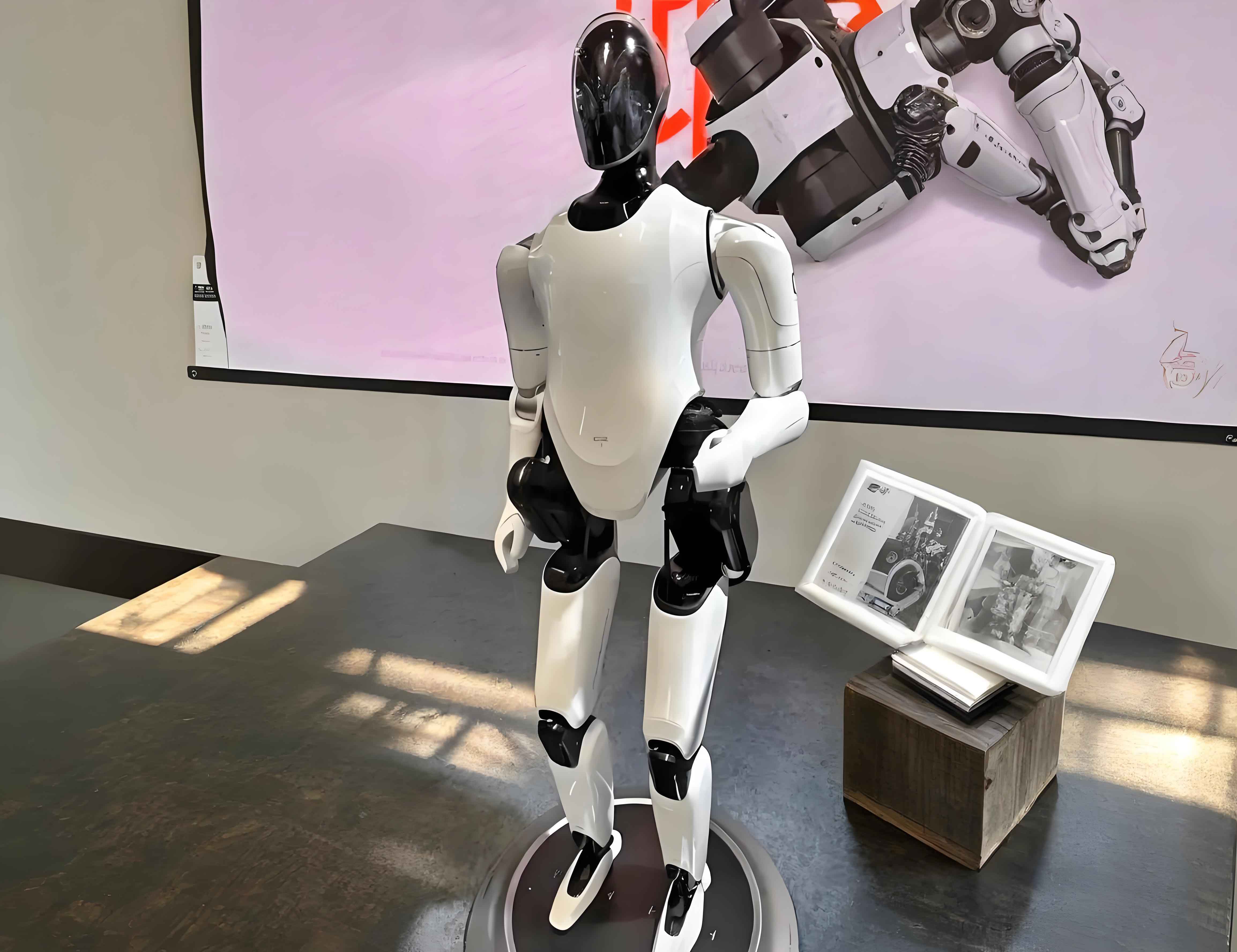
At the base of the pyramid lies internet data (text, videos of tasks), which is abundant but of low relevance and physical fidelity. The middle layer consists of simulation-synthesized data, generated in high-fidelity virtual environments. While scalable and cost-effective, it suffers from the “sim-to-real” gap—the inherent discrepancy between virtual physics and reality. At the apex, and most critical, is real-world teleoperated data, collected from physical embodied AI robot platforms operating in real or meticulously constructed environments. This data is of the highest quality and relevance but is exceedingly scarce, expensive to produce, and difficult to scale.
Globally, leading tech conglomerates and research institutions are heavily investing in the construction and refinement of embodied AI datasets. Their efforts focus on several key dimensions, as summarized in the table below.
| Dataset Name (Approx. Time) | Core Characteristics | Primary Contribution |
|---|---|---|
| Open X-Embodiment (2023) | Unified data format (RLDS); 22 robot morphologies; 1.4M trajectories. | Enabled cross-robot generalization; established initial formatting benchmark. |
| DROID (2024) | Consistent hardware setup; 76k trajectories across 564 diverse environments. | Enhanced robustness via scene diversity; supported long-horizon task training. |
| AgiBot World (2024) | Industrial-grade collection standards; long-horizon tasks (>60s); multi-modal sensors (vision, touch, force). | Provided high-fidelity, complex operational data from replicated real-world settings. |
| RoboMIND (2024) | Inclusion of failure case data; support for multiple robot forms including humanoids. | Facilitated failure analysis and more robust policy learning. |
| Galaxea Open-World (2025) | Real-world mobile manipulation; multi-modal annotation; sub-task decomposition. | Pioneered open-scene real-machine datasets for whole-body coordinated control. |
The collective aim of these datasets is to provide diverse scenario and task data, support various learning paradigms (imitation, reinforcement), promote generalization across hardware platforms through data mixing, and establish benchmarks for evaluation. They increasingly incorporate multi-modal streams—vision, tactile, force—to optimize the perception-decision-control loop for the embodied AI robot.
Recognizing this trend, national strategies have explicitly emphasized strengthening data supply innovation, advocating for application-oriented, high-quality AI dataset development and fostering open-source ecosystems. Despite this strategic consensus and promising global progress, my analysis of the current landscape reveals several persistent and interconnected challenges that hinder the effective development and utilization of datasets for embodied AI robot training.
Challenge 1: The Acute Shortage and High Cost of High-Quality Data Supply
The most pressing bottleneck is the severe insufficiency of high-fidelity, real-world data. First, the gap in real-machine collected data is enormous. Training a single, generalized skill like object grasping for an embodied AI robot can require millions of real-world trajectories. Constraints from rapid hardware iteration cycles and prohibitive costs make large-scale, systematic data collection extraordinarily difficult. Many enterprises report that their in-house data collection fulfills less than 10% of their total data requirements for training a competent embodied AI robot model. This lack of data diversity directly results in poor model generalization, limiting the robot to a narrow set of pre-programmed actions.
Second, the cost structure of real-world data acquisition is formidable. The equation for cost can be modeled as:
$$ C_{\text{real}} = N_{\text{traj}} \times (C_{\text{hardware}} + C_{\text{scene}} + C_{\text{operator}} + C_{\text{processing}}) $$
Where:
- $N_{\text{traj}}$ = Number of trajectories needed (often > $10^6$)
- $C_{\text{hardware}}$ = Cost of robot platform(s), sensors, wearables
- $C_{\text{scene}}$ = Cost of building 1:1 physical replicas of diverse environments (kitchens, factories, etc.)
- $C_{\text{operator}}$ = Cost of recruiting and training skilled teleoperators
- $C_{\text{processing}}$ = Cost of data cleaning, labeling, and formatting
For a single company, this cost is often unsustainable for batch,规模化 production of data at the pace required for model iteration.
Third, there is a significant deficit in the construction of diverse, multi-domain training scenarios. Even the most advanced training facilities, spanning thousands of square meters, pale in comparison to the complexity and unpredictability of the real world. A single entity cannot possibly cover all potential application domains for a general-purpose embodied AI robot.
Fourth, the technical pathway for data utilization remains unconverged. The optimal mix and fusion strategy between real and synthetic simulation data is still an open research question, creating uncertainty in data pipeline development. Fifth, the long-term value of data is underappreciated. Data is often treated as a disposable commodity for a single project rather than a reusable, appreciating asset for the entire industry, stifling potential open-source collaboration.
Challenge 2: Lack of Industry-Wide Data Standards and Specifications
The absence of unified standards severely impedes data interoperability and reuse. This problem manifests in several layers:
| Standardization Layer | Current Issue | Consequence |
|---|---|---|
| Hardware & Acquisition | No standard for sensor types, placements, frequencies, or teleoperation methods (VR, exoskeleton, mocap). | Datasets are inherently incompatible. Pre-processing and conversion costs are prohibitively high. |
| Collection Protocol | No clear operational guidelines for data collectors; no feedback loop from model training on data utility. | High variance in data quality. Significant manual filtering required. “Usability” of data is unknown pre-collection. |
| Format & Processing | Lack of standards for compression, annotation, and cloud deployment formats (e.g., HDF5 variants). | Increased storage costs, complex data engineering pipelines, and friction in cloud migration. |
| Industry Adoption | Leading firms prefer to set their own proprietary standards; smaller firms fear exposing IP through standardization. | Fragmentation persists. Collective progress is slower than potential. |
The mathematical implication is a high entropy state within the data ecosystem. The effort, $E$, to integrate $n$ heterogeneous datasets scales poorly:
$$ E_{\text{integrate}} \approx \sum_{i=1}^{n} \sum_{j \neq i}^{n} C_{ij} \cdot D(p_i || p_j) $$
where $C_{ij}$ is the pairwise conversion cost and $D(p_i || p_j)$ is a divergence measure (e.g., KL divergence) between the data distributions (formats, specifications) of dataset $i$ and $j$. Without standards, this divergence is large, making integration a major hurdle.
Challenge 3: The Unformed Value Cycle for Data Circulation
A healthy market for embodied AI data has yet to emerge. Currently, the dominant model is “collect for self-use.” While some open-source datasets exist, few companies invest in developing standalone data products or services. Data sharing typically occurs through limited business partnerships or exploratory projects, not as a sustainable core business.
Conversely, the demand for purchasing external high-quality data is weak. Due to the aforementioned standardization issues, the usability of third-party data is questionable. Purchased data often only provides marginal gains in pre-training for generalizability, failing to justify the high procurement costs, which can be modeled as a diminishing return function for an embodied AI robot developer:
$$ \Delta P_{\text{external data}} = \frac{\alpha \cdot Q_{\text{data}}}{C_{\text{acquisition}}^{\beta}} – \gamma \cdot E_{\text{integration}} $$
Where $\Delta P$ is the performance gain, $Q$ is data quality, $C$ is cost, and $E$ is integration effort. With high $E$ and $C$, $\Delta P$ often falls below the investment threshold.
Furthermore, the business model for large-scale, publicly-funded embodied AI robot training grounds remains unclear. While significant state capital is invested in building these facilities in major tech hubs, the path to commercial sustainability and a clear return on investment is ambiguous, causing hesitation and implementation delays.
Challenge 4: An Underdeveloped Ecosystem for Specialized Data Services
The niche expertise required to support the embodied AI data value chain is in short supply. First, there is a scarcity of service providers specializing in the mapping and transformation of heterogeneous data streams. Techniques like ETL (Extract, Transform, Load) are crucial for fusing data from different embodied AI robot platforms, but few vendors possess this domain-specific capability.
Second, the capability for high-quality synthetic data generation lags behind global leaders. Simulation platforms that can produce physically realistic, actionable training data with efficient domain randomization are critical for scaling. The domestic market lacks platforms with the maturity and industry influence comparable to NVIDIA’s Isaac Sim.
Third, and most fundamentally, there is a severe talent gap. The industry urgently needs a “pyramid-shaped” talent pool encompassing high-skill data采集员 (teleoperators), data synthesis engineers, model trainers, and ETL specialists for heterogeneous data conversion. Current academic and vocational programs are not yet aligned with these highly specific demands.
Strategic Recommendations for Forward Momentum
Given these challenges, and observing that international players have taken an early lead in end-to-end model development and data-loop construction, I believe the competition for high-quality data—especially real-world, robot-perspective, long-horizon task data—will be a decisive factor. To capture this strategic window, I propose a multi-pronged approach focusing on technology, supply, standards, and talent.
1. Strengthen Support for Key Technological Breakthroughs. Increased investment is needed in foundational and applied research. This includes developing a full-stack toolchain and service platform specifically for embodied AI model development. Support should target validating core hypotheses, such as the optimal design of heterogeneous data pipelines adaptable to rapidly evolving embodied AI robot hardware, and determining the effective mixing ratio $R_{\text{mix}}$ between real ($D_r$) and synthetic ($D_s$) data for maximizing policy transfer success rate $S_t$:
$$ \max_{R_{\text{mix}}} S_t( \pi(R_{\text{mix}} \cdot D_r + (1-R_{\text{mix}}) \cdot D_s) ) $$
Pioneering case studies and best practices from such research must be systematically documented and disseminated.
2. Bolster the Supply of Embodied AI Data. We must aggressively expand access to real-world data collection scenarios. This involves constructing and opening up more diverse physical and simulated environments for data采集. A strategic approach is to promote the deployment of embodied AI robot applications in verticals like advanced manufacturing, logistics, healthcare, and domestic services. The data generated from these live applications becomes invaluable feedback for model refinement, creating the desired “Scenario-Data-Algorithm”闭环. Concurrently, there should be a concerted effort to build foundational, open datasets that address common industry needs, forming the robust base of the data pyramid.
3. Accelerate the Development of Industry Data Standards. To reduce the massive cost of dataset conversion, it is essential to leverage state-owned enterprises, industry leaders, and consortiums to drive consensus on standards. The focus should be on ensuring usability, compatibility, and forward compatibility. Priority areas for standardization include:
- Multi-modal data specifications (tactile, force-torque).
- Hardware-agnostic data acquisition protocols.
- Operational guidelines for teleoperators to ensure consistent quality.
- Formats for representing long-horizon, hierarchical tasks.
Crucially, data quality and usability verification standards must be established. This requires involving companies with actual model-training capabilities in the standard-setting process, using benchmark tasks and场景 testing to validate data utility prospectively.
4. Foster Industry-Academia Collaboration to Cultivate Talent. Building the human capital pipeline is non-negotiable. We must support “order-style” talent cultivation programs where leading enterprises collaborate with universities and vocational schools. This includes co-building实训场 and pilot bases to train the entire spectrum of talent—from skilled data采集员 for the embodied AI robot to data engineers and AI trainers. Specific initiatives should focus on establishing joint data acquisition centers to continuously produce professionals adept at collecting high-fidelity interaction data.
By implementing these coordinated measures—strengthening R&D, enhancing supply, establishing standards, and nurturing talent—we can construct reusable, high-quality training datasets for embodied intelligence. This will drastically reduce redundant investment across the industry, lower the barrier to obtaining critical training data, and catalyze a thriving industrial and innovative ecosystem. The ultimate goal is clear: to lay an unshakeable foundation for a globally influential hub in embodied AI development, powered by the indispensable fuel of high-quality data.