
In my years of studying artificial intelligence and robotics, I have witnessed the rise of embodied AI robots as a transformative field that bridges the digital and physical worlds. These systems, which emphasize learning through dynamic environmental interaction, are poised to redefine industries and daily life. Drawing from recent policy developments, such as the emphasis on future industries in the 2025 Government Work Report and the “Guidelines for the Innovation and Development of Humanoid Robots,” I believe it is crucial to analyze the technical obstacles and emerging trends. This article, written from my firsthand perspective, delves into the core challenges and trajectories shaping embodied AI robots, leveraging tables and formulas to elucidate key points.
Understanding the Fundamental Challenges
Embodied AI robots differ fundamentally from large language models, primarily due to their physical embodiment. While large models excel in digital tasks like text generation, embodied AI robots must operate in unpredictable real-world environments. I see this distinction as central to understanding the complexities involved. The following five hurdles, which I term the “five barriers,” highlight why developing embodied AI robots is exponentially more difficult.
Barrier 1: The Intricacy of Physical Interaction
From my analysis, the first barrier lies in the complexity of physical interaction. Embodied AI robots must directly engage with the environment through sensors and actuators, requiring precise control under dynamic conditions. For instance, when an embodied AI robot grasps an object, it must account for factors like friction, weight distribution, and external disturbances. This can be modeled using Newton’s laws of motion: $$ \sum \vec{F} = m\vec{a} $$ where $\vec{F}$ represents the forces applied, $m$ is the mass, and $\vec{a}$ is the acceleration. In contrast, large models process static data inputs without physical feedback loops. The need for real-time adjustment in embodied AI robots introduces challenges in dynamics modeling, such as handling non-linearities: $$ \tau = J^T(\theta) F $$ where $\tau$ is the joint torque, $J$ is the Jacobian matrix, $\theta$ denotes joint angles, and $F$ is the external force. This mathematical framework underscores the added layer of difficulty for embodied AI robots compared to purely digital systems.
Barrier 2: Multi-Modal Data Fusion and Real-Time Demands
The second barrier involves integrating multi-modal sensory data under strict real-time constraints. Embodied AI robots rely on inputs from vision, touch, sound, and other sensors to form a coherent perception of the world. This fusion must occur within milliseconds to enable seamless “perception-decision-action” cycles. For example, in autonomous driving scenarios, an embodied AI robot must detect obstacles, compute trajectories, and execute maneuvers almost instantaneously. A common approach is sensor fusion using Bayesian filters: $$ p(x_t | z_{1:t}) = \frac{p(z_t | x_t) p(x_t | z_{1:t-1})}{p(z_t | z_{1:t-1})} $$ where $x_t$ is the state at time $t$, and $z_t$ is the measurement. Conversely, large models, like those used for language translation, can tolerate latencies of several seconds. Additionally, data acquisition for embodied AI robots is costly, often requiring expensive physical setups or high-fidelity simulators, whereas large models benefit from vast, readily available digital datasets. This disparity makes training embodied AI robots more resource-intensive.
Barrier 3: Environmental Adaptation and Generalization
The third barrier pertains to adaptation and generalization across diverse environments. While large models achieve generalization through pre-training on static datasets, embodied AI robots must perform in dynamically changing settings. A household embodied AI robot, for instance, must navigate different room layouts or handle unexpected events like moving objects. This requires robust policy generalization, often tackled through reinforcement learning with objectives like: $$ \max_\pi \mathbb{E}_{\pi} \left[ \sum_{t=0}^{\infty} \gamma^t R(s_t, a_t) \right] $$ where $\pi$ is the policy, $\gamma$ is the discount factor, and $R$ is the reward function. However, current embodied AI robots struggle with transferring learned skills to novel scenarios, unlike large models that excel in pattern recognition for fixed tasks. The need for online learning and continuous adaptation further complicates the development of embodied AI robots.
Barrier 4: Safety and Ethical Imperatives
The fourth barrier revolves around safety and ethics. Since embodied AI robots interact physically with humans and environments, any failure can lead to harm. Ensuring safety involves designing systems with high robustness and explainability. For medical embodied AI robots, precision is paramount, as errors in surgery could be fatal. Safety constraints can be formulated as: $$ \text{minimize } C(x,u) \quad \text{subject to } g(x,u) \leq 0 $$ where $C$ is a cost function, $x$ is the state, $u$ is the control input, and $g$ represents safety boundaries. In contrast, large models primarily face ethical issues like bias or misinformation, which are often addressable through software updates. The physical stakes elevate the safety requirements for embodied AI robots, demanding rigorous testing and validation.
Barrier 5: Interdisciplinary Technology Integration
The fifth barrier is the integration of diverse technological stacks. Embodied AI robots require expertise from robotics, control theory, computer vision, and cognitive science, among others. This interdisciplinary nature leads to complex system architectures. For example, coordinating perception, planning, and execution involves layered protocols, whereas large models focus on algorithmic optimizations like attention mechanisms: $$ \text{Attention}(Q,K,V) = \text{softmax}\left(\frac{QK^T}{\sqrt{d_k}}\right)V $$ where $Q$, $K$, and $V$ are query, key, and value matrices. The convergence of hardware and software in embodied AI robots adds another dimension of difficulty, as seen in the need for specialized components like servo motors and embedded systems.
| Dimension | Embodied AI Robots | Large Models |
|---|---|---|
| Primary Goal | Physical interaction and action in real-world settings | Digital content generation and understanding |
| Key Technologies | Sensor fusion, motion control, real-time processing | Transformer architectures, pre-training techniques |
| Data Sources | Physical sensors (e.g., LiDAR, force-torque sensors) | Text corpora, image datasets |
| Typical Applications | Autonomous robots, industrial automation, healthcare assistants | Chatbots, creative tools, knowledge systems |
| Hardware Needs | High (actuators, processors, mechanical parts) | Low (primarily computing clusters) |
| Training Paradigms | Reinforcement learning, simulation-to-reality transfer | Supervised learning, few-shot prompting |
| Latency Tolerance | Milliseconds for critical responses | Seconds to minutes acceptable |
| Interaction Mode | Active environmental manipulation | Passive data processing |
| Major Risks | Physical safety failures, hardware malfunctions | Ethical breaches, data privacy issues |
| Exemplary Systems | ROS-based platforms, humanoid robots | GPT-series, multimodal models |
This table underscores the multifaceted nature of embodied AI robots, highlighting why their development is more arduous than that of large models. In my view, these barriers must be overcome to unlock the full potential of embodied AI robots.
Emerging Trends in Embodied AI Robot Development
Despite the challenges, I observe several promising trends that are shaping the future of embodied AI robots. These trends, derived from technological advancements and market shifts, indicate a path toward widespread adoption. I will outline six key trends that I believe are critical for the progression of embodied AI robots.
Trend 1: Fusion with Large Language Models
The first trend is the increasing fusion of embodied AI robots with large language models. Large models can provide high-level semantic understanding and task planning, while embodied AI robots execute physical actions. For example, an embodied AI robot might use a language model to interpret verbal instructions and then navigate a room to fetch an item. This synergy can be expressed as: $$ \text{Action} = f(\text{Perception}, \text{LLM}(\text{Command})) $$ where $f$ represents the robot’s control policy. Upgrades like GPT-4o and DeepSeek-R1 are accelerating this integration, making embodied AI robots more versatile and user-friendly. I foresee that this trend will reduce development barriers by leveraging the cognitive strengths of large models.
Trend 2: Advanced Multi-Modal Perception and Simulation
The second trend involves deep integration of multi-modal perception and simulation technologies. Embodied AI robots are evolving to combine 3D vision, tactile sensing, and auditory inputs for richer environmental understanding. Simulation platforms, such as NVIDIA Isaac Sim, enable virtual training that transfers to real-world tasks via Sim2Real methods. The transfer learning process can be modeled as: $$ \min_{\theta} \mathbb{E}_{\text{sim}}[L(\theta)] + \lambda \mathbb{E}_{\text{real}}[L(\theta)] $$ where $\theta$ are model parameters, $L$ is a loss function, and $\lambda$ balances simulation and real data. This approach cuts training costs and time, with some industrial applications reporting over 70% reduction in debugging cycles. I expect this trend to enhance the adaptability of embodied AI robots in dynamic settings.
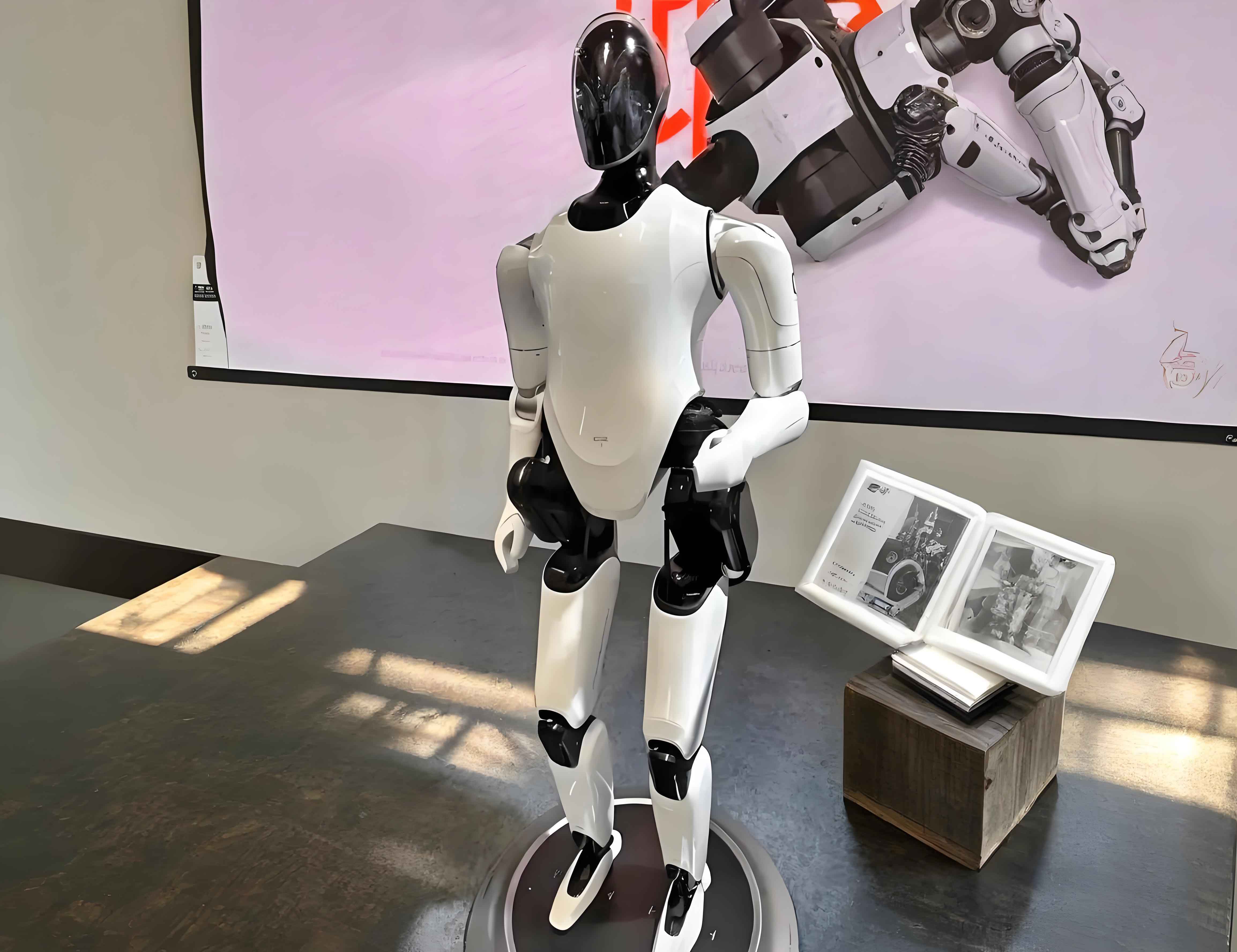
Trend 3: Synthetic Data for Efficient Training
The third trend is the use of synthetic data to overcome physical data scarcity. Generating realistic sensor data through techniques like generative adversarial networks (GANs) allows embodied AI robots to train on diverse scenarios without real-world constraints. The GAN objective is: $$ \min_G \max_D V(D,G) = \mathbb{E}_{x \sim p_{\text{data}}}[\log D(x)] + \mathbb{E}_{z \sim p_z}[\log(1-D(G(z)))] $$ where $G$ is the generator, $D$ is the discriminator, and $z$ is a noise vector. Reports indicate that synthetic data already constitutes over 40% of training data for some embodied AI robot models, improving generalization by up to 35% in tasks like autonomous driving. I predict that as physics engines advance, synthetic data will cover rare but critical cases, such as extreme weather, further boosting the robustness of embodied AI robots.
Trend 4: Innovative Commercial Models: Rental and Service-Based Approaches
The fourth trend is the shift toward rental and service-based commercial models. High hardware costs, often exceeding $10,000 per unit for advanced embodied AI robots, make ownership prohibitive for many consumers. Rental schemes, with daily prices ranging from $100 to $2,500, are democratizing access. This can be analyzed through a cost-benefit equation: $$ \text{ROI} = \frac{\text{Revenue from Services}}{\text{Hardware Cost} + \text{Operating Costs}} $$ where ROI is the return on investment. Companies like Unitree have shown that rental models can shorten cost recovery periods to under six months. Additionally, “experience-as-a-service” offerings, where users lease embodied AI robots for education or healthcare, are expanding from business-to-business (B2B) to business-to-consumer (B2C) markets. I believe this trend will drive broader adoption of embodied AI robots.
Trend 5: Ecosystem Maturation and Policy Support
The fifth trend is the maturation of industrial ecosystems underpinned by policy support. Government initiatives, such as the establishment of innovation centers and investment funds, are fostering collaboration across academia, industry, and research. For instance, regions like Beijing E-Town have clustered over 140 companies, generating nearly $1.4 billion in annual revenue. The growth can be modeled with a logistic function: $$ P(t) = \frac{K}{1 + e^{-r(t-t_0)}} $$ where $P(t)$ is the industry size at time $t$, $K$ is the carrying capacity, $r$ is the growth rate, and $t_0$ is the midpoint. Such ecosystems accelerate innovation in embodied AI robots by ensuring supply chain security and knowledge sharing. I observe that policy-driven coordination is becoming a key enabler for embodied AI robot development.
Trend 6: From Laboratory to Industrial Deployment
The sixth trend is the transition from research prototypes to industrial-scale deployment. While embodied AI robots have demonstrated capabilities in controlled environments, scaling them requires addressing core technical gaps, such as dependency on imported sensors and motors. The innovation diffusion can be described by: $$ \frac{dN}{dt} = p \cdot N \cdot (M – N) $$ where $N$ is the number of adopters, $M$ is the market potential, and $p$ is the adoption rate. Events like the 2025 World Robot Contest showcase the agility of embodied AI robots in sports, validating their multi-task abilities. However, challenges remain in expanding applications to domains like elderly care or logistics. I anticipate that focused efforts on standardization and interoperability will propel embodied AI robots into mainstream use.
| Trend Number | Trend Focus | Expected Impact |
|---|---|---|
| 1 | Integration with large models | Enhanced cognitive capabilities and task flexibility |
| 2 | Multi-modal perception and simulation | Improved training efficiency and real-world adaptation |
| 3 | Synthetic data utilization | Reduced data acquisition costs and better generalization |
| 4 | Rental and service models | Increased market accessibility and consumer penetration |
| 5 | Ecosystem and policy development | Accelerated innovation and industry consolidation |
| 6 | Industrialization and scaling | Broader application across sectors and economic impact |
These trends, in my assessment, collectively point toward a future where embodied AI robots become integral to various sectors. The convergence of technology, business models, and policy will be crucial in realizing this vision.
Mathematical Frameworks and Future Projections
To deepen the analysis, I often rely on mathematical models to project the evolution of embodied AI robots. For instance, the learning curve for embodied AI robots can be approximated by: $$ L(t) = A \cdot t^{-b} $$ where $L(t)$ is the performance at time $t$, $A$ is a constant, and $b$ is the learning rate. Compared to large models, embodied AI robots typically have a steeper curve due to physical constraints. Additionally, the economic impact of embodied AI robots can be estimated using productivity equations: $$ Y = A \cdot K^\alpha \cdot L^\beta $$ where $Y$ is output, $A$ is total factor productivity, $K$ is capital (including embodied AI robots), $L$ is labor, and $\alpha$ and $\beta$ are elasticities. As embodied AI robots automate tasks, they could significantly boost productivity, akin to past industrial revolutions.
In terms of safety, probabilistic risk assessment models are vital for embodied AI robots: $$ R = P \cdot S $$ where $R$ is the risk, $P$ is the probability of failure, and $S$ is the severity. Designing embodied AI robots with fail-safe mechanisms, such as redundant sensors or emergency stops, can mitigate risks. These mathematical approaches help in systematically addressing the challenges I outlined earlier.
Conclusion: Toward a Symbiotic Future
In my view, the journey of embodied AI robots is marked by formidable challenges but also immense promise. By overcoming the five barriers—physical interaction complexity, real-time data fusion, environmental adaptation, safety imperatives, and interdisciplinary integration—we can unlock new possibilities. The six trends I described highlight the dynamic evolution of this field, from technological fusion to market innovation. As embodied AI robots advance, they will not only replace manual labor but also collaborate with humans, creating a symbiotic ecosystem. I am optimistic that with continued research and collaboration, embodied AI robots will transition from niche applications to ubiquitous tools, reshaping our world in profound ways. The key lies in persistent innovation, robust safety frameworks, and inclusive policies that foster growth. Ultimately, the success of embodied AI robots will hinge on our ability to blend digital intelligence with physical dexterity, ushering in a new era of human-machine coexistence.