
The question echoes across research labs and corporate boardrooms worldwide: when will the embodied AI robot have its “ChatGPT moment”? This symbolic threshold refers not merely to a technical breakthrough, but to a definitive inflection point where a terminal product catalyzes a surge in industry-wide shipments, fundamentally altering an industrial or service sector. The journey from fascinating prototype to indispensable tool is a complex interplay of hardware evolution, algorithmic sophistication, and, most critically, the discovery and conquest of viable application scenarios.
Today, the field of embodied AI robots remains firmly in its nascent, pre-commercial development phase. The core challenge is not solely about achieving higher torque or faster processors; it is about transitioning from controlled demonstrations to solving real-world problems with reliability and economic viability. The path mirrors that of earlier technologies: initial uncertainty about use cases gradually gives way to concrete, value-driven applications through iterative exploration.
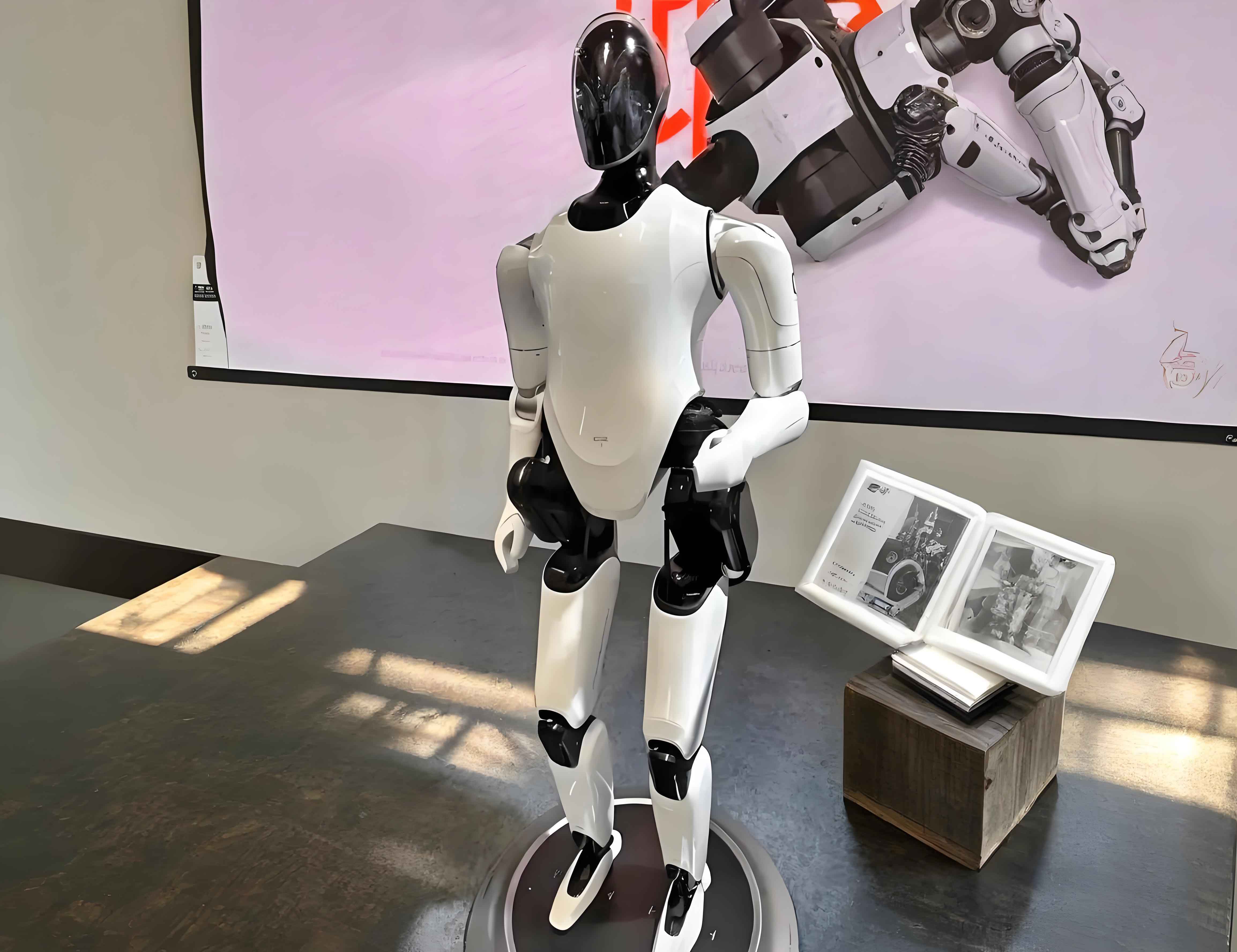
Where are these applications emerging? The initial frontier has logically been the structured environment of the factory. Here, embodied AI robots are being trained for specific, repetitive tasks. The goal is to augment human labor in assembly, quality inspection, and logistics. Beyond the factory floor, a more immediate and compelling value proposition lies in hazardous environments. The deployment of embodied AI robots for tasks like nuclear waste handling, pipeline inspection, firefighting reconnaissance, and mine surveying demonstrates a clear paradigm: using machines to assume high-risk duties, thereby enhancing human safety and operational efficiency. Several specialized embodied AI robots are already operational in these fields, performing tasks such as electrical discharge detection in substations or chemical hazard monitoring in disaster simulations.
Despite these promising inroads, the commercial ecosystem for general-purpose embodied AI robots is still formative. Core component suppliers, such as those manufacturing precision reducers (the “joints” of a robot), report that volumes destined for humanoid or advanced embodied AI platforms remain minimal compared to the established industrial robot market. Current procurement is primarily driven by educational and research institutions, followed by the exhibition and entertainment sectors, where these robots serve as advanced platforms for study or as attention-grabbing ambassadors of technology.
The Scalar Challenge: From Specific Tasks to General Purpose
The evolution of the embodied AI robot is a scalar problem. Early success is found in domain-specific, “single-task” machines. However, the ultimate economic and societal impact hinges on developing more general-purpose platforms. We can model the technical-economic progression across key scenarios using the following parameters: Task Complexity (C), Environmental Uncertainty (U), Required Safety Level (S), and Acceptable Cost (A).
| Application Scenario | Current Stage | Primary Form | Key Technical Hurdles | Economic & Adoption Drivers |
|---|---|---|---|---|
| Industrial Manufacturing | Early Piloting | Task-Specific Arms/ Mobile Platforms | High-precision manipulation, seamless integration with legacy systems | Labor cost savings, 24/7 operation, consistency |
| Hazardous & Extreme Environments | Initial Deployment | Tele-operated/ Semi-autonomous Specialized Robots | Robustness, sensor fusion for degraded conditions (smoke, dust), remote operational latency | Risk mitigation (human safety), access to inaccessible areas, regulatory push |
| Logistics & Warehousing | Advanced Piloting / Early Commercial | Mobile Manipulators, Legged Robots for stairs | Navigation in dense, dynamic spaces, dexterous package handling, “last-meter” delivery | E-commerce growth, labor shortages, throughput efficiency |
| Rehabilitation & Home Care (Ultimate Market) | Basic R&D / Prototyping | Humanoid & Assistant-form Robots | Social intelligence, safe physical HRI, understanding ambiguous commands, lifelong learning | Demographic aging, caregiver shortage, long-term cost economics |
The table above illustrates a clear gradient of difficulty. While an embodied AI robot in a factory deals with high complexity (C), it operates in a low-uncertainty (U), controlled environment. The home, conversely, presents maximum environmental uncertainty and requires the highest safety level, all at a consumer-acceptable cost. This is the grand challenge.
The Home Frontier: A Decade-Long Horizon
The most tantalizing market for the embodied AI robot is the domestic sphere, particularly in alleviating the pressures of aging societies. The economic logic is sound. Comparing the annualized cost of a human caregiver to the amortized cost of an embodied AI robot reveals a potential crossover point. Let $C_h$ be the annual cost of a human caregiver, $P_r$ the purchase price of the robot, $n$ its operational lifespan in years, and $M$ its annual maintenance cost. The robot becomes economically viable when:
$$
\frac{P_r}{n} + M < C_h
$$
Analyses suggest that at a robot price point of around $20,000 with a 5-year lifespan and minimal maintenance, the hourly equivalent cost could fall significantly below human caregiving rates in developed economies. However, this simplistic formula omits the monumental technical barriers. The home is an unstructured, dynamic world. Tasks are open-ended (“tidy the living room”), requiring common-sense reasoning and advanced manipulation skills. An embodied AI robot must navigate cluttered spaces, handle fragile objects, and interact safely with children, pets, and elderly individuals. Current prototypes from leading labs can perform single, pre-trained tasks like folding laundry or making coffee but do so slowly and lack the robust generalization needed for daily assistance.
Furthermore, the requirement for safety ($S$) is paramount and non-negotiable. The margin for error is effectively zero. This necessitates breakthroughs in tactile sensing, compliant control, and real-time hazard prediction. The industry must also solve the “cold start” problem of user acceptance and habit formation, as there is no direct predecessor product in the home.
The Engine of Progress: Algorithms, Data, and the “AI Brain”
The hardware of an embodied AI robot—its actuators, sensors, and chassis—is only half the story. The “ChatGPT moment” for robotics is predicated on the development of a foundational, general-purpose “AI brain” for physical interaction. This is the core of embodied AI. Unlike large language models trained on text corpora, an embodied AI model must learn from multimodal data that couples perception (vision, touch, force) with action (motor commands).
The learning process for an embodied AI robot can be conceptualized as maximizing the reward $R$ over a sequence of states ($s_t$) and actions ($a_t$), given sensory observations ($o_t$):
$$
\max_{\pi} \mathbb{E}_{\pi} \left[ \sum_{t=0}^{T} \gamma^t R(s_t, a_t) \right], \quad \text{where } s_t \sim f(o_t, a_{t-1}, s_{t-1})
$$
Here, $\pi$ is the policy (the robot’s “brain”), $\gamma$ is a discount factor, and $f$ is a function representing the robot’s understanding of its state from noisy observations. Training such a model requires vast amounts of real-world interaction data, which is expensive and slow to collect. This has led to a critical innovation: the use of simulation and synthetic data. Companies are now creating hyper-realistic virtual worlds to train embodied AI models millions of times faster than is possible in reality. A breakthrough “spatial intelligence” model, for instance, can generate complex 3D environments from 2D images, providing endless varied training grounds for the embodied AI robot. The formula for progress hinges on the scalability of data generation:
$$
\text{Model Capability} \propto \log(\text{Scaled Training Data} \times \text{Simulation Fidelity})
$$
Several technical pathways are being explored. Some focus on vision-language-action models (VLA) that link visual perception to language instructions and motor actions. Others pioneer “force-centric” models for delicate manipulation or “one-brain-many-forms” architectures aimed at controlling diverse robotic bodies. The race is on to create the first truly general-purpose embodied AI model that can translate high-level instructions into safe and effective physical behavior across tasks.
Global Race and Diverging Paths
The pursuit of the embodied AI robot has ignited a global technological competition, with distinct strengths characterizing different regions. The landscape is no longer about a single leader but about complementary advantages and strategic focus.
| Dimension | Key Characteristics & Advantages | Representative Focus Areas |
|---|---|---|
| Development Path | Strong venture capital activity, rapid iteration from agile startups. Focus on foundational AI models and simulation. Historically first to commercialize new automation in sectors like logistics. | General-purpose AI “brains,” high-fidelity simulation platforms, humanoid robots for logistics and eventual home. |
| Development Path | Unmatched manufacturing ecosystem and supply chain agility. Massive government policy support and capital deployment. Leading in patent filings and commercial prototyping speed. | Cost-effective hardware manufacturing, component supply chains (sensors, actuators), rapid commercialization in industrial and specific service robots. |
The United States benefits from the concentration of frontier AI research, with tech giants and well-funded startups pushing the boundaries of algorithms and generative models for embodiment. Its historical lead is evident in areas like warehouse automation, where mobile robots have already transformed logistics. China’s formidable strength lies in its ability to engineer, manufacture, and scale hardware rapidly and cost-effectively, backed by comprehensive national industrial strategies. The most likely trajectory is one of interconnected competition, where advances in AI from one region are integrated with manufacturing and systems integration capabilities from another, accelerating the overall pace of development for the embodied AI robot.
Predicting the Inflection Point: A 3-5 Year Outlook
So, when will the “ChatGPT moment” arrive? Based on the current trajectory of technical milestones, pilot deployments, and escalating investment, a reasonable forecast points to a window within the next 3 to 5 years for the first major, sector-specific inflection. This will not be the instantaneous, global explosion seen with ChatGPT, but a decisive proving event in a contained, high-value domain.
We can model the arrival of this moment as a function of converging variables:
$$
T_{\text{inflection}} = f( M_{\text{maturity}}, C_{\text{cost}}, E_{\text{ecosystem}}, D_{\text{data}} )
$$
Where:
– $M_{\text{maturity}}$ is the maturity of the embodied AI model (reliability, generalization).
– $C_{\text{cost}}$ is the total system cost reaching a sector-specific ROI threshold.
– $E_{\text{ecosystem}}$ is the readiness of supporting infrastructure (charging, maintenance, digital twins).
– $D_{\text{data}}$ is the availability of large-scale, task-specific operational data.
The most probable candidate sectors for this first wave are advanced manufacturing (beyond simple pick-and-place) and specialized logistics (like warehouse-to-truck loading). In these environments, the tasks, while complex, are bounded, and the economic return on replacing or augmenting human labor is easily calculated. The success of a single, large-scale deployment of embodied AI robots in a major automotive plant or global logistics hub, demonstrating clear superiority in efficiency and flexibility over prior automation, could serve as the catalytic “moment,” triggering industry-wide re-evaluation and order surges.
| Time Horizon | Expected Milestones for the Embodied AI Robot | Key Enablers |
|---|---|---|
| Next 1-2 Years (2025-2026) | Proliferation of industry-specific pilot programs. Demonstration of first general-purpose embodied AI models. Humanoid robots achieving reliable bi-pedal mobility in semi-structured sites. | Release of next-gen robot-specific AI chips. Expansion of simulation-trained models to real world. Increased government and corporate R&D funding. |
| 3-5 Years (2027-2029) | First “ChatGPT Moment” in a vertical (e.g., EV battery factory logistics). First commercially viable humanoid robots for structured commercial tasks. Significant cost reduction in key actuators and sensors. | Scale-driven cost reduction. Accumulation of massive real-world operational datasets. Proven ROI from early adopters. |
| 5-10+ Years (2030+) | Gradual entry into less structured commercial service roles (e.g., hospital logistics, retail backrooms). Early, high-cost adoption in premium home care settings. Establishment of safety and ethics standards. | Breakthroughs in safe human-robot interaction (HRI), commonsense reasoning, and energy density of batteries. Societal acclimatization to robots in shared spaces. |
The path to the home remains longer, likely exceeding a decade, due to the exponential increase in technical difficulty and the stringent safety and cost constraints outlined earlier. The journey of the embodied AI robot is ultimately a marathon, not a sprint. Its “ChatGPT moment” will not be a single event but a series of sectoral breakthroughs, each building upon the last, steadily integrating embodied intelligence into the physical fabric of our economy and, eventually, our daily lives. The race is on, and the finish line, though distant, is coming into view.