
As an researcher in the field of artificial intelligence, I have witnessed the remarkable shift from disembodied AI to embodied AI robots, which represents a qualitative leap in the pursuit of machine intelligence. Embodied AI robots, defined as intelligent systems with sensorimotor capabilities that perceive, understand, and interact with their environment, are hailed as the ultimate goal of AI and a driving force for new productive forces. However, despite this progress, I find that the interaction behavior of embodied AI robots with objects, environments, and humans remains fraught with deep-seated limitations. These limitations not only hinder their practical applications but also reveal a fundamental gap between artificial embodiment and the rich, lived experience of human bodily existence. In this article, I will explore these limitations through the lens of the phenomenology of the body, argue that they stem from the absence of key phenomenological structures such as body schema, intentional arc, and speech gesture in embodied AI robots, and propose developmental robotics as a promising path forward. Throughout this discussion, I will emphasize the importance of integrating phenomenological insights to advance the capabilities of embodied AI robots, ensuring that the term “embodied AI robot” is central to our understanding.
The phenomenology of the body, particularly as developed in the tradition of existential phenomenology, offers a profound framework for understanding how human beings engage with the world through their lived bodies. It highlights that human interaction is not merely a computational process but an embodied, situated, and pre-reflective engagement. For embodied AI robots to achieve truly fluid and adaptive interactions, they must move beyond current algorithmic approaches and incorporate these phenomenological dimensions. I will begin by outlining the three core limitations in the interaction behavior of embodied AI robots, then delve into their phenomenological roots, and finally suggest how developmental robotics can serve as a bridge to embody these essential structures. To illustrate the current state, consider the following image of an embodied AI robot in a manufacturing setting, which showcases its physical form but also hints at the challenges in dynamic interaction:
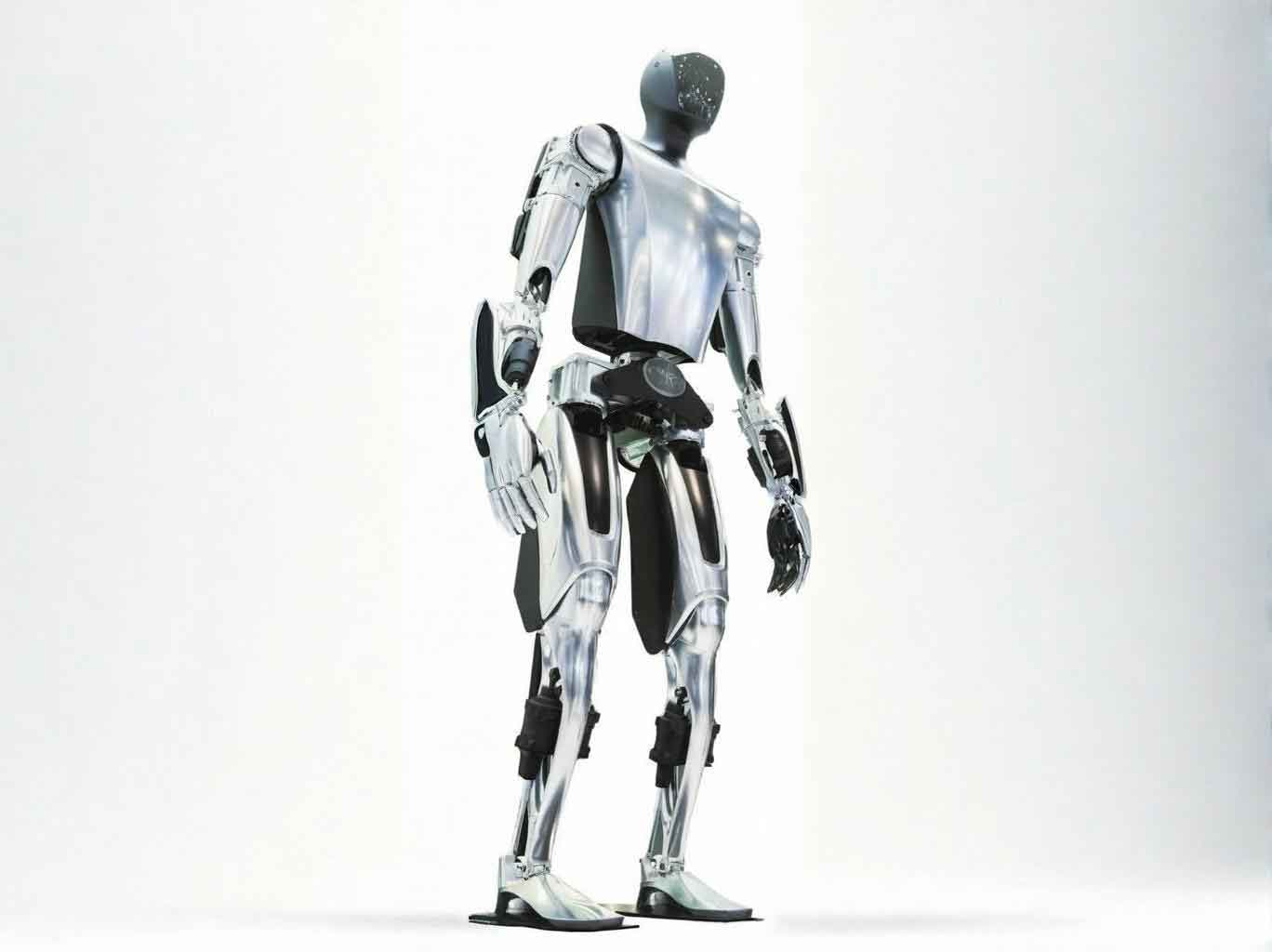
This embodied AI robot, while impressive, often struggles with the nuanced tasks that humans perform seamlessly, such as grasping fragile objects or navigating unpredictable environments. Let us now examine these limitations in detail.
Deep Limitations in the Interaction Behavior of Embodied AI Robots
In my analysis, the interaction behavior of embodied AI robots can be categorized into three primary domains: interaction with objects, interaction with the environment, and interaction with humans. Each domain reveals significant shortcomings that constrain the effectiveness of embodied AI robots in real-world scenarios.
1. Insufficient Motor Control Capabilities
When interacting with objects, embodied AI robots often exhibit inadequate motor control, particularly in tasks requiring precision, adaptability, and whole-body coordination. For example, grasping an object involves not only locating it but also modulating grip force to avoid damage or slippage, while tasks like lifting, carrying, or throwing demand a high degree of judgment and fine motor skills. Current embodied AI robots rely heavily on methods such as reinforcement learning, human instruction, and planning algorithms to achieve motor control. However, these approaches are limited: reinforcement learning lacks sufficient data for mapping perceptual representations to motor representations; human instruction paradigms are not fully autonomous and are vulnerable to environmental uncertainties; and planning methods, such as trajectory optimization, operate in a top-down manner with limited feedback from the control layer, confining them to static or well-defined environments. As a result, the motor control of embodied AI robots remains brittle and computationally intensive, far from the effortless, adaptive control seen in humans, even young children.
To summarize this limitation, I present a table comparing human motor control with that of embodied AI robots:
| Aspect | Human Motor Control | Embodied AI Robot Motor Control |
|---|---|---|
| Basis | Body schema, pre-reflective awareness, and dynamic adaptation | Algorithms (e.g., reinforcement learning, planning), computational models |
| Flexibility | High; adapts seamlessly to novel objects and contexts | Low; often requires retraining or reconfiguration for new tasks |
| Efficiency | Energy-efficient and intuitive, with minimal conscious effort | Computationally expensive, relying on extensive processing |
| Example Task | Grasping a delicate item without damage | Struggles with variable grip forces or unexpected object properties |
This table underscores the gap that embodied AI robots must bridge to achieve human-like dexterity.
2. Insufficient Environmental Interaction Capabilities
Embodied AI robots also face challenges in interacting with dynamic, open-ended environments. While specialized embodied AI robots excel in controlled settings, such as walking on predefined paths, they often fail in scenarios requiring real-time adaptation to unpredictable changes. For instance, autonomous vehicles—a form of embodied AI robot—must navigate complex traffic with noise in sensor data, lighting variations, and sudden obstacles. Current machine learning and deep network approaches are ill-suited for such tasks: they require massive datasets for training, suffer from poor generalization from simulation to reality, and cannot handle the inherent uncertainty of natural environments. The perceptual data in simulations are idealized, whereas real-world data are messy and incomplete, leading to a reality gap that hampers the autonomous operation of embodied AI robots. Thus, designing embodied AI robots that can autonomously interact with and thrive in complex environments remains an open challenge.
To formalize this issue, I propose a formula representing the environmental interaction challenge for embodied AI robots. Let \( E \) denote the environment, \( S \) the sensor data, \( A \) the actions of the embodied AI robot, and \( P \) the performance metric. The gap between simulation and reality can be expressed as:
$$ \Delta = P(E_{\text{real}}, S_{\text{real}}, A) – P(E_{\text{sim}}, S_{\text{sim}}, A) $$
where \( \Delta \) is often negative due to discrepancies in \( E_{\text{real}} \) and \( S_{\text{real}} \). To minimize \( \Delta \), embodied AI robots need adaptive mechanisms that go beyond current data-driven methods.
3. Insufficient Understanding and Expression of Body Language
In human-robot interaction, embodied AI robots are limited in both comprehending and expressing non-verbal cues, such as facial expressions, gestures, and postures. Humans rely heavily on body language to convey emotions, intentions, and social signals, enabling efficient communication—for example, pointing to an object while saying “fetch that” is more direct than a lengthy verbal description. However, current embodied AI robots primarily focus on facial recognition or imitation of human motions, often parameterizing body language into computable models. This approach fails to capture the holistic, context-dependent nature of human body language. The understanding of embodied AI robots is restricted to basic recognition tasks, and their expression lacks the generativity and emotional depth of human non-verbal behavior. Consequently, embodied AI robots struggle to establish natural, bidirectional communication with humans, hindering their integration into social settings.
To illustrate the complexity of body language, consider the following formula for a gesture \( G \), which involves multiple dimensions:
$$ G = f(B, C, E, T) $$
where \( B \) represents body parts (e.g., hands, face), \( C \) the context of interaction, \( E \) the emotional state, and \( T \) the temporal dynamics. For an embodied AI robot to fully understand or express \( G \), it must integrate these factors phenomenologically, rather than treating them as isolated variables.
Phenomenological Roots of the Limitations in Embodied AI Robots
From a phenomenological perspective, the limitations of embodied AI robots arise from the absence of three key structures that characterize human bodily existence: the body schema, the intentional arc, and the speech gesture. These structures are not mere add-ons but foundational to how we perceive, act, and communicate. In this section, I will explore how each missing element contributes to the shortcomings of embodied AI robots.
1. Absence of Body Schema Leads to Poor Motor Control
The body schema, in phenomenological terms, is a dynamic, pre-reflective awareness of one’s body posture and capabilities in relation to the world. It is a Gestalt that allows humans to know intuitively where their body is and how to move it without conscious calculation. For instance, when reaching for a book on a shelf, I do not compute angles or distances; my body schema automatically orchestrates the movement in the most economical way. Moreover, the body schema is open, incorporating tools like a blind person’s cane or a painter’s brush into its structure, enabling seamless interaction with objects. In contrast, embodied AI robots lack such a body schema. Their motor control is achieved through explicit algorithms that process sensory input, compute trajectories, and execute commands—a slow, deliberative process compared to the fluidity of human action. Without a body schema, embodied AI robots cannot tap into the innate, situated knowledge that guides human movement, making them clumsy and inefficient in object manipulation. This absence is a core reason why embodied AI robots fail to match human motor control, as summarized in the earlier table.
To model the body schema conceptually, we can think of it as a function \( \Phi \) that maps bodily states to actions in an environment:
$$ \Phi: (\text{Bodily State}, \text{Environmental Cue}) \rightarrow \text{Action} $$
For humans, \( \Phi \) is learned through development and is highly adaptive; for embodied AI robots, it is often a fixed algorithm prone to errors in novel situations.
2. Absence of Intentional Arc Leads to Poor Environmental Interaction
The intentional arc refers to the feedback loop between the body and the perceptual world, embedding our past experiences, future expectations, and situational context into our engagement with the environment. It gives rise to “affordances”—possibilities for action that emerge from the interaction between body and world, such as a chair inviting sitting or a handle inviting grasping. The intentional arc enables humans to maintain optimal balance and adapt to environmental demands through a continuous, skillful adjustment. For example, when walking on uneven terrain, my body naturally adjusts its gait without explicit thought. Embodied AI robots, however, operate without an intentional arc. Their environmental interaction is based on linear cause-effect relationships derived from data, rather than the circular causality of human embodiment. They perceive sensor data as discrete inputs, missing the holistic affordances that guide human behavior. As a result, embodied AI robots cannot generate the “practical diagnosis” that humans use to respond to situational requests, leading to rigid and often ineffective interactions in dynamic environments. This explains why embodied AI robots struggle with the reality gap represented by the formula \( \Delta \).
The intentional arc can be represented as a dynamic system equation:
$$ \frac{dI}{dt} = \alpha (E – I) + \beta H $$
where \( I \) is the intentional state, \( E \) the environmental input, \( H \) the historical experience, and \( \alpha, \beta \) are adaptation coefficients. For embodied AI robots to develop such an arc, they need lifelong learning mechanisms.
3. Absence of Speech Gesture Leads to Poor Body Language Handling
Speech gesture, in phenomenology, is the embodied expression of meaning through gestures, postures, and vocalizations. It is not merely a symbolic representation but a bodily act that carries intrinsic significance, rooted in the mutual understanding between interacting bodies. Human communication relies on this gestural layer—for instance, a smile or a pointing finger conveys intent directly, often without words. This understanding arises from a pre-reflective, intercorporeal exchange where bodies resonate with each other’s intentions. Embodied AI robots, however, lack speech gesture. Their approach to body language is computational, involving facial recognition algorithms or parameterized behavior models that reduce expressions to quantifiable features. This misses the lived, experiential dimension of gestures, making it hard for embodied AI robots to comprehend or generate authentic non-verbal cues. Without speech gesture, embodied AI robots cannot participate in the “mutual invasion of intentions” that defines human interaction, limiting their ability to build rapport or convey empathy. Thus, the formula for gesture \( G \) remains elusive for embodied AI robots, as they treat \( B, C, E, T \) as separate variables rather than an integrated whole.
To capture speech gesture formally, consider a communication model where meaning \( M \) emerges from bodily interaction:
$$ M = \int_{0}^{T} \psi(B_1(t), B_2(t)) \, dt $$
where \( B_1 \) and \( B_2 \) are the bodies of the interactants, and \( \psi \) is a function of their gestural synchrony over time \( T \). Embodied AI robots currently lack the capacity for such continuous, embodied dialogue.
Developmental Robotics: A Phenomenological Path for Embodied AI Robots
Given these phenomenological insights, I propose that developmental robotics offers a viable path to address the limitations of embodied AI robots. Developmental robotics is an interdisciplinary approach inspired by the principles of human cognitive development, where robots—essentially embodied AI robots—autonomously acquire sensorimotor and cognitive skills through real-time interaction with their environment, much like a child growing up. By mimicking the developmental processes that give rise to body schema, intentional arc, and speech gesture in humans, we can equip embodied AI robots with more human-like interaction capabilities.
The core idea is to allow embodied AI robots to “grow” through staged learning, rather than relying on pre-programmed algorithms. This involves:
- Embodied Morphology: Designing embodied AI robots with human-like body structures (e.g., mimicking infant proportions and joint mechanics) to facilitate the emergence of natural movement patterns.
- Progressive Learning: Enabling embodied AI robots to learn from simple to complex tasks, such as from touching objects to using tools, through multimodal sensory integration and reinforcement from environmental feedback.
- Social Interaction: Immersing embodied AI robots in rich social environments where they interact with caregivers or humans, fostering skills like joint attention, imitation, and cooperative behavior.
Through such developmental pathways, embodied AI robots can gradually construct analogs of body schema, intentional arc, and speech gesture. For example, by experiencing repeated sensorimotor loops, an embodied AI robot might develop a dynamic body schema that optimizes its movements; by exploring varied environments, it might form an intentional arc that reveals affordances; and by engaging in gestural exchanges, it might acquire speech gesture for nuanced communication. This approach aligns with the phenomenological emphasis on embodiment as a historical, situated process.
To illustrate the potential of developmental robotics for embodied AI robots, I present a table comparing traditional AI approaches with developmental robotics:
| Feature | Traditional Embodied AI Robot Approach | Developmental Robotics Approach for Embodied AI Robots |
|---|---|---|
| Learning Paradigm | Supervised or reinforcement learning on fixed datasets | Autonomous, incremental learning through embodied interaction |
| Body Representation | Static kinematic or dynamic models | Emergent body schema through sensorimotor experience |
| Environmental Adaptation | Limited to trained scenarios; poor generalization | Continuous adaptation via intentional arc-like mechanisms |
| Social Interaction | Rule-based or scripted responses to body language | Development of speech gesture through imitative and reciprocal exchanges |
| Long-term Goal | Task-specific efficiency | Lifelong cognitive and behavioral growth |
This table highlights how developmental robotics can transform embodied AI robots into more adaptive and intelligent systems.
Moreover, we can model the developmental process using a growth function for an embodied AI robot’s capability \( C(t) \) over time \( t \):
$$ C(t) = C_0 + \int_{0}^{t} \lambda(s) \cdot I(s) \, ds $$
where \( C_0 \) is the initial capability, \( \lambda(s) \) is a learning rate dependent on environmental richness, and \( I(s) \) is the intensity of embodied interaction at time \( s \). As \( t \) increases, the embodied AI robot accumulates experiences that foster phenomenological structures.
Conclusion: Toward a More Phenomenologically Informed Embodied AI Robot
In this article, I have examined the interaction behavior of embodied AI robots through the framework of the phenomenology of the body. The three deep limitations—in motor control, environmental interaction, and body language handling—stem from the absence of body schema, intentional arc, and speech gesture, respectively. These structures are not mere technical add-ons but fundamental to human-like embodiment. While current embodied AI robots excel in specialized tasks, their rigidity and computational overhead prevent them from achieving the fluidity and adaptability of human interaction. To bridge this gap, I advocate for developmental robotics as a phenomenological path, where embodied AI robots learn and grow through embodied experiences, much like human infants. This approach promises to imbue embodied AI robots with the dynamic, situated intelligence that defines our own bodily existence.
Looking ahead, the integration of phenomenology and AI holds great potential. By designing embodied AI robots that develop body schema, intentional arc, and speech gesture, we can create machines that not only perform tasks but also understand and engage with the world in a more human-like manner. This journey is challenging, but it is essential for realizing the full vision of embodied AI robots as truly intelligent, interactive partners. As I reflect on the future, I am optimistic that through interdisciplinary efforts, we can overcome these limitations and usher in a new era of embodied AI robots that are as lively and responsive as the humans they aim to assist.
To summarize the key phenomenological concepts and their implications for embodied AI robots, here is a final formula encapsulating the desired state of an advanced embodied AI robot:
$$ \text{Embodied AI Robot}_{\text{ideal}} = \Phi_{\text{schema}} \oplus \Gamma_{\text{arc}} \oplus \Psi_{\text{gesture}} $$
where \( \Phi_{\text{schema}} \) represents the body schema for motor control, \( \Gamma_{\text{arc}} \) the intentional arc for environmental interaction, and \( \Psi_{\text{gesture}} \) the speech gesture for body language. The symbol \( \oplus \) denotes integration into a cohesive, phenomenological whole. Achieving this ideal will require sustained research in developmental robotics and a deep commitment to embodying intelligence in its fullest sense.