
As I explore the rapid advancements in robotics, I am struck by how medical robots have transformed healthcare over the past four decades. Since the introduction of the first medical robot, PUMA 200, in clinical trials in 1985, these systems have evolved to encompass key technologies like image processing, 3D modeling, coordinate measurement, and navigation. The driving force behind their adoption stems from the need for remote surgery and enhanced precision in medical procedures. Compared to traditional instruments, medical robots offer greater efficiency, accuracy, and minimized invasiveness, making them a pivotal direction for modern and future medicine. With increasing public focus on healthcare and rising medical demands, it is crucial to understand their current status, advantages, and areas for improvement to guide further development. In this article, I will delve into the applications of medical robots in surgical and dental fields, analyzing market trends, technical aspects, and future prospects, while emphasizing the repeated importance of medical robot innovation.
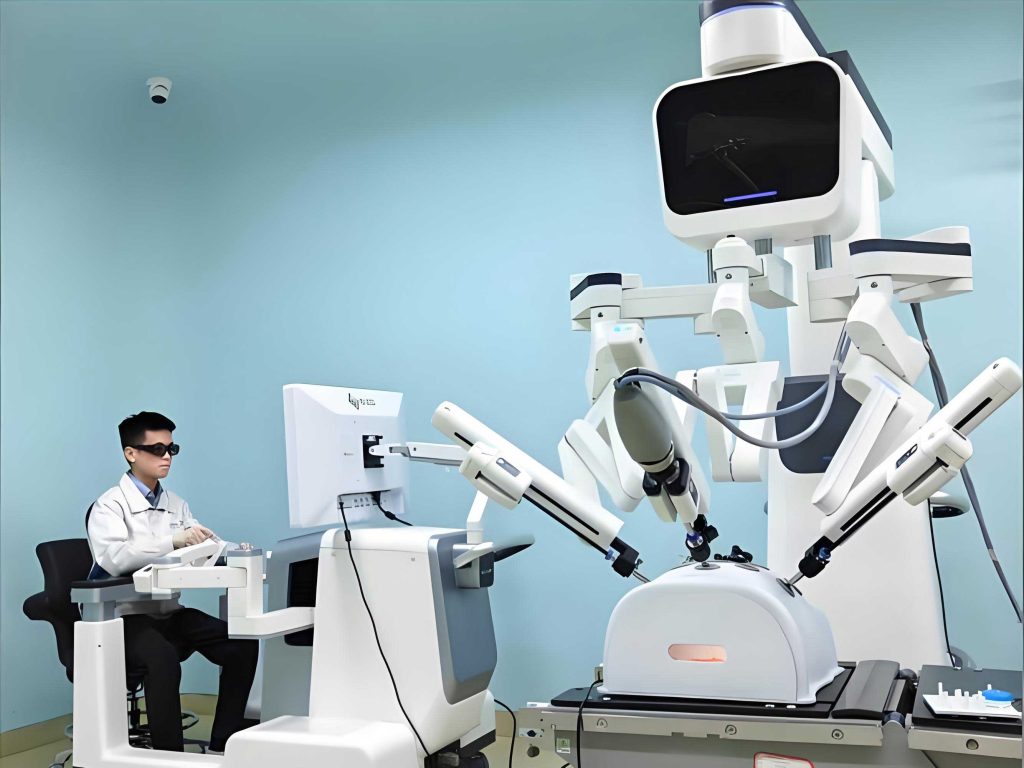
The integration of medical robots into healthcare systems has been accelerated by artificial intelligence, expanding their scope across various specialties. From my perspective, clinical and market data highlight the superior precision of medical robots, which significantly improves treatment outcomes and patient experiences. I will begin by examining surgical robots, then move to oral robots, and conclude with a comparative analysis and recommendations. Throughout, I aim to use tables and formulas to summarize data, ensuring a comprehensive overview of the medical robot landscape.
Current State of Surgical Medical Robots
Surgical medical robots have been widely adopted in fields such as urology, gynecology, neurosurgery, general surgery, and orthopedics. The market for these systems has seen substantial growth, driven by their ability to enhance surgical accuracy. I will break down this section into market size, regional shares, departmental applications, advantages, and disadvantages.
Market Size of Surgical Medical Robots
The global market for surgical medical robots was valued at $8 billion in 2022, with projections indicating it will exceed $36.37 billion by 2032. This represents a compound annual growth rate (CAGR) of 16.40% from 2023 to 2032. To illustrate this growth, I present the following table:
| Year | Market Size (in billions USD) | CAGR |
|---|---|---|
| 2022 | 8.0 | – |
| 2032 | 36.37 | 16.40% |
The CAGR can be expressed mathematically using the formula: $$ CAGR = \left( \frac{EV}{BV} \right)^{\frac{1}{n}} – 1 $$ where EV is the end value ($36.37 billion), BV is the beginning value ($8 billion), and n is the number of years (10). This emphasizes the exponential expansion of the medical robot market.
Regional Market Share of Surgical Medical Robots
In 2023, North America dominated the surgical medical robot market with a 49.90% share. This leadership stems from advanced healthcare infrastructure, high patient trust, and policy support, such as the 2016 “U.S. Robotics Roadmap,” which prioritizes robotics in healthcare. Companies like Google have invested in medical robot development, leveraging AI for applications like type 2 diabetes surgery. Conversely, the Asia-Pacific region is expected to experience rapid growth due to government investments and increasing adoption of advanced medical devices. I summarize this in a table:
| Region | Market Share (2023) | Growth Drivers |
|---|---|---|
| North America | 49.90% | Advanced infrastructure, policy support, tech investments |
| Asia-Pacific | High growth projected | Government incentives, rising healthcare demand |
| Other Regions | Remaining share | Varying factors |
This regional analysis underscores the global disparity in medical robot adoption, with economic factors playing a key role.
Department-Specific Market Size for Surgical Medical Robots
Orthopedic medical robots hold a significant market share, fueled by an aging population and rising incidences of conditions like arthritis. According to data, total knee replacement rates increased by approximately 38% from 2005-2006 to 2017-2018. Projections for primary hip and knee replacements show dramatic growth by 2030 and 2060. I present this data in a table and formula:
| Procedure | 2030 Projected Total (in thousands) | 2060 Projected Total (in thousands) | Growth Rate |
|---|---|---|---|
| Hip Replacement | 635 | 1230 | ~330% increase |
| Knee Replacement | 1280 | 2600 | ~382% increase |
The growth rate for knee replacements can be modeled as: $$ G = \frac{F – I}{I} \times 100\% $$ where G is the growth percentage, F is the future value (2600k), and I is the initial value (based on historical data). Additionally, neurosurgical medical robots are expected to grow at a CAGR of 17.6% from 2024 to 2030, highlighting the diverse applications of medical robots.
Advantages of Surgical Medical Robots
From my analysis, surgical medical robots offer numerous benefits. Precision is a standout feature, often achieving sub-millimeter accuracy. This can be quantified through error margins in procedures. For example, in robot-assisted surgery, the positional error (ε) can be expressed as: $$ \epsilon = \sqrt{(\Delta x)^2 + (\Delta y)^2 + (\Delta z)^2} $$ where Δx, Δy, and Δz are deviations in coordinate measurements. This high precision enables minimally invasive surgeries, leading to smaller incisions, reduced pain, shorter recovery times, and lower complication rates. Studies show that robot-assisted knee replacements can reduce 90-day care costs by $2,400 and readmission rates by 33%. For surgeons, medical robots lower the learning curve; for instance, laparoscopy training drops from 40-90 cases to 15-25 cases with robot assistance. These advantages reinforce the value of medical robots in enhancing surgical outcomes.
Disadvantages of Surgical Medical Robots
Despite their benefits, surgical medical robots face limitations. A major issue is the lack of force and tactile feedback, which hinders the robot’s ability to mimic human touch for病情 assessment. Cost is another barrier; systems like the da Vinci surgical robot can cost $2 million upfront with annual maintenance of $100,000, adding 6-13% to procedure costs. This can be represented as: $$ C_{total} = C_{initial} + (C_{maintenance} \times t) $$ where C_total is the total cost over time t. Additionally, operational complexity requires specialized training, and preoperative planning can be time-consuming, such as needing 1-2 weeks for CT uploads. These factors impede the broader adoption of medical robots.
Current State of Oral Medical Robots
Turning to dentistry, oral medical robots have carved out a substantial market. I will discuss their market size, regional dynamics, departmental breakdown, advantages, and disadvantages, consistently referencing the term medical robot to emphasize its relevance.
Market Size of Oral Medical Robots
The oral medical robot market was valued at $461.38 million in 2023 and is projected to reach $1.71414 billion by 2032, with a CAGR of 15.7%. This growth is summarized below:
| Year | Market Size (in millions USD) | CAGR |
|---|---|---|
| 2023 | 461.38 | – |
| 2032 | 1714.14 | 15.7% |
Using the CAGR formula: $$ CAGR = \left( \frac{1714.14}{461.38} \right)^{\frac{1}{9}} – 1 \approx 0.157 $$ This indicates robust expansion for oral medical robots.
Regional Market Share of Oral Medical Robots
North America leads the oral medical robot market due to its advanced healthcare infrastructure, early adoption of innovative dental technologies, and a shortage of dental professionals amidst rising oral disease rates. The Asia-Pacific region is poised for the fastest growth, driven by government support, population increases, and growing disposable income. I encapsulate this in a table:
| Region | Market Position | Key Factors |
|---|---|---|
| North America | Largest market in 2023 | Economic development, tech advancement, dentist shortage |
| Asia-Pacific | Fastest growth projected | Government policies, rising demand, dental tourism |
This regional analysis mirrors trends in surgical medical robots, highlighting common drivers.
Department-Specific Market Size for Oral Medical Robots
In 2022, the robot-assisted segment held the highest market share at 45%, focusing on aiding dentists in procedures like implants. The independent robot segment is expected to grow fastest at a CAGR of 16.4%, thanks to AI and machine learning advancements. By specialty, implantology accounts for 44% of the market due to aging populations, while endodontics is projected to grow rapidly. I present this data in a table:
| Segment/Specialty | Market Share or Growth Rate | Remarks |
|---|---|---|
| Robot-Assisted Segment | 45% share in 2022 | Enhances precision in procedures |
| Independent Robot Segment | 16.4% CAGR projected | Driven by AI and autonomy |
| Implantology | 44% market share | High demand for implants |
| Endodontics | Rapid growth expected | AI-assisted real-time analysis |
These trends underscore the versatility of oral medical robots in dental care.
Advantages of Oral Medical Robots
Oral medical robots excel in precision. For instance, in implant surgery, the Yomi medical robot reported deviations such as angular error of (2.56°±1.48°), shoulder deviation of (1.04±0.70) mm, root deviation of (0.95±0.73) mm, and depth deviation of (0.42±0.46) mm. These can be modeled using statistical formulas: $$ \sigma_{total} = \sqrt{\sigma_1^2 + \sigma_2^2 + \cdots} $$ where σ represents standard deviations. AI algorithms assist in diagnosis and treatment planning, improving efficiency. Robots can also perform tasks difficult for humans, like precise tooth preparation, and enhance patient experience through personalized care. For example, a robotic teeth-arrangement system can complete full denture alignment in 30 minutes, boosting efficiency. This demonstrates how medical robots are revolutionizing dentistry.
Disadvantages of Oral Medical Robots
However, oral medical robots have drawbacks. Their flexibility is limited compared to human dentists, making them less adaptable to non-standardized procedures. Technical issues and higher failure rates necessitate further system improvements. Additionally, they require skilled operators, creating a shortage of trained personnel. These challenges slow the integration of medical robots into routine dental practice.
Market Prospects and Technical Comparative Analysis of Medical Robots
In comparing surgical and oral medical robots, I identify commonalities and differences that shape their future. Both sectors show North America leading due to infrastructure and technology, while Asia-Pacific grows rapidly with government support. This suggests that medical robot expansion hinges on economic and policy factors. I summarize the comparative advantages and disadvantages in a table:
| Aspect | Surgical Medical Robots | Oral Medical Robots | Common Themes |
|---|---|---|---|
| Precision | Sub-millimeter accuracy | Low deviation in implants | High precision across applications |
| Market Growth | 16.40% CAGR (2023-2032) | 15.7% CAGR (2023-2032) | Strong expansion in both fields |
| Key Limitation | Lack of tactile feedback | Inflexibility in procedures | Inability to fully replace humans |
| Cost Issue | High upfront and maintenance | Similar cost barriers | High costs impede widespread use |
From a technical perspective, the precision of medical robots can be expressed through error minimization formulas. For instance, in both surgery and dentistry, the goal is to minimize a loss function: $$ L = \sum_{i=1}^{n} (y_i – \hat{y}_i)^2 $$ where y_i is the target position and ŷ_i is the robot’s achieved position. The lack of feedback remains a critical hurdle; integrating force sensors could improve this, but it adds complexity. The high cost of medical robots can be analyzed using cost-benefit ratios: $$ R = \frac{B}{C} $$ where R is the ratio, B represents benefits like reduced recovery time, and C is the total cost. Currently, R is often low due to high C, limiting accessibility. These insights highlight the need for innovation to address shared weaknesses in medical robot systems.
Conclusion and Recommendations for Medical Robot Development
In conclusion, medical robots offer exceptional precision, enabling minimally invasive procedures that reduce infection risks, shorten recovery, and improve patient experiences. As disease prevalence rises and healthcare workforce shortages persist, medical robots can alleviate burdens by assisting with data analysis and repetitive tasks. However, challenges like high costs, lack of tactile feedback, and operational complexity hinder broader adoption. Based on my analysis, I propose the following recommendations for the future of medical robots:
- Enhance Healthcare Infrastructure: Developing robust medical infrastructure is foundational for medical robot market growth. Governments and institutions should invest in facilities to support the deployment of medical robots, ensuring patient trust and accessibility.
- Reduce Research and Manufacturing Costs: To mitigate economic pressures, policy support should encourage more companies to engage in medical robot research. Scaling production and leveraging AI can lower costs, as modeled by economies of scale: $$ C_{unit} = \frac{F}{Q} + V $$ where C_unit is the per-unit cost, F is fixed cost, Q is quantity, and V is variable cost. Increasing Q through widespread adoption can decrease C_unit.
- Strengthen Professional Training and Simplify Designs: Medical schools should incorporate medical robot operation courses to build a skilled workforce. Additionally, minimizing the development of complex new devices can shorten learning curves, allowing faster integration of medical robots into practice.
- Develop Standards, Data Applications, and Feedback Systems: For tactile feedback limitations, standards can be established for integrating micro-sensors that monitor intraoperative metrics. Research into high-precision feedback and warning systems is crucial. This could involve algorithms like: $$ F_{feedback} = k \cdot \Delta x $$ where F_feedback is the simulated force, k is a constant, and Δx is displacement. Enhancing such systems will improve the sensitivity of medical robots.
- Optimize Structural Design: Improving the design of medical robots to reduce spatial footprint and increase flexibility will enhance their practicality in clinical settings. This involves mechanical optimizations for better maneuverability.
Looking ahead, the medical robot market is poised for significant expansion, driven by aging populations, rising incomes, and technological advancements. By addressing current drawbacks and leveraging strengths, medical robots can become integral to healthcare, offering smarter, smaller, and more affordable solutions. I am confident that with continued innovation, the potential of medical robots will be fully realized, transforming patient care globally.