
In recent years, with the advancement of robotics technology, medical robots have gained significant traction in addressing challenges such as aging populations and healthcare burdens. As an engineer involved in the research and development of medical robots, I have observed that traditional wiring methods often lead to inefficiencies and reliability issues during the design phase. Three-dimensional (3D) wiring, a mature design approach widely used in industries like automotive and aerospace, offers a transformative solution for medical robot development. This article explores the application of 3D wiring in medical robot design, emphasizing its role in enhancing electromechanical coordination, improving design reliability, and streamlining production processes. Throughout this discussion, the term ‘medical robot’ will be frequently referenced to underscore its relevance in modern healthcare solutions.
The integration of 3D wiring into medical robot design begins with understanding the unique characteristics of these devices. Medical robots, including rehabilitation, surgical, and assistive types, often feature complex electromechanical systems. For instance, rehabilitation medical robots may incorporate motor-driven joints, adjustable postures via sliding rails or linkages, and human-machine interfaces for interaction. These elements necessitate precise wiring to ensure safety, functionality, and maintainability. In my experience, the design of a medical robot must account for dynamic movements, electromagnetic compatibility, and human factors, making 3D wiring an invaluable tool for virtual prototyping. By simulating wiring paths in a digital environment, potential issues such as interference or inefficient layouts can be identified early, reducing costly revisions during physical prototyping.
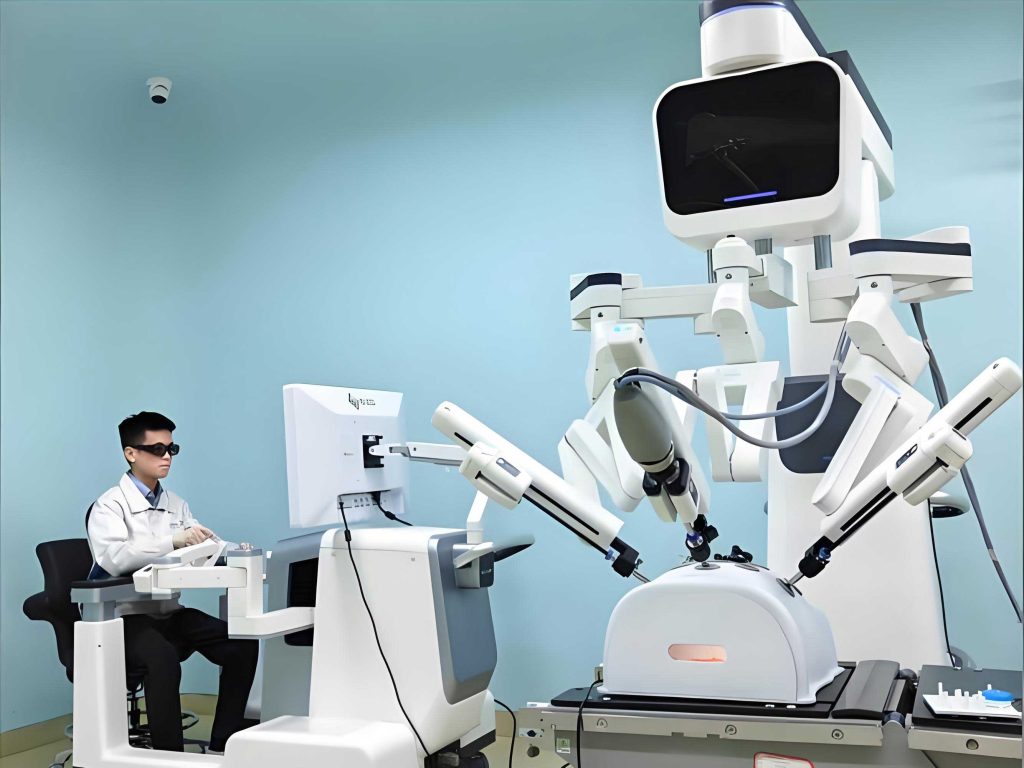
In the research and development of medical robots, electromechanical coordination is critical. Traditionally, mechanical and electrical designs were isolated, leading to problems like insufficient space for connectors or conflicts during assembly. With 3D wiring, I have facilitated a parallel design process where wiring considerations are integrated from the outset. For example, during the schematic design phase, 3D models of components and wiring harnesses are created, allowing for real-time collaboration between mechanical and electrical teams. This approach not only enhances the reliability of the medical robot but also accelerates time-to-market. The table below summarizes key aspects of electromechanical coordination enabled by 3D wiring in medical robot development:
| Aspect | Traditional Design | 3D Wiring-Enhanced Design |
|---|---|---|
| Component Layout | Based on experience, prone to errors | Optimized via virtual simulation |
| Interference Check | Post-prototype identification | Early detection in digital model |
| Assembly Process | Sequential, often conflicting | Parallel, with predefined steps |
| Wiring Length Estimation | Approximate, leading to waste | Precise calculation using software |
| Maintenance Accessibility | Overlooked in early design | Incorporated into human factors analysis |
The design workflow for 3D wiring in medical robots involves several systematic steps. Based on tools like Solidworks Electrical, the process typically includes library preparation, path routing, and validation. First, component libraries (e.g., connectors, terminals) and cable libraries (defining specifications like gauge and bend radius) are established. These libraries are tailored to the medical robot’s requirements, such as compliance with safety standards. Next, wiring harnesses are categorized by function—for instance, power supply harnesses, motor drive harnesses, and sensor harnesses—to streamline design. The routing is performed in a 3D environment, where paths are defined to avoid moving parts and heat sources. Mathematical models can be applied to optimize wiring; for example, the total wiring length \( L \) for a harness with \( n \) segments can be minimized using:
$$ L = \sum_{i=1}^{n} \sqrt{(x_i – x_{i-1})^2 + (y_i – y_{i-1})^2 + (z_i – z_{i-1})^2} $$
Here, \( (x_i, y_i, z_i) \) represent coordinates of waypoints in the medical robot’s assembly. This optimization reduces material waste and improves signal integrity. Additionally, interference probability \( P_{interference} \) can be estimated with:
$$ P_{interference} = \int_{path} f(\text{obstacle density}) \, d\text{path} $$
where \( f \) accounts for mechanical components along the path. By integrating such formulas, the design of a medical robot becomes more robust, ensuring that wiring does not hinder operational safety.
When implementing 3D wiring, several considerations are vital for electromechanical coordination in medical robots. These include interference avoidance, electromagnetic compatibility (EMC), and assembly sequencing. Interference can be static (e.g., inadequate clearance for plugs) or dynamic (e.g., cables colliding with moving arms). In my projects, I use simulation to check for both, adjusting paths to ensure a clearance margin of at least 5 mm. For EMC, separating power and signal harnesses is crucial; shielding effectiveness \( SE \) can be modeled as:
$$ SE = 20 \log_{10} \left( \frac{E_{\text{unshielded}}}{E_{\text{shielded}}} \right) \text{ dB} $$
where \( E \) denotes electric field strength. This informs the selection of shielded cables for sensitive circuits in the medical robot. Assembly issues often arise from parallel mechanical and electrical tasks; for example, cables may need to pass through hollow shafts or sliding rails. By simulating the assembly order in 3D, I can define breakpoints or connectors at accessible locations, enhancing maintainability. The table below outlines key design notes for 3D wiring in medical robots:
| Consideration | Description | Impact on Medical Robot |
|---|---|---|
| Path Routing | Avoid sharp edges and heat sources | Prevents damage and ensures longevity |
| EMC Management | Use twisted pairs and separation | Reduces noise for reliable operation |
| Dynamic Interference | Simulate full range of motion | Ensures safety during rehabilitation exercises |
| Human Factors | Design for easy access and aesthetics | Improves user experience in clinical settings |
| Cost Efficiency | Optimize cable lengths and materials | Lowers production costs for scalable medical robot solutions |
To illustrate the practical application, I will discuss two case studies: a standing lower-limb rehabilitation medical robot and an intelligent upper-limb rehabilitation medical robot. In the standing lower-limb medical robot, the structure includes folding and height-adjustment mechanisms. Using 3D wiring, I designed the main harness to route through hollow tubes in the base frame, accommodating movements without strain. The wiring path was optimized to minimize length, calculated with the earlier formula, resulting in a 15% reduction in cable usage compared to traditional estimates. For the intelligent upper-limb medical robot, which features sliding rails and angular adjustments, 3D wiring allowed me to simulate assembly sequences, identifying that connectors should be placed at segment joints for parallel installation. This reduced assembly time by 20%, enhancing the medical robot’s manufacturability. In both cases, the integration of 3D wiring facilitated early detection of interferences, such as cables pinching during adjustment, thereby improving the reliability of the medical robot.
The benefits of 3D wiring extend beyond design to production and maintenance. For medical robots, where safety is paramount, virtual prototyping with 3D wiring enables thorough testing before physical build. I have derived an efficiency metric \( \eta \) to quantify improvements:
$$ \eta = \left(1 – \frac{T_{3D}}{T_{traditional}}\right) \times 100\% $$
where \( T_{3D} \) and \( T_{traditional} \) represent design times with and without 3D wiring, respectively. In my experience, \( \eta \) often exceeds 30% for complex medical robot projects. Additionally, 3D models support the generation of manufacturing documents, such as harness fabrication drawings and bills of materials, ensuring consistency in mass production. As medical robots evolve toward personalized healthcare, 3D wiring adapts to custom configurations, allowing rapid iteration. For example, in a rehabilitation medical robot with modular components, wiring can be reconfigured digitally to match patient-specific needs, underscoring the versatility of this approach.
In conclusion, the application of 3D wiring in medical robot design represents a significant advancement in electromechanical integration. By adopting this methodology, I have witnessed enhanced collaboration between disciplines, reduced prototyping costs, and improved product reliability. The medical robot industry stands to gain from widespread adoption, as it addresses critical challenges in aging societies and healthcare delivery. Future work may involve integrating artificial intelligence for automated routing or leveraging IoT for smart wiring management in medical robots. Ultimately, 3D wiring not only streamlines development but also contributes to the creation of safer, more efficient medical robots that better serve patients and clinicians alike.