
The integration of Artificial Intelligence (AI) into healthcare represents a paradigm shift, offering unprecedented precision, efficiency, and support in clinical decision-making. Among these advancements, medical robot systems equipped with weak or narrow AI—capable of specific, learned tasks within a defined domain—are becoming increasingly prevalent. These systems assist in surgical procedures, rehabilitation, diagnostics, and patient care, fundamentally altering the traditional doctor-patient dynamic. However, this technological leap forward is accompanied by significant legal ambiguities, particularly concerning liability when a medical robot is implicated in patient harm. The core challenge lies in the lag of legal frameworks behind technological innovation. This article explores the legal status of weak AI medical robots, analyzes the intricate challenges in attributing tort liability, examines international regulatory approaches, and proposes a multifaceted legal framework for governance.
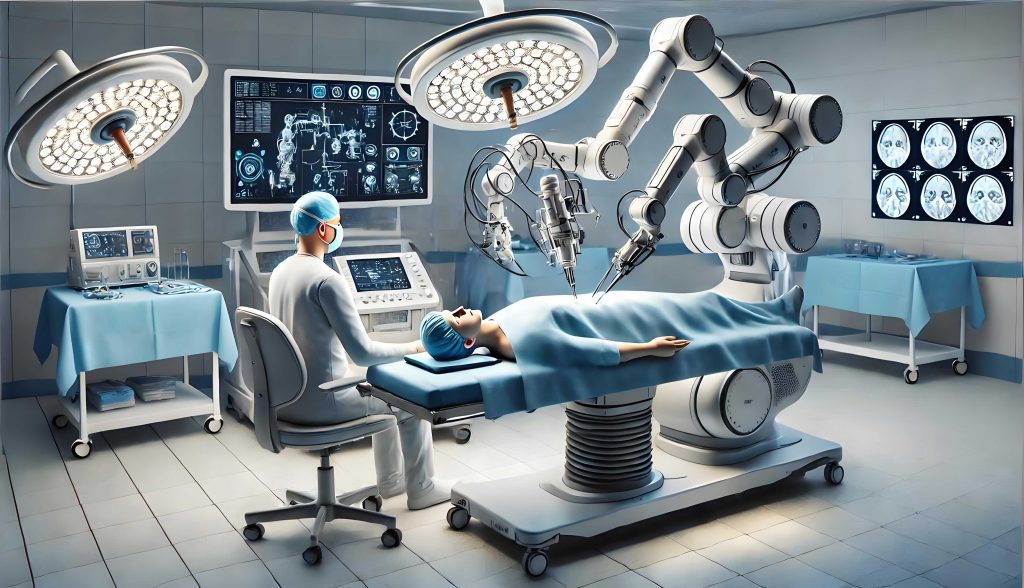
The advent of the weak AI medical robot introduces a new actor into the clinical theater. These are not autonomous agents but sophisticated tools with data-driven learning capabilities. They operate on pre-defined models, analyzing patient-specific data to guide surgeons, propose diagnostic probabilities, or execute precise physical therapy regimens. For instance, an orthopedic surgical medical robot might pre-plan a procedure based on a patient’s scan, intraoperatively guide instrument placement with sub-millimeter accuracy, and allow the surgeon to focus on the operative technique itself. While this synergy enhances outcomes, it also diffuses the chain of causation in the event of an adverse incident. Was it the surgeon’s decision to follow the robot’s plan? A latent flaw in the robot’s design? An error in its training data? The law, traditionally comfortable with binaries like “manufacturer” and “practitioner,” now struggles with this tripartite—and often opaque—relationship.
Clarifying the Legal Status: Tool, Not Agent
A foundational question must be addressed before liability can be apportioned: what is the legal personality of a weak AI medical robot? Proposals range from granting “electronic personhood” to maintaining a strict “tool” status. From my perspective, conferring any form of legal subjectivity upon current-generation weak AI is premature and counterproductive. These systems lack consciousness, intentionality, and the capacity for self-directed goals outside their programming. They are advanced instruments, albeit with stochastic and learning elements. Therefore, I posit that weak AI medical robots should unequivocally be considered legal objects, not subjects. This clarification is crucial; it directs the search for liability away from the machine itself and toward the human and corporate entities responsible for its creation, deployment, and use. Treating it as a tool allows existing tort law doctrines to be adapted, whereas inventing a new legal persona creates unnecessary complexity and risks absolving responsible parties.
The Multifaceted Challenge of Attributing Tort Liability
When a patient is harmed in a procedure involving a medical robot, pinpointing liability is fraught with doctrinal and practical obstacles. The incident could stem from (1) user error (e.g., surgeon override or misuse), (2) product defect (e.g., algorithmic bias, hardware failure), (3) a synergistic failure of both, or (4) unforeseeable circumstances. Applying traditional product liability and medical malpractice law reveals significant gaps.
1. The Elusive “Defect” in a Learning System
Product liability hinges on proving a defect in design, manufacture, or warning. For a medical robot, this is exceptionally difficult. First, national safety standards specifically for adaptive AI medical devices are often non-existent, removing a clear benchmark. Second, the “consumer expectation” test is problematic. What should a reasonable patient expect from a probabilistic, learning diagnostic medical robot? Perfect accuracy is an unrealistic expectation, yet a systemic bias leading to higher misdiagnosis rates for a demographic group constitutes a profound defect. This bias may emerge from the training data, not the initial design, blurring the lines. We can model the probability of a defect manifesting ($P_{defect}$) as a function of both static design ($D$) and dynamic data/learning parameters ($\theta$):
$$P_{defect} = f(D, \theta(t))$$
Where $\theta(t)$ evolves over time $t$, making the defect latent and potentially discoverable only after widespread deployment.
2. The Expanding Web of Responsible Parties
Traditional product liability targets the producer. A modern AI-driven medical robot, however, is the product of a fragmented chain: the algorithm designer, the data curator, the hardware manufacturer, the system integrator, the software updater, and the hospital that deploys it. The “producer” is a contested concept. Should a hospital that fine-tunes a medical robot‘s algorithm on its own patient data be considered a partial producer? Current law often fails to capture these distributed contributors, leaving potential liability gaps.
3. The Causation Conundrum in Human-Machine Collaboration
Medical malpractice requires establishing that the healthcare provider’s breach of the standard of care caused the harm. With a medical robot as an active participant, causation becomes convoluted. Did the surgeon err in relying on the robot’s assessment, or did the robot provide a convincingly erroneous assessment that a reasonable surgeon would have followed? The “black box” nature of many AI algorithms means the surgeon cannot interrogate the machine’s reasoning, undermining their ability to exercise independent judgment. This creates a “responsibility gap.” Furthermore, the standard of care itself is in flux—does it now include the competent use of AI assistance? The causal contribution ($C$) of each actor to harm ($H$) can be represented as:
$$H = \alpha C_{robot} + \beta C_{surgeon} + \gamma C_{institution} + \epsilon$$
where $\alpha, \beta, \gamma$ are weight coefficients that are legally and factually difficult to determine, and $\epsilon$ represents unforeseeable factors.
4. The Limited Fit of Strict Liability Doctrines
Some scholars suggest applying doctrines of strict liability for “abnormally dangerous activities” to certain uses of medical robots. While conceptually appealing for high-risk autonomous procedures, this faces hurdles. Is the medical robot itself a dangerous “thing,” or is its use a dangerous “activity”? Furthermore, strict liability typically falls on the custodian (the hospital), potentially letting developers off the hook for fundamental flaws, which seems inequitable. It may serve best as a residual or backup regime for specific, high-risk applications where other claims are impossible to prove.
Regulatory Explorations: Insights from the EU and the US
International approaches provide valuable lessons for crafting a coherent response. The EU and the US represent two leading, yet distinct, paradigms.
| Jurisdiction | Key Regulatory Instruments/Approaches | Stance on AI Legal Personhood | Liability & Compensation Focus |
|---|---|---|---|
| European Union | AI Act (Risk-based tiers), Medical Device Regulation (MDR), ex-Electronics Personhood proposal. | Rejected for current AI. Systems are legal objects. | High-risk AI (incl. medical) requires ex-ante conformity assessment, post-market monitoring, transparency. Strong emphasis on mandatory insurance and potential compensation funds. |
| United States | FDA oversight as SaMD (Software as a Medical Device), “Predetermined Change Control Plans” for adaptive AI, sectoral guidelines. | Generally rejects personhood; viewed as product/tool. | Layered liability (product liability, malpractice). Focus on pre-market review with novel pathways for iterative AI updates. Practical focus on insurance and institutional risk management. |
The EU’s Comprehensive-Risk Model: The landmark EU AI Act categorizes AI systems by risk. Most medical robots fall into the “high-risk” category, triggering stringent requirements for risk management, data governance, technical documentation, human oversight, and robustness. Crucially, the EU has formally abandoned the early “electronic personhood” idea, affirming AI’s status as a product. Its forward-thinking discussions on mandatory insurance and a collective compensation fund address the worry that individual entities may be unable to cover catastrophic AI-related harm.
The US’ Adaptive-Sandbox Approach: The US FDA regulates AI in medical robots primarily as medical device software. Its innovative “Predetermined Change Control Plan” (PCCP) framework allows developers to pre-specify and get approval for certain types of iterative algorithm changes (like retraining), enabling safer and faster evolution without constant re-submission. Liability is primarily addressed through a combination of state-level product liability law and medical malpractice, with a pragmatic eye on ensuring the liability framework does not stifle innovation.
The common thread is the treatment of contemporary weak AI as a governed object, not a legal subject, and the recognition that oversight must span the entire lifecycle of the medical robot.
Proposing a Multidimensional Legal Framework for Governance
Based on the identified challenges and international insights, I propose an integrated framework for regulating weak AI medical robot侵权. This framework rests on four interconnected pillars.
Pillar 1: Establishing Standards and Clarifying Defect
The first step is to remove ambiguity by establishing robust, technology-specific national standards for the safety, efficacy, and performance of medical robots. These standards must account for learning systems, defining acceptable bounds for performance drift and update protocols. Concurrently, the legal definition of “defect” must be clarified to encompass:
- Algorithmic Defects: Flaws arising from biased training data, faulty model architecture, or harmful emergent behavior from learning.
- Data Pipeline Defects: Flaws in data collection, curation, or labeling that poison the system’s learning process.
- Cybersecurity Defects: Inadequate protections making the medical robot vulnerable to manipulation.
A modified “reasonable patient expectation” test should be informed by these standards and the marketed capabilities of the system.
| Defect Type | Traditional Analog | AI-Specific Manifestation | Suggested Liability Standard |
|---|---|---|---|
| Design Defect | Flawed blueprint | Biased algorithm architecture; insecure data pipeline design | Strict Liability (to incentivize safety-by-design) |
| Manufacturing Defect | Faulty assembly | Code error in deployment; faulty sensor calibration | Strict Liability |
| Warning/Instruction Defect | Inadequate manual | Failure to disclose known limitations, failure rates per subgroup, or required user expertise | Negligence (Failure to warn) |
Pillar 2: Expanding the Circle of Liable Actors
The legal definition of “producer” or “manufacturer” must be statutorily expanded for AI-based medical robots to include key contributors who otherwise might evade responsibility. This expanded circle should encompass:
- The Core Designer/Developer: The entity creating the core algorithm and learning framework.
- The System Integrator: The entity combining hardware, software, and AI into a functional medical robot.
- The Substantial Modifier: Hospitals or third parties that perform significant retraining or modification that alters the system’s performance profile.
- The Importer: Critical for ensuring accountability in global supply chains.
These parties could be held jointly and severally liable for defects originating in their respective domains, with rights of contribution among themselves.
Pillar 3: Modernizing Medical Malpractice for Human-Machine Teams
The standard of care must evolve to acknowledge the medical robot as a standard tool in certain specialties. Liability for healthcare providers and institutions should focus on “organizational malpractice,” which includes:
- Technology Governance Failure: Failure to establish protocols for validating medical robot outputs, failure to provide adequate training, or allowing use by unqualified personnel.
- Ethical Oversight Failure: Deploying a system with known disparities without mitigation; failing to obtain informed consent that specifically addresses AI involvement and its limitations.
- Supervisory Failure: Uncritically following an AI recommendation contrary to obvious clinical signs (“automation bias”).
The duty of the surgeon is not just to operate, but to be a prudent supervisor of the AI-assisted surgical process. A transparency imperative should be legally mandated, requiring developers to provide, at minimum, “explainable AI” outputs that justify recommendations in terms understandable to a clinician.
$$ \text{Clinician’s Duty} = \text{Prudent Supervision} + \text{Critical Engagement} + \text{Ultimate Decision Authority} $$
Pillar 4: Creating a Tailored Compensation and Risk-Management Backstop
To address the unique risks and ensure patient compensation, a two-layer financial mechanism is essential:
- Mandatory Specialized Liability Insurance: Required for all entities in the expanded “producer” chain and for hospitals deploying high-risk medical robots. Premiums would be risk-adjusted based on the system’s autonomy level, proven performance, and transparency.
- A Supplemental Compensation Fund: Financed by a small levy on the sale or licensing of advanced medical robots. This fund acts as a payer of last resort for catastrophic harms where liability is unclear, causation is insurmountably complex, or damages exceed insurance coverage, ensuring patients are not left without recourse.
This system socializes some of the inherent risk of pioneering technology while maintaining strong deterrence through liability rules.
Synthesizing the Framework: A Decision Pathway
To bring these pillars together, we can propose a structured decision pathway for adjudicating a medical robot-related injury claim.
| Step | Question | Analysis & Doctrine |
|---|---|---|
| 1 | Was there a prima facie failure of the medical robot system? | Analyze against Pillar 1 (Standards & Defect). Check for algorithmic, data, or security defects. |
| 2 | If yes, which entity(ies) in the chain are responsible for that failure? | Apply Pillar 2 (Expanded Liability). Assign liability to designer, integrator, modifier, etc., based on fault origin. |
| 3 | Was there a concurrent failure in clinical governance or supervision? | Apply Pillar 3 (Modernized Malpractice). Assess institutional protocols, training, and the clinician’s critical oversight role. |
| 4 | Can liability and causation be clearly established under Steps 1-3? | If yes, proceed under product liability/malpractice. If no (e.g., inscrutable AI failure), consider eligibility for compensation from the Pillar 4 Fund. |
| 5 | For exceptionally high-risk, highly autonomous procedures. | Consider applying a statutory strict liability rule (adapted from Pillar 4 logic) to the procedure’s performer/institution, with recourse against the producer if a defect is later found. |
Conclusion
The integration of weak AI into medical robots is not a fleeting trend but the foundation of next-generation healthcare. The associated legal challenges are complex but not insurmountable. The solution lies not in revolutionary legal concepts like robot personhood, but in the thoughtful evolution and integration of existing tort principles. By establishing clear safety standards, broadening the scope of responsible parties, redefining clinical duty in the age of AI assistance, and creating a robust financial backstop, we can construct a legal environment that does two vital things: protects patients harmed by these advanced systems and provides the legal certainty necessary for innovators and healthcare providers to responsibly develop and deploy them. The goal is a framework that manages risk without stifling the profound benefits that intelligent medical robots promise for global health. The time for proactive legal engineering is now, as the next generation of even more capable systems waits in the wings.