
As a researcher deeply immersed in the intersection of artificial intelligence and law, I find the topic of legal personhood for medical robots both fascinating and urgent. In recent years, the rapid advancement of AI in healthcare has brought medical robots to the forefront of clinical practice, raising profound legal questions. This article explores the necessity of granting legal personhood to medical robots, drawing from current applications, scholarly debates, and future legislative prospects. I will argue that while current laws treat medical robots as mere tools, evolving technology may necessitate a reevaluation of their legal status. Throughout this discussion, I will use tables and formulas to summarize key points, ensuring a comprehensive analysis that exceeds 8000 tokens in length. The keyword “medical robot” will be emphasized repeatedly to underscore its centrality to this discourse.
Medical robots, defined as robotic devices or systems applied in healthcare settings, encompass a wide range of technologies such as surgical robots, rehabilitation robots, medical service robots, and intelligent diagnostic equipment. These medical robots exhibit operability and intelligence, enabling them to assist in procedures, provide therapy, and enhance patient care. The core issue arises from their increasing autonomy: as medical robots become more capable of independent decision-making, determining liability for errors or accidents becomes complex. Legal personhood, in this context, refers to the legal qualification that allows an entity to exercise rights, fulfill obligations, and bear responsibilities. It is characterized by equality and independence. Discussing the legal personhood of medical robots is crucial for distinguishing between AI-driven medical devices and human人格 rights, encouraging legitimate medical practices, protecting the rights of both healthcare providers and patients, ensuring fairness in judicial proceedings, and fostering social harmony.
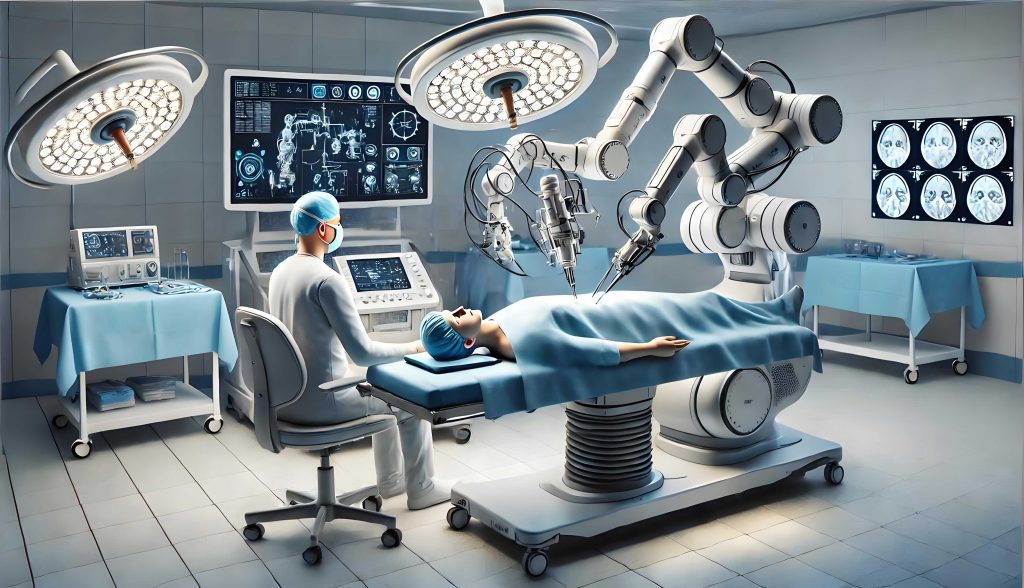
The current application landscape of medical robots is transformative. In traditional healthcare systems, resource imbalances and scarcity have led to challenges in accessibility and affordability. With the rise of AI, supported by big data and cloud computing, intelligent healthcare has accelerated. The COVID-19 pandemic highlighted the importance of public health security, driving the adoption of medical robots like handheld thermometers and infrared imaging monitors for efficient防疫 efforts. In China, policies promoting AI development have spurred the use of medical robots, with systems like the “Da Vinci” surgical robot being integrated into clinical settings since 2006. However, these medical robots pose risks such as improper suturing, infections, or surgical failures, leading to medical disputes. When such incidents occur, judges must navigate existing laws to assign liability among medical robots, healthcare institutions, and manufacturers. This underscores the need to clarify the legal personhood of medical robots as a foundation for resolving responsibility issues.
To frame the debate, I will梳理 the major scholarly perspectives on legal personhood for medical robots, which broadly fall into “subject theory” and “object theory.” These theories offer contrasting views on whether medical robots should be granted legal status.
| Theory | Description | Key Arguments | Limitations |
|---|---|---|---|
| Subject Theory | Argues for granting legal personhood to medical robots based on their human-like behaviors. | Medical robots can act autonomously; they deserve rights and responsibilities. | Defining the scope of personhood; practical implementation challenges. |
| – Electronic Personhood | Proposes a distinct electronic personhood for AI entities. | Accommodates unique nature of medical robots. | Unclear legal内涵; issues with application and termination. |
| – Electronic Agent | Views medical robots as agents controlled by humans, with liability falling on principals. | Aligns with existing代理 law; simplifies责任分配. | Type of代理? How to claim compensation? |
| – Limited Personhood | Suggests medical robots have limited legal personhood, with restricted rights and duties. | Recognizes autonomy while imposing boundaries. | Confusion between rights and capacity; scalability concerns. |
| Object Theory | Denies legal personhood, treating medical robots as legal objects. | Medical robots lack natural life or emotions; they are tools. | May not suit advanced medical robots with high autonomy. |
| – Tool Theory | Considers medical robots as instruments for human use. | Practical for weak AI; aligns with current laws. | Fails for strong AI medical robots; may stifle innovation. |
| – Electronic Slave | Analogizes medical robots to slaves, with owners liable. | Acknowledges some autonomy. | Contradicts平等 values; ethically problematic. |
| – Personality Analogy | Compares medical robots to children or animals, with guardians bearing responsibility. | Useful for侵权损害赔偿 in strong AI scenarios. | Requires independent财产 and人格; still evolving. |
From my perspective, in the current era of weak AI medical robots, the Tool Theory dominates due to its practicality. Medical robots primarily serve as辅助 tools, not independent decision-makers. However, as medical robots advance, a more nuanced legal framework becomes essential to balance interests and address societal needs. This leads me to examine existing legal provisions and future legislative paths.
In China, current laws lack explicit provisions on the legal personhood of medical robots. Medical robots are classified as医疗器械 under regulations like the Medical Device Management Act, denying them independent legal status. This legal gap creates challenges in liability allocation. When medical incidents involve medical robots, courts rely on laws such as the Product Quality Law and the Civil Code to determine责任. For instance, if a surgical error occurs due to a medical robot, liability might be split among the manufacturer, hospital, and potentially the robot itself if personhood were recognized. To address this, some scholars suggest expansive interpretation to temporarily grant legal personhood to medical robots. This approach, however, is a stopgap measure. In the long term, I believe it is necessary to establish medical robots as new legal subjects through dedicated legislation.
The necessity stems from two main reasons. First, future侵权责任 needs will demand clarity. As medical robots gain advanced learning capabilities and自主性, assigning liability solely to owners may become unfair. Granting legal personhood proactively can preempt such issues. Second,法律选择的高效发展模式 supports this move. Historically, legal systems have extended personhood to entities like corporations for societal benefit. Similarly, medical robots could be granted拟制 personhood to enhance healthcare efficiency and innovation. To illustrate this, consider a formula for evaluating the legal personhood potential of a medical robot:
$$ LP_{mr} = \alpha \cdot I + \beta \cdot A + \gamma \cdot R $$
where \( LP_{mr} \) represents the legal personhood score of a medical robot, \( I \) denotes its intelligence level, \( A \) its autonomy, and \( R \) its responsibility capacity. The coefficients \( \alpha, \beta, \gamma \) are weights determined by societal and legal norms. A threshold value, say \( LP_{mr} \geq \tau \), could qualify a medical robot for personhood.
Looking ahead, I propose several legislative设想 for incorporating medical robots as legal subjects. These ideas can be summarized in a detailed framework.
| Aspect | Proposal | Rationale | Implementation |
|---|---|---|---|
| Intelligence分级 | Classify medical robots based on智能程度 (e.g., weak vs. strong AI). | Determines eligibility for personhood; standardizes assessment. | Develop industry standards via expert consensus; use metrics like Turing test adaptations. |
| 取得条件 | Set准入标准: social recognition, autonomous intelligence,平等共识, adaptability, trust, and public registration. | Ensures medical robots meet societal and legal expectations. | Define criteria through legal解释; establish regulatory bodies for evaluation. |
| 取得与终止 | Legal personhood begins upon registration and ends upon注销, similar to法人 entities. | Provides clear temporal boundaries; aligns with existing systems. | |
| 主体资格限制 | Impose restrictions akin to limited capacity persons; require sufficient assets or insurance for责任承担. | Prevents abuse; safeguards against insufficient liability coverage. | 参照民法典; establish insurance pools for medical robots. |
For intelligence分级, I suggest a multi-level system. Let \( S_{mr} \) be the智能 score of a medical robot, calculated as:
$$ S_{mr} = \sum_{i=1}^{n} w_i \cdot f_i(x_i) $$
where \( f_i \) are functions for factors like learning ability, decision-making complexity, and ethical reasoning, \( x_i \) are input metrics, and \( w_i \) are weights. A medical robot with \( S_{mr} > \theta \) (a threshold) could qualify for limited personhood. This approach ensures that only advanced medical robots gain legal status.
Regarding取得条件, the six criteria mentioned earlier—social recognition, autonomous intelligence,平等共识, adaptability,普遍信赖, and public registration—can be formalized. For example, autonomous intelligence \( AI_{mr} \) might be measured by:
$$ AI_{mr} = \frac{\text{Number of independent decisions}}{\text{Total decisions}} \times \text{Complexity factor} $$
A medical robot with high \( AI_{mr} \) and positive social surveys could meet the bar. Similarly, trust can be quantified through patient and provider feedback scores.
The取得与终止 process should mirror that of法人 organizations. A medical robot would apply for registration with a regulatory authority, submitting proof of meeting criteria. Upon approval, it gains legal personhood. Termination would occur via注销 due to obsolescence, malfunction, or legal violations. This ensures accountability throughout the lifecycle of the medical robot.
主体资格限制 is crucial to prevent misuse. Medical robots, especially early in their personhood, may have limited财产. Thus, their capacity can be restricted类似 to minors in law. For instance, certain contracts or liabilities might require human oversight. Additionally, an insurance model can be implemented:
$$ \text{Required Insurance} = k \cdot \text{Expected Liability} + \text{Risk Premium} $$
where \( k \) is a safety factor. This ensures that medical robots can cover damages, protecting victims. Furthermore,借鉴法人资格否认 rules, if a medical robot’s personhood is abused (e.g., for fraud), courts can pierce the veil and hold humans liable.
In practice, the integration of medical robots into legal systems will require iterative refinement. As a researcher, I envision a phased approach. Initially, medical robots could be granted电子人格 through legislative amendments, with试点 programs in healthcare settings. Over time, as technology evolves, a full legal subject status could be enacted. This aligns with global trends, such as the EU’s discussions on electronic personhood for robots.
To deepen the analysis, consider the ethical dimensions. Medical robots operate in sensitive environments; their legal personhood must平衡 innovation with patient safety. I propose an ethical framework公式:
$$ E_{mr} = \lambda_1 \cdot \text{Benevolence} + \lambda_2 \cdot \text{Non-maleficence} + \lambda_3 \cdot \text{Autonomy} + \lambda_4 \cdot \text{Justice} $$
where \( E_{mr} \) is the ethical score for a medical robot, and \( \lambda_i \) are weights reflecting healthcare ethics. Medical robots with high \( E_{mr} \) might receive preferential treatment in personhood grants.
Moreover, the economic impact of legal personhood for medical robots cannot be ignored. By reducing liability uncertainties, it could incentivize investment in AI healthcare. A simple cost-benefit model might be:
$$ \text{Net Benefit} = \text{Healthcare Savings} + \text{Innovation Gains} – \text{Legal Costs} – \text{Insurance Premiums} $$
If Net Benefit > 0, legislating personhood for medical robots is economically viable. Empirical data from early adopters could validate this.
In terms of judicial application, courts will need guidelines for handling cases involving medical robots. I suggest a decision tree: first, determine if the medical robot has legal personhood (based on registration); if yes, assess its liability using formulas like the one above; if no, apply traditional product liability rules. This streamlines justice and ensures consistency.
Finally, international harmonization is vital. As medical robots are used globally, divergent laws could hinder progress. I advocate for model legislation that standardizes key aspects, such as the智能程度 thresholds and insurance requirements. Collaborative efforts through organizations like WHO could facilitate this.
In conclusion, the legal personhood of medical robots is a complex but essential topic. From my first-person perspective as a legal and AI researcher, I believe that while current laws suffice for weak AI medical robots, future advancements necessitate a proactive legislative approach. By establishing clear conditions for intelligence分级,取得资格, termination, and restrictions, we can harness the benefits of medical robots while mitigating risks. This journey requires interdisciplinary collaboration, continuous evaluation, and a commitment to ethical principles. As medical robots become more integral to healthcare, their legal status will shape not only liability but also the very fabric of medical practice and innovation. I am optimistic that with careful planning, we can create a framework that supports both technological progress and societal well-being, ensuring that medical robots serve humanity effectively and responsibly.
To summarize key points, here is a final table contrasting the current and proposed legal status of medical robots:
| Aspect | Current Status (Object Theory) | Proposed Future (Subject Theory) |
|---|---|---|
| Legal Classification | 医疗器械; tool | Electronic person; limited legal subject |
| Liability | Born by manufacturers/hospitals | Shared with medical robot based on autonomy |
| Rights | None | Restricted rights (e.g., to operate within scope) |
| Regulation | Product safety laws | Dedicated AI personhood laws |
| Example | Da Vinci robot as device | Autonomous surgical robot as legal entity |
This transition will not happen overnight, but through incremental steps, we can build a robust legal ecosystem for medical robots. I encourage policymakers, scholars, and practitioners to engage in this dialogue, ensuring that our laws evolve alongside technology. The potential of medical robots to transform healthcare is immense, and with thoughtful legal frameworks, we can unlock it while safeguarding all stakeholders.