
As a researcher deeply immersed in the field of assistive robotics, I have witnessed firsthand the escalating pressures wrought by global demographic shifts. The trend of population aging is unequivocal, with projections indicating that individuals aged 60 and above will constitute nearly one-third of the global population by 2050. This demographic transition correlates strongly with a heightened prevalence of age-related conditions such as coronary heart disease and hypertension. Compounding this challenge is the rising number of older adults living independently, often geographically separated from their families. This confluence of factors underscores an urgent societal need for innovative support systems. In my view, the development of intelligent domestic medical robots represents a promising and practical avenue to address these challenges, offering the potential for medication delivery, routine monitoring, and emergency assistance within the home environment.
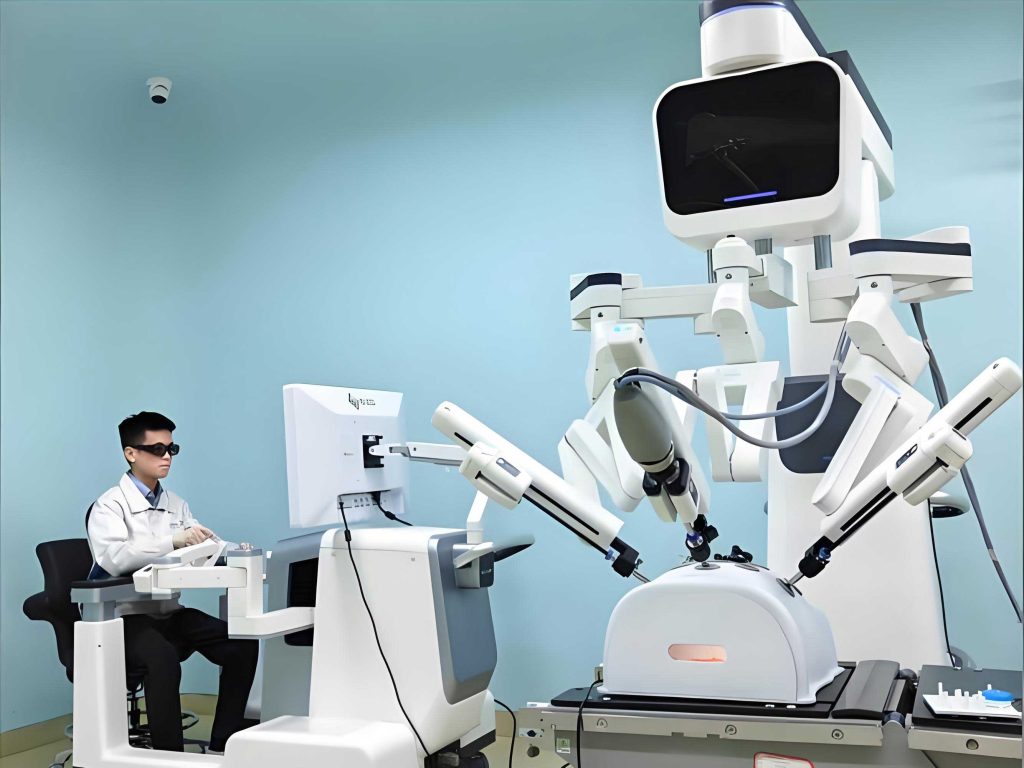
A fundamental and critical capability for any such medical robot is the reliable detection and localization of the human user within the complex and dynamic setting of a home. The robot must not only find the person but also identify specific features, such as the hand, to complete tasks like delivering medicine. My research has therefore focused on designing and implementing a robust human detection system that synergistically combines multiple sensing modalities to achieve high accuracy and reliability. This system forms the perceptual core of a medical robot, enabling it to interact safely and effectively with its human user.
Architecture of the Integrated Detection System
The overarching design principle for our domestic medical robot‘s perception system is redundancy and fusion. Relying on a single method for human detection is often insufficient in real-world scenarios due to occlusions, varying lighting, and diverse postures. Consequently, our system architecture employs a parallel processing framework that leverages both RGB and depth data. The primary sensory input comes from an Astra Orbbec depth camera, which provides synchronized RGB and depth image streams. These streams are then processed through two distinct but complementary pipelines.
The first pipeline utilizes the native Astra Orbbec SDK, which offers a sophisticated skeletal tracking module. The second pipeline employs the OpenCV computer vision library for classical feature-based detection. The outputs from these pipelines—3D skeletal joint coordinates and 2D region-of-interest coordinates—are subsequently interpreted and, where necessary, fused to generate the final target coordinates for the robot’s navigation and manipulation subsystems. The system’s workflow is summarized in the following table:
| System Component | Input Data | Core Technology | Primary Output | Purpose |
|---|---|---|---|---|
| Astra Depth Camera | Scene | Structured Light / Stereo Vision | RGB-D Image Stream | Raw data acquisition |
| SDK Skeletal Tracker | Depth Stream | Probabilistic Machine Learning | 3D Coordinates of 19 Body Joints | Whole-body pose estimation |
| OpenCV Detection | RGB Stream | Haar Cascade Classifiers | 2D Bounding Boxes (Face, Hand) | Facial and hand feature localization |
| Coordinate Transformer | 3D Joints & 2D Boxes | Geometric Transformations | Robot-Centric Target Points (x, y, z) | Unified command for robot action |
Technical Implementation: Skeletal Tracking via Depth Analysis
The skeletal tracking pipeline is crucial for obtaining a robust 3D understanding of the user’s posture and position. The proprietary SDK implements a machine learning model trained on vast datasets of depth images. For each pixel $\mathbf{p}_i$ in the depth frame, the model estimates the probability that it belongs to a specific body part $C_k$ (e.g., torso, left forearm, right hand). This is a per-pixel classification problem based on depth and contextual features.
The core probabilistic estimation for classifying a pixel at location $\mathbf{p}_i$ into one of $K$ body parts can be conceptualized as maximizing the posterior probability. The process involves calculating a belief for each part based on local depth patterns and spatial relationships:
$$ P(C_k | \mathbf{p}_i, \mathcal{D}) = \frac{\sum_{j=1}^{N} w_j \cdot \mathbb{I}(\mathbf{p}_j \in C_k) \cdot K(\|\mathbf{p}_i – \mathbf{p}_j\|, \sigma)}{\sum_{j=1}^{N} w_j \cdot K(\|\mathbf{p}_i – \mathbf{p}_j\|, \sigma)} $$
Where:
– $\mathbf{p}_i$ is the location of the pixel being classified.
– $C_k$ is the $k$-th body part class.
– $\mathcal{D}$ is the observed depth data.
– $N$ is the total number of considered pixels in a local region.
– $w_j$ is a weighting factor for pixel $\mathbf{p}_j$, often based on depth confidence.
– $\mathbb{I}(\mathbf{p}_j \in C_k)$ is an indicator function (1 if pixel $\mathbf{p}_j$ is labeled as part $C_k$, 0 otherwise).
– $K(\cdot, \sigma)$ is a kernel function (e.g., Gaussian) that weights the influence of neighboring pixels based on distance, with bandwidth $\sigma$.
Once these per-pixel probabilities are estimated for all body parts, the algorithm performs a global optimization to fit a pre-defined skeletal model, identifying the precise 3D coordinates of 19 key joints (e.g., head, neck, shoulders, elbows, wrists, torso, hips, knees, ankles). These coordinates are initially provided in the camera’s coordinate frame $(X_c, Y_c, Z_c)$.
For the medical robot to use this data, a transformation to the robot’s base coordinate frame $(X_r, Y_r, Z_r)$ is essential. This involves a rigid transformation incorporating rotation and translation, determined during the system’s calibration phase. The target point for the robot to approach is not the user’s exact center but a point offset for safety. If the spine shoulder joint (the base of the neck) is at $(X_s, Y_s, Z_s)$ in robot coordinates, the target navigation point $(X_t, Y_t, Z_t)$ is calculated as:
$$ \begin{bmatrix} X_t \\ Y_t \\ Z_t \end{bmatrix} = \begin{bmatrix} X_s \\ Y_s \\ Z_s \end{bmatrix} – d_{safe} \cdot \frac{\begin{bmatrix} X_s – X_r \\ Y_s – Y_r \\ 0 \end{bmatrix}}{\lVert \begin{bmatrix} X_s – X_r \\ Y_s – Y_r \\ 0 \end{bmatrix} \rVert} $$
Here, $d_{safe}$ is the predefined safety distance (e.g., 0.3 meters), and $(X_r, Y_r, 0)$ is the robot’s base position on the ground plane. This ensures the medical robot stops at a respectful and safe distance in front of the user.
Technical Implementation: Feature-Based Detection with OpenCV
While skeletal tracking provides excellent 3D pose data, its performance can degrade if the user is partially obscured or in an unconventional posture. To increase robustness, we implement a parallel detection channel using Haar Cascade Classifiers within OpenCV. This method excels at detecting specific frontal patterns, making it ideal for finding faces and hands within the 2D RGB image.
Our system employs three distinct classifiers: one for frontal faces, one for profile faces, and one for hands. The inclusion of the profile face classifier significantly improves detection rates in realistic scenarios where the user may not be facing the medical robot directly. The detection process involves sliding a search window of various sizes across the image at multiple scales and evaluating the sum of pixel intensities within rectangular “Haar-like” features. A cascaded series of weak classifiers, trained on positive and negative image samples, rapidly rejects non-object regions and spends more computation on promising regions.
When a detection is made, a bounding box $B_{det} = (x_{min}, y_{min}, width, height)$ is returned in pixel coordinates. To localize the hand in 3D space, we first calculate the center pixel of the bounding box, $\mathbf{p}_{hand}^{2D} = (x_{min} + \frac{width}{2}, y_{min} + \frac{height}{2})$. Using the registered depth image from the Astra camera, we retrieve the depth value $Z_{hand}$ at this pixel location. The 3D coordinate of the hand in the camera frame is then computed using the camera’s intrinsic parameters (focal lengths $f_x, f_y$ and principal point $(c_x, c_y)$):
$$ X_{hand}^c = \frac{(x – c_x) \cdot Z_{hand}}{f_x}, \quad Y_{hand}^c = \frac{(y – c_y) \cdot Z_{hand}}{f_y}, \quad Z_{hand}^c = Z_{hand} $$
This 3D point, $(X_{hand}^c, Y_{hand}^c, Z_{hand}^c)$, is then transformed into the robot’s coordinate frame to provide a target for the medical robot‘s manipulator or delivery chute. The relative angular orientation of the hand is also computed to guide the robot’s approach.
Experimental Validation and Performance Analysis
To evaluate the performance of our integrated system for the domestic medical robot, we conducted extensive indoor experiments. The prototype was equipped with the Astra camera mounted at an optimal height. A human subject moved to various pre-marked distances from the robot, simulating real-world interaction scenarios. At each distance, multiple trials were conducted, and the system’s success in both Skeletal Tracking (providing a body position) and OpenCV Hand Detection (providing a hand position) was recorded. The results, averaged over five trials per distance, are presented below. Key metrics include success rates and the precision of localization (the average offset between the robot’s delivery point and the actual intended target).
| Initial Distance (cm) | OpenCV Hand Detection | Depth Camera Skeletal Tracking | ||
|---|---|---|---|---|
| Success Rate | Avg. Hand-Target Offset (cm) | Success Rate | Avg. Body-Robot Distance (cm) | |
| 100 | 0/5 (0%) | N/A | 1/5 (20%) | 54 |
| 150 | 2/5 (40%) | 11.0 | 3/5 (60%) | 62 |
| 200 | 3/5 (60%) | 8.3 | 5/5 (100%) | 53 |
| 250 | 4/5 (80%) | 5.4 | 5/5 (100%) | 53 |
| 300 | 3/5 (60%) | 9.2 | 5/5 (100%) | 59 |
| 350 | 1/5 (20%) | 8.1 | 4/5 (80%) | 48 |
| 400 | 1/5 (20%) | 9.5 | 4/5 (80%) | 56 |
The experimental data reveals several important insights for optimizing a domestic medical robot. Firstly, at very close distances (e.g., 100 cm), both methods suffer. The field of view is too narrow to capture the full body for reliable skeletal tracking, and the hand/face may be too large or out of focus for the Haar classifiers. Secondly, an optimal operating range is clearly identifiable between 200 cm and 300 cm. Within this range, the skeletal tracking maintains a perfect 100% success rate, and OpenCV hand detection peaks at 80% success with its lowest localization error (5.4 cm offset) at 250 cm. This suggests 250 cm is a particularly effective distance for this specific sensor configuration. Beyond 350 cm, the resolution and detail in the RGB image diminish, causing the performance of the feature-based OpenCV detector to fall off sharply, while the depth-based skeletal tracker remains relatively robust. The variance in the final body-robot distance (column 5) around the commanded 30 cm safety offset is attributed to the robot’s navigation controller precision and minor errors in the coordinate transformation.
Discussion and System Integration for the Medical Robot
The development of this dual-modality detection system highlights a critical engineering principle for practical assistive robots: resilience through redundancy. In a real home environment, a medical robot will encounter countless unpredictable situations—a user sitting in a deep chair, reaching for an object, standing in poor lighting, or wearing loose clothing. A system relying solely on skeletal tracking might fail if the user’s legs are occluded by a coffee table. Conversely, a system using only frontal face detection would fail if the user is facing away. Our integrated approach allows the medical robot to maintain situational awareness through at least one channel in most common scenarios.
The logic for the high-level decision-making of the medical robot can be formulated as a state machine. Let $S_{skel}$ be the state of skeletal tracking (0 for failure, 1 for success) and $S_{hand}$ be the state of OpenCV hand detection. The robot’s action policy $\pi$ can be defined as:
$$
\pi(S_{skel}, S_{hand}) =
\begin{cases}
\text{NavigateToBody}(P_{torso}), & \text{if } S_{skel} = 1 \\
\text{NavigateToHand}(P_{hand}), & \text{if } S_{skel} = 0 \text{ and } S_{hand} = 1 \\
\text{SearchPattern}(), & \text{if } S_{skel} = 0 \text{ and } S_{hand} = 0
\end{cases}
$$
Where $P_{torso}$ is the safe target point derived from the shoulder joint, and $P_{hand}$ is the 3D location of the detected hand. This policy ensures the medical robot always has a fallback strategy, prioritizing the more reliable full-body tracking when available, but seamlessly switching to hand-targeting or an exploratory search mode as needed.
Conclusion and Future Directions
In this detailed exploration, I have presented the design, implementation, and validation of a human detection system specifically tailored for a domestic medical robot. By fusing the 3D probabilistic reasoning of depth-based skeletal tracking with the robust 2D feature detection capabilities of OpenCV Haar classifiers, the system achieves a level of reliability and precision necessary for safe and effective in-home operation. The experimental results confirm that an optimal operational distance exists, balancing sensor field-of-view and resolution, and that the dual-channel approach significantly expands the range of scenarios in which the medical robot can successfully locate and approach a user.
Future work will focus on several advanced fronts to further enhance the capabilities of the medical robot. Firstly, replacing the classic Haar classifiers with deep learning-based object detectors (e.g., YOLO, SSD) would dramatically improve detection accuracy, speed, and robustness to occlusion and lighting changes. Secondly, implementing a true sensor fusion algorithm at the deep feature or decision level, rather than a simple state-based policy, would yield a single, more confident estimate of the user’s state. Thirdly, integrating this perception system with a more sophisticated human-robot interaction (HRI) module, capable of gesture recognition and intent prediction, will make the medical robot not just a passive tool but an interactive partner in healthcare management. The journey toward a truly intelligent and helpful domestic medical robot is ongoing, and robust, multi-faceted perception is undoubtedly its cornerstone.