
In recent years, the rapid advancement of artificial intelligence has catalyzed profound research into interactive robotic companions. Among these, the development of the socially aware robot dog represents a significant frontier. Emotions play a pivotal role in human perception, communication, and decision-making. As a primary and convenient medium for interaction between humans and a robot dog, speech carries a wealth of affective information beyond mere lexical content. A key challenge, therefore, lies in enabling the robot dog to automatically discern the emotional state of its owner from vocal cues, thereby facilitating more natural and empathetic human-robot interaction. This capability is central to developing a robot dog with what might be termed “emotional intelligence.” This article explores the implementation of affective speech recognition for robot dogs, addressing several critical issues: the construction of emotional speech databases, the extraction of emotion-relevant acoustic features, and the algorithms used for emotion classification.
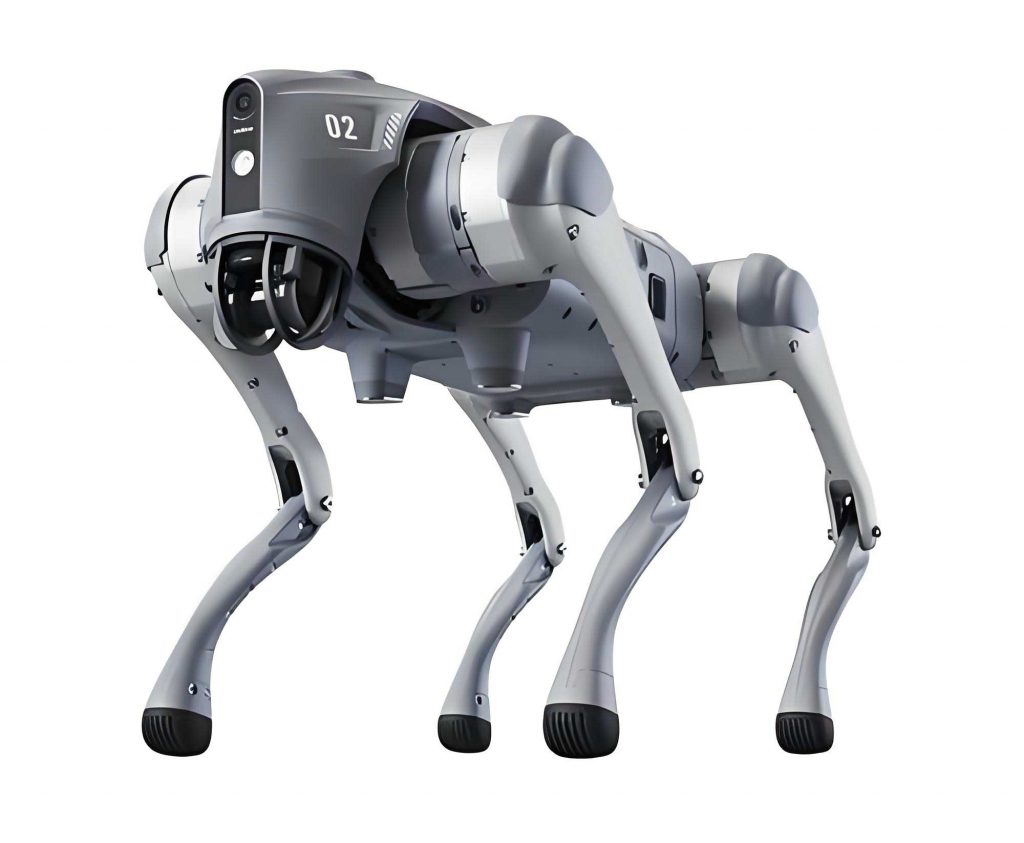
The speech recognition system in a robot dog has a dual task: to decode command information (the “what” is said) and to interpret the embedded emotional information (the “how” it is said). While significant progress has been made in command recognition, the automatic recognition of emotion from speech for a robot dog is still in nascent stages, even in technologically leading regions. The ongoing evolution of microprocessor technology has elevated user expectations; there is a growing desire for robot dogs to possess a degree of emotional sensitivity, allowing them to react appropriately to the affective nuances in an owner’s voice commands.
Emotional Speech Database and Acoustic Features
The foundation of any robust affective speech recognition system is a comprehensive and representative emotional speech database. For a robot dog, the ideal database should originate from real-life interactions, capturing genuine emotional expressions from its specific owner. Conceptually, a newly acquired robot dog would start with a very low “emotional intelligence quotient.” Through a training period where the owner interacts with the robot dog much like training a natural dog—using various emotional utterances—the system can gradually accumulate a personalized affective speech corpus via voice logging. The process for constructing such a database can be summarized as follows:
| Stage | Description | Consideration for Robot Dog |
|---|---|---|
| 1. Data Collection | Recording speech utterances in targeted emotional states (e.g., praise, scolding, comforting). | Must be naturalistic, owner-specific, collected during routine interaction/training sessions. |
| 2. Emotional Labeling | Assigning ground-truth emotional labels (e.g., happy, angry, sad) to each utterance. | Can involve self-report by the owner or annotation by external observers. Crucial for supervised learning. |
| 3. Data Augmentation & Validation | Applying techniques to increase data diversity (e.g., adding noise, varying pitch) and splitting into training/validation sets. | Helps improve model robustness to the varied acoustic conditions of a home environment. |
| 4. Ethical & Privacy Assurance | Ensuring transparent data usage policies and secure storage. | Paramount for user trust, especially for a personal companion like a robot dog. |
To automatically identify a speaker’s emotional state, we must first understand how different emotions influence the speech production mechanism and which acoustic features are affected. Prosodic features—those related to the rhythm, stress, and intonation of speech—are the most conspicuously influenced by emotion. This finding provides a theoretical basis for affective speech recognition in a robot dog. Research indicates that basic emotions (e.g., anger, happiness, sadness, fear, disgust) exhibit relatively consistent cross-cultural effects on prosody, while secondary or social emotions show more cultural variability. The influence of basic emotions on key prosodic and voice quality parameters, relative to a neutral state, is qualitatively summarized below:
| Emotion | Fundamental Frequency (Pitch) | Intensity (Loudness) | Speech Rate | Voice Quality |
|---|---|---|---|---|
| Anger | Higher mean, wider range, abrupt changes | Much higher, sharper attacks | Faster | Breathy, tense |
| Happiness | Higher mean, wider range, smooth contours | Higher | Faster | Breathy, resonant |
| Sadness | Lower mean, narrower range, flat contours | Lower | Slower | Resonant, sometimes creaky |
| Fear | Very high mean, very wide range, erratic | Variable, often higher | Breathy, tense | |
| Disgust | Variable, often lower | Lower | Slower | Creaky, tense |
The pitch contour (envelope, range, shape, temporal structure) is a crucial feature for distinguishing basic emotions, while voice quality parameters help differentiate secondary emotions. Therefore, research in speech emotion recognition, including for our robot dog, typically begins with prosodic and voice quality features. A non-exhaustive list of commonly used features is presented below:
| Feature Category | Specific Features | Typical Extraction/Calculation |
|---|---|---|
| Prosodic Features | Fundamental Frequency (F0) | Mean, max, min, median, standard deviation, range, contours. |
| Energy/Intensity | Frame energy, mean energy, dynamics, contour. | |
| Duration & Speech Rate | Phoneme/syllable duration, pause statistics, speaking rate. | |
| Spectral Features | Formants (F1, F2, F3) | Frequencies and bandwidths of vocal tract resonances. |
| Mel-Frequency Cepstral Coefficients (MFCCs) | Spectral representation of short-term power spectrum. Crucial for modern systems. | |
| Voice Quality Features | Jitter, Shimmer, Harmonics-to-Noise Ratio (HNR) | Measures of periodicity and perturbation in the speech signal. |
However, are prosodic features sufficient for accurate emotion recognition? Variations in prosody are not exclusively driven by emotion; they are also influenced by linguistic content, sentence structure, and the speaker’s individual characteristics (e.g., age, gender, accent). Furthermore, the accurate extraction of features like F0 is highly susceptible to background noise, a common challenge for a robot dog operating in real homes. Critically, prosody is not the sole carrier of affective information. The spectral characteristics of speech—the shape of the vocal tract filter—constitute another vital medium. Experiments have demonstrated the importance of spectral features: when spectral information is filtered out, leaving only pitch and intensity, human recognition rates for emotion drop significantly (e.g., from 85% to 47% in one study). This underscores the necessity of integrating spectral features, such as MFCCs or formant tracks, into the recognition framework for a robot dog.
Speech Emotion Recognition Algorithms
The choice of classification algorithm is paramount. For our robot dog implementation, we consider and experiment with several prominent methods. One classical approach is the use of Hidden Markov Models (HMMs). An HMM is a statistical signal model trained on sequences of feature vectors. Its key advantage is the inherent state transition matrix, which can model the temporal dynamics of speech, making it suitable for capturing the evolution of emotional expression over time. In an HMM-based approach for emotion, the feature vector often incorporates dynamic contours of prosodic features. For instance, a feature vector for frame \(i\) might be constructed as:
$$ \mathbf{m}_i = \left[ F_{a_i}, \frac{dF_{a_i}}{dt}, \frac{d^2F_{a_i}}{dt^2}, E_i, \frac{dE_i}{dt}, \frac{d^2E_i}{dt^2} \right]^T $$
where \(F_{a_i}\) and \(E_i\) represent the fundamental frequency and energy for frame \(i\), respectively, and their derivatives capture dynamic trends. For more comprehensive modeling, spectral features like MFCCs are integrated. The standard 39-dimensional MFCC feature vector, commonly used in automatic speech recognition (ASR), is given by:
$$ \mathbf{MFCC}_{39} = [c_1, c_2, …, c_{12}, E, \Delta c_1, …, \Delta c_{12}, \Delta E, \Delta^2 c_1, …, \Delta^2 c_{12}, \Delta^2 E] $$
Here, \(c_1…c_{12}\) are the cepstral coefficients, \(E\) is the log energy, and \(\Delta\) and \(\Delta^2\) denote first and second-order temporal derivatives (delta and delta-delta coefficients).
In a typical HMM experiment for a robot dog, separate acoustic models are trained for each target emotion (e.g., neutral, anger, happiness) using their corresponding labeled data. During recognition, the likelihood of the input feature sequence is computed against each emotional HMM, and the model with the highest likelihood determines the predicted emotion.
Support Vector Machines (SVMs) are another powerful and widely used classifier for emotion recognition, particularly when using static, utterance-level statistics (e.g., mean F0, standard deviation of energy). An SVM seeks to find the optimal hyperplane that separates feature vectors of different emotion classes with the maximum margin. For non-linearly separable data, kernel functions (e.g., Radial Basis Function – RBF) are employed to map features into a higher-dimensional space where separation is possible. The decision function for a binary SVM is:
$$ f(\mathbf{x}) = \text{sign}\left( \sum_{i=1}^{N} \alpha_i y_i K(\mathbf{x}_i, \mathbf{x}) + b \right) $$
where \(\mathbf{x}\) is the input feature vector, \(\alpha_i\) are Lagrange multipliers, \(y_i\) are class labels, \(K\) is the kernel function, and \(b\) is the bias.
More recently, Deep Neural Networks (DNNs) have become the state-of-the-art. Recurrent Neural Networks (RNNs), especially Long Short-Term Memory (LSTM) networks, are exceptionally well-suited for sequential data like speech, as they can learn long-range temporal dependencies. A simple LSTM cell’s core operations can be summarized by the following equations:
$$
\begin{aligned}
\mathbf{f}_t &= \sigma(\mathbf{W}_f \cdot [\mathbf{h}_{t-1}, \mathbf{x}_t] + \mathbf{b}_f) \quad &\text{(Forget Gate)} \\
\mathbf{i}_t &= \sigma(\mathbf{W}_i \cdot [\mathbf{h}_{t-1}, \mathbf{x}_t] + \mathbf{b}_i) \quad &\text{(Input Gate)} \\
\tilde{\mathbf{C}}_t &= \tanh(\mathbf{W}_C \cdot [\mathbf{h}_{t-1}, \mathbf{x}_t] + \mathbf{b}_C) \quad &\text{(Candidate Cell State)} \\
\mathbf{C}_t &= \mathbf{f}_t * \mathbf{C}_{t-1} + \mathbf{i}_t * \tilde{\mathbf{C}}_t \quad &\text{(Cell State Update)} \\
\mathbf{o}_t &= \sigma(\mathbf{W}_o \cdot [\mathbf{h}_{t-1}, \mathbf{x}_t] + \mathbf{b}_o) \quad &\text{(Output Gate)} \\
\mathbf{h}_t &= \mathbf{o}_t * \tanh(\mathbf{C}_t) \quad &\text{(Hidden State Output)}
\end{aligned}
$$
where \(\mathbf{x}_t\) is the input at time \(t\), \(\mathbf{h}_t\) is the hidden state, \(\mathbf{C}_t\) is the cell state, \(\sigma\) is the sigmoid function, and \(*\) denotes element-wise multiplication. For a robot dog, a network might consist of several LSTM layers followed by fully connected layers, culminating in a softmax output layer for emotion classification.
Experimental Framework and Results for a Robotic Dog
To evaluate the proposed methods for a robot dog context, we designed an experimental framework simulating a personalized interaction scenario. We created a database comprising speech data from multiple speakers simulating commands and interactions with a robot dog across five emotional states: neutral (N), anger (A), happiness (H), sadness (Sa), and fear (F). Features were extracted at both the frame-level (for HMM/LSTM) and utterance-level (for SVM).
Feature Sets:
1. Prosodic (P): Statistics of F0, energy, and duration.
2. Spectral (S): MFCC statistics (mean, std, etc.) and formant statistics.
3. Combined (P+S): Concatenation of Prosodic and Spectral feature vectors.
Models:
– SVM (with RBF kernel)
– HMM (3-state, left-to-right, Gaussian Mixture Models per state)
– LSTM (2 layers, 128 units per layer)
The following table summarizes the average recognition accuracy (%) across emotions on a held-out test set:
| Model | Prosodic (P) Features | Spectral (S) Features | Combined (P+S) Features |
|---|---|---|---|
| SVM | 68.2 | 72.5 | 78.9 |
| HMM | 71.8 | 74.1 | 80.3 |
| LSTM | 73.5 | 79.8 | 85.6 |
The results clearly indicate that: (1) Combining prosodic and spectral features consistently yields superior performance compared to using either in isolation, validating the importance of spectral information for our robot dog. (2) Deep learning approaches (LSTM) outperform traditional models when sufficient data is available, due to their superior capacity to model complex, non-linear, and temporal patterns in emotional speech. (3) The HMM provides a solid, interpretable baseline, especially for capturing prosodic dynamics.
However, a critical challenge remains: the “neutral model” trained on unemotional commands typically achieves accuracy above 90%, while the emotional models, even the best combined LSTM, show a performance gap. This highlights the difficulty of emotion recognition and underscores the necessity for the robot dog to accumulate a large, personalized emotional dataset through continuous interaction to close this gap and achieve reliable real-world performance.
Challenges and Future Directions
The development of effective affective speech recognition for a robot dog is fraught with challenges. First, the data scarcity and personalization problem is significant. Emotional expression is highly idiosyncratic. A generalized model may fail to accurately interpret the specific vocal characteristics of a particular owner. Therefore, lifelong, incremental learning mechanisms where the robot dog adapts to its owner’s unique expressive style are essential.
Second, real-time processing and resource constraints are practical concerns. Advanced models like deep neural networks are computationally intensive. Deploying them on the embedded hardware of a robot dog requires careful optimization, model compression (e.g., quantization, pruning), or efficient cloud-edge collaboration frameworks.
Third, context and multimodality are key. Emotion is rarely conveyed by voice alone. The future of emotionally intelligent robot dogs lies in multimodal fusion—integrating speech emotion recognition with visual cues (tail wagging? body posture? facial expression from other agents), lexical analysis of commands, and even contextual knowledge (did the robot dog just perform an action incorrectly?). A simple late fusion scheme could combine confidence scores from unimodal classifiers:
$$ S_{fusion}(Emotion_j) = \sum_{m=1}^{M} w_m \cdot P_m(Emotion_j | \mathbf{X}_m) $$
where \(P_m\) is the probability from modality \(m\) (e.g., audio, vision), \(\mathbf{X}_m\) is the input data for that modality, and \(w_m\) are learned or heuristic weights.
Future research directions include exploring end-to-end deep learning models that take raw or minimally processed audio waveforms as input and learn optimal feature representations directly for the emotion classification task, potentially bypassing the need for manual feature engineering. Furthermore, self-supervised and semi-supervised learning techniques could alleviate the data labeling bottleneck, allowing the robot dog to learn from vast amounts of unlabeled interaction data. Finally, developing explainable AI (XAI) methods for emotion recognition will be crucial for building trust, allowing users to understand why their robot dog perceived a certain emotion.
Conclusion
Enabling a robot dog to recognize human emotion from speech is a complex but attainable goal central to achieving natural human-robot companionship. It rests on three pillars: a relevant and personalized emotional speech database, a carefully selected set of acoustic features that capture both prosodic and spectral emotional cues, and a robust classification algorithm capable of modeling the temporal dynamics of speech. Our exploration confirms that hybrid feature sets and modern deep learning architectures, particularly LSTMs, offer strong performance. However, significant challenges related to personalization, real-time deployment, and multimodal integration remain. Addressing these challenges through continuous adaptive learning, efficient model design, and multimodal fusion will pave the way for the next generation of emotionally perceptive robot dogs, transforming them from mere automated devices into truly interactive and responsive companions.