
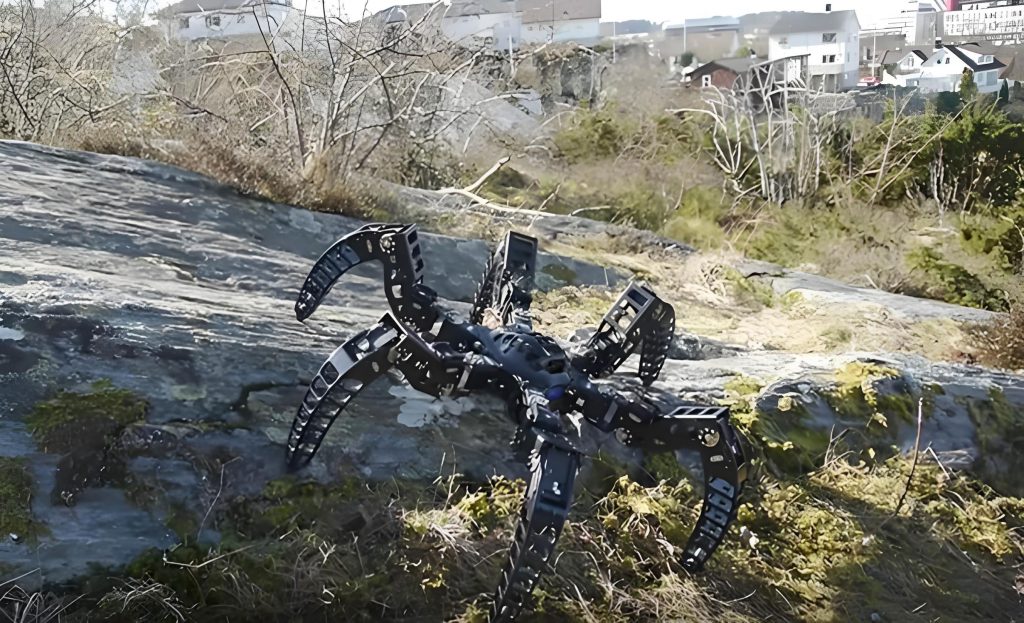
As a researcher immersed in the evolving landscape of robotics, I am witnessing a paradigm shift where biological inspiration seamlessly merges with advanced artificial intelligence. The latest breakthroughs in bionic robot technology are not merely incremental improvements; they represent fundamental leaps in how machines interact with and perceive complex environments. In this comprehensive analysis, I will explore two pivotal advancements that are redefining the capabilities and applications of bionic robots. The first involves the creation of a highly biomimetic, transparent aquatic bionic robot, and the second centers on a groundbreaking control algorithm that unifies force and position manipulation. Throughout this discussion, I will emphasize the core principles, technical specifications, and far-reaching implications of these innovations, consistently highlighting the transformative role of the bionic robot paradigm. To illustrate the aesthetic and conceptual marvel of such designs, consider the following visual representation of a modern bionic robot.
The quest to develop machines that emulate the efficiency and elegance of nature has long driven the field of bionics. A bionic robot, by its very definition, seeks to replicate the form, function, and sometimes even the material properties of biological organisms. This approach often yields solutions that are more energy-efficient, adaptable, and discreet than conventional mechanical designs. The recent development of a jellyfish-inspired bionic robot stands as a testament to this philosophy. This particular bionic robot is engineered for covert underwater operations, featuring a fully transparent body constructed from innovative hydrogel electrode materials. This material choice is crucial, as it grants the bionic robot optical properties similar to water, rendering it nearly invisible—a true “underwater phantom.” The primary specifications of this remarkable bionic robot are summarized in the table below, which encapsulates its minimalist and efficient design ethos.
| Feature | Specification | Functional Implication |
|---|---|---|
| Diameter | 120 mm | Compact size for maneuverability in confined spaces. |
| Weight | 56 g | Negligible mass enabling buoyancy control and efficient propulsion. |
| Primary Material | Advanced Hydrogel Electrode Composite | Provides transparency, flexibility, and electrical conductivity for actuation. |
| Actuation System | Electrostatic Hydraulic Muscle Driver (EHMD) | Enables silent, precise biomimetic motion mimicking jellyfish vortex ring propulsion. |
| Total Array Power Consumption | 28.5 mW | Ultra-low power demand facilitating long-term, autonomous underwater missions. |
| AI Integration | Embedded AI Processor & Micro-camera Module | Allows for real-time target recognition and adaptive behavior in dynamic currents. |
| Key Mobility Feature | Stable Hovering in Dynamic Flow | Critical for precise monitoring and inspection tasks. |
The propulsion mechanism of this bionic robot is a marvel of bio-inspired engineering. It accurately replicates the jellyfish’s method of creating vortex rings for thrust. This motion can be abstracted and modeled physically. The actuator system, based on electrostatic hydraulic muscles, creates pulsed contractions. The fundamental relationship for the thrust generated by a single pulsation cycle can be related to the volume of fluid displaced and the acceleration imparted. A simplified model for the average thrust force $F_t$ over a cycle can be expressed as:
$$ F_t = \rho \cdot V_j \cdot \frac{\Delta u}{\Delta t} $$
where $\rho$ is the fluid density, $V_j$ is the volume of water ejected during the bell contraction (approximated by the deformation volume of the bionic robot’s body), and $\frac{\Delta u}{\Delta t}$ represents the change in jet velocity over the contraction time. The innovative driver allows for precise control over these parameters, enabling the bionic robot to achieve highly efficient and near-silent locomotion. The integration of AI elevates this bionic robot from a simple mimic to an intelligent agent. The onboard processor runs algorithms for visual servoing and stability control, allowing the bionic robot to identify specific underwater targets and maintain position against currents. The power efficiency, stemming from the material and drive technology, is a game-changer. With a total drive array consuming only 28.5 mW, this bionic robot could potentially operate for extended periods on a small battery, unlocking applications in persistent ecological monitoring, sensitive habitat observation, and stealthy inspection of underwater infrastructure. The success of this platform vividly demonstrates how a deep bionic robot philosophy—encompassing form, material, and motion—can solve real-world challenges like covert deep-sea exploration.
While the aquatic bionic robot showcases advanced morphology and low-power actuation, another frontier is being conquered in the domain of robot control and interaction. The traditional separation between position-controlled and force-controlled robots has been a significant limitation, especially for bionic robots designed to interact delicately and adaptively with their surroundings. Most bionic robots, whether limbed or manipulative, require sophisticated and often expensive force sensors to achieve compliant behavior. A groundbreaking algorithmic advance, termed the Unified Policy for Force and Position Control (UniFP), has successfully dismantled this barrier. This framework allows a bionic robot to simultaneously learn and execute both precise trajectory following and sensitive force application—without relying on dedicated force/torque sensors. This is a monumental leap for bionic robot applications requiring dexterous manipulation and safe human-robot collaboration.
The core innovation of UniFP lies in its elegant mathematical formulation, which borrows inspiration from impedance control theory. It conceptually models the interaction between the bionic robot’s end-effector and the environment as a spring-damper-mass system. The standard impedance control law relates force $F$ to position error:
$$ F = M_d (\ddot{x} – \ddot{x}_d) + B_d (\dot{x} – \dot{x}_d) + K_d (x – x_d) $$
where $M_d$, $B_d$, and $K_d$ are the desired inertia, damping, and stiffness matrices, and $x$, $x_d$ are the actual and desired positions. UniFP extends and unifies this concept within a learned policy framework. It formulates a unified objective that incorporates desired position $x_d$, desired force $f_d$, and the estimated external contact force $\hat{f}_{ext}$. For the low-velocity manipulation tasks it initially targets, the inertial terms can be neglected, focusing on the stiffness and damping relationship. The algorithm’s policy $\pi$ outputs control actions $\tau$ (joint torques) based on state observations $s_t$, which include proprioceptive data and goal information. A key component is a force estimator, a neural network module that recursively estimates external forces using only the bionic robot’s historical state information $s_{t-k:t}$ and previous actions $a_{t-k:t-1}$:
$$ \hat{f}_{ext}(t) = g_{\phi}(s_{t-k:t}, a_{t-k:t-1}) $$
where $g_{\phi}$ is the estimator function parameterized by $\phi$. The unified control objective within the policy learning can be framed as minimizing a composite loss function $L$:
$$ L = \lambda_1 \| x – x_d \|^2 + \lambda_2 \| \hat{f}_{ext} – f_d \|^2 + \lambda_3 R(\tau) $$
Here, $\lambda_i$ are weighting coefficients, and $R(\tau)$ is a regularization term for control smoothness. By learning from this objective, the bionic robot’s policy intrinsically understands how to trade-off between position accuracy and force regulation based on contact geometry. When moving freely, it prioritizes position tracking ($\| x – x_d \|^2$ term). Upon contact, the force error term ($\| \hat{f}_{ext} – f_d \|^2$) gains dominance, and the policy automatically adjusts the commanded position to regulate the interaction force, achieving natural compliance. This eliminates the need for explicit, pre-programmed switching between control modes.
The performance advantages conferred by UniFP to a bionic robot are substantial and quantifiable. The following table contrasts key performance metrics between traditional position-only control and the UniFP-enhanced unified control for typical loco-manipulation tasks relevant to bionic robots, such as pushing, inserting, or collaborative carrying.
| Performance Metric | Position-Only Control | UniFP (Force/Position Unified Control) | Improvement / Implication |
|---|---|---|---|
| Task Success Rate (e.g., Peg-in-Hole, Pushing) | Baseline (~60% in complex contact tasks) | ~39.5% Higher | Significantly more reliable and robust operation for a bionic robot in unstructured environments. |
| Hardware Dependency | Often requires force sensors for delicate tasks. | No dedicated force sensors required. | Reduces cost, complexity, and fragility of the bionic robot, especially in miniaturized or harsh environments. |
| Human-Robot Interaction Safety | Rigid trajectory execution can lead to high impact forces. | Intrinsic force sensitivity and compliance. | The bionic robot can yield to external forces, dramatically improving safety for collaborative scenarios. |
| Coordinated Human-Robot Action | Difficult to achieve dynamic synchronization. | High synchronization achievable (e.g., co-carrying). | Enables seamless collaboration where the bionic robot adapts to human partner’s pace and force. |
| Generalization Across Platforms | Control policies often hardware-specific. | Strong cross-platform transfer capability. | The same UniFP core algorithm can be deployed on different bionic robot morphologies with minimal retuning. |
| Energy Efficiency during Interaction | May waste energy fighting constraints. | Energy-efficient compliance reduces wasted effort. | Extends operational life, a critical factor for autonomous bionic robots. |
The mathematical formulation of the force estimator is worth elaborating, as it is the linchpin that enables sensorless force control. Using the bionic robot’s dynamics equation:
$$ M(q)\ddot{q} + C(q, \dot{q})\dot{q} + G(q) = \tau + J^T(q) f_{ext} $$
where $q$ are joint angles, $M$ is the inertia matrix, $C$ accounts for Coriolis and centrifugal forces, $G$ is gravity, $\tau$ is the applied joint torque, $J$ is the Jacobian, and $f_{ext}$ is the external Cartesian force. The estimator $g_{\phi}$ learns to predict $f_{ext}$ by observing the discrepancy between commanded torques $\tau$ and the observed acceleration $\ddot{q}$ (derived from state information). It effectively inverts the known dynamics model, learning to attribute unmodeled accelerations to external forces. This learned model is then fed into the policy, closing the loop for implicit force control.
The implications of UniFP for the future of bionic robots are profound. Consider a bionic robot designed like an animal limb for search and rescue; it can now navigate rubble, not just by planning a path but by feeling its way, pushing debris aside with just the right amount of force. In collaborative manufacturing, a bionic robot arm working alongside humans can handle fragile components, adjusting its grip force in real-time based on estimated contact. The algorithm’s generalization capability means that principles learned on one bionic robot platform—say, a quadrupeds bionic robot—can transfer to another, like a biomimetic manipulator, accelerating development across the entire field. This unified control theory essentially provides a common “language” of interaction that any bionic robot can learn, moving us closer to the dream of machines that move and interact with the nuanced adaptability of living beings.
When we synthesize the advancements in the aquatic bionic robot and the UniFP algorithm, a powerful synergy emerges. The next generation of bionic robots will not only look and move like their biological counterparts but will also interact with the world with a similar blend of precision and softness. Imagine a school of the transparent jellyfish bionic robots, each equipped with a miniaturized version of the UniFP-inspired controller. They could perform delicate coral reef inspections, where the ability to hover stably (from the platform’s design) is combined with the ability to gently probe or sample (from the unified control algorithm) without causing damage. The low-noise, low-power operation of the aquatic bionic robot is perfectly complemented by the low-hardware-requirement, high-compliance nature of UniFP, paving the way for truly autonomous, long-duration, and environmentally sensitive bionic robot swarms.
To further quantify the design trade-offs and performance envelopes for such integrated systems, we can model key parameters. For instance, the relationship between mission duration $T$, power consumption $P$, and battery capacity $C$ for a bionic robot is straightforward: $T \propto C / P$. The jellyfish bionic robot’s $P_{drive} = 28.5 \text{ mW}$ is a stellar figure. If we add the AI processor and sensors, which may consume an additional $P_{AI}$, the total system power $P_{total} = P_{drive} + P_{AI}$. For a target duration $T$, the required battery capacity is $C = T \cdot P_{total}$. The compliance offered by UniFP can also be analyzed through the effective stiffness $K_{eff}$ the bionic robot presents to the environment. In the impedance model, $K_{eff}$ is a function of the policy’s response and the estimator’s accuracy. We can define a performance index $\eta$ for a compliant bionic robot task as:
$$ \eta = \frac{\text{Task Success Score}}{\alpha \cdot \text{Max Interaction Force} + \beta \cdot \text{Energy Used}} $$
where $\alpha$ and $\beta$ are scaling factors. A bionic robot employing UniFP would maximize $\eta$ by achieving high success with low force and low energy. The following table explores hypothetical design and performance vectors for future bionic robots integrating both morphological biomimicry and unified intelligent control.
| Design Focus | Morphological/Biomimetic Innovation (e.g., Jellyfish Bot) | Control/Intelligence Innovation (e.g., UniFP Algorithm) | Synergistic Outcome for the Bionic Robot |
|---|---|---|---|
| Stealth & Monitoring | Transparency, silent vortex propulsion, minimal wake. | Path planning that minimizes contact, force-controlled perching for stationary observation. | A bionic robot that is virtually undetectable and can attach to structures gently for long-term monitoring. |
| Delicate Interaction | Soft, compliant materials (hydrogels, silicones). | Intrinsic force/position control for handling fragile objects (eggs, biological samples). | A bionic robot capable of performing surgical-level manipulation in remote or hazardous environments. |
| Energetic Efficiency | Passive dynamics, energy-recovering gaits, low-power actuators. | Control policies that optimize for energy consumption (e.g., minimizing resistive forces during motion). | An ultra-efficient bionic robot capable of multi-day or multi-week autonomous missions. |
| Adaptability & Learning | Reconfigurable or modular body plans. | Quick policy adaptation and transfer learning via the unified framework. | A bionic robot that can learn a new motor skill for a changed morphology rapidly, enhancing overall robustness. |
| Human-Robot Symbiosis | Non-threatening, organic appearance and motion. | Natural, compliant interaction force regulation and intuitive response to human guidance. | A bionic robot that humans can trust and work with instinctively, breaking down collaboration barriers. |
The trajectory of bionic robot development is clearly headed towards greater integration—integration of form and function, of sensing and actuation, and of planning and control. The jellyfish-inspired bionic robot shows us that extreme specialization in morphology and materials can yield unprecedented performance in niche applications. The UniFP algorithm demonstrates that a unified theoretical approach to a core problem like control can have widespread, generalized benefits across the entire spectrum of bionic robot types, from legged walkers to robotic grippers. As these threads continue to intertwine, we are moving beyond creating machines that simply look like animals; we are forging partners that can operate with them, study them, and assist us in preserving and understanding their habitats. The ultimate bionic robot will be one whose biological inspiration is not skin-deep but is embedded in its very materials, its movements, and its intelligence—a true synthetic organism capable of graceful and purposeful action in our shared world. The journey of the bionic robot, from conceptual mimicry to autonomous, intelligent agent, is perhaps one of the most exciting narratives in modern technology, promising to unlock new realms in exploration, healthcare, environmental science, and beyond.