
The field of robotics has fundamentally transformed modern industry and society by taking on tasks that are dangerous, repetitive, or require superhuman precision in manufacturing, medicine, and exploration. However, traditional rigid-bodied robots face intrinsic limitations, including heavy weight, lack of operational flexibility in confined or unstructured environments, and susceptibility to damage upon impact. To transcend these constraints, a novel paradigm has emerged: bionic robot technology, specifically focusing on soft robotics. By drawing inspiration from biological systems—their forms, structures, and adaptive functions—this field utilizes compliant materials and innovative actuation to create machines capable of safe interaction and unprecedented maneuverability. This bionic robot approach is now paving the way for groundbreaking applications across diverse sectors.
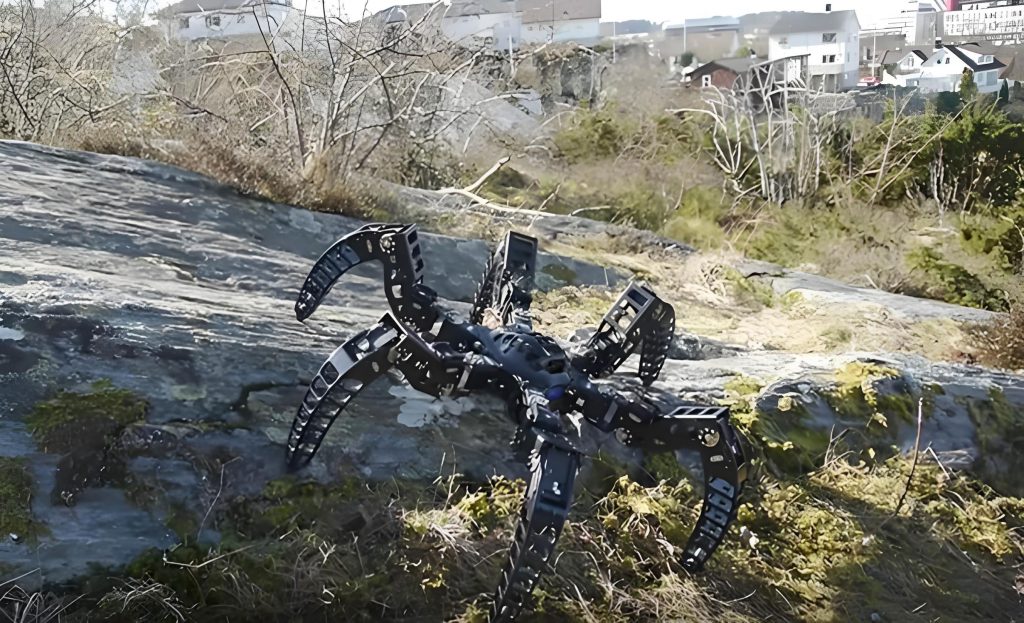
Historical Development of Bionic Soft Robots
The conceptual foundation for the bionic robot was laid in the early 1990s, with pioneering research teams, notably from the University of Tokyo, proposing the idea of machines with biologically inspired, soft bodies. The first prototypes were often simple structures driven by hydraulic or pneumatic pressure, mimicking basic motions of marine organisms. Over the subsequent decades, the field has experienced exponential growth, fueled by advances in materials science, fabrication techniques, and computational modeling. The evolution can be segmented into key phases:
| Phase | Time Period | Key Characteristics & Milestones | Enabling Technologies |
|---|---|---|---|
| Conceptual Genesis | Early 1990s | Proposal of soft-body concepts; first fluidic-driven prototypes. | Basic pneumatics/hydraulics, silicone molding. |
| Material-Driven Exploration | 2000s | Development of advanced elastomers, embedded channels, and simple sensor integration. | Silicones, Ecoflex, shape memory polymers (SMPs), soft lithography. |
| Functional Integration & Actuation Diversification | 2010s | Sophisticated multi-material printing, novel actuation methods (tendon, chemical, electrostatic), and early closed-loop control. | 3D/4D printing, dielectric elastomer actuators (DEAs), liquid crystal elastomers (LCEs), basic machine learning. |
| Intelligence & Autonomy | 2020s – Present | Tight integration of perception, learning, and control; goal-oriented autonomous behavior in complex environments. | Stretchable electronics, neuromorphic computing, deep reinforcement learning, digital twins. |
This progression highlights the transition from simple demonstrators to sophisticated systems, underscoring the journey of the bionic robot from a laboratory curiosity to a platform for practical problem-solving in deep-sea exploration, minimally invasive surgery, and search-and-rescue operations.
System Design of a Bionic Soft Robot
The design of a functional bionic robot is a highly interdisciplinary endeavor, requiring synergistic integration across multiple domains. The system architecture is typically decomposed into four core pillars: Mechanical Structure, Control System, Sensory Apparatus, and Software Intelligence.
1. Mechanical Structure Design
The physical embodiment of a bionic robot is its most distinguishing feature. Unlike rigid links and joints, the mechanical structure leverages compliance and often employs a continuum morphology. Design principles include:
- Bio-inspiration: Morphology is derived from biological models (e.g., octopus arms for manipulation, fish/cuttlefish for propulsion, inchworms for terrestrial locomotion).
- Material Selection: Use of hyperelastic polymers (silicones, polyurethanes), hydrogels, and fiber-reinforced composites to achieve desired stiffness gradients and anisotropic behavior.
- Actuation Integration: Embedding of actuator elements (fluidic channels, electroactive polymers, tendons) within the soft matrix to create “artificial muscles.”
- Fabrication: Employing techniques like multi-material 3D printing, lost-wax casting, and layer-by-layer assembly to realize complex, heterogenous structures.
The deformation of a simple soft pneumatic actuator can be modeled as a function of internal pressure (P), material modulus (E), and geometry. The bending curvature (κ) for a fiber-reinforced bending actuator is approximated by:
$$ \kappa \approx \frac{M}{EI} = \frac{P \cdot A \cdot d}{E \cdot I} $$
where \( M \) is the moment, \( A \) is the pressurized chamber’s cross-sectional area, \( d \) is the moment arm, and \( I \) is the second moment of area.
2. Control System Design
Controlling a continuously deformable body with theoretically infinite degrees of freedom is a paramount challenge. Control strategies for the bionic robot must be inherently robust and adaptive.
| Control Paradigm | Description | Advantages | Challenges |
|---|---|---|---|
| Model-Based Control | Uses analytical (e.g., Cosserat rod theory) or finite-element models to predict deformation and plan actuation. | Precise if model is accurate; enables model-predictive control. | Computationally expensive; models are often simplifications of complex reality. |
| Neural Network Control | Employs artificial neural networks (ANNs) to learn the non-linear mapping between actuator inputs and robot pose/output. | Can handle complex, non-linear dynamics without an explicit model. | Requires extensive training data; generalization to new conditions can be poor. |
| Feedback Control | Uses sensor data (e.g., curvature, pressure) in a closed loop (PID, impedance control) to regulate state. | Robust to disturbances and model inaccuracies. | Requires reliable, embedded sensing; controller tuning can be complex. |
| Morphological Computation | Offloads control tasks to the passive mechanical dynamics of the body itself (e.g., natural oscillation for locomotion). | Simplifies active control; highly energy-efficient. | Design of the “mechanical program” is non-trivial. |
3. Sensory System Design
To interact autonomously with the world, a bionic robot must perceive its own state and its environment. This necessitates sensors that are themselves soft, stretchable, and robust. Key sensing modalities include:
- Proprioception (Self-Sensing): Measuring strain, curvature, and pressure. Achieved via embedded liquid-metal channels (for strain sensing), flexible capacitive sensors, or fiber Bragg gratings.
- Tactile Sensing: Sensing contact force, texture, and slip. Implemented using microstructured capacitive or resistive sensors, or optical waveguides that change light transmission upon deformation.
- Environmental Sensing: Perception of external stimuli like light, chemical gradients, or temperature. Often involves integrating responsive materials or soft microfluidic chips.
The resistance change (\( \Delta R \)) in a soft strain sensor based on a conductive composite often follows a piezoresistive model related to the geometric change and the percolation network deformation:
$$ \frac{\Delta R}{R_0} = GF \cdot \epsilon $$
where \( GF \) is the gauge factor and \( \epsilon \) is the strain.
4. Software & Algorithm Design
The “brain” of the bionic robot comprises algorithms that enable perception, decision-making, and learning. This is where the true “bionic” analogy to biological nervous systems is realized.
- Perception Algorithms: Process raw sensor data to extract meaningful features (e.g., object shape from tactile array data, flow direction from pressure sensor suite).
- Motion Planning & Coordination: Algorithms to compute the sequence of actuator commands needed to achieve a desired end-effector pose or gait, often dealing with under-actuation.
- Machine Learning: Crucial for adapting to uncertain dynamics. Reinforcement Learning (RL) allows a bionic robot to learn control policies through trial and error, optimizing a reward function \( R \). The goal is to find a policy \( \pi \) that maximizes the expected cumulative reward:
$$ J(\pi) = \mathbb{E}_{\pi}\left[ \sum_{t=0}^{T} \gamma^t R(s_t, a_t) \right] $$
where \( s_t \) is the state, \( a_t \) is the action, and \( \gamma \) is a discount factor. - Evolutionary Algorithms: Used to co-optimize the physical design (morphology) and the control policy of a bionic robot in simulation, embodying the principle of “embodied intelligence.”
Fundamental Working Principles
The operational paradigm of a sophisticated bionic robot integrates the aforementioned design pillars into a cohesive, perception-action loop. The core principle is the tight coupling between embodiment (soft body) and computation.
- Actuation-Induced Deformation: An input signal (e.g., pressurized fluid, electrical voltage) is applied to the integrated artificial muscles. The compliant body deforms in a programmed manner, converting this input into motion (bending, stretching, twisting).
- Perception of State & Environment: Embedded soft sensors continuously measure the resulting deformation (proprioception) and contact forces or other environmental variables (exteroception).
- Information Processing & Decision Making: Sensor data is fused and processed by the onboard or remote algorithms. Based on the current state and a predefined goal (or learned policy), the control system computes the next set of actuator commands.
- Closed-Loop Adaptation: The new commands are executed, causing further deformation and interaction. The resulting new sensor data closes the loop, allowing for real-time correction and adaptation to unforeseen perturbations or changing task requirements.
This cycle enables a bionic robot to exhibit behaviors like grasping an unknown object with just the right force, navigating through a cluttered pipe by conforming to its shape, or swimming efficiently by adjusting its gait to the water current.
Applications of Bionic Robots
The unique attributes of softness, adaptability, and safe interaction unlock applications inaccessible to traditional robots.
| Application Domain | Specific Use-Case | Bionic Robot Advantage |
|---|---|---|
| Healthcare & Medical Robotics | Minimally Invasive Surgery (MIS), Rehabilitation, Drug Delivery. | Compliance reduces tissue trauma; ability to navigate complex, delicate anatomical pathways (e.g., blood vessels, intestines) safely. |
| Search, Rescue & Exploration | Disaster rubble exploration, deep-sea surveying, planetary cave exploration. | Resilience to impacts, ability to squeeze through narrow openings, and safe operation near humans or fragile ecosystems. |
| Industrial Automation & Co-Robotics | Handling delicate objects (food, electronics), assembly in confined spaces, human-robot collaborative tasks. | Inherent safety allows direct collaboration with human workers; adaptive grippers can manipulate varied items without complex programming. |
| Environmental Monitoring | Marine life observation, pollution detection in sensitive wetlands, pipeline inspection. | Quiet, non-disruptive operation; ability to camouflage or blend into natural environments; contact-based sensing for sample collection. |
Future Trends and Outlook
The trajectory of bionic robot development points toward several convergent trends that will define the next generation of systems.
1. Material Science Frontiers
The quest for advanced materials is central. Future bionic robot platforms will utilize:
– Self-Healing Polymers: Materials that autonomously repair cuts or punctures, dramatically enhancing longevity.
– Stimuli-Responsive & Programmable Matter: Materials whose stiffness, shape, or color can change on demand in response to heat, light, or magnetic fields, enabling radical morphological adaptation.
– High-Energy Density Soft Actuators: Developing artificial muscles with power-to-weight ratios comparable to biological muscle, overcoming a key current limitation.
2. Intelligence: From Control to Cognition
The intelligence of a bionic robot will evolve from reactive control to proactive cognition.
– Neuromorphic Engineering: Implementing control and perception in event-based, spiking neural networks on low-power chips, mimicking the efficiency of biological brains.
– Distributed Embodied Intelligence: Further offloading computation to the body’s mechanics and local sensorimotor loops, creating more resilient and responsive systems.
3. Miniaturization and Swarm Robotics
The future will see bionic robot systems shrink to micro- and nano-scales for medical tasks, and operate in coordinated swarms. The collective behavior of \( N \) simple soft agents can solve complex problems. A simple model for swarm coordination can be inspired by potential fields:
$$ \vec{F}_{i, \text{swarm}} = -\nabla \left( \sum_{j \neq i}^{N} V_{\text{rep}}(||\vec{r}_i – \vec{r}_j||) + V_{\text{att}}(\vec{r}_i, \vec{r}_{\text{goal}}) \right) $$
where \( \vec{F}_{i, \text{swarm}} \) is the virtual force on agent \( i \), and \( V_{\text{rep}} \) and \( V_{\text{att}} \) are repulsive and attractive potential functions governing inter-agent and goal-seeking behavior.
4. Bio-Hybrid Systems
A radical direction is the creation of bio-hybrid bionic robot entities, integrating living biological cells (e.g., muscle tissue, neurons) with synthetic scaffolds and microelectronics. This could lead to machines with truly biological actuation and sensing capabilities.
5. Sustainability and Ethical Design
As the field matures, emphasis will grow on creating bionic robot systems from biodegradable materials and ensuring their deployment aligns with ethical guidelines, particularly in sensitive areas like healthcare and surveillance.
In conclusion, the bionic robot, particularly in its soft embodiment, represents a fundamental shift in our approach to machine design. By embracing compliance, morphological computation, and tight sensorimotor integration, it promises to bridge the gap between rigid automation and the adaptive, resilient intelligence of the natural world. The ongoing convergence of material science, fabrication technology, and artificial intelligence will undoubtedly unlock capabilities we are only beginning to imagine, solidifying the role of the bionic robot as an indispensable partner in tackling the complex challenges of the future.