
As I reflect on the journey of bionic robots, I am reminded of how these marvels have transitioned from mere figments of science fiction into tangible tools shaping our world. Initially, my fascination with bionic robots was sparked by cinematic depictions where they exhibited almost supernatural abilities, often leading to heated debates about their potential benefits and risks in society. However, with advancements in technology, I have witnessed a steady influx of bionic robots designed to assist in work, learning, and entertainment, subtly integrating into our daily lives and altering our experiences. Today, I believe that bionic robots represent a pivotal innovation, with their applications expanding into domains like military operations, space exploration, medical救助, disaster response, and oceanographic surveys—areas where human involvement is often perilous or impractical. In this article, I will delve into the multifaceted world of bionic robots, exploring their classifications, applications, challenges, and future prospects, all while emphasizing the transformative potential of these machines.
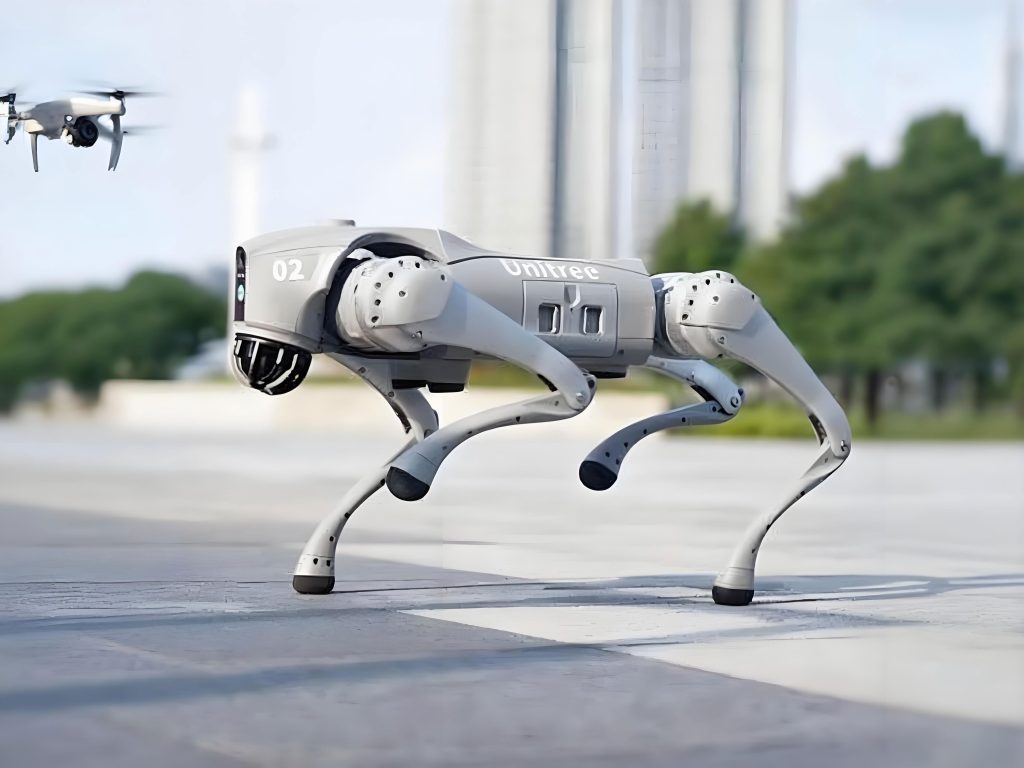
From my perspective, the core of bionic robots lies in their ability to mimic biological organisms, leveraging principles from bionics to replicate external forms,运动 mechanisms, and behavioral patterns. This imitation allows bionic robots to extend or replace certain biological functions, thereby facilitating tasks in specific scenarios. For instance, in medical fields, I have observed that bionic robots like artificial hearts can simulate cardiac肌肉 contractions through pneumatic artificial muscles (PAM), controlled via software simulations. The motion dynamics of such bionic robots can be modeled using equations like the Lagrangian formulation for robotic systems. Consider a simplified model for a bionic robot limb: the torque $\tau$ required for movement can be expressed as $$\tau = M(q)\ddot{q} + C(q, \dot{q})\dot{q} + G(q)$$ where $q$ represents joint angles, $M(q)$ is the inertia matrix, $C(q, \dot{q})$ accounts for Coriolis and centrifugal forces, and $G(q)$ denotes gravitational effects. This equation highlights the complexity involved in replicating natural运动, underscoring why bionic robots must integrate multidisciplinary knowledge.
In terms of applications, I have analyzed various sectors where bionic robots are deployed, each with distinct advantages and drawbacks. To summarize, I present a table comparing key application domains for bionic robots, based on my observations of their performance and limitations.
| Application Domain | Advantages of Bionic Robots | Disadvantages of Bionic Robots | Example Tasks |
|---|---|---|---|
| Military and Anti-terrorism | Can perform in hazardous environments; reduces human risk. | High energy consumption; noise issues; limited实用 value in some cases. | Surveillance, bomb disposal, reconnaissance. |
| Medical救助 | Precision in simulations; soft robotics enable biocompatibility. | High development costs; complexity in integration. | Artificial organs, surgical assistance, rehabilitation. |
| Disaster Response | Access to confined or dangerous spaces; endurance in extreme conditions. | Technological constraints in mobility and sensing. | Search and rescue, structural inspection, hazard assessment. |
| Space Exploration | Operates in vacuum and low-gravity environments; reduces mission risk. | Communication delays; power management challenges. | Planetary roving, sample collection, equipment maintenance. |
| Home and Elderly Care | Provides companionship; assists with daily activities. | Social acceptance barriers; high production costs. | Pet-like interaction, health monitoring, household chores. |
As seen in the table, the bionic robot showcases versatility, yet its efficacy varies across fields. In military contexts, I have noted that bionic robots often face criticism due to excessive能耗 and noise, which diminish their实用 value. Conversely, in垂直化 scenarios like healthcare, bionic robots excel, as evidenced by soft robotic systems that mimic biological tissues. The energy efficiency of a bionic robot can be quantified using a power consumption model: $$P_{total} = P_{motion} + P_{sensing} + P_{computation}$$ where $P_{motion}$ depends on actuator efficiency, $P_{sensing}$ on sensor arrays, and $P_{computation}$ on processing units. Optimizing this equation is crucial for enhancing the performance of bionic robots, especially in resource-limited settings.
Delving into classifications, I categorize bionic robots into three main types: humanoid robots, biomimetic robots, and bio-robots. Based on their operational environments, they can be further divided into aquatic, aerial, and terrestrial bionic robots. To illustrate, I provide a table outlining these categories with examples and key characteristics.
| Category of Bionic Robot | Sub-type | Key Features | Typical Inspirations |
|---|---|---|---|
| Humanoid Robots | Bipedal walkers | 仿人外形,双足行走, grasping abilities. | Human anatomy and movement. |
| Biomimetic Robots | Animal-like designs | Mimics生物运动, such as crawling or flying. | Birds, insects, marine life. |
| Bio-robots | Hybrid systems | Integrates biological tissues with robotic components. | Neural networks, muscular actuators. |
| Aquatic Bionic Robots | Fish-shaped machines | Efficient propulsion underwater; low turbulence. | Sharks, dolphins, octopuses. |
| Aerial Bionic Robots | Winged drones | Maneuverability in air; energy-efficient flight. | Birds, bats, insects. |
| Terrestrial Bionic Robots | Legged or wheeled designs | Adaptability to rough terrain; stable locomotion. | Dogs, reptiles, humans. |
In my analysis, humanoid robots represent a significant branch, as they embody the pinnacle of bionic robot technology, integrating advanced mechanics, control systems, and sensors. The development of such bionic robots began with bipedal walking robots in the late 20th century, and I have seen progress in achieving stable gait patterns. The walking stability can be analyzed using the Zero Moment Point (ZMP) criterion: if the ZMP lies within the support polygon, the bionic robot maintains balance. Mathematically, for a planar system, the ZMP position $x_{zmp}$ is given by $$x_{zmp} = \frac{\sum_{i} m_i (g z_i – \ddot{z}_i x_i) – \sum_{i} I_i \ddot{\theta}_i}{\sum_{i} m_i (g – \ddot{z}_i)}$$ where $m_i$ denotes mass elements, $g$ is gravity, and $I_i$ represents moments of inertia. This formula underscores the intricate balance required in bionic robot design.
Regarding global research advancements, I have observed that efforts in bionic robot development are widespread, with various countries contributing to the field. Although my own region started later, three decades of funding have led to notable achievements, narrowing the gap with international leaders. For instance, the creation of multi-fingered dexterous hands and bipedal robots marks significant milestones. To capture this progress, I compile a timeline table highlighting key developments in bionic robot research, based on my review of公开 literature.
| Time Period | Development in Bionic Robot Research | Impact on Technology |
|---|---|---|
| 1960s-1970s | Emergence of early bipedal walking robots; foundational work in仿人 robotics. | Established basic locomotion principles for bionic robots. |
| 1980s-1990s | Advancements in sensor integration and control algorithms for bionic robots. | Improved environmental interaction and autonomy in bionic robots. |
| 2000s-2010s | Proliferation of soft robotics and biomimetic designs in bionic robots. | Enhanced adaptability and safety for medical and rescue bionic robots. |
| 2020s onwards | Integration of AI, 5G, and VR with bionic robots; focus on cost reduction. | Accelerated deployment in daily life and industrial settings for bionic robots. |
From this timeline, it is evident that bionic robot research has evolved from模仿 to innovation. I have particularly noted breakthroughs in aquatic bionic robots, such as fish-like machines for underwater inspection, and terrestrial ones like wall-climbing gecko-inspired robots. These bionic robots not only open new industries but also generate employment and social value. For example, a collaborative project resulted in a sensor-driven bionic robot capable of mimicking human细微 actions with high precision, achieving angular errors as low as $1.25^\circ$ and response times under $30 \mu s$. The synchronization between operator and bionic robot can be modeled as a control system with transfer function $G(s) = \frac{Y(s)}{U(s)} = \frac{K e^{-Ts}}{\tau s + 1}$, where $K$ is gain, $T$ is delay, and $\tau$ is time constant, illustrating the real-time capabilities of modern bionic robots.
However, in my assessment, several现实 challenges impede the widespread adoption of bionic robots. First, the research depth remains有限, as current prototypes of bionic robots often fall short of biological functionalities. This gap arises from the complexity of biological systems, where movements involve coordinated interactions among骨骼, muscles, and neural networks. Replicating this in a bionic robot requires accurate modeling, which I express through a biomechanical equation: $$F_{muscle} = k \cdot \Delta L + b \cdot \dot{L} + F_{max} \cdot f(\text{activation})$$ where $F_{muscle}$ is muscle force, $k$ and $b$ are stiffness and damping coefficients, $\Delta L$ is length change, and $f(\text{activation})$ represents neural input. Achieving such fidelity in bionic robots is an ongoing struggle.
Second, cost issues loom large. The development and production expenses for bionic robots can reach millions of dollars, primarily due to依赖 on imported core components like motors, reducers, and sensors. I analyze this using a cost model: $$C_{total} = C_{R\&D} + C_{components} + C_{assembly} + C_{testing}$$ where each term contributes to the final price. For instance, a humanoid bionic robot with realistic外观 and expressions may retail for exorbitant amounts, limiting accessibility. To quantify affordability, I define a cost-effectiveness ratio for bionic robots: $$R_{CE} = \frac{\text{Performance Index}}{\text{Cost}}$$ where the Performance Index could include metrics like task completion rate or energy efficiency. Currently, $R_{CE}$ for many bionic robots is low, hindering mass production.
Moreover, production challenges in my region stem from insufficient capabilities in manufacturing key元器件. This dependency inflates costs and slows innovation. I have observed that while theoretical research and market applications for bionic robots are on par globally,加工 processes lag. For example, the precision required for actuator components in bionic robots demands advanced machining, often encapsulated in tolerance equations: $$\delta = \sqrt{\sum_{i} (\frac{\partial f}{\partial x_i} \Delta x_i)^2}$$ where $\delta$ is the overall error and $\Delta x_i$ are individual component variations. Reducing $\delta$ is essential for reliable bionic robots but remains costly.
Looking ahead, I am optimistic about the future of bionic robots. With the advent of 5G and AI, I foresee enhanced connectivity and intelligence in bionic robots. The latency in control systems for bionic robots can be minimized using 5G networks, described by the latency equation: $$L_{total} = L_{propagation} + L_{transmission} + L_{processing}$$ where $L_{propagation}$ is reduced with higher frequencies. Additionally, integrating VR with bionic robots could enable immersive remote operations. As research into neuroscience advances, I believe bionic robots may gain self-perception and adaptive control, moving closer to true biological mimicry. The potential for bionic robots to address societal issues like aging populations is immense; they could assist in elderly care, reducing labor shortages. I envision a future where bionic robots become commonplace, though not perfect replacements, but valuable partners.
In conclusion, my exploration of bionic robots reveals a dynamic field brimming with potential. From their origins in fiction to their current roles in critical applications, bionic robots exemplify human ingenuity. Despite hurdles in cost, technology, and production, ongoing innovations promise to overcome these barriers. I emphasize that bionic robots are not about完美替代 but about augmenting human capabilities and exploring new frontiers. As we continue to refine these machines, I am confident that bionic robots will yield bountiful fruits, enriching our lives and pushing the boundaries of what is possible. Through continuous collaboration and investment, the era of bionic robots is poised to transform our world in ways we are only beginning to imagine.