
The evolving international security landscape, the influx of new technological revolutions into warfare, and the increasing demands of modern combat have led to the growing deployment of robotic systems for executing diverse missions such as counter-terrorism, direct engagement, logistics support, and reconnaissance. Complex battlefield environments, characterized by unpredictable weather, difficult terrain, and dynamic tactical situations, pose significant challenges for military robots, demanding superior environmental adaptability. Nature, through billions of years of evolution and natural selection, has engineered organisms with remarkable traits and functionalities, enabling them to adapt with high reliability to complex and changing surroundings. These biological systems serve as invaluable sources of inspiration for military robotics. Utilizing design morphology within a bio-inspired framework—an approach that integrates multidisciplinary knowledge to study, emulate, and replicate the functions, behaviors, or structures of living organisms—facilitates bionic research and the subsequent development of advanced military bionic robots. These bionic robots, with their enhanced environmental adaptability, promise to provide more effective battlefield support in future complex combat zones, potentially revolutionizing force composition and strategic doctrines across all domains.
This article provides a systematic review, analysis, and summary of the current research status concerning the application of design morphology in the field of military bionic robot design. The core argument is that design morphology, as a systematic theoretical framework emphasizing multidisciplinary fusion, provides a powerful methodology for bio-inspired innovation, effectively supporting the integrated development of next-generation military robotic systems.
1. Foundational Concepts and Theoretical Framework
Bionic robots have emerged as a prominent and rapidly advancing subfield within robotics. As bionic technologies continue to mature, these systems find applications in diverse sectors, including military affairs, aerospace, and disaster response. Compared to other application domains, military bionic robots must operate in exceptionally complex and hostile environments, imposing more stringent requirements on their structural design, locomotion control, and overall system robustness. Their development constitutes a complex systems engineering endeavor, inherently involving the intersection of disciplines such as bionics, design science, information science, and mechanical engineering. In the late 20th century, military agencies like the U.S. Defense Advanced Research Projects Agency (DARPA) and the Department of Defense pioneered research in this area, initiating programs like the Joint Robotics Program (JRP) and the Future Combat System (FCS). Design morphology, particularly when integrated with bionic methods in a bio-inspired mode, offers a potent technical approach for the research and development (R&D) of these sophisticated systems.
1.1 The Connotation of Design Morphology
The essence of design is a process of multidisciplinary fusion and innovation. As a scientific discipline, design aims to realize products and develop corresponding knowledge and applications to achieve desired outcomes. Morphology, in its biological sense, is the study of the form, structure, and formative principles of organisms. Design morphology, as the “morphological” study within the design field, is fundamentally concerned with the architectural analysis of the design domain and the investigation of the components, elements, and holistic configurations of typical objects to inspire innovation. Historically, its evolution has progressed from artistic morphology, through perspectives focusing singularly on biology, art, or engineering, towards a generalized design morphology that integrates knowledge from bionics, information science, psychology, and other fields—a process of continual innovation.
Traditional design morphology research often focused on the relationship between the form of products, architecture, or graphic art and aesthetics, emphasizing philosophical unity and aesthetic ideals. Modern product form design, however, prioritizes the interplay between function, structure, behavior, principle, and artistry, closely linked with bionics, information science, engineering, and psychology. Organisms, shaped by eons of evolution, have developed precise and refined mechanisms to adapt to environmental changes. Studying these exceptional capabilities and their underlying principles, and applying them to the design and manufacturing of new technological equipment, is known as biomimetics or bionics. Although biomimetic activities have existed for millennia, bionics was formally established as a systematic science in 1960.
Design morphology operating in a bio-inspired mode and incorporating bionic methods represents a critical branch. It comprehensively considers factors such as biological morphology, kinematic structure, motion strategies, and information perception while imitating natural inspiration sources. By fusing multidisciplinary knowledge, it provides systematic support for translating biological principles into engineered systems. The synergistic combination of bionic methods and design morphology effectively promotes innovative design activities in engineering. The process model for this integrated approach is outlined below.
The process begins with the acquisition of a biological domain inspiration source. The next step involves abstraction, extracting the embedded patterns to obtain both the “Form” (external shapes like structures) and the “State” (internal conditions like functions and behaviors). Multidisciplinary knowledge is then employed to construct mathematical and technical models, facilitating analogical transfer from the biological domain to the engineering domain. Finally, the system is realized through aesthetic design, engineering structures, materials, and other means, completing the innovation cycle. This model emphasizes a systematic, knowledge-driven translation from nature to technology.
| Stage | Key Activity | Multidisciplinary Input |
|---|---|---|
| 1. Inspiration Acquisition | Identify and study a biological system with desirable traits. | Biology, Zoology, Ecology |
| 2. Pattern Abstraction | Extract the essential ‘Form’ (structure) and ‘State’ (function/behavior) principles. | Design Theory, Systems Analysis |
| 3. Model Construction | Develop mathematical and technical models representing the abstracted principles. | Mathematics, Physics, Computer Science |
| 4. Analogical Transfer | Map the biological models to feasible engineering concepts and specifications. | Engineering Design, Materials Science |
| 5. System Realization | Implement the design through physical structures, actuators, sensors, and control systems. | Mechanical Engineering, Electrical Engineering, Aesthetics |
1.2 The Elements of Design Morphology
The two constituent elements of design morphology are “Form” and “State” within a design context. The “Form” refers to the structured external shape, encompassing components, geometric dimensions, materials, and colors. A product must possess certain strength and stiffness to achieve a specific state. The “State” denotes the internal condition, including function, operational principle, behavior, aesthetic characteristics, and value proposition. The objective of product design is to utilize specific forms to express different functional features or value orientations. In design morphology, Form is the material carrier of the design, while State is the conscious message it conveys. They are interdependent: a Form necessarily conveys a certain State, and the State, in turn, determines the pattern of the Form.
Bio-inspired design morphology extracts elements of State—such as behavior, function, and principle—from the biological inspiration source. It employs mathematical modeling and other methods to analyze and uncover the underlying motion or operational mechanisms. Subsequently, it uses elements of Form—such as mechanisms, materials, and colors—to re-express these principles in the engineering domain, thereby achieving product innovation. Both Form and State in design morphology involve multidisciplinary交叉融合. Through this交叉融合, we can analyze and comprehend the State隐含 beneath the external appearance of things and apply it to the expression of new product designs.
1.3 Military Bionic Robots: Definition and Classification
Military bionic robots represent a high-level fusion of design morphology principles and military robotics requirements. Designers and engineers, drawing inspiration from various organisms in nature, have created numerous high-performance bionic robots capable of executing combat and strategic missions, significantly advancing military equipment development.
Inheriting the characteristics of military robots while embodying traits of biological systems, military bionic robots offer several battlefield advantages: high mobility and intelligence; strong environmental adaptability and survivability; absolute obedience to command; all-weather, omnidirectional operational capability; and relatively low operational costs.
Since the 1960s, the development of military bionic robots has traversed three main stages: fixed or programmable remote control; semi-autonomous operation with sensing capabilities; and intelligent, autonomous unmanned operation. The latest stage involves systems with high levels of intelligence, capable of autonomous learning and reasoning to dynamically adapt to complex battlefields, performing the perception-decision-action cycle independently to navigate obstacles, identify targets, and execute missions like search, rescue, and reconnaissance without human intervention.
The classification of military bionic robots is complex. They can be categorized by locomotion mode (e.g., jumping, wheeled, legged, crawling), by military function (e.g., combat/attack, reconnaissance/exploration, mine/explosive clearance, defense/security, logistics/maintenance, CBRN defense), or most pertinently for this morphological analysis, by operational domain: terrestrial, underwater, and aerial (or air/space). This domain-based classification aligns well with the distinct environmental adaptations found in nature and will structure the subsequent review.
2. Research Status of Military Bionic Robots via Design Morphology
With increasing operational tasks and military demands, military bionic robots exhibit a wide variety of types, forms, and functions. From the perspective of design morphology, the current status of research on bionic structures, motion mechanisms, and behavioral strategies is summarized and analyzed below across the three primary domains.
2.1 Terrestrial Military Bionic Robots
Nature hosts a multitude of terrestrial organisms that have evolved unique physiological structures, locomotion mechanisms, and behaviors to adapt to diverse environments. From a design morphology standpoint and combined with military functionalities, researchers have developed a series of terrestrial military bionic robots for executing hazardous tasks such as logistics support, reconnaissance in perilous conditions, and CBRN defense. Based on mission scenarios and motion mechanics, they can be subdivided into jumping, legged, climbing, and digging robots.
2.1.1 Jumping Robots
Research on jumping robots originated from NASA’s Apollo program. Subsequent development has been widespread. For instance, inspired by the jumping morphology of animals, a pneumatically actuated bipedal robot was developed, achieving a jump height of 1.5 times its body length. Another prominent example is the BionicKangaroo, which mimics the jumping gait and energy-recycling tendon mechanism of a kangaroo. A notable miniaturized approach involved mimicking the leg structure and energy storage/release mechanism of a desert locust, resulting in a 22.6g robot capable of jumping 3.35 m high. Similarly, a 15g, 50mm long quadruped robot inspired by a cricket’s leg mechanics can achieve a launch velocity of 1.5 m/s to overcome obstacles. Domestic research has also focused on continuous jumping robots inspired by locusts.
2.1.2 Legged Robots
In the realm of quadrupedal robots, early military efforts included the “Walking Truck” developed for carrying loads over rough terrain. The most famous series is arguably the Boston Dynamics’ robots developed with DARPA support, beginning with BigDog. These robots, inspired by the form and dynamic motion of quadrupedal mammals, exhibit extraordinary rough-terrain adaptability. The lineage includes Cheetah, LittleDog, and Spot, with LittleDog focusing on perception and dynamic planning over complex ground. Domestically, quadruped robots capable of carrying 50kg loads and traversing 30° slopes have been developed.
For bipedal/humanoid robots, Boston Dynamics’ Atlas represents the state-of-the-art. Inspired by human morphology and balance, it uses multimodal sensing and dynamic adaptation to withstand impacts and perform complex maneuvers. In China, the “BHR” series of humanoid robots can mimic human motion and achieve human-robot interaction.
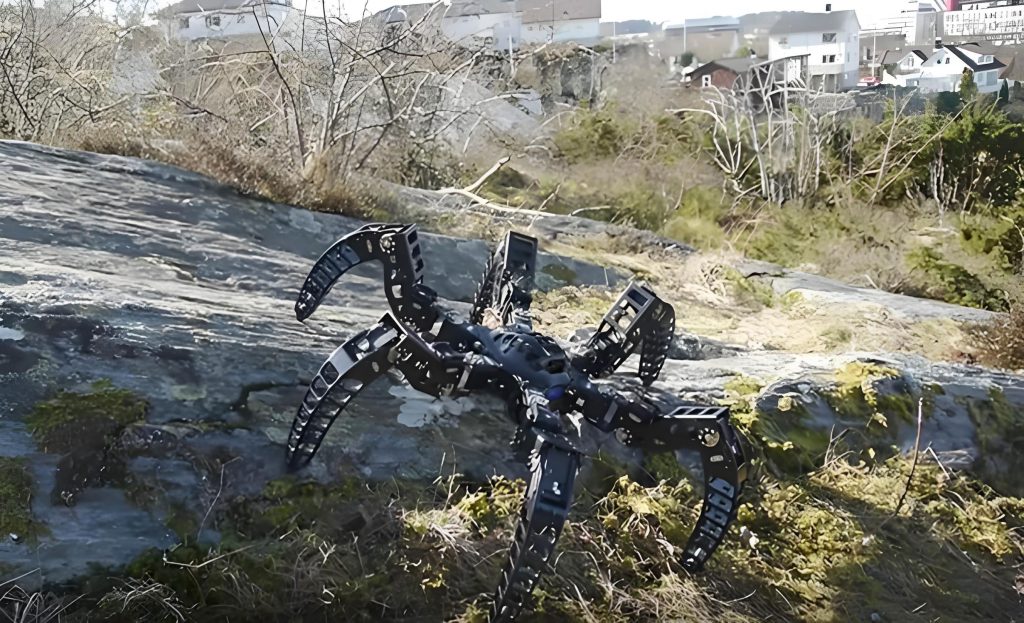
Furthermore, mimicking the form, structure, and movement of insects (e.g., cockroaches, spiders, ants) and reptiles (e.g., snakes) has yielded fruitful results for potential military or disaster-response applications. Examples include the cockroach-inspired RoACH, the spider-inspired BionicSpider, and the ant-inspired BionicAnt, which demonstrate collective behaviors.
2.1.3 Climbing Robots
Climbing robots can perform military surveillance and tracking on vertical structures. Significant research has been inspired by biological climbers. One direction mimics the gecko’s use of van der Waals forces via microscopic setae, leading to directional adhesive materials for gripping in space or on walls. Another project took inspiration from wasps that use claw hooks to grip and drag heavy prey, creating micro-air-vehicles that can anchor and pull 40 times their weight for reconnaissance. Dynamic climbing inspired by squirrels resulted in the RiSE robot, capable of rapid 28 cm/s climbing and perch-and-wait surveillance. A passive adaptive claw mechanism inspired by squirrels and other climbers uses elastomers and spines. Soft robotics approaches have also emerged, such as a pneumatic pole-climbing robot inspired by tree snakes’ wrapping motion, achieving speeds of 30.85 mm/s and carrying 25 times its weight, suitable for CBRN environments.
Other terrestrial robots, like those inspired by the burrowing mechanics of earthworms, moles, or pangolins, show promise for military excavation, mine-clearing, and reconnaissance tasks.
| Robot Type | Biological Inspiration | Key Mimicked Principle (State/Form) | Potential Military Application |
|---|---|---|---|
| Jumping (BionicKangaroo) | Kangaroo | Elastic energy recycling in tendons; synchronized leg-tail dynamics. | Rapid traversal of trenches, obstacles; reconnaissance leaps. |
| Quadruped (BigDog/Spot) | Pack animals (e.g., mules, dogs) | Dynamic stability over rough terrain; energy-efficient legged locomotion. | Load carriage in unstructured environments; patrol. |
| Bipedal (Atlas) | Human | Balanced bipedal gait; whole-body coordination for manipulation and mobility. | Infrastructure work in human-designed spaces; EOD. |
| Insect-like (BionicAnt) | Ant | Decentralized cooperative behavior; small-scale robust locomotion. | Swarm intelligence for surveillance, sensor deployment. |
| Climbing (Gecko-inspired) | Gecko | Directional dry adhesion via van der Waals forces. | Stealthy vertical surveillance on buildings, ships. |
| Snake-like (Pole climber) | Tree Snake | Helical wrapping and extension for climbing cylindrical structures. | Inspecting poles, pipes in confined or hazardous areas. |
2.2 Underwater Military Bionic Robots
The complex and variable underwater environment poses challenges for conventional propeller-driven military robots, which can be noisy and inefficient in certain conditions. Therefore, developing underwater bionic robots with simple structures and superior locomotion has become a focus. Researchers employ design morphology, combining bionics and robotics, to mimic the form, structure, and propulsion mechanisms of aquatic life like fish, reptiles, and mollusks.
2.2.1 Fish-like Robots
Inspired by the high-speed swimming and efficiency of the yellowfin tuna, the TunaBot was developed to study and replicate its carangiform swimming mode. The manta ray’s flapping pectoral fin locomotion, which minimizes turbulence, inspired the MantaDroid, a robot with high flexibility, maneuverability, and 10-hour endurance for exploration tasks. For extreme depths, a soft robotic lionfish was created, inspired by deep-sea snailfish. Using soft artificial muscles to flap flexible pectoral fins, it can operate under low-temperature and high-pressure conditions, offering potential for deep-sea military applications.
2.2.2 Reptile-like Robots
Turtle-inspired robots mimic the structure and kinematics of sea turtle flippers to achieve good underwater agility. A more complex system inspired by the salamander can switch between swimming and walking gaits, offering true amphibious capability for operations across domain boundaries.
2.2.3 Mollusk-like Robots
Inspired by the sailing and pulsation of the Portuguese man o’ war, the JellyBot is a concept for self-powered, deployable swarms for ocean surface monitoring. Another project mimicked the octopus’s jet propulsion mechanism, creating a soft robot that cycles between water intake and expulsion to achieve pulsed jetting for locomotion at speeds of 18-32 cm/s.
2.3 Aerial (and Air/Space) Military Bionic Robots
The extraordinary flight capabilities of winged insects and birds, perfected over millennia in terms of morphology, flight mode, and energy efficiency, provide excellent inspiration for aerial bionic robots. Compared to their terrestrial and underwater counterparts, aerial bionic robots are often smaller, more agile, and less constrained by terrain, making them increasingly valuable for military powers.
2.3.1 Insect-like Robots
The RoboFly micro-robot, weighing only 300 mg, mimics the high-frequency wing flapping of flies to achieve untethered flight. To overcome turbulence challenges faced by rotary wings, the Skeeter and DelFly Nimble robots were inspired by the agile flight of dragonflies. Skeeter is a sub-20g flier capable of riding wind currents, while DelFly Nimble can perform aerobatic maneuvers like 360° flips. A landmark achievement is the RoboBee, the world’s smallest flying robot at 0.1g, inspired by bees, capable of vertical take-off, hovering, and steering, representing a significant technological breakthrough.
2.3.2 Bird-like Robots
The SmartBird, inspired by the herring gull, perfectly mimics the flapping, gliding, and soaring flight of birds with high aerodynamic efficiency (≈80%). The Nano Hummingbird, developed under DARPA, meticulously replicates the hummingbird’s flight capabilities, including hover and aerobatics, in a 10g, 16cm-wingspan platform for close-range surveillance. Research into avian morphing wings led to the PigeonBot, which uses an underactuated mechanism to control multiple feathers, enabling in-flight wing shape adjustment for robust and adaptive flight.
| Domain | Robot Example | Biological Inspiration | Key Mimicked Principle | Military Application Vision |
|---|---|---|---|---|
| Aerial | RoboBee | Bee / Flying Insect | High-frequency flapping-wing flight; extreme miniaturization. | Covert micro-surveillance indoors/outdoors; swarm tactics. |
| Nano Hummingbird | Hummingbird | Precise hover and agile maneuvering in confined spaces. | Urban ISR (Intelligence, Surveillance, Reconnaissance). | |
| Underwater | TunaBot | Tuna | High-speed, efficient carangiform (body-caudal fin) swimming. | Fast underwater propulsion for interception or rapid deployment. |
| MantaDroid | Manta Ray | Low-turbulence, efficient lift-based propulsion via pectoral fins. | Stealthy, long-endurance ocean floor reconnaissance. | |
| Amphibious | Salamander Robot | Salamander | Neuromechanical coordination for gait transition between swimming and walking. | Littoral zone operations; beach reconnaissance and traversal. |
3. Current Challenges and Future Trends
While design morphology has yielded impressive results in military bionic robot design, several challenges remain in achieving truly integrated, multidisciplinary, and cross-domain innovation. Key issues include leveraging vast internet-based biological knowledge, achieving deeper biomimicry, and enabling multi-modal and collective behaviors.
3.1 The Challenge of Sourcing Bio-inspiration
The design process begins with acquiring high-quality biological inspiration. Current methods—searching literature, consulting experts, keyword searches—can create “knowledge gaps,” leading to incomplete biological understanding and somewhat arbitrary design processes. Meanwhile, the internet hosts a vast repository of unstructured biological data that remains underutilized.
Future Trend: Integrating design morphology with natural language processing and knowledge graph techniques to systematically mine structured and unstructured biological data online. This will allow for intelligent retrieval and recommendation of relevant biological cases as inspiration sources, making the design process more systematic and informed. The goal is to move from ad-hoc inspiration to a data-driven, knowledge-supported discovery process. This can be framed as an information retrieval optimization problem, maximizing the relevance $R$ of retrieved biological cases $B_i$ to an engineering problem $E$:
$$ R(B_i, E) = f(SemanticSimilarity(B_i, E), \text{Historical Success Rate}, \text{Cross-Domain Transferability}) $$
3.2 The Challenge of Cross-Domain Analogical Reasoning and Implementation
A significant bottleneck lies in the analogical transfer from biological principles (“State”) to engineering implementations (“Form”). The gap persists due to incomplete understanding of biological mechanisms and a heavy reliance on designers’ experience, lacking robust computational support for cross-domain reasoning.
Future Trend: Leveraging advances in artificial intelligence, particularly deep learning for cross-domain analogy and generative design. Research will focus on developing intelligent algorithms that can map functional and behavioral patterns from the biological domain to generate novel engineering design concepts for bionic robots. This involves creating models that understand abstract functional representations. For instance, a kinematic principle like a jumping leg’s force profile $F(t)$ derived from a locust can be mapped to a design space of spring-damper-actuator systems in robotics:
$$ F_{bio}(t) \xrightarrow{\text{Analogical Mapping}} \arg\min_{k, b, u(t)} \left\| F_{robot}(k, b, u(t)) – F_{bio}(t) \right\| $$
where $k$ is stiffness, $b$ damping, and $u(t)$ the control input.
3.3 The Challenge of Multi-Modal Behavior Fusion
Modern warfare requires systems capable of operating across multiple domains (land, air, water). Most current military bionic robots are specialized for a single environment. Research into highly adaptive robots that can change morphology and behavior for multi-terrain operation, and into intelligent swarm协作, is still nascent.
Future Trend: Developing bionic robots with adaptive morphologies and multi-modal locomotion (e.g., air-water, water-land transitions), inspired by organisms like flying fish or mudskippers. Furthermore, implementing advanced collective behaviors inspired by insect swarms, bird flocks, or fish schools will be crucial. This involves distributed control algorithms, local communication rules, and emergent intelligence, allowing groups of simple bionic robots to accomplish complex tasks beyond the capability of a single unit. The control law for an individual agent $i$ in such a swarm might follow bio-inspired rules:
$$ \vec{v}_i^{desired} = w_1 \vec{v}_{goal} + w_2 \sum_{j \in Neighbors} f_{align}(\vec{v}_j) + w_3 \sum_{j} f_{cohere}(\vec{p}_j) + w_4 \sum_{j} f_{separate}(\vec{p}_j) $$
where weights $w$ balance goal attraction, velocity alignment, cohesion, and separation—principles observed in bird flocks.
4. Conclusion
The military bionic robot, with its core of intelligent technology and goal of executing tactical or strategic missions under complex or hazardous conditions, represents a critical智能化装备. Its development not only addresses future operational needs but also forms a cornerstone in the competition for strategic advantage in the ongoing industrial revolution. Current research, guided by design morphology, focuses on imitating biological form, kinematic structure, movement strategy, and information perception, typically proceeding from known biological inspirations to engineered solutions. However, this process can be non-systematic. The future of the field lies in harnessing the vast biological data available online through advanced computational methods, thereby enabling a more robust, knowledge-driven design morphology framework.
In conclusion, design morphology provides a powerful, systematic methodology for the innovative design of military bionic robots. Its application can significantly shorten R&D cycles, enhance system reliability and robustness, and improve the ability of robotic systems to adapt to dynamic, complex environments and execute challenging military missions. As AI technology continues to evolve, the application of design morphology in this field will progressively move towards human-AI collaborative intelligent design, where computational systems augment human creativity to discover and realize ever more effective bio-inspired solutions for defense and security.