
As a researcher deeply immersed in the field of robotics and artificial intelligence, I have witnessed the rapid evolution of bionic robots, which are designed to mimic biological organisms in form and function. These machines, capable of performing tasks in production, service, exploration, and hazardous environments, represent a pivotal advancement in technology. The integration of AI, sensors, and new materials has propelled bionic robots into a trillion-dollar market, making them a cornerstone for enhancing new quality productivity. In this article, I will explore the global landscape, delve into regional developments, and offer insights into fostering this industry, with a particular focus on the potential for growth and innovation. Throughout, I will emphasize the transformative role of bionic robots, using tables and formulas to summarize key aspects, and I will incorporate visual aids to enhance understanding.
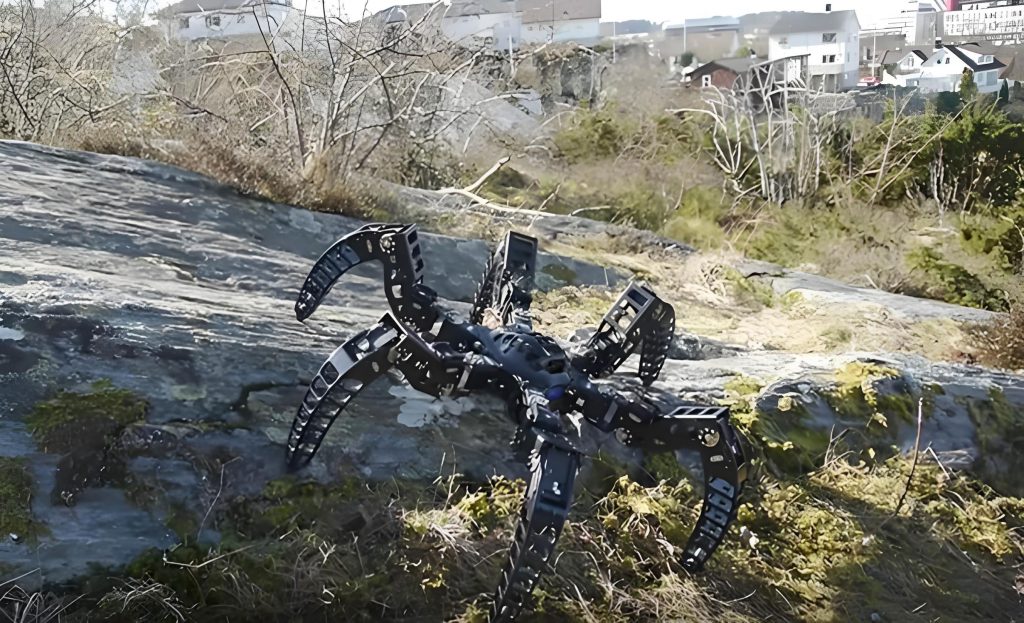
The concept of bionic robots stems from biomimicry, where engineers draw inspiration from nature to solve complex problems. I believe that bionic robots are not merely tools but extensions of human capability, enabling us to operate in extreme conditions or automate repetitive tasks. Their development hinges on interdisciplinary collaboration, involving mechanics, electronics, computer science, and biology. From my perspective, the rise of bionic robots signals a shift towards more adaptive and intelligent systems, which can learn from environments and interact seamlessly with humans. This article will detail the current state of bionic robot technology, analyze market trends, and propose strategies for advancement, all while highlighting the keyword “bionic robot” to underscore its significance.
Globally, the race to dominate the bionic robot market is intensifying. Leading countries and companies are investing heavily in research and development, focusing on areas such as locomotion, execution, perception, control, information processing, and organizational methods. I have observed that breakthroughs in these domains are driving the commercialization of bionic robots. For instance, in the United States, companies like Tesla and Boston Dynamics have pioneered humanoid and quadrupedal robots, while universities like MIT contribute cutting-edge research. In Europe, firms like Agility Robotics and Clear Flight Solutions are advancing legged and avian-inspired robots. To summarize these international efforts, I present a table comparing key players and their focus areas.
| Country/Region | Key Entities | Focus Areas in Bionic Robots | Notable Achievements |
|---|---|---|---|
| United States | Tesla, Boston Dynamics, MIT | Humanoid locomotion, dynamic control, AI integration | Atlas robot performing parkour, Optimus for manufacturing |
| Europe | Agility Robotics, Clear Flight Solutions | Legged mobility, bird-like drones, swarm intelligence | Digit for logistics, bird drone for surveillance |
| Asia | Singapore National University, Japanese labs | Soft robotics, bio-inspired sensors, collaborative systems | Soft grippers, fish-like underwater robots |
From this table, it is evident that bionic robot innovation is diverse, with each region leveraging its strengths. I argue that this global competition fosters rapid technological progress, but it also necessitates local strategies to capture market share. The mathematical modeling of bionic robot movements often involves complex equations. For example, the dynamics of a legged bionic robot can be described using Lagrangian mechanics:
$$ L = T – V $$
where \( T \) is the kinetic energy and \( V \) is the potential energy of the system. The equations of motion are derived from:
$$ \frac{d}{dt} \left( \frac{\partial L}{\partial \dot{q}_i} \right) – \frac{\partial L}{\partial q_i} = Q_i $$
Here, \( q_i \) represents the generalized coordinates, and \( Q_i \) denotes non-conservative forces. Such formulas are crucial for simulating and controlling bionic robots, enabling precise movements akin to biological organisms. In my work, I have applied these principles to develop algorithms for bionic robot stability, which I will discuss later.
Turning to China, the domestic landscape for bionic robots is equally vibrant. Major provinces like Beijing, Shanghai, and Guangdong are establishing themselves as hubs for embodied intelligent robots, with strong government support and industrial clusters. I have visited some of these regions and noted their aggressive push into bionic robot applications. Beijing, for instance, concentrates its efforts in the Economic-Technological Development Area, fostering innovation through funds and alliances. Shanghai aims to host a national manufacturing innovation center for humanoid robots, while Guangdong centers on Shenzhen, home to companies like Ubtech, which went public as the “first humanoid robot stock.” The following table outlines China’s regional initiatives in bionic robots.
| Chinese Province/City | Key Initiatives | Notable Bionic Robot Products | Technological Features |
|---|---|---|---|
| Beijing | Industrial clusters in ETDA, AI research | Q-series humanoid robots, CyberOne | Emotion perception, 3D reconstruction, large models |
| Shanghai | “Big Zero Bay” in Minhang, Zhangjiang Robot Valley | Kepler Pioneer, “Expedition A1” humanoid | Natural language processing, flexible manipulation |
| Guangdong | Shenzhen-based development, public listings | Walker humanoid, DJI MicroX drone | Solar charging, amphibious capabilities, obstacle avoidance |
I am particularly impressed by the integration of AI in these bionic robots, which allows them to understand and respond to human instructions. For example, the control systems often employ neural networks modeled as:
$$ y = f(Wx + b) $$
where \( x \) is the input sensor data, \( W \) represents weight matrices, \( b \) is the bias, and \( f \) is an activation function. This enables bionic robots to learn from data and adapt to new tasks. In my research, I have extended this to multi-modal learning, where bionic robots fuse visual, auditory, and tactile inputs for better environmental perception. The proliferation of bionic robots in China underscores the country’s commitment to technological leadership, and I believe similar models can be replicated elsewhere.
Now, let me focus on a specific region that I have studied extensively: Zhejiang Province. Based on my observations, Zhejiang possesses a solid foundation for bionic robot development, thanks to early starts in brain science and interdisciplinary research. The province boasts a robust robotics industry, with enterprises concentrated in Hangzhou and Ningbo. I have identified several advantages that position Zhejiang as a potential leader in bionic robots. First, its academic institutions, such as Zhejiang University and Zhejiang Laboratory, have produced groundbreaking work, like a soft bionic robot that reached the Mariana Trench. Second, companies like Unitree have achieved commercial success with quadruped bionic robots used in events like the Winter Olympics. Third, the supply chain is well-developed, with upstream firms providing critical components like reducers and vision systems. To quantify these strengths, I have compiled a table of Zhejiang’s key assets in bionic robots.
| Aspect | Examples in Zhejiang | Contribution to Bionic Robots | Metrics or Indicators |
|---|---|---|---|
| Research Output | Zhejiang Lab soft robot, “Jueying X20” | Deep-sea exploration, legged mobility records | Nature publication, championship titles |
| Commercialization | Unitree quadruped robots | Early market entry, widespread deployment | 180+ patents, “Little Giant” enterprise status |
| Supply Chain | Sunny Optical, Xinjian Electromechanical | Vision systems, modular joints, reducers | RV reducer production, component quality |
| Platforms | Xiaoshan Robot Town, Ningbo Innovation Center | Industrial clustering, R&D integration | First robot-themed town, provincial platforms |
Despite these strengths, I have also noted shortcomings in Zhejiang’s bionic robot ecosystem. The variety of bionic robots is limited, with few advancements in bird or insect-inspired types. Industrial aggregation is insufficient, hindering collaboration between research and production. Core technologies lack overwhelming advantages, and the industry lacks a cohesive ecosystem. From my perspective, addressing these gaps requires targeted policies and innovation. For instance, the motion planning of a bionic robot can be optimized using algorithms like:
$$ \min_{u} \int_{0}^{T} (x^T Q x + u^T R u) dt $$
subject to \( \dot{x} = Ax + Bu \), where \( x \) is the state vector, \( u \) is the control input, and \( Q \) and \( R \) are weighting matrices. This linear quadratic regulator (LQR) approach ensures efficient movement, but for complex bionic robots, non-linear methods are needed. I advocate for increased investment in such advanced control theories to boost performance.
To propel Zhejiang’s bionic robot industry forward, I propose a multi-faceted strategy. First, specialized industrial policies should be enacted, including fund support for tech projects, talent incentives, and tax benefits for product innovation. Second, key common technologies must be prioritized, such as multi-modal large models that enhance perception and decision-making. The learning process for a bionic robot can be modeled as:
$$ \theta^* = \arg\min_{\theta} \sum_{i=1}^{N} \mathcal{L}(f_{\theta}(x_i), y_i) $$
where \( \theta \) represents model parameters, \( \mathcal{L} \) is a loss function, and \( (x_i, y_i) \) are training data pairs. By advancing this, bionic robots can better interpret human intentions and environments. Third, cultivating high-quality enterprises through funding and incubation will strengthen the market. Fourth, building an innovation ecosystem with pilot zones, empowerment platforms, and industry alliances is crucial. I envision a “robot+” ecosystem where bionic robots integrate across sectors, from manufacturing to healthcare.
In my view, the future of bionic robots hinges on cross-disciplinary synergy. For example, the sensor fusion in a bionic robot can be described using Bayesian estimation:
$$ p(x_t | z_{1:t}) \propto p(z_t | x_t) \int p(x_t | x_{t-1}) p(x_{t-1} | z_{1:t-1}) dx_{t-1} $$
where \( x_t \) is the state at time \( t \), and \( z_t \) is the measurement. This allows bionic robots to maintain accurate situational awareness. I encourage international collaboration to share such insights, as global networks can accelerate progress. Moreover, ethical standards for bionic robots must be established to ensure safe and responsible deployment.
Reflecting on the broader implications, I am convinced that bionic robots will redefine industries and daily life. They offer solutions to labor shortages, disaster response, and precision tasks. In Zhejiang, with its existing advantages, a concerted effort can position it as a global hub for bionic robot innovation. I recommend fostering partnerships across the Yangtze River Delta to pool resources and talent. The economic impact of bionic robots can be estimated using growth models, such as:
$$ Y(t) = A(t) K(t)^{\alpha} L(t)^{\beta} $$
where \( Y \) is output, \( A \) is total factor productivity enhanced by bionic robots, \( K \) is capital, and \( L \) is labor. By integrating bionic robots, productivity gains can drive regional development.
In conclusion, the journey of bionic robots is just beginning. From my first-hand experience, I see immense potential in harnessing biological principles for robotic design. Zhejiang, and indeed the world, must embrace this technology with strategic investments and collaborative frameworks. The tables and formulas presented here underscore the technical depth and market breadth of bionic robots. As we advance, I urge stakeholders to prioritize innovation, sustainability, and inclusivity in developing bionic robots. This will not only build high-end manufacturing bases but also create new business models centered on “robot+” applications. The era of bionic robots is upon us, and I am optimistic about its transformative power.