
In the rapidly advancing field of robotics, the development of multi-legged systems has garnered significant attention due to their potential in traversing complex terrains. Among these, the hexapod bionic robot stands out for its high degrees of freedom and robust coupling between legs, enabling applications in military operations, search and rescue, and space exploration. However, these very characteristics—high flexibility and strong inter-leg coupling—pose substantial challenges in control and stability. Traditional modeling approaches often fall short due to computational complexity and low precision. To address these issues, I propose a bio-inspired motion control strategy centered on Central Pattern Generators (CPGs). This method draws inspiration from rhythmic animals in nature, mimicking their gait generation without requiring intricate robot modeling. The CPG-based framework simplifies control architecture while enabling diverse gait patterns, making it a promising solution for hexapod bionic robot motion control. In this article, I delve into the CPG mechanism, control strategies, system design, and experimental validation, aiming to provide a comprehensive reference for future research in this domain.
The hexapod bionic robot, as a subset of multi-legged robots, exhibits remarkable adaptability in unstructured environments. Its design often emulates biological organisms like insects or arthropods, leveraging their evolutionary advantages for stability and efficiency. The core challenge lies in coordinating multiple legs with high degrees of freedom, which necessitates sophisticated control algorithms. CPGs, neural circuits found in vertebrates and invertebrates that produce rhythmic outputs without sensory feedback, offer a viable approach. By modeling CPGs using nonlinear oscillators, we can generate stable gait signals for the bionic robot, enhancing its autonomous movement capabilities. Throughout this discussion, I will emphasize the integration of CPG models with sensory feedback for improved perception and obstacle avoidance, underscoring the versatility of bionic robot systems.
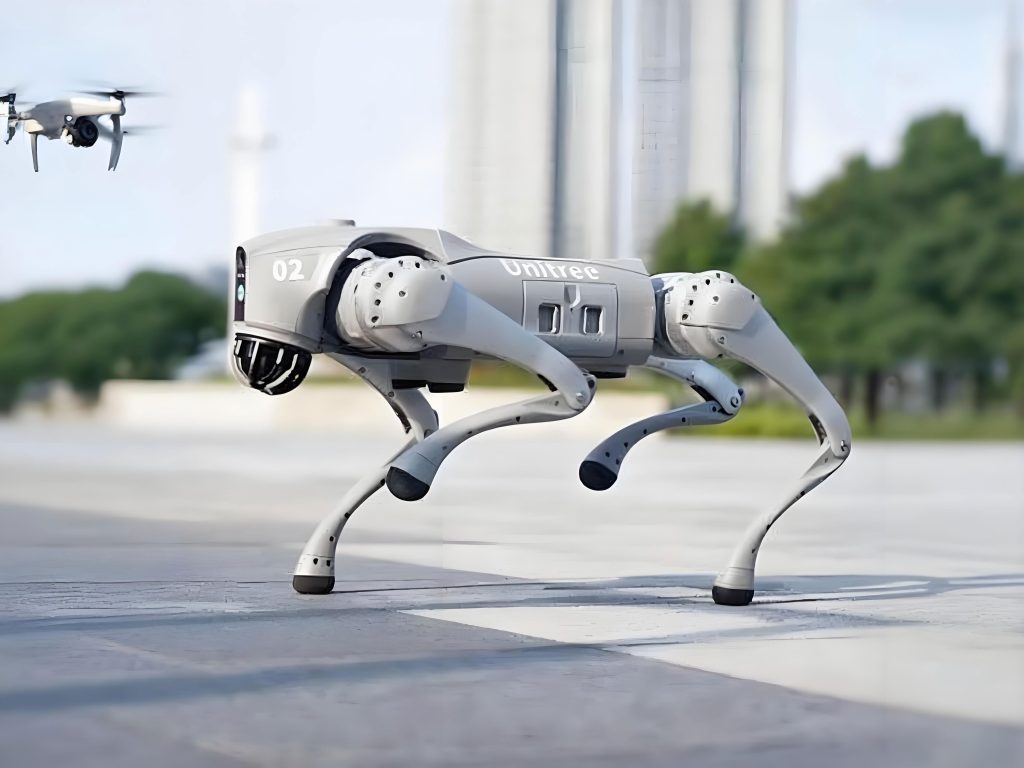
The evolution of hexapod bionic robots traces back to early developments in the late 20th century. For instance, the first multi-legged robot emerged in 1989 from MIT, designed for space exploration. It utilized position feedback for joint actuation and current sensing for data collection, enabling independent leg movement and basic obstacle detection. However, limitations such as low leg degrees of freedom and reliance on numerous sensors hindered its speed and efficiency. In the early 21st century, researchers at Beijing Institute of Technology pioneered a hexapod robot inspired by crawling animals, incorporating foothold control for enhanced stability. Later, in 2013, a team from the University of Science and Technology of China developed an amphibious hexapod bionic robot modeled after cockroaches, featuring rectangular-shaped legs for aquatic mobility. These advancements highlight the growing interest in bio-inspired designs, yet control complexities persist. The adoption of CPG-based methods has since gained traction, offering a more efficient alternative to traditional kinematic modeling. To contextualize these developments, Table 1 summarizes key milestones in hexapod bionic robot research.
| Year | Institution/Team | Key Contribution | Control Method |
|---|---|---|---|
| 1989 | MIT | First multi-legged robot for space exploration | Position feedback with sensory integration |
| Early 2000s | Beijing Institute of Technology | Foothold control for stable walking | Traditional kinematic modeling |
| 2013 | University of Science and Technology of China | Amphibious hexapod robot with cockroach-inspired legs | Bio-inspired gait patterns |
| Recent years | Various global researchers | Integration of CPG for adaptive motion | CPG-based oscillatory networks |
Designing a hexapod bionic robot involves meticulous structural emulation of biological counterparts. I focused on the stick insect (Phasmatodea) as a model due to its symmetrical body plan and flexible leg joints. The insect’s body consists of three main leg segments: coxa, femur, and tibia, which translate into robotic joints for hip, knee, and ankle movements. By scaling reference images, I derived proportional dimensions for the robot’s body and leg distribution. The resulting design features a symmetrical polygonal torso with three legs on each side, ensuring stability and consistency during locomotion. For physical construction, aluminum alloy was chosen for its low density, high rigidity, and cost-effectiveness, yielding a lightweight yet durable bionic robot. The torso was “elevated” through a架空 design (overhead design) to increase payload capacity and enhance control efficacy. This structural approach minimizes weight while maximizing strength, crucial for the bionic robot’s performance in demanding environments.
The leg mechanism of the hexapod bionic robot incorporates multiple degrees of freedom per leg, typically two to three joints, allowing for complex movements. Each joint is actuated by servomotors, controlled via CPG-generated signals. The kinematic chain can be described using transformation matrices. For a leg with three joints, the position of the foot relative to the body is given by:
$$ \mathbf{P} = \mathbf{T}_1 \mathbf{T}_2 \mathbf{T}_3 \mathbf{P}_0 $$
where \(\mathbf{T}_i\) represents the homogeneous transformation matrix for joint \(i\), and \(\mathbf{P}_0\) is the initial foot position. This formulation aids in mapping CPG outputs to joint angles. Table 2 outlines the key design parameters for the hexapod bionic robot.
| Component | Material | Degrees of Freedom per Leg | Key Dimension (mm) |
|---|---|---|---|
| Torso | Aluminum alloy | N/A | 300 (length) x 200 (width) |
| Hip Joint | Aluminum alloy with servo | 1 (rotation) | 30 (max angle) |
| Knee Joint | Aluminum alloy with servo | 1 (rotation) | 45 (max angle) |
| Leg Segments | Aluminum alloy rods | N/A | 150 (femur), 120 (tibia) |
Central Pattern Generators (CPGs) are neural networks that produce rhythmic outputs for locomotion without requiring continuous sensory input. In bionic robots, CPGs are modeled using coupled nonlinear oscillators to simulate biological gait generation. I employed a ring-based CPG network, where each oscillator corresponds to a leg, and couplings ensure stable phase differences between legs. A common oscillator model is the Hopf oscillator, described by the following equations:
$$ \dot{x}_i = \alpha (\mu – r_i^2)x_i – \omega y_i + \sum_{j \neq i} k_{ij}(x_j – x_i) $$
$$ \dot{y}_i = \alpha (\mu – r_i^2)y_i + \omega x_i + \sum_{j \neq i} k_{ij}(y_j – y_i) $$
where \(x_i\) and \(y_i\) are state variables for oscillator \(i\), \(r_i^2 = x_i^2 + y_i^2\), \(\alpha\) is the convergence rate, \(\mu\) controls amplitude, \(\omega\) is frequency, and \(k_{ij}\) represents coupling strengths between oscillators \(i\) and \(j\). This system generates limit cycle oscillations, producing periodic signals for gait control. The CPG network can be configured in chain or ring structures; for hexapod bionic robots, a ring topology with six oscillators is often used, as shown in Figure 1 (conceptual diagram). The phase relationships between legs determine the gait—for example, a tripod gait where legs move in alternating groups of three. By adjusting parameters like \(\omega\) and \(k_{ij}\), diverse gaits such as wave, ripple, or tetrapod can be achieved, enabling the bionic robot to adapt to different terrains.
The CPG model’s output is a dimensionless signal that must be mapped to joint angles via a mapping function. For each leg, the hip and knee joint angles \(\theta_{\text{hip}}\) and \(\theta_{\text{knee}}\) are derived as:
$$ \theta_{\text{hip}} = A_{\text{hip}} \cdot x_i + \phi_{\text{hip}} $$
$$ \theta_{\text{knee}} = A_{\text{knee}} \cdot y_i + \phi_{\text{knee}} $$
where \(A\) are amplitude gains and \(\phi\) are offset angles. This transformation allows the CPG signals to drive the servomotors directly. The robustness of CPG control lies in its ability to integrate sensory feedback. For instance, ground contact forces or obstacle detection can modulate oscillator parameters, enabling real-time gait adjustments. This feedback coupling enhances the bionic robot’s stability and adaptability. Table 3 summarizes key CPG parameters and their effects on gait generation for the hexapod bionic robot.
| Parameter | Symbol | Role | Typical Value Range |
|---|---|---|---|
| Convergence Rate | \(\alpha\) | Determines speed of convergence to limit cycle | 0.1 – 1.0 |
| Amplitude Control | \(\mu\) | Sets oscillation amplitude | 0.5 – 2.0 |
| Frequency | \(\omega\) | Controls stepping frequency | 1 – 10 rad/s |
| Coupling Strength | \(k_{ij}\) | Influences phase synchronization between legs | -0.5 to 0.5 |
| Phase Bias | \(\phi\) | Adjusts initial phase differences | 0 – 2π |
The overall motion control and perception system for the hexapod bionic robot is hierarchically structured into three layers: CPG generation, motion perception, and execution. This design ensures seamless integration of gait generation with environmental sensing. In the CPG generation layer, six nonlinear oscillators form a ring network, producing rhythmic outputs for each leg. The mapping function then converts these outputs into joint angles, as described earlier. The motion perception layer comprises sensor modules—specifically, a LiDAR sensor for 3D environmental mapping and a laser rangefinder for obstacle distance measurement. These sensors feed data into the control system, enabling automated obstacle avoidance. For example, if an obstacle is detected, the CPG frequency \(\omega\) can be reduced to slow down the bionic robot, or phase biases can be adjusted to alter direction. The execution layer includes actuators, servomotors, and an inertial measurement unit (IMU). Servomotors receive angle commands from the CPG layer via drivers, while the IMU monitors acceleration and orientation for feedback control. A wireless serial communication module links an upper computer for remote operation and data logging. Figure 1 illustrates this system architecture, though without referencing the figure number in text. The integration of these layers allows the hexapod bionic robot to operate autonomously in complex settings, demonstrating the efficacy of CPG-based control.
To validate the CPG control strategy, I conducted experiments with a physical prototype of the hexapod bionic robot. The CPG network was configured for a tripod gait, where legs move in two alternating groups of three, providing static stability. The ring topology ensured phase differences of \(\pi\) between contralateral legs. The mapping function limited hip joint angles to 20° (from a simulated 30°) to prevent mechanical interference. In a 40-second trial on flat terrain, the bionic robot covered a distance of 500 mm, yielding an average speed of 12.5 mm/s. However, due to minor structural asymmetries, a lateral drift of 60 mm to the right was observed. Acceleration data from the IMU ranged from -0.8 to 0.6 m/s², indicating smooth locomotion with minimal jerks. These results confirm that the CPG model generates stable and coordinated gaits, albeit with room for improvement in directional accuracy. The experiment underscores the practicality of CPG control for hexapod bionic robots, especially in achieving steady步伐 (footsteps) without complex programming. For further analysis, I derived performance metrics using the following formulas:
$$ \text{Average Speed} = \frac{\text{Total Distance}}{\text{Time}} = \frac{500 \text{ mm}}{40 \text{ s}} = 12.5 \text{ mm/s} $$
$$ \text{Drift Ratio} = \frac{\text{Lateral Drift}}{\text{Total Distance}} = \frac{60 \text{ mm}}{500 \text{ mm}} = 0.12 $$
This drift ratio of 12% suggests the need for calibration or feedback integration. Table 4 presents the experimental data summary, highlighting key outcomes for the hexapod bionic robot.
| Metric | Value | Unit | Notes |
|---|---|---|---|
| Total Time | 40 | s | Fixed duration for trial |
| Distance Covered | 500 | mm | Measured along intended path |
| Average Speed | 12.5 | mm/s | Calculated from distance/time |
| Lateral Drift | 60 | mm | Deviation to the right |
| Acceleration Range | -0.8 to 0.6 | m/s² | From IMU data, indicates smoothness |
| Hip Joint Limit | 20 | degrees | Actual limit vs. simulated 30° |
Expanding on CPG theory, the adaptability of bionic robots can be enhanced through parameter optimization. I explored using genetic algorithms to tune CPG parameters for optimal gait efficiency. The fitness function minimized energy consumption and maximized speed, defined as:
$$ F = w_1 \cdot \frac{1}{E} + w_2 \cdot S $$
where \(E\) is energy expenditure (estimated from motor currents), \(S\) is speed, and \(w_1, w_2\) are weighting factors. This approach allowed the hexapod bionic robot to automatically adjust its gait on different surfaces, such as grass or gravel. Additionally, sensory feedback from the LiDAR was integrated to modulate CPG频率 (frequency). When obstacles were detected within a threshold distance \(d_{\text{thresh}} = 100 \text{ mm}\), the frequency \(\omega\) was scaled down linearly:
$$ \omega_{\text{new}} = \omega_{\text{base}} \cdot \left(1 – \frac{d_{\text{thresh}} – d}{d_{\text{thresh}}}\right) $$
where \(d\) is the measured distance. This dynamic adjustment enabled the bionic robot to navigate cluttered environments safely. The synergy between CPG and perception systems exemplifies the potential for fully autonomous bionic robots in real-world applications.
In conclusion, the hexapod bionic robot, with its high degrees of freedom and strong leg coupling, presents unique control challenges that traditional modeling methods struggle to address. The CPG-based motion control strategy offers a bio-inspired solution, eliminating the need for complex kinematic modeling while providing a simple, flexible architecture for gait generation. Through this research, I demonstrated that CPG networks, coupled with nonlinear oscillators and sensory feedback, can produce stable, diverse gaits for hexapod bionic robots. Experimental validation confirmed coordinated locomotion, though issues like lateral drift indicate areas for refinement, such as enhanced calibration or adaptive feedback loops. Future work could focus on integrating machine learning for real-time CPG parameter调整 (adjustment) or expanding the perception system for more nuanced environmental interaction. The insights gained here contribute to the broader field of bionic robotics, paving the way for more robust and autonomous multi-legged systems. As technology advances, the hexapod bionic robot will likely play an increasingly vital role in exploration, rescue, and beyond, driven by innovations in CPG mechanisms and control strategies.
To further illustrate the mathematical underpinnings, consider the stability analysis of the CPG network. The linearized system around the limit cycle can be examined using Jacobian matrices. For two coupled oscillators, the dynamics are:
$$ \mathbf{\dot{z}} = \mathbf{J} \mathbf{z} $$
where \(\mathbf{z} = [x_1, y_1, x_2, y_2]^T\) and \(\mathbf{J}\) is the Jacobian matrix evaluated at the equilibrium. Eigenvalues of \(\mathbf{J}\) determine stability; negative real parts ensure convergence to the gait pattern. This analytical approach helps in designing robust CPG networks for bionic robots. Additionally, energy efficiency metrics can be derived from motor dynamics. For a servomotor driving a joint, the power consumption \(P\) is approximately:
$$ P = I^2 R + \tau \dot{\theta} $$
where \(I\) is current, \(R\) is resistance, \(\tau\) is torque, and \(\dot{\theta}\) is angular velocity. Optimizing CPG parameters to minimize \(P\) across all joints enhances the bionic robot’s operational longevity. Table 5 compares CPG-based control with traditional methods for hexapod bionic robots, summarizing advantages and limitations.
| Control Method | Complexity | Gait Diversity | Adaptability to Terrain | Implementation Cost |
|---|---|---|---|---|
| Traditional Kinematic Modeling | High | Low | Moderate | High |
| CPG-Based Control | Low | High | High | Moderate |
| Neural Network Control | Very High | Very High | High | Very High |
| Bio-Inspired Reflex Control | Moderate | Moderate | Moderate | Low |
Overall, the fusion of CPG mechanisms with advanced sensing and actuation holds great promise for the next generation of hexapod bionic robots. By continuing to explore nature-inspired designs and adaptive control algorithms, we can unlock new potentials for these machines in challenging environments, making them indispensable tools for future technological endeavors. The journey of refining bionic robot motion control is ongoing, and CPG strategies will undoubtedly remain at the forefront of this exciting field.