
As a researcher immersed in the evolving field of marine technology, I observe that the strategic imperative to care for, understand, and manage the ocean is propelling smart ocean engineering into the abyssal depths. The new generation of marine equipment is advancing towards full ocean depth capability, multidisciplinary integration, refined operation, intelligence, miniaturization, and low energy consumption. In this context, intelligent materials—functional systems that integrate sensing, actuation, and control into a single entity—have emerged as a transformative force. Specifically, their application in developing deep-sea actuators and marine bionic robots represents a cutting-edge frontier. These bionic robots, inspired by the elegant propulsion mechanisms of marine life, promise unprecedented mobility and environmental compatibility for underwater exploration. However, the engineering application of such bionic robots in the extreme deep-sea environment remains nascent, fraught with technical hurdles. From my perspective, this article aims to comprehensively review the current state of research, dissect the fundamental actuation principles, evaluate performance through quantitative models, and forecast the trajectory for deep-sea actuators and marine bionic robots based on intelligent materials. The discussion will be structured to emphasize the role of intelligent materials in enabling a new class of bionic robots, a term that will be recurrently highlighted to underscore the biomimetic paradigm.
Intelligent Actuating Materials: Principles and Quantitative Models
Intelligent actuating materials are the cornerstone of advanced bionic robots. They are characterized by their ability to undergo significant deformation or generate force in response to external stimuli such as heat, electricity, or chemical changes. The most prominent categories include shape memory alloys (SMA), piezoelectric ceramics (PZT), and electroactive polymers (EAP), the latter encompassing ionic polymer-metal composites (IPMC) and dielectric elastomers (DE). Each material operates on distinct physicochemical principles, which can be described mathematically to predict and optimize their performance in bionic robot applications.
Shape Memory Alloys (SMA), particularly Nickel-Titanium (NiTi) alloys, exhibit the shape memory effect (SME) and superelasticity, driven by a reversible martensitic-austenitic phase transformation. The one-way shape memory effect, commonly used in actuators, allows recovery of a pre-deformed shape upon heating. A simplified thermomechanical constitutive model, often used for design analysis, relates stress ($\sigma$), strain ($\epsilon$), and temperature ($T$):
$$\sigma = E(\epsilon – \epsilon_L) + \Theta (T – T_0) + \Omega \xi$$
Here, $E$ is the Young’s modulus (which differs for martensite and austenite phases), $\epsilon_L$ is the transformation strain, $\Theta$ is the thermoelastic coefficient, $T_0$ is a reference temperature, $\Omega$ is the transformation tensor, and $\xi$ is the martensite volume fraction (varying between 0 and 1). The transformation kinetics are often described by exponential functions of temperature and stress. The maximum recoverable strain for NiTi SMA can approach 8%, with generated stresses up to several hundred MPa, making it suitable for bionic robots requiring substantial force and displacement.
Piezoelectric Ceramics (PZT) generate strain directly proportional to an applied electric field via the direct piezoelectric effect. Their behavior is governed by linear constitutive equations coupling mechanical and electrical variables:
$$S_{ij} = s^E_{ijkl} T_{kl} + d_{kij} E_k$$
$$D_i = d_{ijk} T_{jk} + \epsilon^T_{ij} E_j$$
where $S$ is the strain tensor, $T$ is the stress tensor, $E$ is the electric field vector, $D$ is the electric displacement vector, $s^E$ is the compliance matrix at constant electric field, $d$ is the piezoelectric charge coefficient matrix, and $\epsilon^T$ is the permittivity matrix at constant stress. PZT actuators offer high bandwidth (fast response in microsecond to millisecond range) and high force density, but their inherent strain is small, typically less than 0.3%. This necessitates displacement amplification mechanisms in bionic robot designs, potentially adding complexity.
Electroactive Polymers (EAP) represent a diverse class. Ionic Polymer-Metal Composites (IPMC) bend due to the mobility of hydrated cations within a polymer membrane under a low voltage (1-5V). The bending curvature $\kappa$ can be empirically related to the applied voltage $V$ and dimensions:
$$\kappa \approx \frac{3 d_{31} V}{L^2}$$
where $d_{31}$ is an effective ionic piezoelectric constant and $L$ is the length. IPMCs are soft, operate in wet environments, and exhibit large bending deformations but produce low blocking force (~0.1 N).
Dielectric Elastomers (DE), on the other hand, are essentially compliant capacitors. Applying a voltage across a DE film induces Maxwell stress, causing it to compress in thickness and expand in area. For an incompressible ideal dielectric elastomer, the principal true stress $\sigma_i$ and the nominal electric field $\tilde{E}$ are related. The actuation strain $s_z$ in the thickness direction under a nominal electric field $\tilde{E} = V/t_0$ (where $V$ is voltage and $t_0$ is initial thickness) is approximately:
$$s_z = -\frac{\epsilon_r \epsilon_0 \tilde{E}^2}{Y}$$
where $\epsilon_r$ is the relative permittivity, $\epsilon_0$ is the vacuum permittivity, and $Y$ is the Young’s modulus. Pre-stretching the DE film dramatically improves performance, enabling area strains exceeding 300%. However, this requires high voltages (kilovolts for millimeter-scale films) and robust insulating frameworks to prevent electrical breakdown, posing challenges for underwater bionic robots.
The following table synthesizes and expands upon the key performance parameters of these intelligent materials, providing a comparative foundation for their selection in bionic robot development.
| Material | Max Actuation Strain (%) | Max Stress (MPa) | Typical Response Time | Energy Density (J/cm³) | Efficiency (%) | Drive Voltage Range | Key Actuation Mechanism | Primary Limitation for Deep-Sea Bionic Robots |
|---|---|---|---|---|---|---|---|---|
| Shape Memory Alloy (NiTi) | 5 – 8 | 200 – 700 | 0.1 s – 60 s | ~10 | 3 – 5 | 3 – 12 V (Joule heating) | Thermally-induced phase transformation | Slow cooling/cycling, hysteresis |
| Piezoelectric Ceramic (PZT-5A) | 0.1 – 0.3 | 30 – 40 | 10 µs – 0.1 s | 0.1 – 0.5 | 60 – 90 | 50 – 800 V | Inverse piezoelectric effect | Small strain, brittle, high voltage insulation |
| Ionic Polymer-Metal Composite (IPMC) | 1 – 5 (bending) | 0.1 – 0.5 (blocking force) | 0.1 s – 10 s | ~0.01 | 1 – 10 | 1 – 5 V (DC/Low AC) | Ion migration & solvent transport | Force output, dehydration, electrolysis in seawater |
| Dielectric Elastomer (VHB 4910) | 100 – 300 (area) | 0.1 – 0.3 | 0.01 s – 0.1 s | ~3.4 | 60 – 90 | 1 – 10 kV (≈100-500 V/µm) | Maxwell stress (electrostatic) | High voltage, electrical breakdown, viscoelastic losses |
Deep-Sea Actuators: From Traditional to Intelligent Systems
In my analysis of subsea technology, traditional deep-sea actuators—reliant on electromagnetic motors, hydraulic pistons, or solenoid valves—have been the workhorses for manipulators, valve operators, and sampling mechanisms on platforms like remotely operated vehicles (ROVs) and autonomous underwater vehicles (AUVs). While powerful, these systems introduce significant penalties: complex pressure-compensated or oil-filled housings, substantial weight and volume, magnetic interference with sensors, acoustic noise, and limited ability to scale down. Intelligent material-based actuators present a paradigm shift. They can act as “artificial muscles,” converting electrical energy directly into mechanical motion with potentially simpler packaging. The development of such actuators is a critical step towards enabling agile and efficient bionic robots.
Several prototypes illustrate this shift. SMA-based actuators often employ arrays of thin wires or springs embedded in a soft matrix. When electrically heated, they contract, pulling on the matrix to produce bending, twisting, or linear motion. Their performance can be modeled by considering the heat transfer equation alongside the constitutive law. The cooling time, often the limiting factor for cycle frequency, depends on convective heat transfer to the surrounding medium, which in deep-sea conditions is affected by pressure and temperature. For a SMA wire in water, the cooling rate can be approximated by Newton’s law of cooling: $$T(t) = T_{amb} + (T_{max} – T_{amb}) e^{-ht/(\rho c_p V)}$$ where $h$ is the heat transfer coefficient, $\rho$ is density, $c_p$ is specific heat, and $V$ is volume. The coefficient $h$ is itself a function of pressure and flow conditions, a complex relationship for deep-sea bionic robots.
EAP-based actuators, particularly DE, are being engineered into stack or diaphragm configurations to produce larger forces or displacements. A multilayer DE stack actuator’s blocked force $F_{block}$ can be estimated as: $$F_{block} = n A \epsilon_0 \epsilon_r \left(\frac{V}{t}\right)^2$$ where $n$ is the number of layers, $A$ is the active area per layer, and $t$ is the single-layer thickness. This highlights the trade-off between force, voltage, and geometry. For IPMC, researchers are exploring hybrid structures or novel electrode materials to enhance force output and stability in ionic environments, crucial for bionic robots operating in seawater.
To systematically evaluate the suitability of different actuator technologies for integration into deep-sea bionic robots, a multi-criteria comparison is essential. The table below expands on traditional metrics to include factors critical for long-duration, reliable deep-sea operation.
| Evaluation Criterion | Electromagnetic Motor | Hydraulic Cylinder | SMA Actuator | PZT Actuator (with Amp) | IPMC Actuator | DE Actuator |
|---|---|---|---|---|---|---|
| Force-to-Weight Ratio | High | Very High | Medium-High | High | Low | Medium |
| Strain / Stroke | Medium (needs gearing) | Large | Medium (5-8%) | Very Low (0.1-0.3%) | Large (bending) | Very Large (100%+) |
| Response Bandwidth | High (10-100 Hz) | Medium (1-10 Hz) | Low (0.01-1 Hz) | Very High (1-10 kHz) | Medium (1-10 Hz) | High (10-100 Hz) |
| Power Efficiency | High (70-90%) | Medium (60-80%) | Low (3-5%) | High (60-90%) | Low (1-10%) | High (60-90%) |
| Deep-Sea Pressure Resistance | Requires housing | Requires compensation | Inherently good (solid state) | Requires housing for electronics | Good (polymer based) | Good (elastomer based) |
| System Complexity & Weight | Medium-High | Very High | Low | Medium (needs HV driver) | Very Low | Low (needs HV driver/frame) |
| Noise & EMI | High (acoustic/ magnetic) | Medium (pump noise) | Very Low | Low | Very Low | Very Low |
| Biomimetic Compliance | Low | Low | High | Low | Very High | Very High |
| Suitability for Small Bionic Robots | Poor (scaling issues) | Poor | Good | Fair (needs amplification) | Excellent | Good (with miniaturized HV) |
Marine Bionic Robots: Embodiment of Intelligent Materials
The ultimate expression of intelligent materials in ocean engineering is the marine bionic robot. By emulating the propulsion kinematics of fish, jellyfish, rays, and cephalopods, these bionic robots achieve locomotion efficiencies and maneuverabilities that often surpass conventional propeller-driven AUVs. The choice of intelligent material directly shapes the design, performance, and potential application niche of the resulting bionic robot.
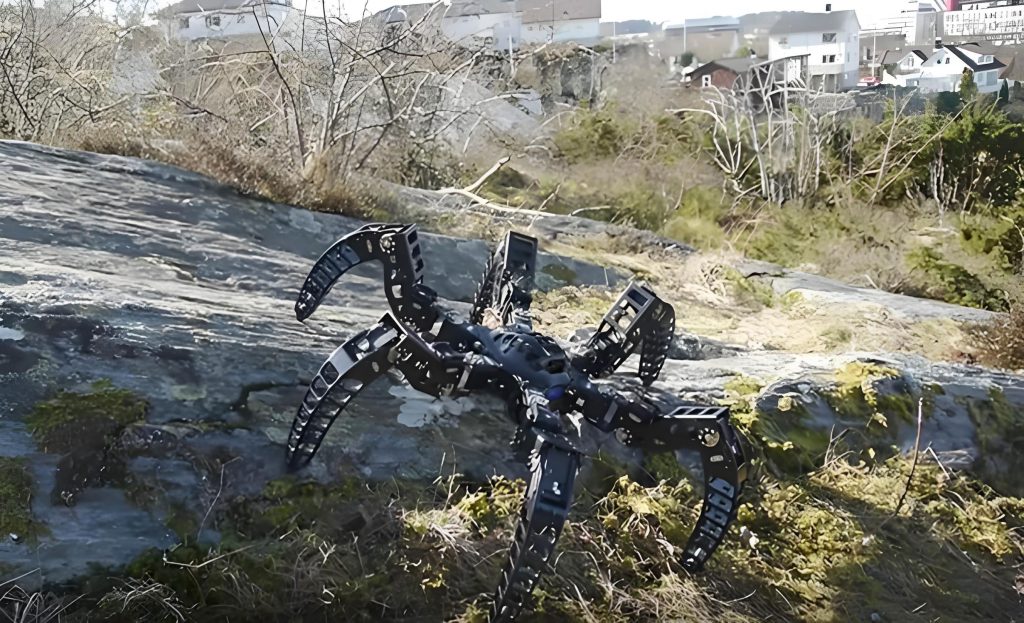
This image captures the essence of a biomimetic approach, showcasing a conceptual bionic robot whose form and likely actuation strategy are derived from marine organisms. It visually underscores the integration of biology and engineering that defines this field.
SMA-Driven Bionic Robots: These bionic robots often feature a soft body cast from silicone or other elastomers, with embedded SMA wires or springs as actuators. A classic example is the robotic jellyfish. Its bell deformation can be modeled by approximating the SMA wire contraction as an internal moment causing bending of a soft composite beam. The average swimming speed $U$ of such a pulsed-jet bionic robot can be related to the body deformation kinetics and fluid dynamics through scaling laws. If the bell volume change per stroke is $\Delta V$ and the pulse frequency is $f$, the average jet velocity $v_{jet}$ and thrust $T$ can be estimated: $$T \propto \rho \Delta V f v_{jet}$$ where $\rho$ is water density. SMA-driven bionic robots like robotic manta rays use paired SMA actuators to produce flapping motions of pectoral fins. The flapping amplitude $\theta$ is directly linked to the SMA recovery strain $\epsilon_{SMA}$ and the mechanical advantage of the attachment points: $$\theta \approx k \cdot \epsilon_{SMA} \cdot L_{wire}/L_{lever}$$ where $k$ is a geometric factor. While these bionic robots demonstrate good force and silent operation, their cycle frequency is limited by thermal management.
IPMC-Driven Bionic Robots: These bionic robots excel in creating graceful, undulatory motions with low voltage control. A robotic fish propelled by an IPMC tail fin operates on the principle of resonant bending. The tail-beat frequency is tuned to the mechanical resonance of the IPMC-beam-fluid system to maximize tip displacement and thrust. The thrust force $F_{thrust}$ generated by an oscillating flexible plate in a fluid can be modeled using elongated body theory or computational fluid dynamics, but a simplified form for small amplitudes is: $$F_{thrust} \approx \frac{1}{4} \pi^2 \rho b^2 f^2 A^2 C_T$$ where $b$ is the span, $f$ is frequency, $A$ is the trailing-edge amplitude, and $C_T$ is a thrust coefficient. IPMC bionic robots are typically lightweight and have excellent form-factor for small-scale exploration but struggle with providing sufficient thrust for payloads or against currents.
DE-Driven Bionic Robots: This category has produced some of the most impressive strain-based bionic robots. A DE-based robotic fish often uses a DE film as the body wall itself, with segmented electrodes to create traveling wave deformations along the body, mimicking subcarangiform swimming. The axial strain wave propagating at speed $c$ generates a reactive thrust from the water. The required voltage $V$ to achieve a certain strain $s$ in a pre-stretched DE film of initial thickness $t_0$ is: $$V = t_0 \sqrt{\frac{Y s}{\epsilon_0 \epsilon_r}}$$ For a film with $Y=1$ MPa, $\epsilon_r=3$, $t_0=100 \mu m$, and target strain $s=0.3$ (30%), the voltage $V \approx 1.4$ kV. Recent advances have demonstrated DE bionic robots capable of withstanding hydrostatic pressure by using incompressible fluid-filled chambers or specially structured elastomers, bringing deep-sea operation closer to reality.
PZT-Driven Bionic Robots: Often used in miniature or micro bionic robots, PZT elements are typically employed in bimorph or unimorph configurations to vibrate a rigid fin at high frequency, creating a “vibrational swimming” mode. The small displacement of the PZT is amplified by a mechanical lever or the fin’s own flexibility. The swimming speed of such a bionic robot is often low but can be effective at very small scales where viscous forces dominate. The Reynolds number $Re = \rho U L / \mu$ is a key parameter, and for $Re << 1$, scaling laws differ significantly from larger bionic robots.
The following table provides a detailed, albeit non-exhaustive, compilation of reported marine bionic robot prototypes, their actuation technology, and key performance metrics. This synthesis highlights the diversity and progress in the field.
| Bionic Robot Name / Inspiration | Primary Actuator Material | Dimensions (Length, Span, or Diameter) | Mass (g) | Max Reported Speed (mm/s or BL/s) | Actuation Voltage / Frequency | Notable Features & Challenges |
|---|---|---|---|---|---|---|
| Robojelly (Jellyfish) | SMA (BISMAC composite) | Ø 164 mm | ~150 (est.) | 54.2 mm/s (0.33 BL/s) | Joule heating / 0.2-0.5 Hz | Biomimetic bell kinematics; cooling limits frequency. |
| SSC Turtle (Sea Turtle) | SMA with woven composite | ~200 mm length | N/A | 22.5 mm/s (0.11 BL/s) | N/A / Multi-gait | Soft smart composite; demonstrates complex gait transitions. |
| Wireless Manta Ray | SMA wires | 243 mm length, 350 mm span | 354 g | 57 mm/s (0.23 BL/s) | Battery / ~0.3 Hz | Wireless autonomy; demonstrates turning via asymmetric flapping. |
| Jet-Propelled Squid Robot | SMA springs (mantle) | ~180 mm length | N/A | 87.7 mm/s (0.49 BL/s) | Joule heating / Pulsed | Emulates pulsed jet propulsion; requires efficient cavity sealing. |
| IPMC Manta Ray | IPMC (pectoral fins) | 80 mm length | 55.3 g | 4.2 mm/s (0.05 BL/s) | 3.3 V / 0.4 Hz | Low-voltage control; 3D motion; low thrust output. |
| Soft Robotic Jellyfish (Virginia Tech) | IPMC (multiple strips) | Ø 164 mm | 11 g | 1.5 mm/s (0.009 BL/s) | ~4 V / < 1 Hz | Transparent, fully soft; very slow speed. |
| Fast-moving Soft Electronic Fish | Dielectric Elastomer | 93 mm length | ~1.5 g (actuator) | 64 mm/s (0.69 BL/s) | 9.5 kV / 5 Hz | High speed for soft robot; requires external high-voltage supply. |
| Ultra-thin DE Robotic Fish | Dielectric Elastomer | 150 mm length, 0.75 mm thick | 4.4 g | 37.2 mm/s (0.25 BL/s) | High voltage / ~1 Hz | Extremely thin profile; demonstrates potential for stealthy bionic robots. |
| DE Jellyfish Robot | Dielectric Elastomer (diaphragm) | ~100 mm diameter | N/A | 10 mm/s (0.1 BL/s) | 9 kV / 1.6 Hz | Produces jet thrust via diaphragm contraction; thrust ~0.12 mN. |
| Micro Boxfish AUV | PZT bimorph (caudal fin) | 12 mm length | < 1 g | N/A (very small scale) | ~100 V / High frequency (100s Hz) | Demonstrates miniaturization; operates in low Reynolds number regime. |
| PZT-driven Carangiform Fish | PZT unimorph | 270 mm length | ~200 g (est.) | 25.19 mm/s (0.09 BL/s) | High voltage AC / 0.9 Hz | Measured thrust of 7.1 mN; uses mechanical amplification of PZT displacement. |
Critical Challenges for Deep-Sea Engineering of Bionic Robots
Transitioning laboratory prototypes of bionic robots into reliable tools for deep-sea exploration presents formidable interdisciplinary challenges. From a materials and systems engineering perspective, I identify the following as paramount:
1. Hydrostatic Pressure Effects: At full ocean depth (≈110 MPa), material properties and actuator performance can deviate significantly from surface conditions. For SMA, the transformation temperatures ($A_s$, $A_f$, $M_s$, $M_f$) are pressure-dependent: $$ \frac{dT}{dP} = \frac{\Delta V}{\Delta S} $$ where $\Delta V$ and $\Delta S$ are the volume and entropy changes of transformation. A positive $dT/dP$ means higher pressures require higher temperatures to induce the austenitic transformation, potentially altering actuation timing and force. For DE and IPMC, the surrounding pressure imposes a compressive load that counteracts the actuation strain. The effective actuation strain $s_{eff}$ under pressure $P$ for a DE might be modified as: $$ s_{eff} \approx s_0 – \frac{P}{Y_{eff}} $$ where $s_0$ is the strain at atmospheric pressure and $Y_{eff}$ is an effective modulus. Furthermore, housing flexible bionic robot bodies to prevent implosion or leakage without crippling their mobility is a major design puzzle.
2. Low-Temperature Operation: Deep-sea temperatures hover around 2-4°C. The performance of thermally activated SMAs is severely impacted. The available transformation temperature window narrows, hysteresis may increase, and the kinetics of martensitic transformation slow down. For IPMCs, lower temperatures increase the viscosity of the internal solvent, slowing ion mobility and reducing response speed. The conductivity of the polymer membrane also decreases. The temperature dependence of IPMC tip displacement $\delta$ can be empirically modeled as: $$\delta(T) \approx \delta_{ref} \cdot \exp\left(-\frac{E_a}{k_B T}\right)$$ where $E_a$ is an activation energy for ion transport. Heating systems add complexity and power drain, negating some advantages of bionic robots.
3. Seawater Conductivity and Electrochemical Environment: This is a multi-faceted issue. For IPMCs, which require an ionic environment, seawater itself can serve as the electrolyte. However, uncontrolled ion exchange, electrode corrosion (especially with noble metal electrodes), and parasitic electrochemical reactions (like water electrolysis at voltages above ~1.23V) can degrade performance and longevity. For DE and PZT, seawater is a conductive medium that poses a severe risk of short-circuiting high-voltage electrodes. Robust, flexible, and pressure-tolerant dielectric insulation coatings are essential. Any wiring or connectors for these bionic robots must also be perfectly insulated. Furthermore, using the material’s own electrical resistance for self-sensing and closed-loop control—a touted advantage of smart materials—becomes unreliable due to parallel conduction paths through the seawater.
4. Energy Storage and Efficiency for Autonomous Operation: The low cyclic efficiency of some materials (like SMA at ~5%) and the high voltage requirements of others (DE, PZT) strain on-board energy storage systems. A bionic robot’s endurance is a function of the specific energy of its battery and the system’s overall efficiency $\eta_{sys}$: $$Endurance \propto \frac{E_{battery} \cdot \eta_{sys}}{P_{actuation} + P_{auxiliary}}$$ where $P_{actuation}$ includes driver losses. Developing efficient, miniaturized high-voltage converters for DE or low-power, rapid switching circuits for SMA is non-trivial. Energy harvesting from the marine environment (thermal gradients, salinity gradients, currents) could be integrated into future bionic robots but remains at low technology readiness.
5. Structural Integrity and Biofouling: The soft polymeric materials used in many bionic robots are susceptible to abrasion, tearing, and long-term degradation from UV radiation (if surface-operating), ozone, and biological fouling. Biofouling increases drag, adds mass, and can jam moving parts, drastically reducing the operational lifespan of a deployed bionic robot. Developing fouling-release coatings compatible with large-strain elastomers is an ongoing challenge.
6. Control and Navigation in Dynamic Environments: Achieving precise trajectory control and navigation for a soft, continuously deforming bionic robot in the presence of currents and waves is complex. Traditional rigid-body dynamics models are inadequate. Instead, one must use continuum mechanics models or data-driven approaches. The equation of motion for a soft bionic robot segment can be expressed using a simplified Cosserat rod theory or the Euler-Lagrange formulation for flexible bodies: $$\frac{d}{dt}\left(\frac{\partial L}{\partial \dot{q}_i}\right) – \frac{\partial L}{\partial q_i} + \frac{\partial R}{\partial \dot{q}_i} = Q_i^{act} + Q_i^{fluid}$$ where $L$ is the Lagrangian, $R$ is the Rayleigh dissipation function, $q_i$ are generalized coordinates (describing deformation), $Q_i^{act}$ are generalized forces from actuators, and $Q_i^{fluid}$ are fluid dynamic forces. Real-time computation of such models for control is intensive, pushing the limits of embedded processors on small bionic robots.
Future Trends and Concluding Perspective
Looking ahead, the evolution of deep-sea bionic robots will be shaped by several convergent trends. First, there will be a move towards hybrid and multi-material actuation. Combining SMA for high force with DE for fast response in a single bionic robot structure could yield superior performance. Second, advanced manufacturing like 3D/4D printing will enable the creation of functionally graded soft structures with embedded actuators and sensors, moving towards truly monolithic bionic robots without discrete joints or adhesives. Third, the integration of machine learning and embodied intelligence will be crucial. Bionic robots will use adaptive control algorithms that learn optimal gaits for different conditions and employ proprioceptive sensing (via resistance, capacitance, or embedded piezoresistive sensors) for closed-loop deformation control without external cameras or sonar in murky waters.
Fourth, energy autonomy will be addressed not just by better batteries, but by exploring bio-inspired energy solutions. Concepts include artificial chloroplasts for solar energy in surface bionic robots or microbial fuel cells that generate electricity from organic matter in sediment for benthic bionic robots. The energy conversion efficiency $\eta_{bio}$ of such systems needs significant improvement to be practical: $$P_{generated} = A_{cell} \cdot J_{max} \cdot \eta_{bio} \cdot V_{cell}$$ where $A_{cell}$ is area, $J_{max}$ is maximum current density, and $V_{cell}$ is cell voltage.
Fifth, the vision of swarms of small, cooperative bionic robots will drive research into miniaturization, low-power communication (e.g., optical or acoustic modems), and distributed sensing algorithms. A swarm of simple bionic robots could perform large-area seabed surveys more efficiently than a single large vehicle.
In conclusion, intelligent materials have unlocked a new design space for marine robotics, centered on the bionic robot paradigm. While SMA currently offers the most straightforward path to early deep-sea applications due to its force and strain characteristics, ongoing research into EAP and hybrid systems holds immense promise for creating more agile, efficient, and lifelike bionic robots. The journey from laboratory curiosity to reliable deep-sea explorer is arduous, demanding innovations in material science, marine engineering, and control theory. However, the potential payoff—a new generation of silent, efficient, and environmentally benign platforms for ocean observation and interaction—makes the pursuit of advanced deep-sea bionic robots not just a technical challenge, but a necessary step in our quest to understand the planet’s final frontier. The continued convergence of biomimetics, smart materials, and artificial intelligence will undoubtedly propel the field of bionic robots to new depths, both literally and figuratively.