
The evolution towards intelligent transportation systems represents a pivotal development in modern infrastructure. Central to this transformation is the need for highly efficient, reliable, and cost-effective toll collection mechanisms at highway exits. While the widespread adoption of Electronic Toll Collection (ETC) has streamlined passage for a significant portion of users, a notable segment of vehicles continues to rely on manual toll collection (MTC) using Composite Pass Cards (CPC). Traditional MTC lanes, dependent on human operators, present challenges in operational cost, consistency, and scalability. This article details the comprehensive design and implementation of a dedicated intelligent robot system engineered to autonomously manage the entire toll collection process for non-ETC vehicles at highway exits, thereby enabling truly unmanned toll stations.
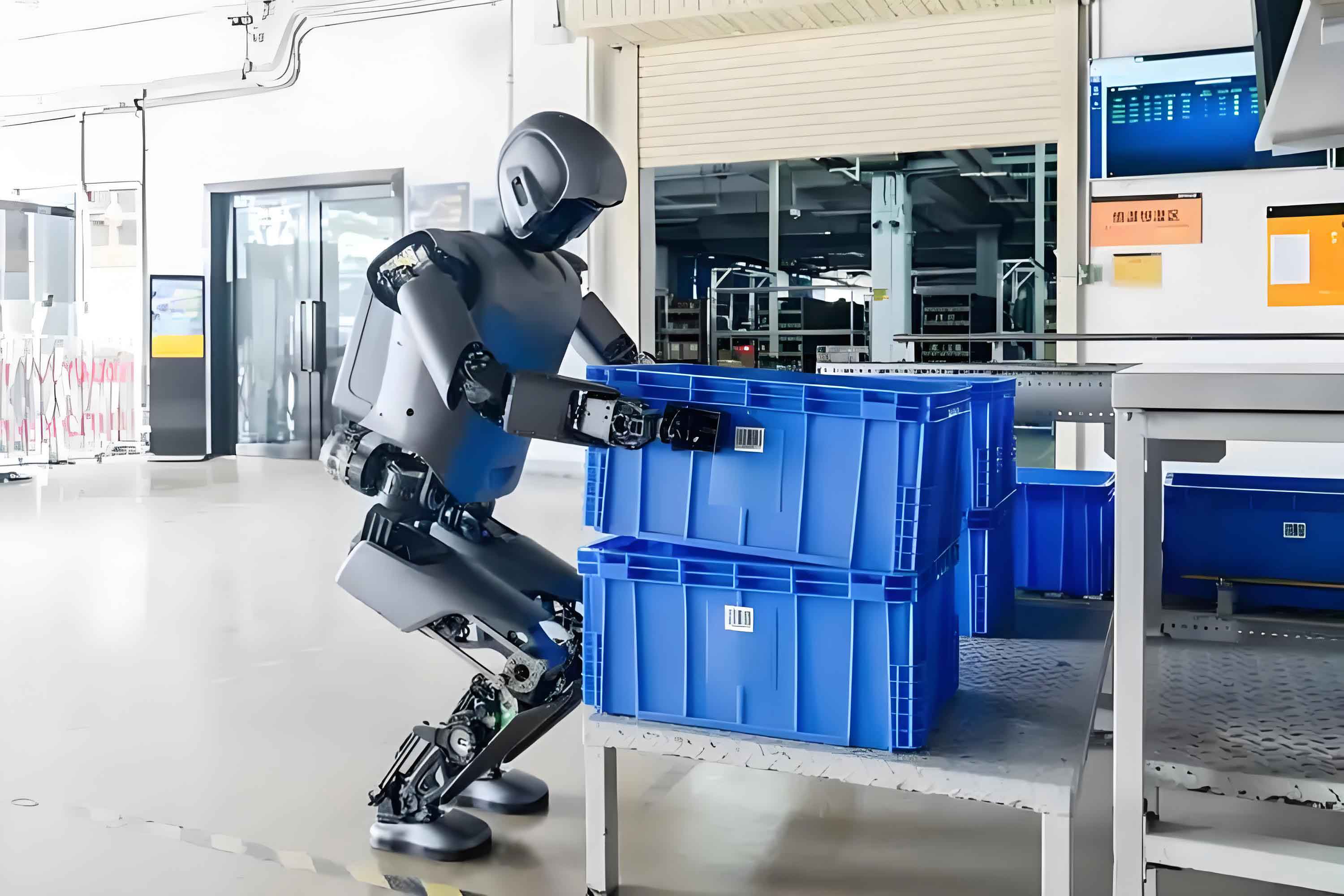
The core premise of the proposed intelligent robot is to integrate a suite of advanced technologies into a cohesive, self-contained unit. This system replaces the human toll collector entirely, performing vehicle identification, data reading, fee calculation, multi-modal transaction processing, and physical gate control. Furthermore, it incorporates sophisticated exception-handling capabilities and remote customer support, ensuring robust operation under diverse and unpredictable scenarios. The convergence of these functions within a single intelligent robot platform marks a significant leap forward in toll station automation.
System Architecture and Design Philosophy
The architecture of the highway exit intelligent robot is built upon a modular and layered approach, ensuring reliability, maintainability, and adaptability. The design philosophy prioritizes seamless integration of perception, decision-making, and actuation subsystems. The high-level system framework can be conceptualized through its primary functional layers, as summarized in the following table:
| Functional Layer | Key Components & Technologies | Primary Objective |
|---|---|---|
| Perception & Input | Machine Vision (License Plate, Vehicle Type), Radar/Ground Loop Sensors, Dual-Frequency RFID Readers (OBU/CPC), Payment Code Scanners, Environmental Sensors. | To accurately capture all necessary data: vehicle identity, class, entry/route information from CPC card, and driver payment intent. |
| Core Processing & Control | Industrial-Grade Main Control Computer, PLC-based Actuation Controller, Edge Computing Unit. | To fuse sensor data, execute toll logic, manage transaction states, and orchestrate all hardware components. |
| Transaction & Interaction | Multi-mode Payment Terminal (ETC, QR Code), Thermal Receipt Printer, High-Definition Display, Intelligent Voice Broadcast, Bi-directional Video Intercom. | To facilitate fee presentation, secure payment collection, provide user feedback, and enable remote assistance. |
| Actuation & Output | Precision Card/Receipt Handling Mechanisms, Automated Barrier Gate, Indicator Lights. | To physically interact with the driver (card intake/return, receipt issuance) and control vehicle passage. |
| Support & Infrastructure | Uninterruptible Power Supply (UPS), Dynamic Environment Monitoring System (Temperature, Humidity, Smoke), Network Connectivity Modules. | To ensure continuous, stable, and secure operation under all conditions. |
The operational logic of the intelligent robot is governed by a deterministic state machine implemented in the main controller. The system’s response to various inputs can be modeled to ensure predictable behavior. A critical metric is the overall system efficiency $\eta_{sys}$, which can be expressed as a function of the success rates of its constituent processes:
$$ \eta_{sys} = P_{detect} \times P_{read} \times P_{calc} \times P_{pay} \times P_{gate} $$
where:
$P_{detect}$ = Probability of successful vehicle detection and classification,
$P_{read}$ = Probability of successfully reading the CPC card data,
$P_{calc}$ = Probability of accurate fee calculation,
$P_{pay}$ = Probability of successful transaction completion,
$P_{gate}$ = Probability of reliable gate operation.
The design goal of the intelligent robot is to maximize each $P$ term, thereby driving $\eta_{sys}$ as close to 1 (or 100%) as possible.
Detailed Hardware Composition and Integration
The physical embodiment of the intelligent robot is a ruggedized kiosk housing meticulously integrated hardware modules. Each module plays a specific role in the toll collection pipeline.
1. Perception and Data Acquisition Cluster
This cluster is the “senses” of the intelligent robot.
- Vehicle Detection Unit: Utilizes a combination of millimeter-wave radar and inductive ground loops to detect vehicle presence, measure speed, and determine positioning relative to the kiosk. The radar provides superior performance in adverse weather compared to purely vision-based systems.
- Machine Vision Subsystem: Employs high-resolution, wide-dynamic-range cameras coupled with dedicated processing algorithms for simultaneous License Plate Recognition (LPR) and Vehicle Type Classification (VTC). The VTC algorithm cross-validates the classification from the CPC card data to prevent discrepancies.
- RFID Reader Unit: Incorporates separate but co-located antennas for 5.8GHz (for reading onboard ETC units in mixed lanes) and 13.56MHz (for reading CPC cards). The CPC card reader includes a precision mechanical “intake-hold-eject” mechanism to position the card optimally for reading.
- Payment Scanner: A high-sensitivity, multi-angle QR code scanner capable of reading codes from smartphones presented at varying distances and angles.
2. Core Control and Actuation Systems
This forms the “brain and hands” of the intelligent robot.
- Main Control Computer: A fanless, industrial PC operating a real-time processing platform. It runs the core application logic, integrates data from all sensors, communicates with the central toll server, and sends high-level commands to the actuator controller.
- Actuation Controller & Mechanism Unit: A Programmable Logic Controller (PLC) manages all physical movements. It controls:
- Card Handling Mechanism: Uses stepper motors and rollers to gently ingest, transport, and eject the CPC card.
- Receipt Printer & Cutter: Issues a physical toll receipt upon successful payment.
- Barrier Gate Controller: Sends the open/close signal to the lane’s barrier gate after transaction completion.
- Input/Output (I/O) Processing Unit: Acts as a robust interface between the main controller and external lane devices such as the fee display, signal lights, and auxiliary alarms, providing electrical isolation and signal conditioning.
3> Human-Machine Interaction (HMI) Interface
This is the “voice and face” of the intelligent robot, critical for user experience and exception handling.
- Interactive Front Panel: Features clearly labeled ports for CPC card insertion, receipt collection, and a contactless area for ETC card tapping. It integrates the payment scanner and a prominent help button.
- Audio-Visual System: Comprises a high-brightness LCD screen for displaying fee and instructions, a noise-cancelling speaker for clear intelligent voice guidance, and a wide-angle camera with microphone for video intercom.
- Remote Assistance Gateway: The video intercom establishes a low-latency, encrypted connection to a remote control center. This allows a human operator to visually assess problems (e.g., damaged card, confused driver) and interact directly to resolve them, a fail-safe feature that significantly enhances the robustness of the intelligent robot.
4. Power and Environmental Management
This is the “life support” system for the intelligent robot.
- Power Distribution Unit (PDU) with UPS: Conditions input AC power and provides stable DC power to all subsystems. The integrated Uninterruptible Power Supply ensures transaction completion and graceful shutdown during brief grid outages, preventing data corruption or vehicle entrapment.
- Dynamic Environment Monitoring System: A network of sensors continuously monitors internal temperature, humidity, and smoke. Alerts are generated and proactive cooling is activated to prevent hardware failure, ensuring the intelligent robot operates reliably in harsh outdoor environments.
Operational Workflow and Algorithmic Processing
The intelligent robot executes a complex, multi-stage workflow for each vehicle. The following sequence details the process, highlighting the algorithmic decisions at each step.
Step 1: Vehicle Detection and Triggering. The ground loop/radar sensor detects an approaching vehicle and sends a trigger signal. The machine vision system is activated. The LPR and VTC algorithms process the video feed. The license plate number $L$ and vehicle type $V_{vision}$ are extracted. This establishes a primary vehicle identity.
Step 2: CPC Card Interaction and Data Fusion. The driver inserts the CPC card. The mechanism ingests it and positions it over the RFID antenna. The card’s data is read, containing entry station $S_{entry}$, a list of passed gantry IDs $[G_1, G_2, …, G_n]$, and a recorded vehicle type $V_{card}$.
The system performs a critical validation check:
$$ \text{Validate}(V_{vision}, V_{card}) = \begin{cases}
\text{True}, & \text{if } V_{vision} \equiv V_{card} \\
\text{False}, & \text{otherwise}
\end{cases} $$
If validation fails, the transaction is flagged for exception handling (e.g., voice prompt to driver, remote assistance invocation).
Step 3: Toll Calculation. Using $S_{entry}$, $[G_1, G_2, …, G_n]$, and the validated vehicle type $V$, the main controller queries the central toll server or uses a local tariff table to compute the fee $F$.
$$ F = \Phi(S_{entry}, S_{exit}, [G_1, G_2, …, G_n], V) $$
where $\Phi$ represents the toll calculation function based on distance and vehicle class. $F$ is displayed on the screen and announced via voice.
Step 4: Multi-Mode Payment Processing. The intelligent robot enters a payment waiting state. It can accept:
- ETC Payment: If the driver presents a portable or vehicle-mounted ETC card, the 5.8GHz reader deducts the fee $F$ directly.
- QR Code Payment: The driver scans a static QR code on the display or presents their personal code to the scanner. The system interfaces with payment gateways (WeChat Pay, Alipay) for transaction authorization.
The payment success signal $P_{success}$ is a crucial state variable.
Step 5: Completion and Gate Control. Upon receiving $P_{success}=True$, the intelligent robot prints a receipt, returns the CPC card, and sends an open command to the barrier gate. The gate opening is conditional, formalized as:
$$ \text{GateCommand} = \begin{cases}
\text{OPEN}, & \text{if } P_{success} \land \text{Validate}(V_{vision}, V_{card}) \\
\text{CLOSE}, & \text{otherwise}
\end{cases} $$
If $P_{success}=False$ (e.g., payment timeout, insufficient funds), the system initiates exception protocols, including voice instructions and activating the video intercom for remote help.
Testing, Validation, and Performance Analysis
The developed intelligent robot prototype underwent rigorous laboratory and field testing. Performance was quantified against key operational metrics and compared directly with legacy manual toll collection (MTC) systems. The results demonstrate the transformative impact of the intelligent robot.
| Performance Metric | Legacy MTC System | Intelligent Robot System | Improvement & Analysis |
|---|---|---|---|
| Vehicle Recognition Accuracy | ~95% (Prone to human error, fatigue) | >99.5% (Machine vision + validation) | The intelligent robot eliminates subjective error. The dual-validation between $V_{vision}$ and $V_{card}$ drastically reduces classification mistakes, a major source of revenue loss and dispute. |
| Average Service Time per Vehicle | 20-30 seconds | 12-15 seconds | Processing time is optimized by parallel operations (simultaneous card read, plate recognition, fee calculation) and instant electronic payment, cutting dwell time by ~50%. |
| Payment Mode Flexibility | Primarily cash, limited card | ETC, QR Codes (WeChat, Alipay) | The intelligent robot offers driver convenience and hygiene benefits, while accelerating transaction speed and reducing cash handling costs and risks. |
| Exception Handling Efficiency | Relies on on-site attendant; slow resolution | Automated prompts + Instant remote video support | Automated voice guidance resolves common issues (e.g., “Insert card correctly”). Complex problems are escalated seamlessly to a remote expert via high-quality video intercom, minimizing lane blockage. |
| Operational Uptime & Cost | Limited by shifts; High labor cost | 24/7 operation possible; Primarily maintenance & power cost | The intelligent robot enables truly unmanned stations, offering massive long-term operational expenditure (OPEX) savings and consistent service availability. |
| Data Integrity & Security | Manual logging, potential for discrepancy | Automated, encrypted digital records; Audit trail for all actions | Every transaction, image, and exception is logged digitally, enhancing accountability, auditability, and security against fraud. |
The system’s reliability can be further analyzed through its Mean Time Between Failures (MTBF) and availability. If the failure rate $\lambda$ of each critical subsystem $i$ is known, the overall system failure rate $\lambda_{sys}$ can be approximated for a series system:
$$ \lambda_{sys} \approx \sum_{i=1}^{n} \lambda_i $$
The availability $A$ of the intelligent robot, considering its redundant support features like remote assistance, is then:
$$ A = \frac{MTBF}{MTBF + MTTR} $$
where MTTR is the Mean Time To Repair, which is reduced by the remote diagnostic capabilities of the dynamic environment system and video intercom. Field data indicated an availability exceeding 99.8%, surpassing the performance of a human-staffed lane subject to breaks and shifts.
Conclusion and Future Vision
The design and implementation of this highway exit intelligent robot present a viable and superior solution for modernizing toll collection infrastructure. By synergistically integrating machine vision, radio-frequency identification, automated actuation, intelligent human-machine interaction, and robust support systems, the intelligent robot successfully replicates and enhances all functions of a human toll collector. It delivers tangible benefits in accuracy, efficiency, operational cost, and user experience.
The deployment of such intelligent robot systems is a critical step towards realizing the vision of “Smart Highways.” Future iterations will focus on incorporating more advanced artificial intelligence, such as predictive analytics for traffic flow management and deeper integration with vehicular ad-hoc networks (V2X) for even more seamless communication. Furthermore, the modular design allows for the addition of new payment technologies and compliance with evolving standards. The transition to autonomous, intelligent robot-managed toll collection is not merely an incremental improvement but a foundational shift that enhances network efficiency, reduces logistical costs, and provides a more reliable service for all road users, thereby solidifying the backbone of intelligent transportation ecosystems.