
In the context of the rapid advancement of artificial intelligence and robotics, the effective deployment of intelligent robots in high-risk operations, particularly in emergency rescue and disaster relief, has become a critical focus. The imperative to safeguard human lives while improving operational efficiency drives the innovation and design of these sophisticated machines. My analysis aims to explore the transformative role of the intelligent robot, examining its core systems, operational principles, and practical applications. I will also address existing challenges and propose pathways for future development to expand its lifesaving capabilities. The integration of the intelligent robot into disaster response protocols is not merely a trend but an essential evolution towards safer and more effective humanitarian operations.
The fundamental value of an intelligent robot in crisis scenarios stems from its unique structural and functional design. As a product of advanced AI and mechatronics, it typically features robust electronic control systems enabling precise remote operation and a high degree of autonomy. This allows it to perform tasks deemed too dangerous for human responders. Externally, the intelligent robot is often constructed from specialized alloy composites, granting it exceptional resistance to corrosion, high temperatures, and physical impacts. This durability permits operation in extreme environments such as infernos, collapsed structures, or chemically contaminated zones, where it can conduct reconnaissance, identify survivors, and assess structural integrity. Furthermore, equipped with advanced sensor suites, the intelligent robot can penetrate deep into disaster zones to detect vital signs, analyze environmental hazards, and predict potential secondary collapses, thereby formulating preliminary rescue strategies and guiding the safe extraction of victims.
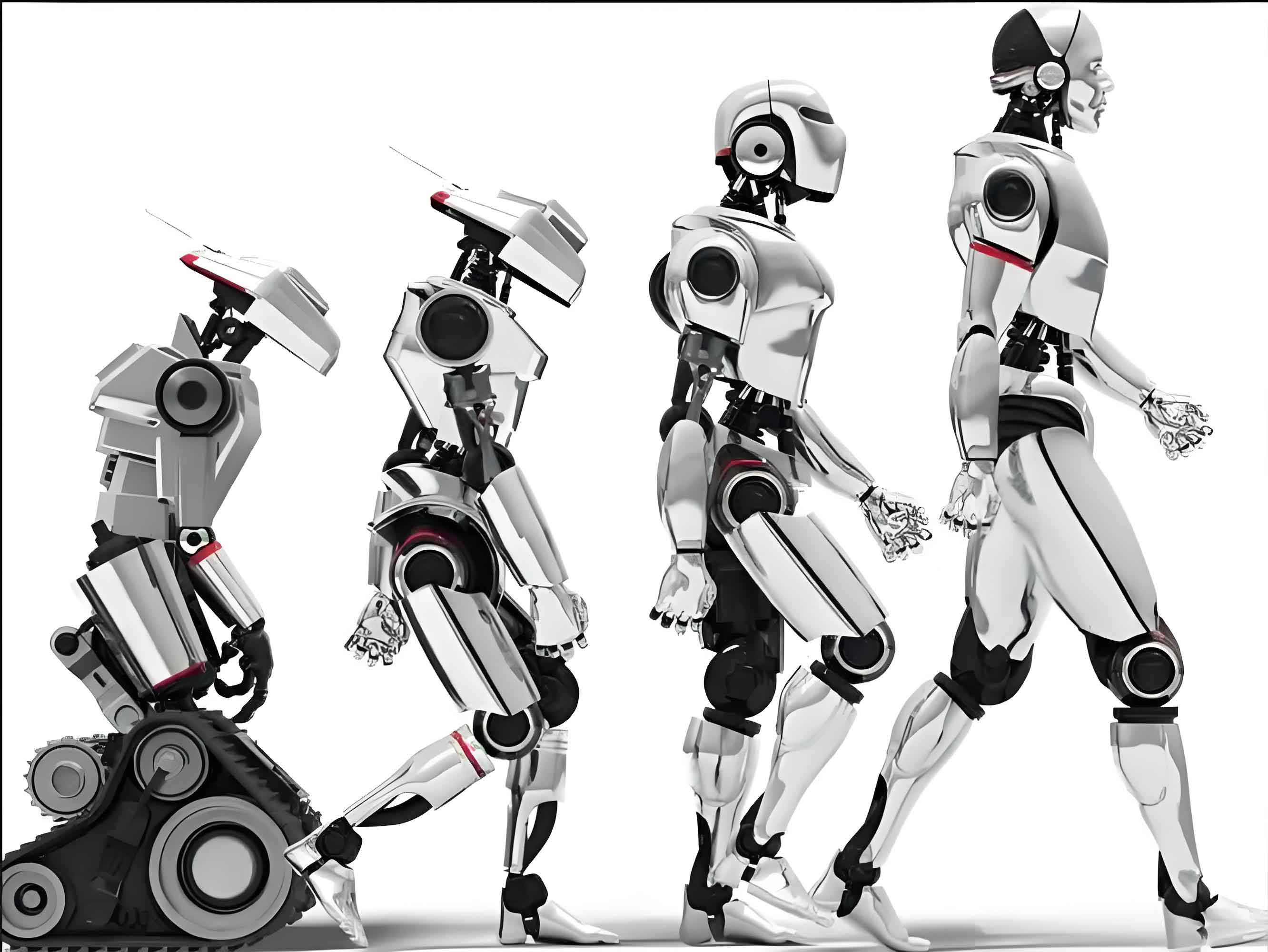
From a systems perspective, the intelligent robot deployed in the field demonstrates high reliability and environmental adaptability. Its energy systems are designed for extended operational duration, a crucial factor in prolonged rescue missions. Through reliable telemetry and communication links, operators can maintain real-time situational awareness of the dynamic disaster scene. The resilient material science behind the intelligent robot ensures its functionality is minimally compromised by variables like water pressure, temperature flux, or particulate matter. To fully realize its potential, continued integration of breakthroughs in electronics, information technology, and material science is paramount for the iterative improvement of the intelligent robot platform.
Core Systems and Working Principles of the Intelligent Robot
The operational efficacy of an intelligent robot in disaster relief is rooted in its integrated systems. While designs vary, a generalized functional architecture can be described. A common powertrain for heavy-duty rescue robots involves an onboard combustion engine or high-density battery pack driving a hydraulic pump. This system often incorporates a clutch mechanism connected to a drive shaft. Pressurized hydraulic fluid is then distributed to various control units and actuators, enabling powerful movements for locomotion, manipulation, or driving auxiliary systems like water pumps for drainage. This design allows the intelligent robot to decouple its propulsion from its task-specific tools, optimizing power allocation and overall efficiency. The operational time \(T_{operation}\) can be modeled as a function of energy capacity \(E\) and average power draw \(P_{avg}\):
$$T_{operation} = \frac{E}{P_{avg}}$$
For an electrically powered intelligent robot, \(E = C_{battery} \times V\), where \(C_{battery}\) is battery capacity and \(V\) is voltage. Minimizing \(P_{avg}\) through efficient drive systems and duty cycling is key to extending mission duration.
The sensor and navigation system is the “perception” hub of the intelligent robot. It typically includes:
- LiDAR & Depth Cameras: For 3D mapping and obstacle detection in low-visibility conditions.
- Thermal Imaging: To locate survivors based on body heat signatures through smoke or rubble.
- Gas & Chemical Sensors: To detect hazardous atmospheres (toxic gases, radiation, low oxygen).
- Inertial Navigation System (INS): Crucial for maintaining positional accuracy when GPS signals are degraded or lost, such as inside buildings or underground. The INS uses accelerometers and gyroscopes to calculate position (\(p\)), velocity (\(v\)), and orientation (\(\theta\)) via dead reckoning:
$$ p_t = p_0 + \int_{0}^{t} v(\tau) \, d\tau $$
$$ \theta_t = \theta_0 + \int_{0}^{t} \omega(\tau) \, d\tau $$
where \(\omega\) is the angular velocity. Sensor fusion algorithms (e.g., Kalman Filters) combine INS data with sporadic GPS signals to provide continuous, reliable positioning. - Acoustic Doppler Profilers: Used on aquatic intelligent robots (unmanned surface vessels – USVs) to measure water flow velocity profiles, essential for flood and hydrological assessment.
The control and communication system forms the “command and control” link. It usually consists of a handheld or console-based remote terminal and a transceiver base station, often operating on secure, robust frequency bands (e.g., 2.4 GHz or 5.8 GHz). This system transmits control signals to the intelligent robot and receives high-bandwidth data streams—video, sensor readings, and system status—in real-time. Advanced intelligent robots employ AI-driven control software that can process this sensory input to perform semi-autonomous tasks like path planning or automated victim identification, reducing the cognitive load on human operators.
| System | Primary Components | Core Function | Key Performance Metric |
|---|---|---|---|
| Powertrain & Locomotion | Engine/Battery, Hydraulic pumps, Actuators, Tracks/Wheels | Provides mobility and power for tool operation. | Power-to-weight ratio, Torque, Operational endurance \(T_{operation}\). |
| Sensing & Perception | LiDAR, Thermal Camera, Multi-gas Sensor, INS, Microphones | Environmental mapping, hazard detection, victim localization. | Sensor range, resolution, data fusion accuracy. |
| Control & Communication | Onboard Computer, AI Software, Radio Transceiver, Control Terminal | Remote/autonomous operation, data telemetry, decision support. | Latency, bandwidth, signal range, autonomy level. |
| Manipulation & Tooling | Robotic Arms, Grippers, Custom end-effectors (cutters, drills) | Direct interaction: clearing debris, breaking barriers, delivering supplies. | Payload capacity, degrees of freedom, precision. |
Operational Applications and Deployed Systems
The application of the intelligent robot in disaster scenarios is multifaceted. Drawing from lessons learned in major incidents, we can categorize its roles and the specialized systems employed.
1. Flood and Water Disaster Response: In events like catastrophic urban flooding or dam breaches, the intelligent robot platform takes several forms.
- Unmanned Surface Vessels (USVs) for Reconnaissance: These intelligent robots are equipped with sonar, depth sounders, and Doppler profilers. They autonomously or remotely map submerged topography, measure current velocities (\(v_{current}\)), and identify breach points or submerged hazards, generating critical data for engineering responses. The acoustic velocity measurement often relies on the “Time-of-Flight” principle, where the speed of sound in water \(c\) is a function of temperature \(T\), salinity \(S\), and pressure \(P\): $$ c = 1449.2 + 4.6T – 0.055T^2 + 0.00029T^3 + (1.34 – 0.01T)(S – 35) + 0.016P $$ Accurate \(c\) is vital for precise sonar and Doppler measurements.
- High-Capacity Drainage Robots: These are often vehicle-based intelligent robots carrying integrated pumping systems (e.g., “Dragon Suction” pumps). They can be deployed into flooded areas too deep or dangerous for personnel, operating continuously to dewater critical infrastructure like subway tunnels or hospitals. Their pumping efficiency \(\eta_{pump}\) can be expressed as: $$ \eta_{pump} = \frac{\rho g Q H}{P_{input}} $$ where \(\rho\) is fluid density, \(g\) is gravity, \(Q\) is flow rate, \(H\) is total dynamic head, and \(P_{input}\) is input power.
- Amphibious and Bridging Systems: Some intelligent robot platforms are designed as amphibious transport or can deploy rapid-assembly bridges, facilitating the movement of personnel and equipment across flooded or ruptured terrain.
2. Structural Collapse (Earthquake, Explosion) Search and Rescue: This is a primary domain for the ground-based intelligent robot.
- Reconnaissance and Mapping: Small, agile tracked intelligent robots enter unstable rubble piles. Using LiDAR and cameras, they create 3D maps of void spaces, providing structural engineers with a blueprint of the collapse to plan safe ingress points for human teams.
- Victim Detection and Assessment: Equipped with thermal imagers, CO₂ sensors, and seismic acoustic listening devices, the intelligent robot can locate trapped individuals. Advanced algorithms can assess vital signs from thermal data or subtle movements.
- Primary Intervention: Larger robotic platforms with heavy-duty manipulator arms can perform “soft” excavation—carefully removing debris to create an access path—or deliver essential supplies like water, air, and communication devices to victims awaiting extraction.
| Disaster Type | Primary Intelligent Robot Form | Key Tasks | Supporting Technology/Sensors |
|---|---|---|---|
| Urban Flooding | USV, Amphibious Vehicle, Drainage Robot | Hydrographic surveying, breach identification, high-volume dewatering, logistics. | Sonar, Doppler Profiler, INS, High-flow pumps. |
| Structural Collapse | Tracked/Wheeled Ground Robot | Interior reconnaissance, victim search, structural assessment, light debris clearance. | LiDAR, Thermal Camera, MEMS-based INS, Gas sensor, Robotic arm. |
| Fire & HAZMAT | Thermally Protected Ground Robot | Approaching fire source, identifying hot spots, handling hazardous materials, ventilation assessment. | High-temp. housing, IR camera, Multi-gas sensor, Samplers. |
| Landslide & Mudflow | Heavy-Tracked or Legged Robot | Traversing unstable terrain, assessing slide mass, searching for surface victims. | Ground-penetrating radar, GNSS, Stereo vision for terrain analysis. |
3. Firefighting and HAZMAT Incidents: The intelligent robot built with refractory materials can withstand extreme temperatures.
- Proximal Fire Attack: These robots can advance directly into burning structures or industrial sites, deploying water or foam jets to suppress flames from within, a tactic too risky for firefighters.
- Hazardous Material Handling: In chemical spills or nuclear incidents, a specialized intelligent robot can be used to identify, contain, or retrieve hazardous substances, keeping human operators at a safe distance.
Persistent Challenges and Strategic Imperatives
Despite their proven utility, the integration of the intelligent robot into mainstream disaster response faces significant hurdles, as observed in large-scale, complex operations.
1. Interoperability and Joint Operations: Major disasters involve a multitude of response agencies—national, military, local, and volunteer. A critical challenge is the lack of standardized communication protocols and data-sharing platforms between different intelligent robot platforms and command centers. Incompatible control systems and data formats hinder the creation of a unified operational picture. The effectiveness \(E_{joint}\) of a multi-robot, multi-agency team can be modeled as a function of interoperability \(I\), shared situational awareness \(A\), and coordinated task allocation \(T_c\):
$$ E_{joint} = f(I, A, T_c) $$
Maximizing \(E_{joint}\) requires developing common standards for the intelligent robot to ensure seamless collaboration.
2. Operator Skill Gap and Training: The sophisticated nature of the modern intelligent robot demands specialized operational and maintenance skills. Often, newly fielded advanced systems arrive with limited time for comprehensive training, leading to underutilization or ineffective deployment during actual crises. Developing rigorous simulation-based training curricula and intuitive human-robot interfaces (HRIs) is essential to bridge this gap.
3. Inadequate Technical Planning and Adaptability: The dynamic, chaotic nature of a disaster site requires rapid, yet deep, technical assessment to deploy the intelligent robot optimally. Sometimes, technical planning is superficial, failing to account for all environmental variables or secondary risks. The intelligent robot itself must be adaptable, but so must the human planning process. This involves pre-crisis scenario modeling and developing flexible, contingency-based deployment protocols for the intelligent robot.
| Challenge Category | Specific Issue | Impact on Mission | Proposed Mitigation Strategy |
|---|---|---|---|
| Technical & Interoperability | Lack of standard data/control protocols between different robot systems. | Fragmented situational awareness, inefficient coordination between units. | Develop and mandate open communication standards (e.g., ROS-Industrial, JAUS) for all public service intelligent robots. |
| Human Factors | Insufficient operator training on complex new platforms. | Reduced operational tempo, underutilization of capabilities, potential for operator error. | Implement tiered certification programs and high-fidelity VR/AR simulation trainers for intelligent robot operation. |
| Tactical & Strategic | Ad-hoc technical planning unable to cope with complex, evolving site conditions. | Suboptimal robot deployment, missed opportunities for intervention, increased risk. | Integrate robotic specialists into frontline command teams; develop AI-assisted decision-support tools for robot tasking. |
| Logistical & Sustainability | High maintenance demands and power consumption in remote or damaged areas. | Limited endurance, logistical burden for support (fuel, spare parts). | Advance energy-dense power sources (e.g., hydrogen fuel cells); design for modularity and field repair. |
Future Directions and Concluding Synthesis
The trajectory for the intelligent robot in emergency response points towards greater autonomy, resilience, and systemic integration. Future developments must focus on:
1. Enhanced Autonomy through AI: Moving beyond remote operation, the next-generation intelligent robot will leverage machine learning for higher-level autonomy. This includes real-time path planning in complex rubble, automated victim recognition and prioritization, and adaptive task execution based on changing environmental conditions. Swarm robotics, where multiple simple intelligent robots coordinate to achieve a complex goal (like creating a communication relay or distributed sensing network), is a promising research avenue. The coordination efficiency of a swarm of \(n\) robots can be analyzed through models of collective behavior, potentially optimizing a global utility function \(U_{global}\):
$$ U_{global} = \sum_{i=1}^{n} u_i – C_{communication} – C_{interference} $$
where \(u_i\) is the utility contributed by robot \(i\), and the costs account for coordination overhead.
2. Improved Human-Robot Teaming: The interface between human and intelligent robot will evolve towards more intuitive collaboration. Augmented Reality (AR) interfaces could allow commanders to “see through” the robot’s sensors in a natural way, while haptic feedback systems could provide operators with a sense of touch during delicate manipulation tasks.
3. Multi-Modal Mobility and Morphology: Future intelligent robot designs will likely incorporate hybrid mobility—combining wheels, tracks, and legs—or even aerial capabilities (e.g., integrated drones) to overcome the widest possible range of terrain obstacles, from flooded streets to vertical shafts. This morphological adaptability, \(M_{adapt}\), could be a key performance metric, defined as the ratio of traversable terrain types \(T_{traversable}\) to known disaster terrain types \(T_{disaster}\):
$$ M_{adapt} = \frac{T_{traversable}}{T_{disaster}} $$
4. Resilient Communication and Edge Computing: To operate in communication-denied environments, intelligent robots will need advanced mesh networking capabilities and sufficient onboard “edge” computing power to perform critical perception and planning tasks locally, only syncing essential data when a connection is available.
| Technology Area | Specific Innovation | Expected Impact on Intelligent Robot Capability |
|---|---|---|
| Artificial Intelligence | Reinforcement Learning for autonomous navigation; Vision Transformers for scene understanding. | Reduced operator burden, faster area coverage, improved decision-making in novel environments. |
| Advanced Sensor Fusion | Neuromorphic sensors (event-based cameras), quantum-enhanced inertial sensors. | Lower power consumption, higher precision navigation in GPS-denied conditions, better low-light performance. |
| Novel Actuation & Materials | Artificial muscles (e.g., SMA, hydrogels), self-healing composite materials. | More dexterous and robust manipulation, increased platform survivability and longevity. |
| Energy Systems | High-energy-density solid-state batteries, compact hydrogen fuel cells. | Dramatically extended mission endurance, faster recharge/refuel cycles. |
In conclusion, the intelligent robot represents a paradigm shift in disaster response, offering a powerful means to extend human capability into perilous zones. My analysis confirms that its value lies not in replacing human responders, but in augmenting them—taking on the most dangerous initial reconnaissance and intervention tasks, thereby reducing risk and saving crucial time. The core systems of perception, decision-making, and action within the intelligent robot are continually evolving. However, to fully harness this potential, we must address the concomitant challenges of interoperability, training, and adaptive planning. The future of the intelligent robot is inextricably linked to advancements in AI, materials science, and communication technologies. By strategically investing in these areas and fostering collaborative standards, we can ensure that the intelligent robot becomes an ever more reliable and indispensable partner in safeguarding lives and communities against the ravages of disaster.