
The rapid evolution of artificial intelligence and electromechanical systems has propelled the intelligent robot to the forefront of technological innovation, acting as a key driver for industrial transformation and societal advancement. This dynamic landscape presents a critical challenge for higher education: the urgent need to cultivate a new generation of engineers and scientists who possess not only solid interdisciplinary theoretical foundations but also exceptional practical skills and a deeply ingrained innovative mindset. Traditional educational models, often characterized by rigid disciplinary boundaries and a theory-heavy approach, frequently fall short in preparing students for the complex, integrated, and fast-paced nature of the intelligent robot industry. The disconnect between academic learning and industrial application, coupled with a lack of hands-on system-level experience, results in a significant gap in graduate readiness. This paper, therefore, explores the conception, design, and implementation of a comprehensive course series explicitly crafted to bridge this gap. Our approach is fundamentally rooted in the principle of industry-academia-research integration and is strategically aligned with the demands of modern intelligent robot innovation competitions, serving as both a pedagogical framework and a catalyst for talent development.
The core challenge we identified lies in the “fragmented” understanding students often have of intelligent robot systems. Undergraduates participating in robotics contests or seeking careers in this field typically come from diverse backgrounds such as Automation, Computer Science, Mechanical Engineering, or Electronics. While they may have deep knowledge in their respective majors, they commonly lack a holistic grasp of how hardware, software, and algorithms coalesce into a functioning autonomous system. Furthermore, conventional curricula seldom provide sustained, project-based immersion in the complete development lifecycle of an intelligent robot, from sensor interfacing and embedded control to high-level perceptual reasoning and decision-making. This lack of cohesion and practical synthesis hinders their ability to innovate and solve real-world engineering problems effectively.
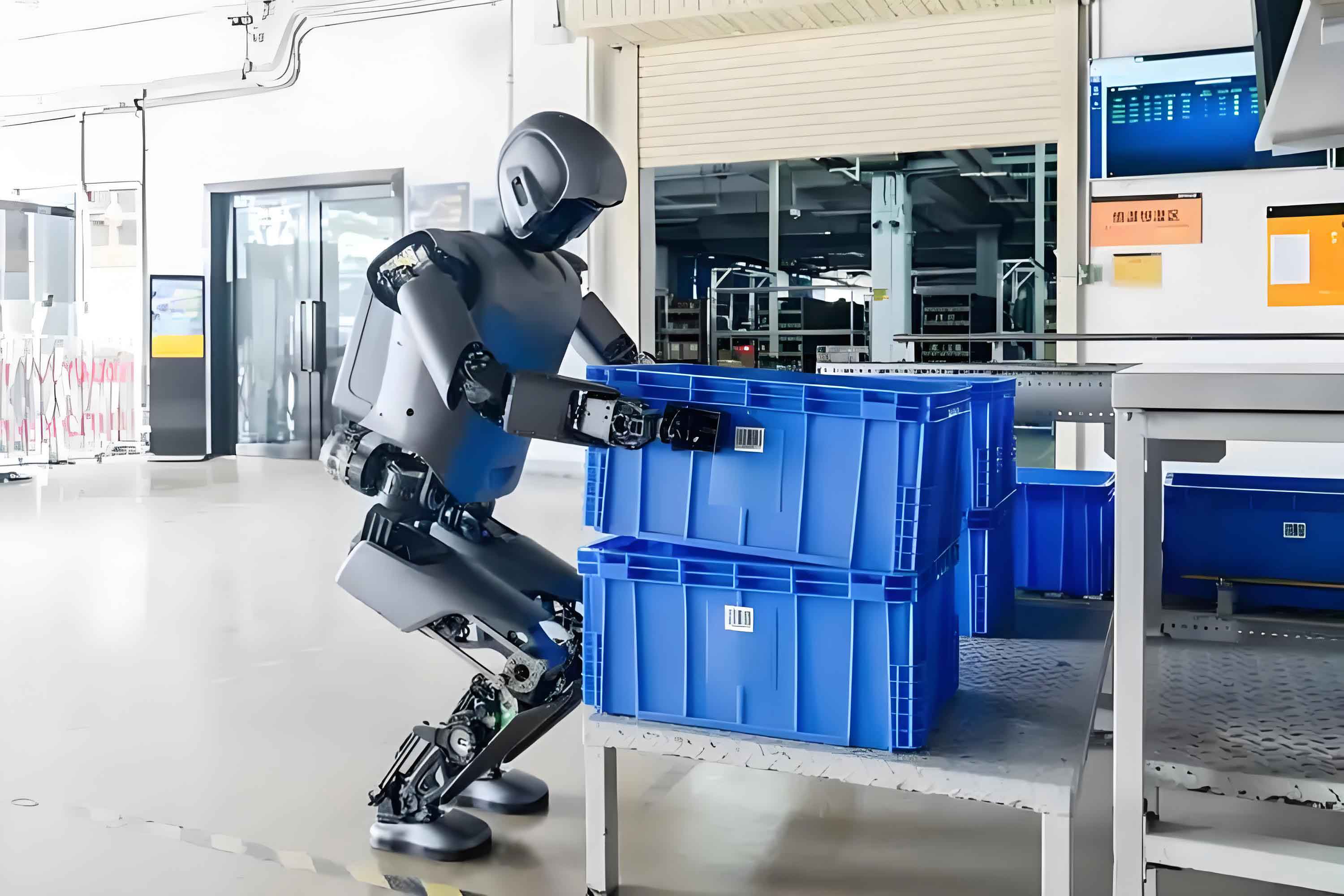
To address these challenges, we have architected a 96-credit-hour course series structured into three progressive, modular pillars. The design philosophy is to deconstruct the complex intelligent robot stack into manageable, interlocking layers, each building upon the last, while continuously reinforcing the connection to practical application and competitive problem-solving. Each module is meticulously designed with learning outcomes that directly map to the skill sets required to excel in competitions like intelligent vehicle challenges, robot manipulation contests, and drone autonomy events. Simultaneously, through active collaboration with industry partners, we infuse the curriculum with real-world relevance, ensuring that the technologies and methodologies taught are not merely academic exercises but are aligned with current and future industrial needs. This symbiotic relationship between competition-driven learning and industry-informed content creates a powerful educational ecosystem for nurturing versatile talent in intelligent robot technologies.
Modular Curriculum Architecture: From Foundations to Autonomous Intelligence
The entire curriculum is scaffolded to guide students from foundational hardware and software principles to the implementation of advanced autonomous algorithms. The 96 hours are distributed across three core modules, each with a distinct focus but designed to be highly complementary.
| Module | Credit Hours | Core Learning Objectives | Key Topics |
|---|---|---|---|
| 1. Embedded Systems Design & Development | 32 | To master the hardware underpinnings of a robot, including circuit design, microcontroller programming, and sensor/actuator interfacing. | Electronic circuit fundamentals; PCB design (EDA tools); Microcontroller architecture (e.g., ARM Cortex-M); C/Embedded C programming; Timers/Interrupts; Communication protocols (UART, I2C, SPI, CAN); Sensor data acquisition (IMU, Ultrasonic, Infrared); Motor driver circuits and PWM control. |
| 2. Robot Operating System & Application Development | 32 | To develop proficiency in Linux, ROS, and software engineering practices for building modular, scalable robot software systems. | Linux command line, filesystem, and shell scripting; C++/Python for robotics; Software build systems (CMake); ROS architecture: nodes, topics, services, actions; ROS tools (RViz, rqt); URDF/SDF for robot modeling; Gazebo simulation; Software integration for robotic functions. |
| 3. Intelligent Vehicle Algorithms & Implementation | 32 | To understand and implement core algorithms for perception, localization, planning, and control in an autonomous mobile robot context. | Deep Learning basics with PyTorch/TensorFlow; Sensor fusion (Kalman/Extended Kalman Filters); Simultaneous Localization and Mapping (SLAM); Object detection & tracking (YOLO, SORT); Path planning (A*, D*, RRT); Trajectory planning & tracking (Pure Pursuit, MPC); Motion control & obstacle avoidance. |
Module 1: Embedded Systems Design & Development
This foundational module demystifies the hardware layer of an intelligent robot. We start from first principles, ensuring students appreciate the physical and electrical constraints within which autonomy operates. A significant portion is dedicated to practical electronic design. Students learn to use Electronic Design Automation (EDA) software to translate schematic diagrams into printed circuit board (PCB) layouts, considering crucial aspects like power integrity, signal integrity, and noise mitigation. The theoretical underpinning of common sensor interfaces is covered. For instance, the analog readout from a distance sensor is modeled, and its conversion to a digital value is explained in the context of the microcontroller’s Analog-to-Digital Converter (ADC). A simple voltage divider rule is often applied here:
$$ V_{out} = V_{in} \cdot \frac{R_2}{R_1 + R_2} $$
where $$ V_{out} $$ might be the input to an ADC pin from a resistive sensor. Similarly, the Pulse-Width Modulation (PWM) principle for motor control is derived, showing how duty cycle $$ D $$ relates to average output voltage:
$$ V_{avg} = D \cdot V_{supply}, \quad \text{where } D = \frac{t_{on}}{T_{period}} $$
Hands-on labs require students to build the core electronic systems for a small differential-drive mobile robot from scratch. This includes designing and soldering motor driver H-bridges, creating power distribution boards, and interfacing ultrasonic rangefinders and inertial measurement units (IMUs) via I2C or SPI buses. The embedded software component focuses on writing efficient, interrupt-driven firmware in C to read sensors, process data, and execute low-level control commands, establishing a firm grasp of real-time system concepts crucial for any intelligent robot platform.
Module 2: Robot Operating System & Application Development
Transitioning from bare-metal programming to high-level software abstraction, this module introduces the tools and frameworks essential for modern intelligent robot development. We begin with the Linux operating system, the de facto standard in robotics, teaching students to navigate and script in this environment. The core of the module is the Robot Operating System (ROS). Students learn its publish-subscribe communication paradigm, which elegantly decouples software components (nodes). They model their simple robot in Unified Robot Description Format (URDF), simulate it in Gazebo, and write nodes to, for example, process simulated sensor data or control simulated actuators.
The power of ROS lies in its modularity and code reusability, a concept we emphasize through incremental projects. A key learning outcome is the ability to integrate disparate functionalities. For instance, students might develop one node that subscribes to camera images and publishes detected object positions, while another node subscribes to these positions and published sensor data to plan avoidance maneuvers. The communication between nodes $$N_i$$ and $$N_j$$ over a topic $$T$$ can be abstracted as a data flow:
$$ N_i \xrightarrow[\text{publishes}]{T} \text{Middleware} \xrightarrow[\text{forwards}]{T} N_j \xrightarrow[\text{subscribes}]{T} $$
This module bridges the gap between low-level hardware control from Module 1 and the high-level algorithms of Module 3, teaching students how to build a flexible, maintainable software architecture for a complex intelligent robot.
Module 3: Intelligent Vehicle Algorithms & Implementation
This capstone module delves into the “intelligence” of the intelligent robot. It focuses on the algorithmic core that enables autonomous perception, reasoning, and action. We start with the fundamentals of deep learning, providing students with hands-on experience in configuring frameworks like PyTorch, designing simple convolutional neural networks (CNNs) for tasks like lane or object detection from camera images. The forward pass of a neuron is introduced:
$$ y = f\left(\sum_{i=1}^{n} w_i x_i + b\right) $$
where $$f$$ is the activation function, $$w_i$$ are weights, $$x_i$$ are inputs, and $$b$$ is the bias.
A major focus is sensor fusion and state estimation. Students implement filters to combine noisy data from multiple sources, such as fusing wheel encoder odometry with IMU data using a complementary or Kalman filter to get a more robust estimate of the robot’s pose (position $$(x, y)$$ and orientation $$\theta$$). The prediction and update steps of a simple linear Kalman filter for tracking 1D position are explored:
Prediction:
$$ \hat{x}_{k|k-1} = F_k \hat{x}_{k-1|k-1} $$
$$ P_{k|k-1} = F_k P_{k-1|k-1} F_k^T + Q_k $$
Update:
$$ \tilde{y}_k = z_k – H_k \hat{x}_{k|k-1} $$
$$ S_k = H_k P_{k|k-1} H_k^T + R_k $$
$$ K_k = P_{k|k-1} H_k^T S_k^{-1} $$
$$ \hat{x}_{k|k} = \hat{x}_{k|k-1} + K_k \tilde{y}_k $$
$$ P_{k|k} = (I – K_k H_k) P_{k|k-1} $$
Path planning and control are also covered in depth. Students implement and compare classic graph-search algorithms (A*, D* Lite) for global planning in known maps and local planners (Dynamic Window Approach, Timed Elastic Band) for real-time obstacle avoidance. The kinematic model of a differential-drive robot is used to relate wheel velocities $$(v_l, v_r)$$ to robot body velocity $$(v, \omega)$$:
$$ v = \frac{r}{2}(v_r + v_l), \quad \omega = \frac{r}{L}(v_r – v_l) $$
where $$r$$ is the wheel radius and $$L$$ is the distance between wheels. These algorithms are not just studied theoretically; students deploy and tune them on physical robot platforms, closing the loop from perception to action and completing the full autonomy stack for an intelligent robot.
Industry-Informed Practical Pedagogy and Case Design
To ensure the curriculum remains grounded and relevant, we have established a deep collaboration network with leading companies in robotics and automation. This industry-academia partnership informs both the content and the pedagogy. The practical teaching cases within each module are co-designed or reviewed by industry engineers to reflect genuine challenges and standard practices in the development of commercial and research intelligent robot systems.
| Module | Case Study Title | Learning Goals & Industry Relevance |
|---|---|---|
| Embedded Systems | 1. Robust DC Motor Driver with Fault Protection | Design H-bridge with current sensing and short-circuit protection; essential for reliable actuator control in any mobile intelligent robot. |
| 2. Multi-Sensor Obstacle Detection Node | Fuse ultrasonic and infrared proximity data on an MCU to create a reliable, low-level safety system; mimics industrial safety scanner integration. | |
| ROS Development | 3. ROS-based Remote Teleoperation & Monitoring Suite | Develop a graphical interface to send commands and visualize robot sensor data (topic visualization) over a network; foundational for remote operation of industrial or field intelligent robots. |
| 4. Gazebo Simulation of an Autonomous Warehouse Tugger | Model a complex robot with multiple sensors in simulation, script automated point-to-point navigation; directly applicable to logistics automation. | |
| Algorithms & Implementation | 5. LiDAR-based Graph-SLAM for Indoor Mapping | Implement a SLAM pipeline (e.g., using Google Cartographer or GMapping) to autonomously build a map of an unknown environment; core technology for service and cleaning robots. |
| 6. Vision-Based Pedestrian Tracking & Reactive Avoidance | Integrate a CNN-based detector with a tracker and a local planner to enable a robot to safely navigate among moving obstacles; relevant for autonomous guided vehicles (AGVs) in human-shared spaces. |
These cases are sequenced from component-level to system-level integration. They are designed to be open-ended, encouraging students to research, experiment, and optimize. For example, in Case 5, students must not only get the SLAM algorithm running but also evaluate the quality of the resulting map using metrics like relative pose error, mirroring the validation processes used in industry. This problem-based learning approach, fueled by realistic scenarios, dramatically enhances students’ abilities in systems thinking, debugging, and iterative development—skills paramount for innovators in the intelligent robot sector.
Development of Multi-Modal Experimental Platforms and Teaching Resources
Effective hands-on learning requires accessible and capable hardware. Our teaching and research team has developed a suite of modular intelligent robot platforms that scale in complexity to match the curriculum’s progression.
| Platform | Core Compute | Key Sensors | Primary Pedagogical Use |
|---|---|---|---|
| Autonomous Mobile Rover | Raspberry Pi 4/5 | Camera, IMU, Ultrasonic, Wheel Encoders | Modules 1 & 2: Ideal for learning embedded interfacing, basic ROS node development, and simple autonomy tasks (line following, wall following). Low-cost and highly modular for student experimentation. |
| Advanced Research Rover | NVIDIA Jetson AGX Orin | 3D LiDAR, Stereo Camera, GPS/IMU, ToF sensors | Module 3: Provides the computational power (GPU) and sensor suite necessary for implementing and testing advanced algorithms like real-time 3D SLAM, deep learning-based perception, and complex navigation in unstructured environments. |
| Collaborative Robot Arm (6-DOF) | Integrated Controller + External PC | Force-Torque Sensor, Vision Camera | Advanced Projects: Used for specialized projects in manipulation, introducing concepts of kinematics, motion planning, and human-robot interaction, expanding the definition of intelligent robot beyond mobile platforms. |
These platforms are complemented by a rich set of digital resources enabling a blended learning model. We have created extensive online repositories containing lecture videos, detailed lab manuals, pre-configured software virtual machines, and code templates. This allows students to prepare theory and even run simulations before lab sessions, making the limited physical lab time far more productive for hands-on debugging and experimentation. The online forums facilitate peer-to-peer help and collaboration, mimicking distributed development teams common in the intelligent robot industry.
Fusion of Online-Offline Learning and Industry Collaboration Mechanism
The instructional methodology seamlessly blends asynchronous online learning with intensive, collaborative offline practice. The online component provides the flexibility for self-paced mastery of foundational concepts and software tools. For instance, students complete interactive tutorials on Linux commands, ROS basics, or Python for robotics before attending the corresponding lab.
The offline component, centered around our well-equipped laboratory and the physical robot platforms, is where synthesis occurs. Here, instructor and teaching assistant guidance is crucial. More importantly, we regularly host sessions with engineers from our partner companies. These industry experts serve as guest lecturers, provide technical workshops on specific tools (e.g., a specific SLAM library or simulation software used in their products), and most valuably, act as project mentors and reviewers. They pose challenge problems drawn from their work, critique student design approaches, and provide insights into industry-standard best practices, reliability requirements, and cost-performance trade-offs. This continuous exposure to professional perspectives helps students contextualize their academic learning within the broader ecosystem of intelligent robot innovation and commercialization.
The ultimate synthesis happens in the form of capstone projects, often directly linked to upcoming innovation competitions. Student teams, functioning as small startups, take responsibility for a full project cycle: defining requirements based on competition rules or an industry-proposed challenge, designing the system architecture, implementing and integrating modules from all three courses, testing rigorously, and iterating based on results. This end-to-end experience is the hallmark of our curriculum, producing graduates who are not just knowledgeable in parts but are proficient architects and builders of integrated intelligent robot systems.
Conclusion and Future Perspectives
The integrated industry-academia-research curriculum for intelligent robot education, anchored in the framework of innovation competitions, represents a significant evolution in engineering pedagogy. By systematically deconstructing the autonomy stack into coherent modules, reinforcing learning with industry-relevant practical cases, and fostering a blended, collaborative learning environment with direct industry engagement, we create a powerful incubator for talent. Students emerge from this series not merely as programmers, electrical engineers, or algorithm specialists, but as versatile roboticists with a holistic understanding of the system, proven practical skills, and the confidence to innovate.
The success of this approach is reflected in the enhanced performance of student teams in national and international intelligent robot competitions, where they demonstrate superior system integration skills and innovative problem-solving. Furthermore, feedback from industry partners indicates that graduates from this program integrate into R&D teams more rapidly and contribute effectively from the outset. Looking forward, we plan to continually update the curriculum to embrace emerging trends such as embodied AI, large language models for robot task planning, and advanced multi-robot coordination. We will also deepen industry collaboration through more joint research projects that can feed directly into advanced teaching cases, ensuring that our educational pipeline remains a vibrant and leading source of talent for the ever-advancing field of intelligent robots.