
The mining industry is inherently hazardous, with accidents characterized by sudden onset, complex and dangerous environments, and extreme difficulty in executing rescue operations. Traditional rescue methods are severely limited by post-accident conditions such as collapses, toxic gas accumulation, and oxygen-deficient atmospheres, posing significant risks to human responders. The intelligent robot has emerged as a critical technological asset to ensure mining safety. Driven by policy support and technological breakthroughs, significant progress has been made in recent years. However, substantial technical bottlenecks and practical application challenges remain. This article systematically reviews the current state, core challenges, and future directions for mining rescue intelligent robots from four key technological perspectives:本体设计, communication, perception, and planning algorithms. The aim is to provide a reference for related research and foster the deeper integration of intelligent robotic systems in mine safety.
Current Research Landscape for Intelligent Mine Rescue Robots
The field of intelligent rescue robots for mining is evolving rapidly, with notable advancements both domestically and internationally across various technological domains. The overarching goal is to develop systems capable of operating autonomously or semi-autonomously in unstructured, hazardous post-disaster environments. The research focus spans the mechanical design of the robot platform, reliable communication in subterranean settings, robust environmental perception, and intelligent navigation and task planning. Key trends include the transition from single-mode to multi-modal locomotion for terrain adaptability, the adoption of wireless mesh networking for communication, the fusion of multi-sensor data for comprehensive situational awareness, and the hybrid use of global and local path planning algorithms to balance efficiency and real-time obstacle avoidance. The integrated progress across these areas is propelling the capabilities of the modern mining rescue intelligent robot.
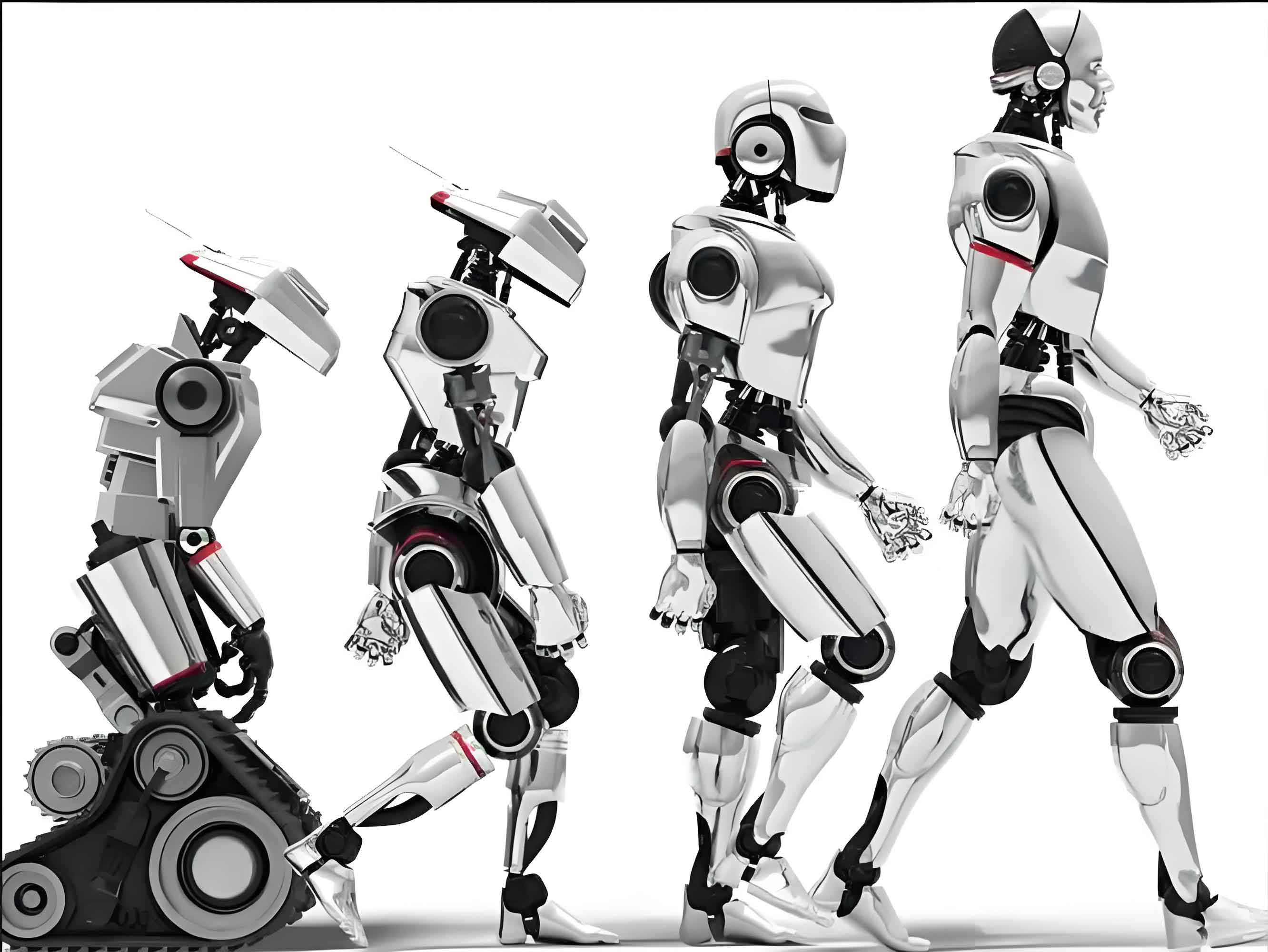
本体设计: Platform Architecture and Mobility
The本体设计 of an intelligent rescue robot must reconcile multiple, often competing, requirements: environmental adaptability, mobility over complex terrain, payload capacity, operational safety (especially防爆), and energy efficiency. The design directly impacts the robot’s capability to reach and operate within a disaster zone.
State of the Art
Current research has moved beyond simple wheeled or tracked platforms. The trend is towards multi-modal and specialized本体设计s:
- Multi-modal Platforms: Integrated systems combine wheels, tracks, or legs to handle diverse obstacles like rubble, steep inclines, and gaps.
- Snake-like Robots: Utilizing modular关节构型s, these robots excel at penetrating narrow gaps and pipes but typically suffer from low payload and speed.
- Legged (Biomimetic) Robots: Quadruped or hexapod designs offer superior stability and adaptability on highly unstructured terrain but face challenges in control complexity and limited operational endurance.
Material science plays a crucial role. The use of lightweight composites like carbon fiber frames, combined with optimized hybrid (e.g., hydraulic-electric) drive systems, aims to enhance the power-to-weight ratio. Safety design is paramount. While traditional explosion-proof (防爆) housings add significant weight, innovative approaches like intrinsic safety circuit design combined with localized explosion-proof encapsulation for critical components are being explored to reduce overall mass while meeting safety standards.
| Locomotion Type | Advantages | Disadvantages | Suitability for Mine Rescue |
|---|---|---|---|
| Wheeled/Tracked | High speed on flat terrain, simple control, good energy efficiency. | Poor performance on large debris, steps, or soft ground. | Limited to less damaged, open roadways. |
| Legged (Biomimetic) | Excellent adaptability to highly unstructured terrain, can step over obstacles. | Complex control, high energy consumption, lower speed, stability challenges. | High potential for navigating collapse zones and rubble. |
| Snake-like/Articulated | Unmatched ability to traverse extremely narrow and confined spaces. | Very slow, minimal payload capacity, complex kinematics. | Ideal for penetration into blocked tunnels or ventilation shafts. |
| Hybrid (Wheel-Leg-Track) | Versatility; can adapt locomotion mode to the immediate terrain. | Mechanical complexity, heavier本体设计, control challenges for mode switching. | Most promising for general-purpose rescue in varied post-disaster topography. |
Key Challenges
- Dynamic Adaptability vs. Simplicity: Integrating multiple locomotion modes creates control algorithm complexity and increases energy consumption. Ensuring stable and seamless transitions between modes during operation remains difficult.
- Lightweighting vs. Payload/Strength: Achieving a light本体设计 for energy efficiency and mobility often conflicts with the need for strong structural integrity,防爆 protection, and the capacity to carry essential rescue tools or sensors.
- Safety and Durability: Engineering lightweight yet reliable explosion-proof and environmental (dust, water, corrosion) protection is a significant challenge. The long-term reliability of novel protective solutions under extreme conditions requires rigorous validation.
Future Directions
The future of本体设计 lies in modularity, intelligence, and adaptive safety.
- Modular and Reconfigurable Platforms: Developing standardized interfaces will allow an intelligent robot to be quickly configured with different mission-specific modules (e.g., reconnaissance, debris clearing, medical supply delivery).
- Advanced Multi-modal Locomotion: Research will focus on intelligent control algorithms for hybrid systems, enabling the robot to autonomously select the optimal gait or drive mode based on real-time terrain analysis.
- Smart Protective Systems: Moving from static to dynamic protection, where the robot’s防爆 system can adjust its safeguarding level based on real-time gas concentration readings, and using new materials and distributed energy-dissipation structures.
Communication Technology: The Lifeline for Control and Data
Reliable communication is the lifeline for any remote-controlled or tele-operated intelligent robot. The underground mine environment, with its twisting tunnels, rough walls, and potential structural collapses, severely attenuates and reflects radio signals, creating a major hurdle.
State of the Art
Given the impracticality of trailing cables in a dynamic rescue scenario, wireless mesh networking is the predominant approach. Different technologies offer trade-offs:
- Wi-Fi with Mobile Repeaters: Leverages mature, high-bandwidth technology. Deployable relay nodes (e.g., “tumbler”-style droppable nodes) can extend network range dynamically to follow the advancing intelligent robot.
- ZigBee Mesh Networks: Offer advantages in low power consumption, low cost, and self-organizing capability, making them suitable for deploying static sensor networks. However, their low data rate limits video transmission.
- Mobile Ad-hoc Networks (MANET) / Mesh Protocols: Provide a robust, self-healing, and extensible network. Nodes (robots, repeaters) cooperate to relay data, offering a good balance of range, data rate, and reliability suitable for robotic teams.
- Hybrid and Prioritized Systems: Some systems use dual-channel communication to separate high-priority control commands from high-volume video data, ensuring stable control even if video bandwidth fluctuates.
| Technology | Key Strengths | Key Limitations in Mines | Typical Use Case |
|---|---|---|---|
| Wi-Fi (802.11) | High bandwidth, mature, widely available hardware. | Short range per node, high power consumption, signal blocked by obstacles. | Primary link when supported by a dense network of repeaters; video transmission. |
| ZigBee | Very low power, low cost, excellent for dense networks. | Very low data rate (<250 kbps), limited range. | Deploying stationary environmental sensor networks; low-rate telemetry. |
| Mesh Protocols (e.g., 802.11s) | Self-forming, self-healing, extends network range via hopping. | Latency increases with hops, bandwidth shared across hops. | Dynamic networks for multiple robots and mobile repeater nodes. |
| 5G/Private Networks | Potentially ultra-low latency and high bandwidth. | Poor penetration, requires extensive infrastructure (base stations). | Future potential for pre-equipped mines or surface coordination. |
The effective communication range and bandwidth are fundamentally governed by path loss models. A simplified log-distance path loss model for underground tunnels can be expressed as:
$$PL(d) = PL(d_0) + 10n \log_{10}\left(\frac{d}{d_0}\right) + X_\sigma$$
where $PL(d)$ is the path loss (dB) at distance $d$, $PL(d_0)$ is the path loss at a reference distance $d_0$, $n$ is the path loss exponent (which is significantly higher in mines than in free space, often >3), and $X_\sigma$ represents shadow fading due to large-scale obstructions.
Key Challenges
- The Bandwidth-Range-Reliability Trilemma: Achieving high-bandwidth (for video), long-range, and highly reliable communication simultaneously in unpredictable underground geometries is extremely challenging.
- Dynamic Network Management: As the intelligent robot moves and the environment potentially changes (collapses), the communication network must adapt in real-time, managing node discovery, routing, and potential link failures autonomously.
- Power Constraints: High-power transmitters extend range but drain battery life quickly. Energy-efficient communication protocols are essential for sustained missions.
Future Directions
- Multi-Modal Adaptive Communication: Future intelligent robots will likely carry multiple radios. An AI-driven communication manager could dynamically select the optimal technology (e.g., lower-bandwidth but longer-range for control, switching to higher-bandwidth when near a repeater for data dump).
- Intelligent, Deployable Infrastructure: Development of sophisticated mobile relay nodes that can autonomously position themselves to optimize network coverage for the primary救援 intelligent robot.
- Integration with Pre-existing Infrastructure: Leveraging any surviving mine communication infrastructure (leaky feeder systems, fiber optic lines) as a backbone, with wireless meshes providing the last-mile connection to the robot.
Perception Technology: The Eyes and Ears of the Intelligent Robot
Perception is the foundation for autonomous decision-making. A rescue intelligent robot must construct a coherent model of an unfamiliar, dark, dusty, and potentially dynamic environment while searching for signs of life.
State of the Art
Modern systems employ a suite of complementary sensors, with data fusion being key:
- LiDAR (Light Detection and Ranging): The cornerstone for mapping and localization. It provides precise geometric point clouds of the environment, enabling Simultaneous Localization and Mapping (SLAM). Solid-state LiDARs are becoming favored for their robustness.
- Computer Vision: Stereo or RGB-D cameras provide rich texture and color data. They are crucial for object recognition, reading signs, and identifying tools or hazards. Thermal cameras can detect heat signatures of survivors or equipment fires.
- Gas and Environmental Sensors: Electrochemical or semiconductor sensors monitor concentrations of $CH_4$, $CO$, $O_2$, $H_2S$, etc., providing vital atmospheric hazard data.
- Life Detection Sensors:
- Radar-based: Detect micro-movements caused by breathing and heartbeat through rubble.
- Acoustic/Sonar: Listen for calls for help or tapping sounds.
- Thermal Imaging: Locate body heat signatures.
Sensor fusion is typically implemented using probabilistic frameworks like Kalman Filters or more advanced Bayesian methods. For example, fusing LiDAR-based pose estimation with visual odometry can be represented as:
$$\mathbf{\hat{x}}_k = \mathbf{\hat{x}}_k^- + \mathbf{K}_k(\mathbf{z}_k – \mathbf{H}_k\mathbf{\hat{x}}_k^-)$$
where $\mathbf{\hat{x}}_k$ is the updated state estimate (robot position, orientation), $\mathbf{\hat{x}}_k^-$ is the predicted state, $\mathbf{z}_k$ is the measurement from a sensor (e.g., visual feature match), $\mathbf{H}_k$ is the measurement model, and $\mathbf{K}_k$ is the optimal Kalman gain that weights the trust between prediction and measurement.
| Sensor Type | Primary Data | Role in Fusion Pipeline | Key Vulnerability |
|---|---|---|---|
| 3D LiDAR | Geometric point cloud, range data. | Primary source for SLAM, obstacle detection, global map creation. | Performance degraded by dense smoke/dust (scattering). |
| Stereo/RGB-D Camera | Color/Intensity images, depth map. | Object recognition, semantic segmentation, texture mapping, supplementary odometry. | Requires adequate, non-uniform lighting; blinded by smoke/dust. |
| Thermal Camera | Heat signature (temperature) map. | Victim detection, overheated equipment identification, navigation in total darkness. | Cannot see through solid barriers; confused by ambient heat sources. |
| MMWave Radar | Micro-Doppler signatures, range-velocity. | Non-line-of-sight life sign detection, motion sensing through light obstructions. | Lower spatial resolution; complex signal interpretation. |
| Gas Sensor Array | Concentration of specific gases. | Hazard mapping, generating a “gas concentration field” overlay for the geometric map. | Slow response time, cross-sensitivity, requires calibration. |
Key Challenges
- Adverse Environmental Conditions: Dust, smoke, water mist, and uneven lighting can degrade or blind optical (LiDAR, camera) and acoustic sensors. Sensors must be physically protected while maintaining functionality.
- Heterogeneous Data Fusion: Fusing asynchronous, multi-rate, and geometrically misaligned data from different sensors (geometric point clouds, pixel arrays, scalar gas readings) into a single, consistent, and actionable world model is computationally intensive and algorithmically complex.
- Real-time Processing Requirements: Perception algorithms for SLAM, object detection, and victim identification must run in real-time on the robot’s limited onboard computing resources.
- Sensor Survivability: Ensuring sensor accuracy and longevity in high-humidity, high-temperature, and corrosive (e.g., $H_2S$) environments.
Future Directions
- Resilient Sensor Hardware: Development of sensors inherently robust to mine conditions, such as LiDAR systems with longer wavelengths less affected by dust, or hardened camera assemblies with adaptive active lighting.
- AI-Enhanced Fusion and Understanding: Using deep learning not just for individual tasks (e.g., victim detection in an image) but for cross-modal understanding—e.g., correlating a thermal anomaly with a specific shape in the LiDAR point cloud and an audible sound to confirm a survivor’s location with high confidence.
- Digital Twin Creation: The perception system’s ultimate goal will be to construct a real-time “digital twin” of the disaster site, integrating geometric, semantic, and atmospheric data, which can be used for sophisticated mission planning and simulation by remote human operators.
Planning Algorithms: The Cognitive Engine for Navigation and Task Execution
Planning algorithms transform perceived environmental data into actionable motion and task plans. For a rescue intelligent robot, this involves navigating to target locations while avoiding static and dynamic obstacles, and potentially executing specific rescue sequences.
State of the Art
A hierarchical approach is standard: a global planner finds an overall feasible path on a known (or incrementally built) map, and a local planner handles real-time obstacle avoidance and motion control.
- Global Path Planning:
- Graph Search Algorithms (A*, D*): Workhorse algorithms for finding the shortest path on a grid or graph representation of the map. Variants like bidirectional A* and hybrid A* (for kinematic constraints) are commonly used. The cost function for A* is:
$$f(n) = g(n) + h(n)$$
where $g(n)$ is the cost from the start node to node $n$, and $h(n)$ is a heuristic estimate of the cost from $n$ to the goal. - Sampling-Based Algorithms (RRT, RRT*): Efficiently explore high-dimensional configuration spaces, suitable for complex 3D planning or when the map is not perfectly discrete.
- Evolutionary Algorithms (GA, PSO): Useful for multi-objective optimization, e.g., finding a path that minimizes time, energy, and risk exposure simultaneously.
- Graph Search Algorithms (A*, D*): Workhorse algorithms for finding the shortest path on a grid or graph representation of the map. Variants like bidirectional A* and hybrid A* (for kinematic constraints) are commonly used. The cost function for A* is:
- Local Motion Planning & Obstacle Avoidance:
- Dynamic Window Approach (DWA): Samples achievable velocities in the next time interval, simulates the resulting trajectories, and scores them based on proximity to the global path, distance to obstacles, and speed. It selects the velocity $(v, \omega)$ with the highest score:
$$G(v, \omega) = \alpha \cdot \text{heading}(v,\omega) + \beta \cdot \text{dist}(v,\omega) + \gamma \cdot \text{velocity}(v,\omega)$$ - Artificial Potential Field (APF): The robot is attracted to the goal and repelled by obstacles. The total force $\mathbf{F}_{total}$ is:
$$\mathbf{F}_{total} = -\nabla U_{att}(\mathbf{q}) – \nabla U_{rep}(\mathbf{q})$$
where $U_{att}$ is the attractive potential from the goal and $U_{rep}$ is the repulsive potential from obstacles. While simple, it is prone to local minima traps.
- Dynamic Window Approach (DWA): Samples achievable velocities in the next time interval, simulates the resulting trajectories, and scores them based on proximity to the global path, distance to obstacles, and speed. It selects the velocity $(v, \omega)$ with the highest score:
Modern research focuses on tightly coupling these layers. For instance, a global path from A* can provide guiding waypoints for the DWA, or the APF can be modified with virtual sub-goals to escape local minima.
Key Challenges
- Planning Under Uncertainty and Dynamics: The map is incomplete and changes (new collapses, moving debris). Algorithms must be reactive and capable of frequent re-planning without excessive computational cost.
- High-Dimensional State Space: Planning for a complex intelligent robot (e.g., with an arm) in 3D cluttered space involves many degrees of freedom, leading to the “curse of dimensionality.”
- Local Minima and Trap Scenarios: Classic algorithms like APF can fail in common mine scenarios like U-shaped collapse areas or long, narrow tunnels, causing the robot to oscillate or stop.
- Incorporating Complex Constraints: Paths must respect not just collision avoidance but also terrain traversability, stability, energy consumption, and atmospheric hazard levels (e.g., avoiding high $CH_4$ zones).
Future Directions
- Learning-Based Planning: Reinforcement Learning (RL) and Imitation Learning can enable robots to learn sophisticated navigation and obstacle negotiation policies directly from experience or expert demonstration, potentially outperforming traditional algorithms in complex, dynamic environments.
- Multi-Agent Collaborative Planning: For teams of intelligent robots, distributed planning algorithms will allow for coordinated task allocation (e.g., one robot maps, another clears debris) and formation control while maintaining communication links.
- Integration with Large Language Models (LLMs) and World Models: LLMs could interpret high-level, ambiguous human commands (“check the area behind the collapsed support pillar”). A learned world model would allow the robot to predict the outcome of its actions and plan over longer horizons, considering the temporal evolution of the disaster site.
Synthesis and Conclusion
The development of the intelligent rescue robot for mining is a multidisciplinary endeavor facing a complex set of interrelated challenges. Progress is being made on all fronts: through more adaptive and safer本体设计s, more resilient and intelligent communication networks, more robust and perceptive sensor suites, and more capable and flexible planning algorithms. The central theme for the future is intelligent integration and autonomy. The next generation of救援 intelligent robots will not simply be tools remotely piloted into danger zones. They will be collaborative partners that can understand their mission context, adapt to unforeseen circumstances, make safe decisions in real-time, and work effectively as part of a human-robot team. Achieving this vision requires continued convergence of advancements in robotics, artificial intelligence, materials science, and communication engineering. The ultimate goal is to deploy intelligent robotic systems that significantly enhance the safety, speed, and success rate of mine rescue operations, thereby safeguarding human lives in one of the world’s most critical and challenging industries.