
As I observe the global manufacturing landscape, a profound transformation is underway, driven by the silent, precise, and relentless work of intelligent robots. We are no longer at the cusp of this change; we are in its midst. The vision of the “lights-out factory,” where production hums along 24/7 devoid of human presence on the floor, is materializing from a futuristic concept into an operational reality. From assembly lines to restaurant kitchens, intelligent robots are permeating diverse scenarios, becoming the primary agents of a new industrial revolution. This shift is not merely about automation; it is about the fusion of cyber and physical systems, creating a self-optimizing, resilient, and highly efficient production paradigm. The data is unequivocal: the nation has emerged as the world’s largest and most dynamic market for these machines, with industry revenues soaring and production volumes holding the top global position for nearly a decade. The proliferation of enterprises dedicated to robotic technologies further underscores a vibrant and rapidly expanding ecosystem.
At the heart of this transformation lies the relentless advancement in the core technologies that empower the intelligent robot. An intelligent robot is not defined solely by its mechanical arm or mobile base, but by its integrated “brain”—a suite of technologies enabling perception, learning, and autonomous decision-making. The technological stack can be conceptualized as a layered architecture:
$$T_{FR} = I_{AI} + I_{DT} + I_{IoT} + I_{AM}$$
Where \(T_{FR}\) represents the total technological foundation of a Future Factory robot, and the components are:
\(I_{AI}\) = Artificial Intelligence & Machine Learning,
\(I_{DT}\) = Digital Twin simulation,
\(I_{IoT}\) = Industrial Internet of Things connectivity,
\(I_{AM}\) = Additive Manufacturing integration.
Let’s examine the contribution of each layer. AI and machine learning algorithms, particularly deep learning for computer vision and reinforcement learning for control, allow the intelligent robot to perform complex tasks like anomaly detection, adaptive grasping, and predictive maintenance. For instance, the quality inspection process, once reliant on human eyes, can now be performed with superhuman accuracy and speed by an intelligent robot governed by a convolutional neural network (CNN). The performance can be modeled as an improvement function:
$$Q_{robot}(t) = \alpha \cdot \int_{0}^{t} e^{-\lambda \tau} \cdot D(\tau) \, d\tau + Q_{base}$$
Here, \(Q_{robot}(t)\) is the quality score over time, \(\alpha\) is the learning rate, \(\lambda\) is the forgetting factor, \(D(\tau)\) is the incoming data stream, and \(Q_{base}\) is the baseline performance. This continuous learning loop is what distinguishes an intelligent robot from a simple automated machine.
The Digital Twin (\(I_{DT}\)) creates a virtual, dynamic replica of the physical robot and its environment. This allows for simulation, optimization, and remote monitoring without disrupting live operations. Stress tests, new workflow simulations, and “what-if” analyses are conducted in the digital realm, drastically reducing downtime and development costs. The synchronization between the physical and digital entities can be expressed as minimizing a state deviation function:
$$\min \left[ \sum_{i=1}^{n} (s_{p,i} – s_{d,i})^2 \right]$$
where \(s_{p,i}\) and \(s_{d,i}\) are the states of the physical and digital twins, respectively.
Connectivity via IIoT (\(I_{IoT}\)) is the nervous system. Sensors embedded on the intelligent robot and throughout the factory floor generate vast amounts of operational data. This data flows seamlessly to edge devices or the cloud for processing, enabling real-time coordination between multiple robots (swarm robotics) and with other smart systems. Finally, Additive Manufacturing (\(I_{AM}\)), or 3D printing, synergizes with the intelligent robot by allowing for on-demand production of customized tooling, spare parts, or even complex components, further enhancing flexibility.
| Core Technology | Key Function for Intelligent Robot | Primary Benefit |
|---|---|---|
| AI & Machine Learning | Perception, Decision-Making, Adaptive Control | Autonomy, Flexibility, Predictive Capability |
| Digital Twin | Simulation, Optimization, Virtual Commissioning | Risk Reduction, Performance Optimization, Zero-Downtime Testing |
| Industrial IoT (IIoT) | Real-time Data Acquisition & System Interconnectivity | Fleet Coordination, Real-time Monitoring, Data-Driven Insights |
| Additive Manufacturing | On-Demand Tooling & Part Fabrication | Supply Chain Resilience, Mass Customization, Rapid Prototyping |
While these technologies are global in development, their application provides a compelling window into the future of manufacturing. The market’s scale and pace of adoption make it a premier innovation laboratory. The growth trajectory is staggering, as summarized below:
| Metric | 2022 Figure | Global Rank / Note |
|---|---|---|
| Total Industry Revenue | > $240 billion (¥1700+ billion) | World’s Largest Market |
| Industrial Robot Output | 443,000 units | World’s Leading Producer |
| Service Robot Output | 6.458 million units | World’s Leading Producer for 9 consecutive years |
| Registered Robotics Enterprises | > 562,900 | Vast and Growing Ecosystem |
| New Enterprises (Jan-May 2023) | 70,700 | +35.3% Year-on-Year Growth |
This explosive growth is channeled into building the factories of tomorrow. The most celebrated archetypes are the “Lighthouse” and the emerging “Morning Star” factories. A Lighthouse Factory, as designated by the World Economic Forum in collaboration with McKinsey & Company, represents the pinnacle of Fourth Industrial Revolution technology adoption. It is a site that has successfully integrated a suite of advanced use cases—often involving intelligent robots, AI, and big data analytics—at scale, achieving significant operational and financial improvements while enabling transformative business models.
The distribution of these beacons is highly instructive. Of the 132 global Lighthouses, a significant concentration is in discrete manufacturing sectors like electronics, automotive, and consumer appliances. This is logical, as these industries face the challenge of producing high-mix, low-volume, and complex products. The intelligent robot is perfectly suited to bring flexibility and precision to this environment. For example, in the heavy machinery sector, only two global Lighthouses exist, both belonging to the same conglomerate. In the lithium battery sector, again, only two have been recognized, both from the industry leader. This highlights how the strategic deployment of intelligent robots and digitalization can create an unassailable competitive moat.
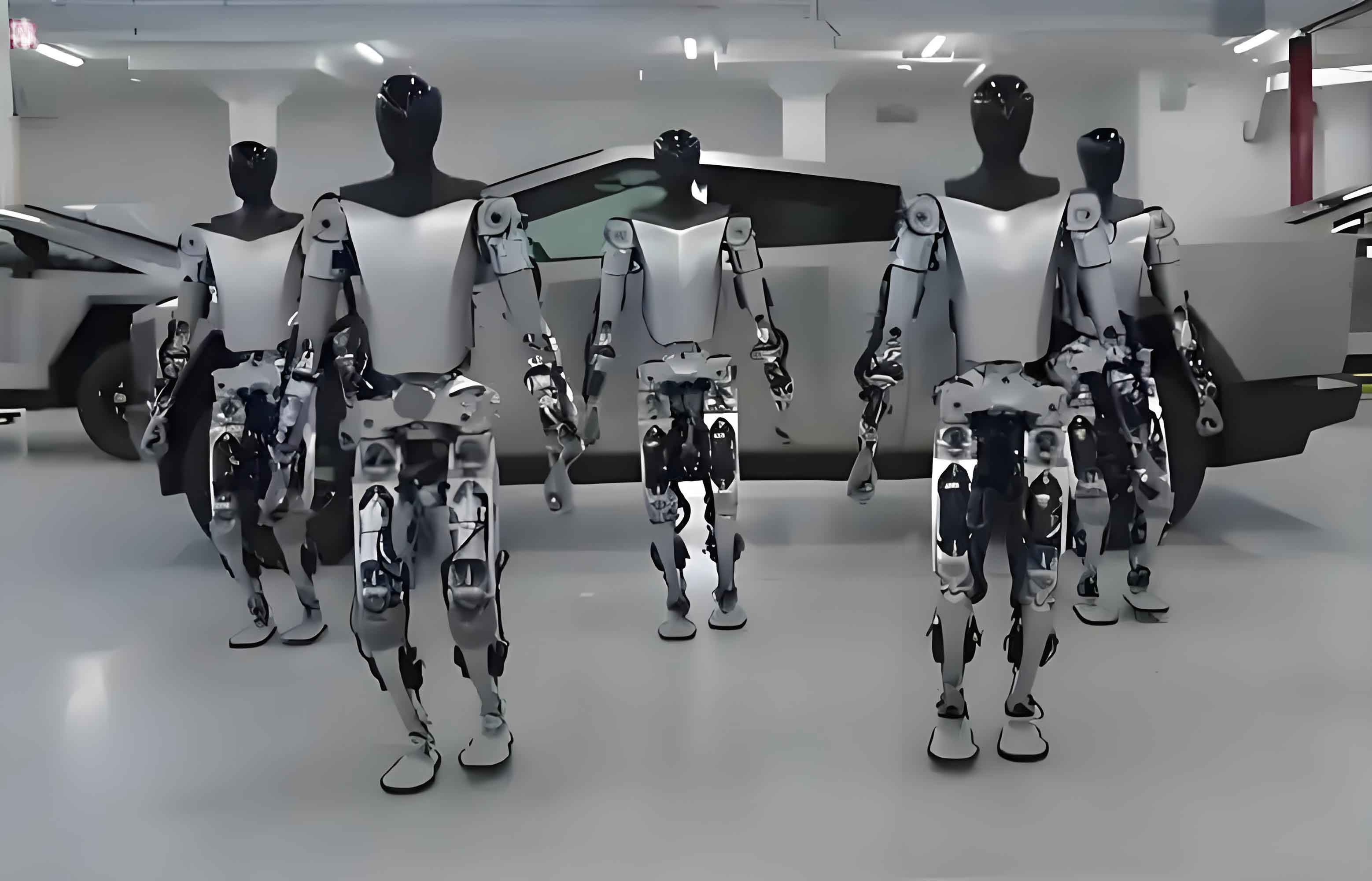
The success of the Lighthouse model has inspired regional adaptations. The “Morning Star Factory” initiative is a prime example, aiming to cultivate a broader base of data-driven digital enterprises. While Lighthouses are global exemplars, Morning Star Factories focus on deep, data-centric innovation within specific regional industrial contexts. The goal is to move beyond isolated pilot projects and create a systemic capability for data acquisition, management, and application across the entire value chain. The focus is on empowering these factories to leverage data modeling and digital twins to solve core industrial problems, from predictive maintenance of high-value equipment to optimizing energy consumption in high-pollution processes.
This evolution points to a powerful new paradigm: the coupling of the “Industrial Brain” with the “Future Factory.” The Industrial Brain is a platform that aggregates and analyzes industry-wide data, providing macro-level insights, resource matching, and ecosystem coordination. The Future Factory, powered internally by fleets of intelligent robots and a digital thread, is the micro-level execution engine. Together, they form a symbiotic relationship. The factory feeds operational data to the brain, and the brain provides the factory with market intelligence, supply chain optimization, and access to shared technological services. This paradigm enhances not just individual factory productivity but the resilience and agility of the entire industrial cluster.
The efficacy of this approach is best demonstrated through concrete, albeit anonymized, examples. The measurable outcomes from deploying intelligent robots and associated technologies are profound.
| Industry | Factory Type (Virtual Example) | Key Intelligent Robot & Digital Use Cases | Quantified Outcome |
|---|---|---|---|
| Electronics | Lighthouse Factory (Discrete Mfg) | 37+ 4IR use cases: AI-driven visual inspection, robotic flexible assembly, digital twin for production simulation, IoT for fleet management. | Productivity increased by 30%, quality-related costs reduced by 15%, energy efficiency improved by 20%. |
| Consumer Packaged Goods | Lighthouse Factory (Process/Discrete Hybrid) | AI-driven demand forecasting enabling 24/7 digital sales model, robotic palletizing & logistics, AI for quality control in filling lines. | Inventory turnover improved by 25%, order-to-delivery lead time cut by 40%, market share growth in tailored product segments. |
| Chemical / New Materials | Lighthouse Factory (Process Mfg) | 28 advanced use cases: ML-driven catalytic process optimization, AI for predictive safety hazard detection, autonomous mobile robots (AMRs) for material transport in hazardous zones. | Overall Equipment Effectiveness (OEE) up by 10%, yield improvement of 5%, recordable safety incidents reduced to zero. |
| Heavy Machinery | Morning Star Factory (Discrete Mfg) | Data modeling for predictive maintenance of large-scale CNC machines, digital twin for remote expert support and operator training, robot welding cells with adaptive path planning. | Unplanned downtime decreased by 50%, service costs reduced by 20%, welding defect rate cut by 35%. |
The aggregate impact is staggering. Research indicates that leading Lighthouse Factories achieve an average productivity increase exceeding 2.5x. Perhaps even more critical in today’s context is the sustainability dividend: successful integration of these digital technologies has led to reductions in carbon emissions by over 97% in specific, optimized processes. The intelligent robot, when integrated into a holistic system, becomes a tool not just for economic efficiency but for environmental stewardship. The operational gains can be modeled through a composite efficiency metric for a Future Factory (\(E_{FF}\)):
$$E_{FF} = \omega_1 \cdot \frac{O_{actual}}{O_{max}} + \omega_2 \cdot (1 – \frac{D}{D_{base}}) + \omega_3 \cdot \frac{E_{base}}{E_{actual}}$$
where \(O\) is output, \(D\) is defect rate, \(E\) is energy consumption, \(\omega\) are weighting factors, and the subscript \(base\) refers to pre-transformation levels. The deployment of the intelligent robot positively impacts all three terms.
However, the journey from a traditional facility to a Future Factory is not merely a procurement exercise. It is a strategic transformation that requires systemic planning and execution. The challenges are multifaceted: high initial capital investment, a significant skills gap in managing and maintaining advanced cyber-physical systems, data security and interoperability concerns, and the need for cultural change within the organization. The return on investment (ROI) must be calculated over a longer horizon and include both tangible and intangible benefits. A simplified ROI model for an intelligent robot deployment project could be:
$$ROI_{FR} = \frac{\Delta P \times V + \Delta Q \times M – C_{I}}{C_{I}}$$
where \(ROI_{FR}\) is the return on investment for the Future Factory initiative, \(\Delta P\) is the increase in production volume, \(V\) is the value per unit, \(\Delta Q\) is the improvement in quality (monetized as reduced waste/rework), \(M\) is the market size, and \(C_I\) is the total investment cost in intelligent robots and digital infrastructure.
To navigate this complexity, a phased roadmap is essential. The following table outlines a conceptual, multi-stage approach to building the Future Factory, centered on the intelligent robot.
| Phase | Focus | Key Actions Involving Intelligent Robot | Technology Emphasis |
|---|---|---|---|
| Foundation & Pilot | Assess, Plan, and Prove Value | Conduct process mining to identify high-ROI automation opportunities. Deploy pilot collaborative robots (cobots) for non-critical, repetitive tasks. Establish basic data collection from equipment. | Cobots, PLC connectivity, basic SCADA, cloud data storage. |
| Scale & Integrate | Automate Processes and Connect Systems | Scale robotic automation to core production lines (welding, assembly, painting). Implement IIoT networks for real-time monitoring. Develop first-generation digital twins for key assets. Integrate Robotics Process Automation (RPA) for back-office functions. | Industrial robots, AMRs, IIoT platforms, edge computing, initial digital twin models. |
| Optimize & Innovate | Enable Intelligence and Agility | Deploy AI/ML for predictive maintenance, computer vision for quality. Integrate additive manufacturing for on-demand tooling. Use advanced digital twins for full-line simulation and optimization. Implement robot fleet learning for adaptive scheduling. | AI/ML platforms, advanced simulation software, additive manufacturing systems, 5G connectivity. |
| Ecosystem & Transform | Couple with Industrial Brain and New Business Models | Connect factory data to industrial brain for supply chain optimization. Enable mass customization through flexible robotic cells. Offer manufacturing-as-a-service using excess, intelligent robot-driven capacity. Achieve autonomous decision-making for core operations. | Industrial Internet platforms, blockchain for traceability, advanced analytics, fully autonomous robotic systems. |
Looking ahead, the trajectory is clear. The intelligent robot will become increasingly sophisticated, moving from pre-programmed automation to true contextual awareness and collaborative intelligence. We will see the rise of “robotics-as-a-service” (RaaS) models, lowering the barrier to entry for small and medium-sized enterprises. The convergence of intelligent robots with augmented reality (AR) will revolutionize maintenance and training. Furthermore, the focus will expand from shop-floor productivity to the entire product lifecycle, with intelligent robots playing key roles in design for manufacturability, circular economy processes like disassembly and recycling, and personalized after-sales services.
In conclusion, the intelligent robot is far more than a piece of capital equipment. It is the central architectural element in the construction of the Future Factory—a factory that is autonomous, adaptive, sustainable, and deeply interconnected. The proliferation of Lighthouse and Morning Star Factories provides a tangible blueprint for this future. The transformation is a complex systems challenge, requiring investment not just in technology, but in people, processes, and partnerships. Yet, the imperative is undeniable. In an era defined by volatility, uncertainty, and the demand for personalization, the ability to harness the power of the intelligent robot within a digitally integrated ecosystem will separate the industry leaders from the laggards. The future of manufacturing is being written today, not by human hands alone, but in close collaboration with the precise, untiring, and ever-more-intelligent machines we have built.