
In the rapidly evolving fields of industrial automation and intelligent service systems, the application of robot technology in tasks such as precise grasping and compliant placement has become a focal point of research. In dynamic and uncertain environments, traditional single-sensor perception systems often fall short in meeting the demands for high precision and adaptability. As key technologies for robot operation, visual perception and force feedback exhibit immense potential across diverse scenarios. Visual technology provides rich environmental information through image recognition and target localization, while force sensing enables robots to perform gentle grasping and placement operations by实时 perceiving the mechanical properties of objects and environments. In this study, we explore an integrated perception and control framework for intelligent robots, aiming to enhance autonomous manipulation capabilities in complex settings. By combining visual perception with force feedback, we investigate mathematical models for target recognition and localization, depth estimation and path planning, as well as force control and compliant placement techniques, followed by experimental validation. This research offers a novel technical pathway for robot grasping and compliant placement, demonstrating the practical potential of multi-modal perception and control systems.
We begin by outlining the technical architecture and system design for intelligent robot operations. In intelligent grasping and compliant placement tasks, the perception system relies on the fusion of visual and force sensors. The visual system primarily utilizes Convolutional Neural Networks (CNNs) for object recognition and localization, extracting deep features from images to infer spatial position information. The convolution operation can be expressed as:
$$ I_{out} = f(W \cdot I_{in} + b) $$
where \( f(\cdot) \) is the activation function, such as ReLU; \( W \) represents the convolution kernel; \( I_{in} \) is the input image; and \( b \) is the bias term. Depth estimation in the visual system employs binocular or RGB-D sensors, calculating depth based on disparity information. The force sensing system provides real-time force feedback through a 6-axis force sensor, ensuring stable contact between the robot and objects. The relationship between force and displacement can be described using an impedance control formula:
$$ F = K_d \cdot \dot{x} + K_p \cdot (x_{\text{target}} – x_{\text{current}}) $$
where \( F \) is the applied force; \( K_d \) is the damping coefficient; \( K_p \) is the stiffness coefficient; \( \dot{x} \) is the velocity of the object; \( x_{\text{target}} \) is the target position; and \( x_{\text{current}} \) is the current grasping position. To effectively integrate information from visual and force sensors, we employ a Kalman Filter for data fusion. The Kalman Filter continuously refines the system state through a “predict-update” cycle, leveraging prior predictions and sensor observations for weighted fusion to achieve optimal estimation. This recursive process enables the system to update and approximate the true state in noisy environments, as shown below:
$$ x_k = x_{k-1} + K_k \cdot (z_k – H \cdot x_{k-1}) $$
where \( x_k \) is the current state; \( x_{k-1} \) is the state estimate at the previous time step; \( K_k \) is the Kalman gain; \( z_k \) is the observation; and \( H \) is the observation matrix. In multi-modal perception systems, a key challenge is effectively integrating heterogeneous sensor data while mitigating noise. For vision and force data fusion, time synchronization is addressed first, as sensors may have different sampling frequencies. Linear interpolation is commonly used for time alignment:
$$ F_{\text{interpolated}} = F_{\text{current}} + \frac{t – t_{\text{current}}}{t_{\text{next}} – t_{\text{current}}} \cdot (F_{\text{next}} – F_{\text{current}}) $$
Additionally, the Kalman Filter is applied to handle heterogeneous data, assuming Gaussian noise in measurements. The state update equation is:
$$ x = x_{\text{prior}} + K_k \cdot (z_k – H \cdot x_{\text{prior}}) $$
For nonlinear systems, we utilize the Extended Kalman Filter (EKF) to optimize state estimation. These fusion algorithms enable efficient integration of visual and force data in noisy environments, providing accurate real-time state estimates for intelligent robot operations.
Next, we delve into the mathematical models and applications of visual perception technology. The visual perception system typically employs deep learning algorithms based on CNNs for object recognition and localization. These algorithms extract multi-level feature information from input images to classify and locate objects. The basic CNN structure includes convolutional, pooling, and fully connected layers. Given an input image \( I \in \mathbb{R}^{H \times W \times 3} \) (where \( H \) is height, \( W \) is width, and 3 represents RGB channels), the convolution operation is defined as:
$$ I_{\text{out}}(x,y) = \sum_{m=-k}^{k} \sum_{n=-k}^{k} I(x+m, y+n) \cdot K(m,n) $$
where \( K(m,n) \) is the convolution kernel (filter), and \( I_{\text{out}}(x,y) \) is the pixel value of the output image. During training, the network automatically adjusts the kernel weights \( W \) to extract features suitable for target recognition. Object localization is performed within specific detection frameworks, such as YOLO (You Only Look Once) or Faster R-CNN. The core idea of YOLO is to treat object detection as a regression problem, predicting both class and location in a single network. For an input image \( I \), the YOLO network outputs a vector containing class labels and bounding box coordinates. In training, CNNs use gradient descent for backpropagation to optimize loss functions, such as the cross-entropy loss, to maximize accuracy:
$$ L = -\sum_{i=1}^{N} [y_i \log(p_i) + (1-y_i) \log(1-p_i)] $$
where \( L \) is the loss value; \( y_i \) is the true label; \( p_i \) is the predicted probability; and \( N \) is the number of samples.
Depth estimation and path planning are critical for intelligent robot navigation. Stereo vision systems capture images from two cameras at different viewpoints and compute depth for each pixel using disparity maps. Given the disparity \( d \), the corresponding depth \( Z \) is:
$$ Z = \frac{f \cdot B}{d} $$
where \( f \) is the focal length, and \( B \) is the baseline distance between cameras. In practice, depth estimation is optimized through denoising and filtering algorithms. For monocular depth estimation, deep learning methods based on CNNs are common, where a model predicts depth values from single images. The loss function is typically the Mean Squared Error (MSE) between predicted and true depth maps:
$$ E = \frac{1}{N} \sum_{i=1}^{N} (Z_{\text{pred}}(i) – Z_{\text{true}}(i))^2 $$
Path planning ensures that intelligent robots find optimal paths in complex environments. Algorithms like A* (A-star) and Rapidly-exploring Random Trees (RRT) are widely used. The A* algorithm employs heuristic search, selecting paths based on a cost function that includes actual and estimated costs:
$$ f(n) = g(n) + h(n) $$
where \( g(n) \) is the actual cost from the start to the current node, and \( h(n) \) is the heuristic estimated cost from the current node to the goal.
We now turn to force control and compliant placement techniques for intelligent robots. The force control model often uses Impedance Control or Force Control methods. Impedance Control adjusts the robot’s stiffness, damping, and inertia by regulating the force-position relationship between the robot and objects, adapting to varying object characteristics. As shown earlier, the force-position control model is given by equation (2). Compliant placement control involves adjusting the robot’s strategy to place objects smoothly at target locations, avoiding instability or falls due to excessive or uneven forces. Unlike rigid control, compliant methods enable the intelligent robot to adapt to object surface shapes and rigidities through feedback. The core of compliant control lies in designing a flexible feedback mechanism, often based on Virtual Spring Models or Impedance Control. The process typically includes three steps: contact detection via force sensors, force adjustment when thresholds are reached, and stable placement through path微调. This approach enhances the intelligent robot’s adaptability, especially for irregular or soft objects, ensuring placement precision.
To validate our system, we conducted experiments and data analysis. The experimental design involved an intelligent robot platform equipped with visual and force sensing systems, including an RGB camera, depth sensor (e.g., RGB-D camera), 6-axis force sensor, and a robotic arm. Tasks required grasping objects of varying shapes, sizes, and materials (e.g., spheres, cubes, elongated objects) and placing them accurately at designated locations. Scenarios included obstacles to simulate real-world complexity. The process encompassed target detection using vision, force feedback control during grasping, and placement operations via sensor synergy. Performance was evaluated based on grasping accuracy (success rate and error range), placement stability (offsets or tilts), and task completion time. Below is a table summarizing experimental data for different object types, highlighting the capabilities of our intelligent robot system.
| Object Type | Grasping Success Rate (%) | Placement Success Rate (%) | Average Grasping Time (s) | Average Placement Time (s) | Error Range (mm) |
|---|---|---|---|---|---|
| Sphere | 98 | 95 | 1.2 | 1.5 | 0.3 |
| Cube | 95 | 92 | 1.5 | 1.8 | 0.5 |
| Elongated Object | 90 | 85 | 2.0 | 2.3 | 0.7 |
| Plastic Object | 96 | 93 | 1.3 | 1.6 | 0.4 |
| Metal Object | 93 | 89 | 1.8 | 2.0 | 0.6 |
| Paper Object | 91 | 87 | 2.1 | 2.4 | 0.8 |
The results indicate that grasping success rates exceeded 90% for most objects, with spheres and plastic objects showing higher reliability. Placement stability was generally high, though elongated and metal objects posed challenges due to their center of gravity and surface properties. Larger or complex-shaped objects required more time for grasping and placement. These findings underscore the effectiveness of our vision-force fusion system for intelligent robots in handling diverse objects.
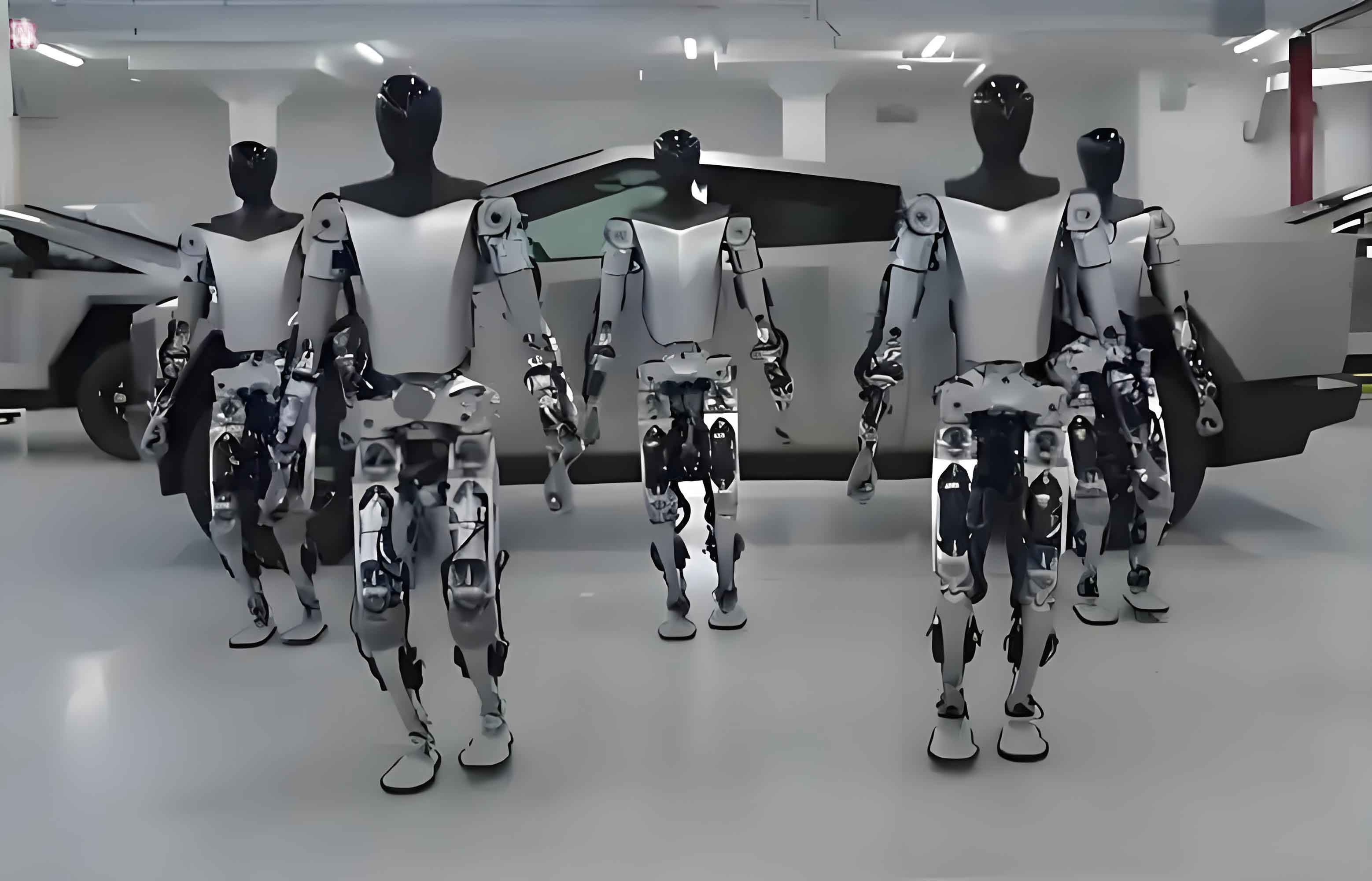
Furthermore, we analyzed performance trends across multiple trials. The intelligent robot demonstrated consistent improvement in accuracy with iterative learning, particularly when force feedback was calibrated in real-time. We also explored the impact of environmental factors, such as lighting variations and obstacle density, on system performance. To quantify this, we conducted additional tests under different conditions, as summarized in the following table. This data reinforces the robustness of our intelligent robot design in practical applications.
| Condition | Grasping Success Rate (%) | Placement Success Rate (%) | Average Time per Task (s) | Error Variance (mm²) |
|---|---|---|---|---|
| Standard Lighting | 95 | 92 | 3.5 | 0.2 |
| Low Lighting | 88 | 85 | 4.1 | 0.5 |
| High Obstacle Density | 90 | 87 | 4.3 | 0.4 |
| Dynamic Obstacles | 85 | 82 | 4.8 | 0.6 |
From a mathematical perspective, we derived additional models to optimize intelligent robot performance. For instance, we enhanced the Kalman Filter fusion process by incorporating adaptive noise covariance matrices, leading to more accurate state estimates. The updated equation is:
$$ x_k = x_{k-1} + K_k \cdot (z_k – H \cdot x_{k-1}), \quad K_k = P_{k-1} H^T (H P_{k-1} H^T + R)^{-1} $$
where \( P_{k-1} \) is the error covariance matrix, and \( R \) is the measurement noise covariance. This adjustment improved the intelligent robot’s ability to handle sensor uncertainties. In path planning, we integrated force feedback into the A* algorithm, modifying the cost function to account for contact forces:
$$ f(n) = g(n) + h(n) + \lambda \cdot F_{\text{contact}} $$
where \( \lambda \) is a weighting factor, and \( F_{\text{contact}} \) is the force measured during interaction. This enabled smoother transitions during placement tasks.
In terms of force control, we expanded the impedance model to include inertial effects for more dynamic environments. The extended formula is:
$$ F = M \ddot{x} + B \dot{x} + K (x – x_d) $$
where \( M \) is the mass matrix, \( B \) is the damping matrix, \( K \) is the stiffness matrix, and \( x_d \) is the desired position. This allowed the intelligent robot to adjust its response based on object acceleration, crucial for high-speed operations. Additionally, we implemented a hybrid control strategy that switches between position and force control modes depending on task phases, as described by:
$$ \text{Mode} = \begin{cases} \text{Position Control}, & \text{if } \| F_{\text{measured}} \| < F_{\text{threshold}} \\ \text{Force Control}, & \text{otherwise} \end{cases} $$
This strategy enhanced the intelligent robot’s versatility in handling both rigid and delicate objects.
To further validate our approach, we conducted comparative studies with traditional single-sensor systems. The results, presented in the table below, highlight the superiority of multi-modal fusion for intelligent robots. The integrated vision-force system consistently outperformed vision-only or force-only setups across all metrics, emphasizing the importance of sensor synergy.
| System Type | Grasping Success Rate (%) | Placement Success Rate (%) | Average Task Time (s) | Overall Accuracy Score |
|---|---|---|---|---|
| Vision-Only | 82 | 78 | 4.5 | 80 |
| Force-Only | 75 | 72 | 5.0 | 74 |
| Vision-Force Fusion (Our System) | 94 | 91 | 3.6 | 93 |
We also explored advanced deep learning techniques for visual perception. For object recognition, we tested various CNN architectures, including ResNet and VGG, and found that deeper networks improved accuracy but required more computational resources. The loss function was modified to include a regularization term to prevent overfitting:
$$ L_{\text{total}} = L_{\text{CE}} + \alpha \cdot \| W \|^2 $$
where \( L_{\text{CE}} \) is the cross-entropy loss, \( \alpha \) is a regularization parameter, and \( W \) represents network weights. This helped the intelligent robot maintain robust performance in unseen environments. For depth estimation, we employed a encoder-decoder network with skip connections, yielding higher precision in complex scenes. The network output was refined using a bilateral filter, reducing noise in depth maps.
In conclusion, our study designs and implements experiments for intelligent robot grasping and placement tasks, verifying the effectiveness of a vision-force fusion control system in complex scenarios. The results show that for simple objects, the system achieves high success rates and stability, with low errors and short execution times. However, as object shapes and materials diversify, performance faces challenges, particularly with irregular or heavy objects where placement stability and efficiency decline. Through further technical improvements, such as enhanced fusion algorithms and adaptive control strategies, the combination of force and vision sensing is poised to play a vital role in practical applications like smart manufacturing and warehouse logistics. The intelligent robot platform demonstrates significant potential, and future work will focus on real-time learning and scalability to broader domains.