
In today’s rapidly evolving industrial landscape, the integration of intelligent robot CNC technology has revolutionized mechanical manufacturing. As a researcher and practitioner in this field, I have witnessed firsthand how this synergy between artificial intelligence and numerical control enhances productivity, reduces costs, and improves product quality. In this article, I will delve into the core characteristics, application points, and a detailed case study of intelligent robot systems, emphasizing their transformative impact. The term “intelligent robot” will be frequently highlighted to underscore its centrality in modern automation.
Intelligent robot CNC technology combines advanced algorithms, such as machine learning and deep learning, with precision control systems to autonomously optimize manufacturing parameters. This integration allows for adaptive adjustments in real-time, leading to superior production outcomes. The widespread adoption of intelligent robots in mechanical manufacturing is driven by their ability to handle complex tasks with minimal human intervention. For instance, in machining components, intelligent robots can execute high-precision operations, while in offline programming, they simulate processes to preempt issues. The following sections will explore these aspects in depth, supported by tables and formulas to summarize key concepts.
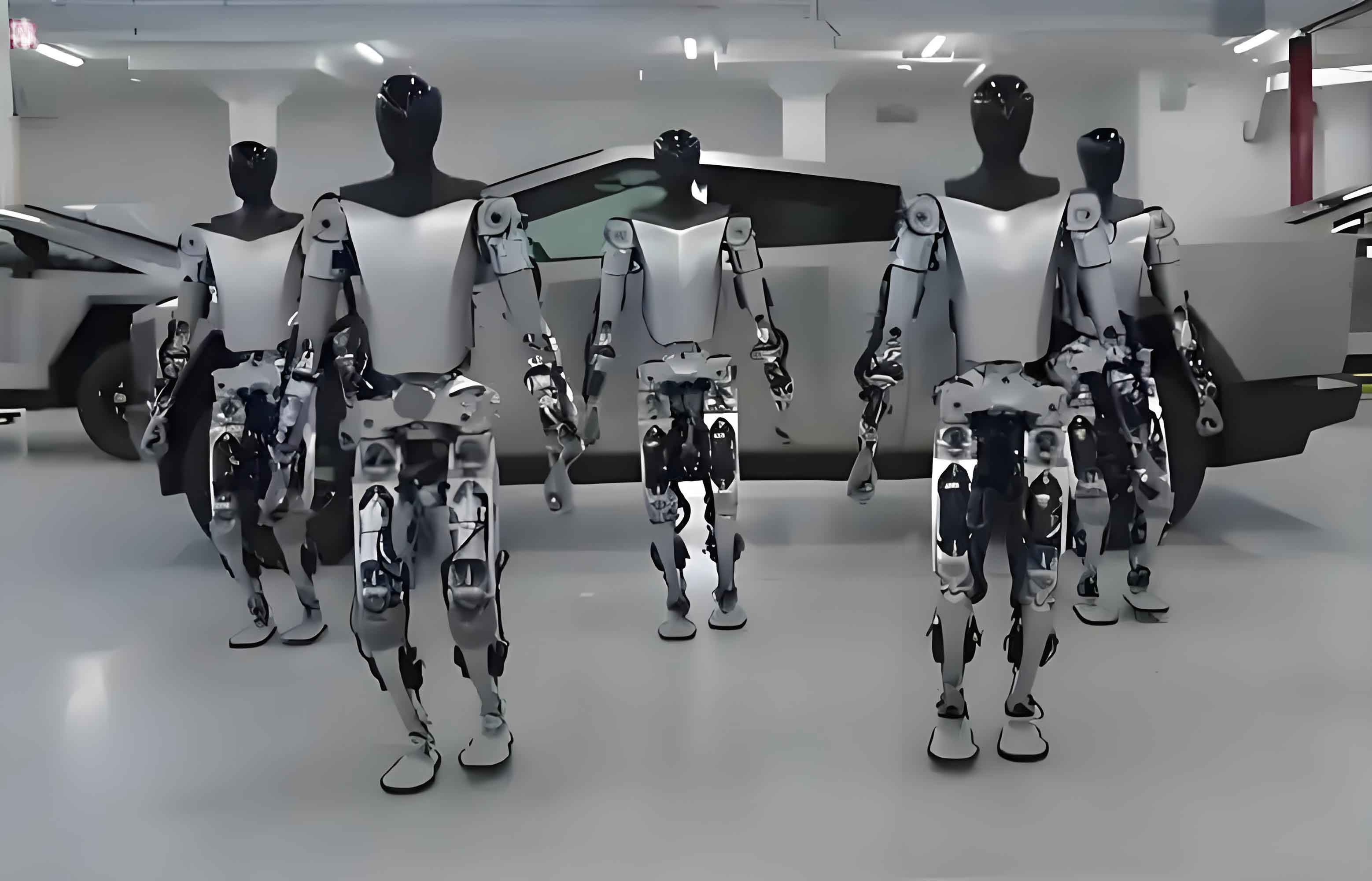
The essence of intelligent robot technology lies in its unique features, which set it apart from traditional automation. Below, I outline the primary characteristics that make intelligent robots indispensable in mechanical manufacturing.
Characteristics of Intelligent Robot CNC Technology
Intelligent robots exhibit several key traits that enhance their performance in manufacturing environments. These include high precision, user-friendly human-robot interaction, and strong programmability. Each of these aspects contributes to the efficiency and flexibility of intelligent robot systems.
High Precision
The high precision of intelligent robots is achieved through sophisticated measurement and control systems. By employing advanced servo mechanisms and algorithmic control, these robots can maintain exact tolerances during operations. This precision is critical for applications requiring fine machining and accurate measurements. For example, in contouring or polishing tasks, the positional accuracy of an intelligent robot can be modeled using error minimization formulas. Consider the following equation for positional error in a robotic arm:
$$ \epsilon_p = \sqrt{ (\Delta x)^2 + (\Delta y)^2 + (\Delta z)^2 } $$
where \(\epsilon_p\) represents the positional error, and \(\Delta x\), \(\Delta y\), and \(\Delta z\) are deviations along the Cartesian axes. Intelligent robots often reduce this error to micrometer levels, ensuring consistent product quality. Additionally, the repeatability of an intelligent robot can be expressed as:
$$ R = \max_{i=1}^{n} \| \mathbf{p}_i – \mathbf{p}_{\text{desired}} \| $$
where \(R\) is the repeatability measure, \(\mathbf{p}_i\) is the actual position in the \(i\)-th cycle, and \(\mathbf{p}_{\text{desired}}\) is the target position. Through continuous calibration and sensor feedback, intelligent robots achieve high precision, which is vital for industries like aerospace and automotive manufacturing.
User-Friendly Human-Robot Interaction
Intelligent robots are designed with intuitive interfaces that facilitate easy operation and monitoring. Features such as graphical user interfaces (GUIs), touchscreen controls, and voice recognition enable seamless interaction. For instance, operators can issue voice commands to an intelligent robot for tasks like starting a machining cycle or adjusting parameters. This friendly interaction reduces training time and minimizes errors. The natural language processing capability of an intelligent robot can be described by a probability model for command recognition:
$$ P(C|S) = \frac{P(S|C) P(C)}{P(S)} $$
where \(P(C|S)\) is the probability of a command \(C\) given speech signal \(S\), \(P(S|C)\) is the likelihood, \(P(C)\) is the prior probability of the command, and \(P(S)\) is the evidence. This allows the intelligent robot to accurately interpret human instructions, enhancing collaboration on the shop floor.
Strong Programmability
The programmability of intelligent robots enables customization for diverse manufacturing tasks. Using standard programming languages like Python or ROS (Robot Operating System), users can develop scripts to control robot movements, sensor integrations, and decision-making processes. This flexibility allows an intelligent robot to adapt to new products or processes quickly. The trajectory planning for an intelligent robot can be formulated using spline interpolation:
$$ \mathbf{q}(t) = \sum_{i=0}^{n} \mathbf{a}_i t^i $$
where \(\mathbf{q}(t)\) is the joint angle vector at time \(t\), and \(\mathbf{a}_i\) are coefficients determined by boundary conditions. This programmability supports complex operations, such as multi-axis machining or assembly, making the intelligent robot a versatile tool in manufacturing.
To summarize these characteristics, Table 1 provides a comparative overview.
| Characteristic | Description | Impact on Manufacturing |
|---|---|---|
| High Precision | Achieved through advanced servos and algorithms; error reduction to micrometer levels. | Enhances product quality and consistency; suitable for high-tolerance applications. |
| User-Friendly Interaction | Features GUIs, voice control, and intuitive interfaces. | Reduces operator training time and minimizes human error. |
| Strong Programmability | Customizable via programming languages; supports complex trajectory planning. | Increases flexibility and adaptability to new tasks. |
Application Points of Intelligent Robot CNC Technology in Mechanical Manufacturing
In my experience, intelligent robot CNC technology is applied across various facets of mechanical manufacturing. The key application points include machining components, offline programming, and laser measurement. Each of these leverages the capabilities of intelligent robots to optimize production processes.
Machining Components
Intelligent robots are extensively used for machining components, where they automate tasks like milling, drilling, and grinding. By integrating with CNC machines, an intelligent robot can handle workpieces with high accuracy. For example, in machining a metal disk with radius \(r = 100\,\text{mm}\), an intelligent robot might be programmed to cut four semicircular slots along the edge at uniform intervals. The slot dimensions can be defined using parametric equations. Let the slot profile be a semicircle of radius \(r_s\), then its Cartesian coordinates relative to the disk center can be expressed as:
$$ x(\theta) = r \cos(\theta) \pm r_s \cos(\phi), \quad y(\theta) = r \sin(\theta) \pm r_s \sin(\phi) $$
where \(\theta\) is the angular position on the disk, and \(\phi\) varies from \(0\) to \(\pi\) for the semicircle. The intelligent robot uses sensor feedback to adjust cutting parameters in real-time, ensuring precision. Table 2 outlines a typical machining sequence for such a component.
| Step | Operation | Parameters | Intelligent Robot Role |
|---|---|---|---|
| 1 | Workpiece Loading | Position accuracy: ±0.1 mm | Robot grasps blank via gripper. |
| 2 | Slot Cutting | Tool speed: 5000 rpm, Feed rate: 100 mm/min | Robot controls tool path based on macro programs. |
| 3 | Quality Inspection | Tolerance: ±0.05 mm | Robot uses vision system to measure slots. |
| 4 | Unloading | Cycle time: 30 seconds | Robot places finished part on conveyor. |
This process highlights how intelligent robots streamline production, reducing manual intervention and errors.
Offline Programming
Offline programming allows intelligent robots to be programmed in a virtual environment, minimizing downtime on the factory floor. By combining CAD models with simulation platforms, an intelligent robot can test and optimize programs before execution. This approach is particularly useful for complex parts where collisions or inefficiencies might occur. The simulation involves kinematic modeling of the intelligent robot. For a 6-DOF robotic arm, the forward kinematics can be represented using the Denavit-Hartenberg parameters:
$$ T_i^{i-1} = \begin{bmatrix} \cos\theta_i & -\sin\theta_i \cos\alpha_i & \sin\theta_i \sin\alpha_i & a_i \cos\theta_i \\ \sin\theta_i & \cos\theta_i \cos\alpha_i & -\cos\theta_i \sin\alpha_i & a_i \sin\theta_i \\ 0 & \sin\alpha_i & \cos\alpha_i & d_i \\ 0 & 0 & 0 & 1 \end{bmatrix} $$
where \(T_i^{i-1}\) is the transformation matrix between consecutive joints, and \(\theta_i\), \(d_i\), \(a_i\), \(\alpha_i\) are joint parameters. The intelligent robot uses these matrices to simulate movements and generate collision-free paths. Offline programming enhances productivity by allowing rapid reprogramming for new parts, a key advantage in custom manufacturing.
Laser Measurement
Laser measurement systems integrated with intelligent robots provide non-contact precision measurement of components. During production setup, an intelligent robot can scan parts to verify dimensions before machining. This reduces scrap and ensures conformity to specifications. The measurement principle involves triangulation or time-of-flight techniques. For a laser displacement sensor, the distance \(d\) to a surface can be calculated as:
$$ d = \frac{c \cdot \Delta t}{2} $$
where \(c\) is the speed of light, and \(\Delta t\) is the time difference between emitted and reflected pulses. The intelligent robot processes this data to adjust machining parameters accordingly. In practice, an intelligent robot might use laser measurement to inspect a batch of parts, with the data logged for quality assurance. Table 3 summarizes common laser measurement applications in manufacturing.
| Application | Measurement Type | Accuracy | Intelligent Robot Function |
|---|---|---|---|
| Dimensional Inspection | Length, width, height | ±0.01 mm | Robot positions sensor and analyzes data. |
| Surface Contouring | 3D profile | ±0.05 mm | Robot moves sensor along complex paths. |
| Alignment Verification | Position and orientation | ±0.1° | Robot compares measured vs. CAD data. |
Through these applications, intelligent robots enhance accuracy and reduce rework, contributing to lean manufacturing.
Case Study: Implementation of an Intelligent Robot System in Motor Housing Production
To illustrate the practical application of intelligent robot CNC technology, I will describe a case study based on a motor housing manufacturing line. This example demonstrates how intelligent robots are deployed for tasks such as material handling, machining, and quality control. The system centers on an intelligent robot integrated with CNC machines, conveyors, and vision systems.
System Overview and Equipment Layout
The automatic processing line for motor housings consists of several key components, each orchestrated by intelligent robots. The layout is designed to maximize throughput and minimize manual handling. Below is a breakdown of the equipment:
- Loading and Unloading Conveyors: These conveyors transport raw blanks and finished parts. The intelligent robot interfaces with them for seamless material flow.
- Mobile Robot R1: This intelligent robot moves on a rail system to transfer workpieces between stations. It is equipped with a multi-fingered gripper for handling diverse part geometries.
- Fixed Robot R2: A stationary intelligent robot responsible for unloading finished parts and placing them into bins. It incorporates a vision system for precise positioning.
- VM850 Vertical Machining Centers (2 units): CNC machines that perform operations like drilling, tapping, and milling. Each is fitted with an iRVision system for workpiece recognition.
- CLX360 CNC Lathe: Used for turning operations on internal features of the housing.
The coordination among these elements is managed by a PLC, with the intelligent robots acting as the central automation agents. The layout efficiency can be quantified using throughput formulas. For instance, the overall cycle time \(T_{\text{cycle}}\) for producing one housing can be estimated as:
$$ T_{\text{cycle}} = \max(T_{\text{load}}, T_{\text{machine1}}, T_{\text{machine2}}, T_{\text{lathe}}) + T_{\text{transport}} $$
where \(T_{\text{load}}\) is loading time, \(T_{\text{machine}}\) are machining times, and \(T_{\text{transport}}\) is the time for intelligent robot movements. By optimizing these parameters, the line achieves high productivity.
Machining Process Details
The motor housing is made from ADC12 aluminum alloy, and the machining involves multiple operations distributed across the CNC machines. Table 4 details the process plan, highlighting the role of intelligent robots in workpiece transfer.
| Machine | Operations | Parameters | Intelligent Robot Involvement |
|---|---|---|---|
| VM850 Machining Center 1 | Drill M4 tap hole, Tap M4 thread, Mill external circular boss | Tap hole diameter: 4.5 mm, Boss height: 3 mm | Robot R1 loads/unloads workpiece; verifies position via sensors. |
| VM850 Machining Center 2 | Drill 6 × φ5 holes, Machine 5 mm through-hole, Chamfer hole edges (45°) | Hole diameter: 5 mm, Chamfer depth: 0.5 mm | Robot R1 transfers workpiece; vision system aligns part. |
| CLX360 CNC Lathe | Machine internal bore, Step hole processing, Chamfer internal edges (45°) | Bore diameter: 10 mm, Step diameters: 4 mm and 5 mm | Robot R1 loads part into lathe fixture; monitors cutting forces. |
Each operation requires precise coordination, which is enabled by the programmable nature of the intelligent robot. For example, the tapping torque can be monitored using a force model:
$$ \tau = k \cdot d \cdot F $$
where \(\tau\) is the torque, \(k\) is a material constant, \(d\) is the tap diameter, and \(F\) is the axial force. The intelligent robot can adjust feed rates if anomalies are detected, preventing tool breakage.
Design of Robot Automated Handling Actions
The intelligent robot R1 executes a sequence of actions to handle workpieces throughout the line. This sequence is programmed using state machines and sensor feedback. The steps are as follows:
- Blank Pickup: Robot R1 moves to the loading conveyor, where it grips the blank using a pneumatic gripper. The gripping force \(F_g\) is controlled to avoid deformation:
$$ F_g = \mu \cdot m \cdot g $$
where \(\mu\) is the friction coefficient, \(m\) is the workpiece mass, and \(g\) is gravity. The intelligent robot verifies grip via pressure sensors.
- Loading to Machining Center 1: Robot R1 transports the blank to VM850 #1 and places it in a dedicated fixture. The positioning accuracy is ensured by visual servoing.
- Inter-Machine Transfer: After machining, Robot R1 retrieves the part and moves it to VM850 #2 for further operations. This involves trajectory planning to avoid obstacles.
- Lathe Processing: Robot R1 loads the workpiece into the CNC lathe, where internal features are machined. The robot monitors the lathe’s status signals to synchronize actions.
- Unloading and Palletizing: Upon completion, Robot R1 places the finished housing on a turnover station, then onto the unloading conveyor. Robot R2, a fixed intelligent robot, picks it from the conveyor and stacks it in a bin using vision guidance.
This automated handling reduces cycle times and minimizes human labor. The motion planning for Robot R1 can be optimized using inverse kinematics. For a serial manipulator, the joint angles \(\mathbf{q}\) for a desired end-effector pose \(\mathbf{T}\) can be solved numerically:
$$ \mathbf{q} = f^{-1}(\mathbf{T}) $$
where \(f^{-1}\) represents the inverse kinematic function. The intelligent robot computes these in real-time to follow smooth paths.
Design of Specialized Fixtures
To ensure stability during machining, custom pneumatic fixtures are designed for each CNC machine. These fixtures are tailored to the motor housing geometry and machining forces. Table 5 summarizes the fixture designs, emphasizing how they complement the intelligent robot operations.
| Machine | Fixture Type | Key Features | Integration with Intelligent Robot |
|---|---|---|---|
| VM850 Machining Center 1 | Combination pneumatic fixture with dual locating pins and pneumatic clamping | Quick clamping/release; elastic collets for size variation | Robot R1 aligns workpiece with pins; fixture signals clamp status to robot. |
| VM850 Machining Center 2 | Pneumatic three-jaw self-centering chuck with elastic V-blocks | Automatic centering; directional clamping for hole patterns | Robot R1 places part; chuck activates via robot signal. |
| CLX360 CNC Lathe | Combination pneumatic fixture with two-pin locating and pneumatic rotary mechanism | Rotary action for internal access; force monitoring for cutting stability | Robot R1 loads part onto pins; fixture rotates for machining. |
The fixtures enhance accuracy by minimizing vibrations. The clamping force \(F_c\) can be calculated based on cutting forces \(F_{\text{cut}}\):
$$ F_c \geq \frac{F_{\text{cut}}}{\mu_s} $$
where \(\mu_s\) is the static friction coefficient. The intelligent robot can adjust clamping pressure dynamically if sensors detect slippage.
CNC Machine Interface Design
The communication between intelligent robots and CNC machines is critical for synchronized production. This involves both hardware connections and software logic. The interface design encompasses:
- Hardware Linkage: Shielded cables connect the intelligent robots, PLC, and CNC machines to transmit input/output signals. This prevents electromagnetic interference, ensuring reliable data exchange.
- Software Development: Using robot-specific software and PLC programming, control programs are written to manage handshaking signals. For instance, the intelligent robot sends a “ready to load” signal to the CNC machine, which responds with a “door open” command. The state transitions can be modeled as a finite-state automaton.
- Signal Processing: Key signals include emergency stop, machine ready, gripper pneumatic status, fixture release, and safety door signals. The intelligent robot processes these to maintain safe operations. For example, if an emergency stop is triggered, all devices halt immediately.
The communication protocol can be represented by a set of logical equations. Let \(S_{\text{robot}}\) be the robot status and \(S_{\text{CNC}}\) be the CNC status, then the loading sequence might be:
$$ \text{Load\_Permission} = S_{\text{robot}} \land S_{\text{CNC}} \land \neg \text{Emergency\_Stop} $$
This Boolean logic ensures that the intelligent robot only acts when conditions are safe. The integration reduces downtime and enhances system robustness.
Conclusion
In summary, intelligent robot CNC technology represents a paradigm shift in mechanical manufacturing. Through my analysis, I have shown how intelligent robots offer high precision, user-friendly interaction, and strong programmability, enabling efficient applications in machining, offline programming, and laser measurement. The case study of a motor housing production line illustrates the practical implementation, where intelligent robots coordinate with CNC machines, conveyors, and fixtures to automate complex processes. The use of formulas, such as those for error calculation and kinematics, along with tables summarizing processes and designs, underscores the technical depth of this technology. As intelligent robots continue to evolve, they will further drive productivity gains, cost reductions, and quality improvements in the manufacturing sector. The repeated emphasis on “intelligent robot” throughout this article highlights its pivotal role in shaping the future of automation.