
The global robotics landscape is witnessing a significant shift, with China emerging as a powerhouse. For three consecutive years, China has maintained its position as the world’s largest consumer market for industrial robots. The production scale of domestically manufactured robots is experiencing explosive growth, with output from January to October 2016 alone surpassing the total annual output of the previous year by a staggering 71.5%. As market capacity expands and industrial upgrading accelerates, China’s robot industry is widely described as welcoming its own “spring.” Industrial robots, serving as critical equipment for supporting the digitalization and intelligence of manufacturing, offer a multifaceted solution: enhancing production capabilities, improving product quality, and addressing the dual challenges of a shrinking workforce and persistently rising labor costs in China. The recent annual China Robot Industry Promotion Conference held in Wuhu, Anhui, provided a platform to assess achievements, explore the utilization rate of domestic robots, and discuss the vast application spaces for China’s robot technologies.
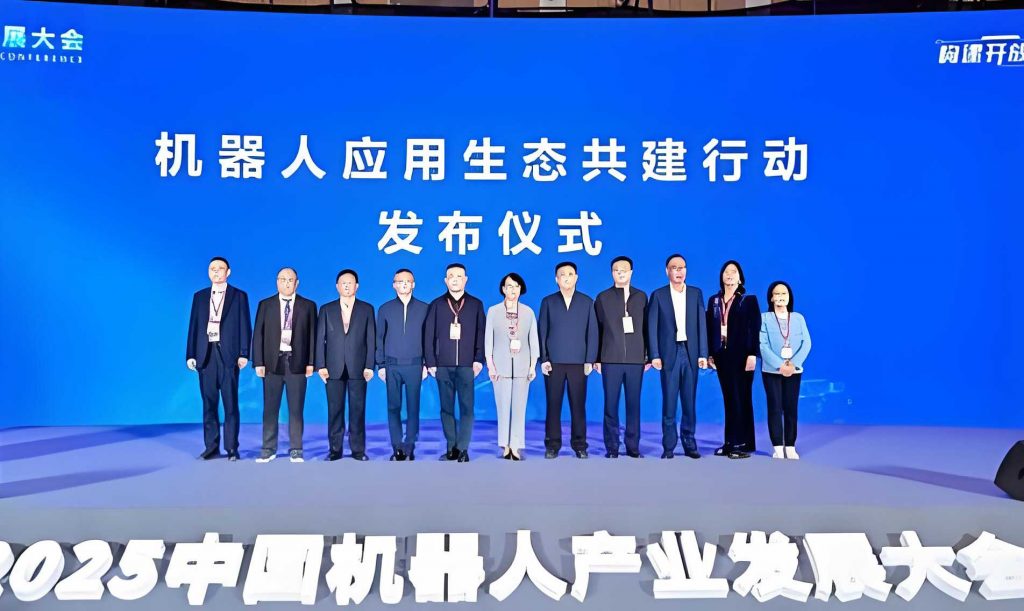
The conference underscored that the China robot sector is in a phase of accelerated development. The diminishing demographic dividend and rising labor costs are steering global manufacturing towards automation, with robot replacement becoming an inevitable direction. This trend is creating unprecedented opportunities for the China robot ecosystem. Enterprises within this ecosystem are rapidly scaling up, supported by national initiatives and growing domestic expertise.
- China Robot Sector Enters Accelerated Development Phase: Demographic Shifts Fuel Automation Drive
The fundamental driver for the China robot boom is the transformation within its manufacturing base. As China’s industrialization progresses, the nation has solidified its status as a global manufacturing hub. However, the transition from being large to becoming strong requires a profound upgrade of traditional industries. Li Ruifeng, Executive Deputy Director of the Harbin Institute of Technology Robot Research Institute, emphasized that the development of the robot industry is a vital aspect of accelerating the construction of a manufacturing powerhouse, promoting the transformation and upgrading of manufacturing, and enhancing competitive capabilities. Industrial robots are pivotal in building a new manufacturing system characterized by flexibility, intelligence, and precision. The demand for such robots is consequently surging. The China robot market’s expansion is not merely quantitative but signifies a strategic shift towards smarter production. With the gradual weakening of the population红利, the continuous climb in labor costs makes robot adoption an economically sound and strategic necessity for Chinese manufacturers, further solidifying the long-term growth trajectory for the China robot industry.
- Assessing Domestic China Robot Adoption and Application Frontiers
A key topic at the conference was the current utilization rate of domestically produced robots and their potential application spaces. While foreign brands historically dominated, domestic China robot manufacturers are making significant inroads. The application space for China robot technology is vast, extending beyond traditional automotive and electronics manufacturing. China’s comprehensive manufacturing categories provide a broad market for industrial robot applications. Song Xiaogang, Executive Chairman of the China Robot Industry Alliance (CRIA), pointed out that China’s完备的制造业门类 offers extensive market space for industrial robots. Beyond industrial uses, sectors like elderly care services, medical rehabilitation, disaster rescue, and public safety are showing rapidly growing demand for service robots. This indicates that the China robot industry’s growth is bifurcating into strong industrial and promising service segments. Examples like the “Jiaolong” deep-sea submersible, rehabilitation robots, intelligent security robots, fire-fighting robots, and home smart service robots are already entering the market, showcasing the diversification of the China robot field.
- Case Study: Wuhu Robot Industrial Park Epitomizes China Robot Growth
The evolution of the Wuhu Robot Industrial Park in Anhui province serves as a microcosm of the broader China robot industry development. Wuhu Guke Automation Technology Co., Ltd., registered in 2013, was among the first enterprises to settle in the park. Specializing in the R&D, production, and sales of drive-control products and application solutions for industrial robots, the company represents the rising technical capability within the China robot sector. Wang Yulin, Assistant General Manager of the company, shared that after formal operation began in August 2014, the Wuhu production line commenced independent production by the end of 2015. The current capacity allows for the assembly and testing of 8 sets per person per day. With all 16 workstations operational, the annual production capacity can reach 10,000 sets of controllers and servo systems. “Guke, starting with robots as an entry point, has begun to venture into other fields, promoting its products in non-standard automation equipment industries such as laser and professional transfer equipment,” Wang stated. The diversification of product functions and expansion of application ranges have led to gradual market enlargement and improved operational benefits. Since production began in Wuhu, sales have grown at an annual rate of 30%, primarily targeting the Yangtze River Delta region. Wang Yulin noted the dramatic change in the park itself—from a deserted suburb to a bustling hub with wide roads, new buildings, and complete facilities—within just a few years. “What we need to do is hone our internal skills, find our positioning, and promote and welcome the future of intelligent equipment,” she said, reflecting the proactive mindset driving the China robot industry forward.
- Momentum for Domestic China Robot Prosperity Continues to Rise
Statistical data robustly supports the optimistic outlook for the China robot industry. According to CRIA data, China’s industrial robot output was 32,996 units in 2015, a year-on-year increase of 21.7%. The growth accelerated dramatically in 2016. From January to October 2016, output reached 56,604 units, which was 71.5% higher than the total output of the entire previous year. Latest statistics for 2016 show that sales of domestically produced industrial robots continued to grow. In the first half of the year, cumulative sales were 19,257 units, representing a comparable caliber growth of 37.7% year-on-year, with the growth rate accelerating by 10.2 percentage points compared to the same period last year. The sales structure is also improving. Among domestic robots, the proportion of multi-joint robots is continuously increasing, with a year-on-year growth of 67.2%. Over 60% of domestically produced industrial robots are applied in handling and loading/unloading sectors, indicating a further release of market demand. Furthermore, the 3C manufacturing (computers, communication, consumer electronics) and automotive manufacturing industries are major users of domestic China robots. This data underscores the deepening integration of China robot solutions into core manufacturing processes.
Key Growth Metrics of China’s Robot Industry (2015-2016) Metric 2015 2016 (Jan-Oct) Growth Rate Industrial Robot Output 32,996 units 56,604 units 71.5% increase over 2015 full year Domestic Industrial Robot Sales (First Half) Data for H1 2015 implied from growth rate 19,257 units (H1 2016) 37.7% year-on-year growth (comparable caliber) Multi-joint Robot Sales Growth (Domestic) Base period data N/A for full period 67.2% year-on-year growth (H1 2016) Application in Handling/Unloading Base period data >60% of domestic robots (H1 2016) Highlighting dominant application sector This sustained high-speed growth trajectory confirms that the China robot industry is on a steep upward climb. The expansion is fueled not only by replacement demand but also by new applications emerging from technological advancements within the China robot domain.
- Persistent Challenges: Foreign Brands Hold Majority Share in China Robot Market
Despite the impressive progress, the China robot industry faces significant hurdles. From the perspective of the domestic consumption market, foreign robot brands still command approximately 70% of sales in China. Sun Feng, Deputy Director of the Equipment Industry Department of the Ministry of Industry and Information Technology (MIIT), highlighted several weaknesses when comparing China’s robot industry with those of industrially developed nations. These include薄弱的技术创新能力 (weak technological innovation capability), reliance on imported key components, low reliability of high-end products, an incomplete standards and certification system, and generally weak market competitiveness of enterprises. These issues seriously constrain the healthy and sustainable development of the China robot industry. More严峻的是, foreign giants represented by the “Big Four” robot manufacturers—KUKA, ABB, Fanuc, and Yaskawa—are accelerating their localization布局 in China, further increasing their market share. This无形中挤压了 the market space for domestic China robots. “From another perspective, it also ignites the desire for domestic robots to develop rapidly, making transformation and upgrading an urgent task,” Sun Feng remarked. This competitive pressure underscores the need for the China robot sector to innovate and move up the value chain.
- Strategic Responses and Future Roadmap for China Robot Advancement
To overcome these challenges and secure a leading position, the China robot industry is focusing on intelligentization and application-driven development. “Simply put, it is about injecting more intelligence into robots, improving their demonstration applicability, making their functionality stronger, and their operation simpler and more convenient,” analyzed Song Xiaogang. He suggested that under current conditions, universities, research institutions, robot enterprises, and user enterprises should collaborate more closely. Industrial development should be pulled by application demands, which should guide research directions and content. Only in this way will future research achievements in the China robot field be more intelligent and better aligned with the needs of industries and enterprises. The national strategy emphasizes not only expanding the scale but also improving quality and strengthening the industrial chain. The “Robot Industry Development Plan (2016-2020)” sets clear goals: by 2020, strive to cultivate more than three internationally competitive leading enterprises, create more than five robot supporting industrial clusters, and achieve a market share of over 50% in the high-end market. This roadmap provides a clear direction for the China robot industry’s evolution from a volume player to a quality and technology leader.
- Broadening Horizons: Service Robots as a New Frontier for China Robot Innovation
The future of the China robot industry is not limited to factory floors. As highlighted by industry experts, societal needs are opening new avenues. China’s aging population is creating substantial demand for service robots in elderly care and medical rehabilitation. Similarly, demands in disaster relief, rescue operations, and public safety are fostering the development of specialized robots. The successful development and deployment of various service robots, from康复机器人 to intelligent security and fire-fighting robots, demonstrate the innovative capacity within the China robot ecosystem. This diversification reduces over-reliance on the industrial segment and taps into growing consumer and institutional markets. The development of service robots represents a strategic expansion for the China robot industry, leveraging domestic market needs to build expertise that could eventually compete globally.
- Integration and Intelligence: The Core of Next-Generation China Robot Development
The path forward for the China robot industry involves deep integration with emerging technologies like artificial intelligence, the Internet of Things, and big data. The concept of “intelligent manufacturing” is central to China’s industrial policy, and robots are the physical enablers of this vision. Enhancing the智能化 of robots—making them more perceptive, adaptable, and easier to program and deploy—is a critical research and development focus. Collaborative efforts between academia and industry, as suggested by experts, are essential to address the core technological bottlenecks, particularly in关键零部件 like precision reducers, servo motors, and controllers. Success in these areas will determine the long-term competitiveness and sustainability of the China robot industry, enabling it to move beyond medium and low-end applications and capture value in high-margin, complex automation solutions.
- Global Context and the Positioning of the China Robot Industry
In the global arena, the rise of the China robot industry is reshaping supply chains and competitive dynamics. While currently a massive consumer market, China’s rapid growth in domestic production capacity positions it as a future major exporter of robot technology and solutions. The government’s supportive policies, such as “Made in China 2025,” which prioritizes advanced manufacturing including robotics, provide a strong tailwind. The experiences gained from serving the vast and diverse domestic manufacturing base give China robot companies unique insights into cost-effective and scalable automation solutions. As these companies build scale and technological prowess, they are poised to become significant players internationally, initially in emerging markets and eventually challenging incumbents in developed economies. The journey of the China robot industry from importer to innovator is a key narrative in the global technological landscape.
- Sustainability and Long-Term Vision for China Robot Growth
The sustainability of the current growth phase in the China robot industry depends on several factors: continuous technological innovation, talent cultivation, robust supply chain development, and the creation of a healthy market ecosystem that values quality and reliability over mere cost. The industry must also navigate economic cycles and potential overcapacity risks. However, the fundamental drivers—demographic trends, wage inflation, and the strategic imperative for manufacturing升级—remain strong. The focus on developing core technologies and key components domestically is crucial for reducing external dependencies and enhancing the resilience of the China robot supply chain. With concerted efforts from all stakeholders, the “spring” for China’s robot industry could evolve into a prolonged period of summer, characterized by maturity, innovation, and global influence.
In conclusion, the China robot industry stands at a pivotal juncture. Bolstered by strong domestic demand, supportive policies, and increasing technical capabilities, it is experiencing unprecedented growth. The examples from Wuhu, the impressive production and sales statistics, and the broadening application spectrum all point towards a vibrant future. However, the industry must confront the dominance of foreign brands in the domestic market and bridge technological gaps to achieve its ambitious goals. By fostering collaboration, prioritizing innovation, and focusing on intelligent, application-specific solutions, the China robot industry is well-positioned to transition from a period of rapid expansion to one of qualitative leadership, ultimately contributing significantly to China’s transformation into a manufacturing superpower and shaping the global robotics industry in the years to come. The journey of the China robot sector is a testament to the country’s industrial ambitions and its capacity for technological catch-up and innovation.