
A series of pivotal international technology summits hosted across China in mid-2016 underscored the nation’s accelerating role as a central hub for global collaboration, driving convergence and setting standards in fields ranging from virtual reality and next-generation communications to advanced robotics. These gatherings highlighted China’s dual strategy of fostering domestic innovation while actively shaping the international technological landscape, with a particularly strong emphasis on the development and integration of its robotics sector.
The period from May to June 2016 witnessed a remarkable concentration of high-level tech dialogues. The First Global Virtual Reality Conference (GVRC) in Shanghai set the stage, followed closely by the Third Belt and Road International Forum in Hong Kong, the inaugural Global 5G Conference in Beijing, and the Third China Robot Summit in Yuyao. Collectively, these events painted a picture of a dynamic ecosystem where Chinese institutions, from academic bodies to government-backed initiatives, are facilitating critical exchanges between global industry leaders, scientists, and investors.
I. Pioneering the Virtual Frontier: Global VR/AR Leaders Convene in Shanghai
On June 8th, the First Global Virtual Reality Conference (GVRC) successfully convened at the China Europe International Business School (CEIBS) in Shanghai’s Jinqiao area. The event marked a significant milestone, hailed by participants as a step that could propel the global virtual reality industry from its “first year” into a new era of maturity.
The conference brought together a prestigious assembly of global VR/AR technology and content application giants, including Microsoft, META, Virtually Live, and Macrograph. Their representatives were joined by researchers and practitioners from renowned institutions such as CEIBS and Stanford University, alongside investment and financing entities and leading entrepreneurs.
Under the theme “Creating a New World,” the GVRC served as a premier platform for the most influential scientists, corporate executives, innovators, investors, and industry leaders within the VR/AR domain. Through a series of keynote speeches and roundtable discussions, they engaged with attendees to share insights on the latest technological trends and industry applications, with a unified goal of jointly promoting industrial integration and development.
II. Hong Kong’s Niche: Professional Services for the Belt and Road Initiative
Concurrently, Hong Kong solidified its position as a professional services nexus for large-scale international projects. The Third Belt and Road International Forum, hosted by the Belt and Road International Institute in Hong Kong on June 12th, gathered delegates and scholars to discuss the initiative’s progression.
A key consensus emerged regarding the unique advantages offered by Hong Kong. Participants noted that given the complex legal systems and diverse cultural backgrounds of countries involved in the Belt and Road Initiative, Hong Kong’s status as a world-class financial centre and a Special Administrative Region of China provides unparalleled benefits. Representatives highlighted that Hong Kong’s professional services in fields such as law, accounting, and consultancy are of internationally recognized一流 (first-class) standard. Particularly in areas like large-scale investment facilitation, commercial dispute resolution, and the protection of intellectual property and investments, Hong Kong’s professional ecosystem was deemed an ideal choice for Belt and Road participants, further integrating the region into China’s broader technological and economic outreach.
III. Forging the Future of Connectivity: The Drive for a Unified Global 5G Standard
Just weeks earlier, the focus was on the foundational networks that will enable future technologies like VR and advanced robotics. The First Global 5G Conference was held with great fanfare in Beijing on May 31st. This landmark meeting was jointly organized by the 5G promotion organizations from five key global players: China, the European Union, the United States, Japan, and South Korea.
The conference’s theme, “Building the 5G Technology Ecosystem,” clearly outlined its ambitious objective: to guide the formation of a unified global technical standard for 5G. This effort is critical to prevent market fragmentation and to accelerate the development and application of 5G industries worldwide. The collaborative spirit of this event demonstrated China’s active and central role in a crucial, consensus-driven international standardization process—a necessary precursor for the seamless operation of future interconnected technologies, including the vast networks of China robot systems envisioned for smart factories and cities.
IV. The Centerpiece: China Robot Ecosystem Showcases Strength and Ambition in Yuyao
While fostering enabling technologies like 5G and VR, China’s most tangible advances were on full display at the Third China Robot Summit in Yuyao, Zhejiang province, on June 13th. This event served as a powerful testament to the explosive growth and strategic importance of the China robot industry.
The scale of commitment was immediately evident. The summit featured a signing ceremony for 12 major projects encompassing intelligent economy industrial projects, government service initiatives, and talent cooperation programs. The total contracted amount for these projects surpassed an impressive 20 billion yuan. The event itself attracted over 1,500 participants, including experts, scholars, and corporate leaders from across China and overseas, underscoring the immense interest in the China robot market.
The summit’s theme, “Human-Robot Integration, Making Robots Smarter,” guided its proceedings, which combined keynote reports, thematic forums, and extensive exhibition halls. The exhibition served as a showcase for the diversity and sophistication of China robot innovations. Attendees witnessed a range of representative robot products and technological achievements, from educational and companion robots to sophisticated industrial arms.
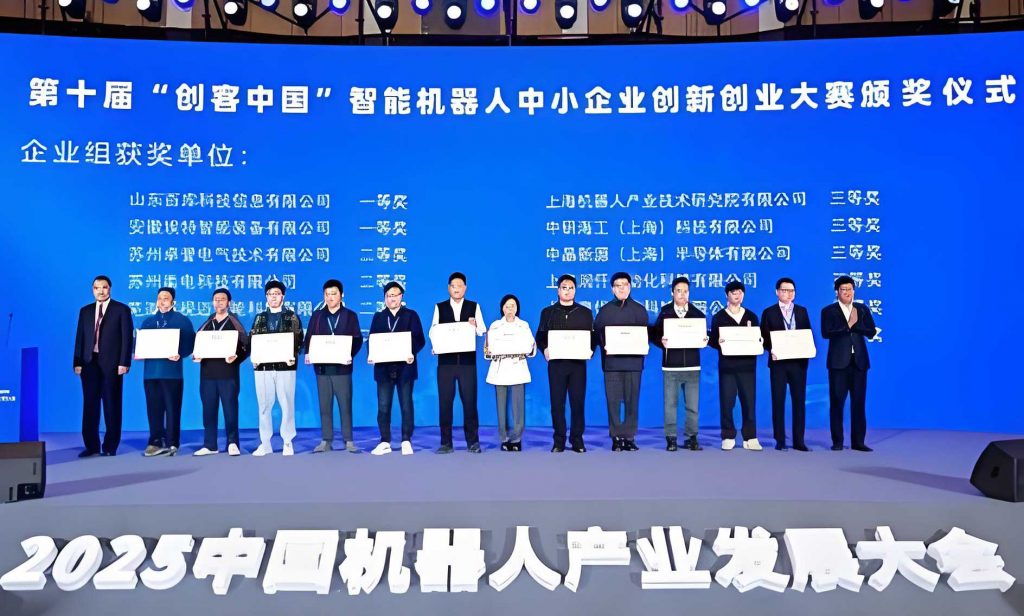
The following table highlights some of the key China robot products and technologies demonstrated, reflecting the sector’s breadth:
| Robot Name / Model | Type / Category | Notable Features / Application | Manufacturer/Origin |
|---|---|---|---|
| Alpha Series Robots | Humanoid / Service & Entertainment | Bipedal movement, programming education, interactive performances | Chinese Robotics Company |
| Youdi Robot | Educational / Companion | Designed for child interaction, educational content, voice recognition | Chinese Robotics Company |
| Various Industrial Robotic Arms | Industrial / Manufacturing | Precision assembly, welding, material handling for smart factories | Multiple China-based Manufacturers |
Looking forward, the summit announced a decision of lasting significance for the China robot community: the China Robot Summit would henceforth be permanently hosted in Yuyao, Ningbo. This move is designed to cement the city’s and the region’s status as a core cluster for China robot research, development, and industrial exchange, ensuring a stable annual platform for global engagement centered on China robot advancements.
V. Analysis: The Interconnected Threads of China’s Tech Strategy
The simultaneity of these four major events in a short timeframe is not coincidental but reflective of a coherent national strategy. Each summit addresses a critical layer of the modern technological stack, and China is positioning itself at the intersection of all of them.
- Infrastructure (5G): The push for a unified global 5G standard, led in part by Chinese organizations, aims to create the high-speed, low-latency network essential for real-time data transfer. This is the lifeblood for operating swarms of connected China robot systems in industrial IoT settings and for streaming high-fidelity VR/AR content.
- Interface & Experience (VR/AR): The GVRC focused on the human-machine interface frontier. The development of sophisticated VR and AR has direct implications for the China robot industry, particularly in areas like remote teleoperation of robots, immersive training for robot programming and maintenance, and enhanced human-robot collaboration interfaces.
- Implementation & Capital (Belt and Road): The Belt and Road Forum, emphasizing Hong Kong’s professional services, facilitates the international deployment of large-scale infrastructure and technology projects. This creates channels for exporting integrated China robot solutions—whether for smart logistics hubs, automated ports, or intelligent manufacturing plants—across participating economies.
- Core Technology & Manufacturing (China Robot Summit): This is the tangible output layer. The summit displayed the physical hardware and AI software that constitute the China robot industry. The massive investments and project signings prove the sector is moving rapidly from R&D to commercialization and large-scale adoption, both domestically and as a future export pillar.
The commitment to permanently host the China Robot Summit in Yuyao symbolizes a long-term dedication to making this sector a permanent cornerstone of the national economy. It ensures a consistent, high-profile venue for announcing breakthroughs, securing financing, and forging international partnerships specifically for the China robot ecosystem.
Conclusion: A Convergent Path Forward
The summer of 2016 marked a defining moment in China’s technological narrative. Through hosting the First Global VR Conference, the Third Belt and Road Forum, the First Global 5G Conference, and the Third China Robot Summit, China demonstrated a multifaceted approach to global tech leadership. It is simultaneously acting as a convener for international dialogue on future standards (5G, VR), a facilitator for global project deployment via its financial and professional hubs (Belt and Road), and a powerhouse of indigenous innovation and manufacturing in core hardware sectors, most prominently in robotics.
The “China robot” phenomenon sits at the convergence of these streams. It relies on advanced networks (5G), benefits from improved human-robot interfaces (VR/AR), and is deployed through international frameworks (Belt and Road). The announcements and displays in Yuyao confirmed that the China robot industry is not an isolated silo but an integral, rapidly advancing component of a broader national vision for technological synergy and industrial upgrading. As these fields continue to mature, their interconnected growth, fostered by forums like these, is poised to reshape global supply chains, manufacturing paradigms, and technological ecosystems in the years to come.