
As the curtain rose on 2024, the stunning performance of Stanford University’s Mobile ALOHA robot ignited a frenzy on social media, with many proclaiming “2024 as the元年 of the robot industry.” In the tidal wave of rapid global robot industry growth, Chinese entrepreneurs must grasp the current state of China’s robot industry development while actively examining its opportunities and challenges, striving to achieve an industrial leap in this global competition.
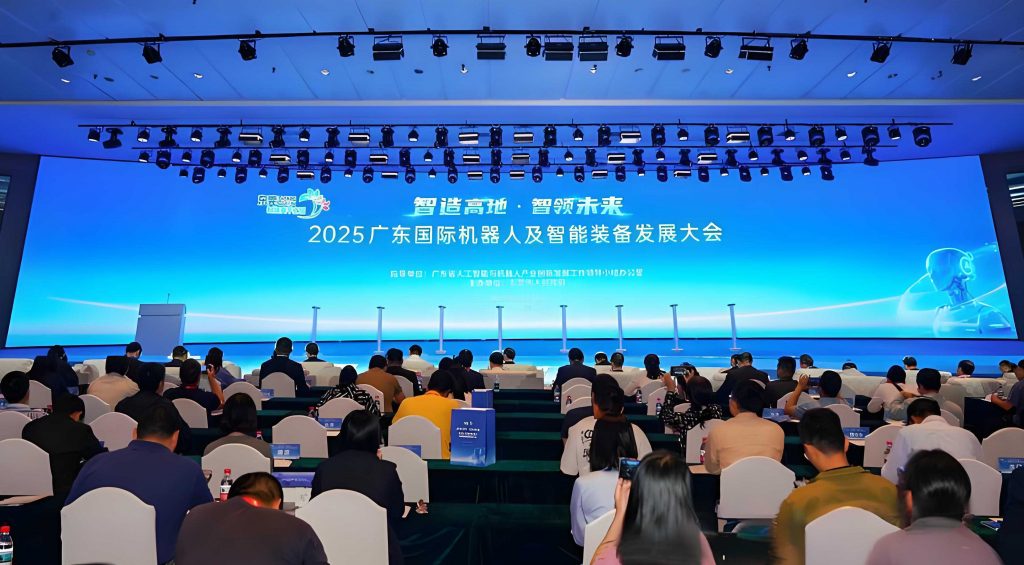
The evolution of artificial intelligence (AI) technology, particularly the advancement of multimodal large models, is driving the evolution of robots. They will be capable of self-learning, constructing a profound understanding of increasingly complex environments, endowing them with human-like perception and reasoning decision-making abilities. Against the backdrop of rising domestic labor costs and an aging population, the trend of smart robots driving industrial upgrading and renewal is becoming increasingly evident. It is anticipated that in the coming years, robot technology will achieve more innovations and transformations, propelling the industry toward a qualitative leap.
Current State of China’s Robot Industry
Driven by proactive policies and robust market demand, China’s robot industry has experienced迅猛 development. Since 2017, the industry has maintained an average annual growth rate of 22%, significantly higher than the global average. This growth not only reflects China’s remarkable progress in the robot sector but also预示 its important position in the global intelligent manufacturing领域.
Industrial Scale and Sustained Growth
The scale of China’s robot industry continues to expand. In 2022, the market size for robots in China was approximately $17.4 billion, accounting for about 34% of the global market. Within this, the industrial robot market held a 45% share of the global total. This dominance underscores the pivotal role of China’s robot industry in worldwide manufacturing dynamics. The consistent growth trajectory highlights the increasing adoption of automation and智能 solutions across various sectors within China.
| Metric | Value | Global Share |
|---|---|---|
| China Robot Market Size (2022) | ~$17.4 billion | ~34% |
| Industrial Robot Market in China (2022) | Leading segment | ~45% |
| Average Annual Growth Rate (Since 2017) | 22% | Above global average |
This expansion is fueled by domestic demand and strategic initiatives, positioning China’s robot industry as a key player in the international arena. The growth in scale is not merely quantitative but is increasingly accompanied by advancements in quality and technological sophistication.
Policy Environment and Continuous Optimization
The Chinese government has加深 its emphasis on the robot industry, issuing a series of policy measures to promote its rapid development. The “Robot Industry Development Plan (2016–2020)” clarified the industry’s development goals and key tasks, providing policy guidance for the healthy growth of the robot industry. Entering the “14th Five-Year Plan” period, the Ministry of Industry and Information Technology (MIIT), in collaboration with multiple departments, released new development plans, further refining the development path for the robot industry. In January 2023, MIIT联合 17 departments issued the “”Robot +” Application Action Implementation Plan,” offering specific action guidelines for the深化 application and innovation of the industry.
Beyond policy support, the government has increased financial investments through channels such as national科技 plans and strategic emerging industry special funds, providing solid fiscal support for robot technology R&D and industrialization. Local governments have also actively responded, introducing local policies to inject vitality into the development of the robot industry. In terms of intellectual property protection, China has strengthened the审查 and protection of robot technology patents, safeguarding the legitimate rights and interests of industrial innovation, thereby creating a favorable environment for the sustained development of the robot industry. This comprehensive policy framework is instrumental in shaping a conducive ecosystem for China’s robot industry to thrive.
Technological Innovations and Continuous Breakthroughs
In the ongoing wave of robot technological innovation, Chinese enterprises have achieved significant breakthroughs in multiple fields, enhancing the international competitiveness of intelligent robot products. Particularly in the field of collaborative robots, the intelligent robots developed in China have reached international advanced levels. For instance, the application of deep learning technology enables industrial robots to make more precise decisions in unknown environments, while the safety technology of collaborative robots is continuously upgraded, such as the development of安全 skin technology, ensuring both the safety of human-robot collaboration and improving operational efficiency.
Furthermore, notable progress has been made in the协同 control technology of复合移动 robots, achieving high-degree-of-freedom mobile operation, which is of great significance for the construction of smart factories. At the 2023 Beijing World Robot Conference, the appearance of domestic humanoid robots demonstrated complex functions like walking and coffee latte art, showcasing China’s innovative strength in the robot technology field. These technological breakthroughs not only enhance robot performance but also lay a solid foundation for future applications in broader domains. The pace of innovation in China’s robot sector is accelerating, with R&D efforts focusing on core components and systems integration.
Application Fields and Continuous Expansion
With the increasing成熟 of large-model robot technology and the diversification of market demand, the application fields of robots in China are undergoing unprecedented expansion. Currently, robots in China not only play a core role in the manufacturing sector but also extend their application scope to industries such as logistics and services. Manufacturing, as the main battlefield for robot applications, covers multiple细分 markets including automotive manufacturing, electronic assembly, and metal processing.
- Manufacturing: Robots are extensively used for welding, assembly, painting, and material handling, improving precision and efficiency.
- Logistics: Automated guided vehicles (AGVs) and autonomous mobile robots (AMRs) are revolutionizing warehouse management and supply chain operations.
- Services: Robots are deployed in healthcare for surgery assistance, in hospitality for concierge services, and in retail for customer interaction.
- Emerging Sectors: Exploration in agriculture, construction, and disaster response is gaining traction, showcasing the versatility of China’s robot solutions.
The rapid growth trend of robot applications in logistics and service industries provides powerful momentum for the transformation and upgrading of these sectors. This expansion is driven by the need for efficiency, cost reduction, and the ability to perform tasks in environments that are hazardous or tedious for humans.
Formation of Industrial Cluster Effects
In China, the cluster effect of the robot industry is gradually显现, with multiple provinces and cities clearly proposing goals for developing the industrial robot industry in their “14th Five-Year Plan.” At the government level, there is an active response to the central call for deepening the integration of industrialization and informatization. Based on their respective development characteristics and focusing on advantageous industries, they are accelerating the promotion of intelligent manufacturing transformation.
Regions represented by Beijing, Shanghai, Guangdong, and Chongqing are cultivating robot industry-centric industrial clusters through policy support and resource integration. These clusters not only promote the完善 of the industrial chain but also attract domestic and foreign investments, forming a良好的 industrial ecosystem. Through the leading role of flagship enterprises and breakthroughs in key components and core technologies, these industrial clusters are expected to become an important force driving the continuous innovation and enhancement of the international competitiveness of China’s robot industry. The synergy within these clusters fosters collaboration, knowledge sharing, and economies of scale, strengthening the overall foundation of China’s robot industry.
Summary: The core competitiveness of China’s robot industry lies in its vast domestic market, strong policy support, and the continuous technological innovation and application expansion brought about by industrial cluster effects. These advantages will jointly propel China’s robot industry to occupy a more important position on the global stage, contributing力量 to achieving high-quality economic development. The trajectory of China’s robot industry is set toward greater integration and sophistication, with a clear focus on sustaining growth through innovation.
Opportunities for China’s Robot Industry
China’s robot industry is standing at a new historical period of development opportunities. The rapid development of AI technology, especially the evolution of multimodal large models, is driving the evolution of robots. They will be able to build a deep understanding of more complex environments through self-learning, endowing them with human-like perception and reasoning decision-making capabilities. As domestic labor costs rise and aging issues intensify, the trend of intelligent robots driving industrial upgrading and renewal becomes increasingly apparent. It is预计 that in the coming years, robot technology will achieve more innovations and changes,推动 the industry toward a qualitative leap.
1. Integration of Robots and Large Model Technology
Similar to the手机 industry under the widespread application of 4G and 5G communication technologies, AI large model technology is becoming an important driving force for the development of the robot industry. Deep learning and neural network technologies endow robots with higher-level perception, learning, and adaptation capabilities, enabling them to perform diverse tasks in complex environments. For example, China’s UBTECH Robotics推出的 Walker robot integrates advanced visual recognition and voice interaction technologies, capable of providing辅助 services in home environments.
Beyond using existing visual and language foundation models for the robot field, future technology may also achieve the development of专属 foundation expert models for robot tasks, such as action control models or motion planning models for navigation. These robot foundation models demonstrate强大的 generalization capabilities, able to adapt to different tasks and even specific scenarios, further reflecting the possibility of integrating different robot modules into a unified model. The fusion of large models with robotics opens avenues for more autonomous, adaptable, and intelligent machines, positioning China’s robot industry at the forefront of this convergence.
2. The New Era of Human-Robot Collaboration
In the context of “Industry 4.0” and smart factories, the application of collaborative robots in manufacturing is gradually becoming widespread. Human-robot协同 technology will become an important development direction, with collaborative robots becoming an indispensable part of efficient production and life. Robots and humans will jointly execute tasks in production environments, medical fields, and service industries, fully leveraging their respective advantages. This collaborative labor is expected to improve efficiency, reduce costs, and create safer working environments. Currently, humanoid robots in China are at the same level as Tesla in terms of degrees of freedom and weight, with some manufacturers achieving better performance than Tesla’s Optimus in these two aspects.
In the future, the continuous evolution of large model technology may enable robots to train in virtual environments and then match the real world more efficiently, or directly train 3D robots using 2D data, such as showing robots videos of humans moving objects to enable them to learn how to move objects. This progression signifies a shift toward seamless interaction between humans and machines, where robots augment human capabilities rather than replace them, fostering a symbiotic relationship in various sectors.
3. Gradual Extension of Application Scenarios
With continuous technological progress, the application scenarios of large-model robots will不断 expand in fields such as intelligent manufacturing, services,医疗 health, family life, special environment operations, education and training, entertainment and sports, and city management. They will achieve deep integration with human life,推动 a leap in social productivity.
According to the unique needs of each industry, enterprises will deploy customized AI robots on a large scale to solve specific problems in various business areas and processes. These intelligent robots will deeply integrate into business systems, making more accurate and明智 responses based on company-owned data in secure environments, assisting people in completing various services. The potential for China’s robot industry to penetrate diverse sectors is immense, driven by tailored solutions that address real-world challenges, from precision agriculture to elderly care, thereby creating new markets and value chains.
Challenges Facing China’s Robot Industry
Although China’s robot industry has huge development potential and market space, it also faces multifaceted challenges that require joint efforts from the government, enterprises, and all sectors of society to actively address.
1. Weak Industrial Foundation and Insufficient Technological Accumulation
Despite certain achievements in the development of China’s robot industry, compared to developed countries, technological accumulation is still insufficient. Robotics is a product of multi-disciplinary, high-tech交叉融合, and China’s industrial foundation is relatively weak. Especially in some key technologies and core components, such as controllers and servo motors, there is still a significant reliance on imports.
In response, enterprises in China’s robot industry should not only continuously improve their own product quality to achieve import substitution but also use innovative thinking for breakthroughs and product二次创新, considering and attempting from the perspectives of defining product problems, solution paths, and underlying technology choices. China has strong development potential in the large model field, not only conducting independent R&D in algorithms, architecture,语料库 construction, but also making progress in the根技术创新 of AI. For example, Huawei’s PanGu large model and Tencent’s Hunyuan large model are加速 catching up with international advanced levels. In the future, China can build a large model industrial ecosystem, forming professional enterprises and organizational ecosystems in specialized fields such as intelligent manufacturing, fintech, biomedicine, scientific research, and cultural entertainment. Empowered by AI, the innovation methodologies and tools for enterprises in the robot industry chain in China may be极大 enriched, with永不停歇的 “innovation” possibly being the only way for future enterprises to build护城河. This approach emphasizes the need for foundational research and indigenous innovation to reduce dependencies and foster a self-reliant China robot ecosystem.
2. Lack of High-End Supply
China’s robot industry’s supply capacity in the fields of high-end industrial robots and service robots is still insufficient. This shortcoming not only restricts the overall development of the industry but also impacts the technological upgrading and transformation of downstream industries. The shortage of high-end supply not only weakens the industry’s global competitiveness but may also stifle innovation momentum, limiting China’s leading position in the global robot market.
To address this issue, the following measures are recommended: First, increase R&D investment, especially in key core technologies, to achieve technological breakthroughs and independent innovation. Second, encourage industry-university-research cooperation to promote the transformation of scientific research成果, accelerating the industrialization process of high-end robot technology. Additionally, fostering specialized enterprises that focus on niche, high-value applications can help build expertise and gradually move up the value chain in the global China robot market.
3. Difficulties in Application落地 and Market Promotion Obstacles
The self-learning capabilities of large-model robots depend on powerful backend computing resources, which pose challenges in cloud and edge deployment, especially regarding signal延迟 and security. Furthermore, due to security considerations, the collection of training data becomes complex, limiting breakthroughs in robot applications in diversified scenarios.
In terms of market promotion, China’s robot industry faces problems such as “difficulty in sales,” “high costs,” and “difficulty for users to operate.” These issues not only hinder enterprises from moving toward the high-end market but also affect the transformation of small and medium-sized enterprises toward intelligent manufacturing. The consumer market is extremely price-sensitive, and high costs make it difficult for service robots to普及 to the mass consumer领域.
To应对 these challenges, it is recommended that专业 companies build customized vertical large models based on specific application scenarios and deeply integrate them with robot technology. By implementing the “robot +” strategy and leveraging industry积累, promote the application of robot technology in specific fields. For example, lessons can be drawn from China’s successful experiences in the drone and smart car fields, combining AI technology with robots to achieve more intelligent interaction. From initial drone follow-shot photography to the interaction of autonomous driving vehicles with the environment, and further to the direct contact of robotic arms with the physical world, each step reflects technological progress. Through such a development path, costs can be gradually reduced, the ease of use of robots can be improved, thereby promoting their application in broader fields, and ultimately achieving the大众化 and intelligentization of robot technology. This requires concerted efforts to demonstrate the ROI of robot deployments and develop user-friendly interfaces for the China robot industry to gain wider acceptance.
4. Severe Talent Shortage Situation
The rapid development of China’s robot industry has brought an urgent demand for专业 talent, but currently, the talent shortage has become a key bottleneck constraining industrial development. The robot industry involves multi-disciplinary交叉, placing极高要求 on the comprehensive abilities of talent, including robot engineers, machine learning experts, control system engineers, etc. These positions not only require profound专业 knowledge but also good innovation capabilities and跨学科协作 abilities.
Recommendations for应对措施: The government and enterprises should adopt a multi-pronged strategy to alleviate the talent shortage problem. First, strengthen the对接 between the education system and industrial needs. Through school-enterprise cooperation, establish majors related to robotics engineering, artificial intelligence, etc., to cultivate high-quality talent that meets market demand. Second, implement talent introduction plans to attract top domestic and international experts and teams. Through project cooperation, talent exchanges, and other means, enhance the technical level of domestic talent. Simultaneously, increase training efforts for在职 personnel. Through continuing education and skills enhancement courses, help existing engineers update their knowledge structures to adapt to the development of new technologies. Furthermore, establish incentive mechanisms to provide policy support such as research funding and tax incentives for innovative talent in the robotics field, stimulating their innovative vitality. Building a robust talent pipeline is essential for sustaining the growth and innovation of the China robot sector.
5. Data Security Challenges
With the widespread application of robot technology, data security has become a key challenge for industrial development. Sensitive information processed by robot systems, such as design drawings, process parameters, and production plans, must be strictly protected to prevent data leaks and misuse. Manufacturers and users need to take comprehensive measures in hardware, software, communication, and user privacy, formulating strict security strategies to ensure the security of robot systems at all levels.
Additionally, AI technology, especially large model technology, is leading the transformation of the robot industry, posing new requirements for legislation. Countries, including China, the EU, the US, and India, are actively构建 AI policy frameworks aimed at promoting technological progress, attracting investment, while ensuring that technological development does not harm public interests. Ethical issues occupy a core position in robot R&D, and the international community urgently needs to reach consensus on ethical standards and industry norms for AI to address global challenges.
To this end, it is recommended to strengthen international cooperation to推动 the formulation of unified industry standards, ensuring the development of the robot industry in a safe, compliant environment. Simultaneously, encourage enterprises to establish internal data security management systems, adopt encryption technologies to protect data transmission, and implement regular security audits to improve the overall data security level of the entire industry. As China’s robot industry expands globally, adhering to international security and ethical norms will be crucial for maintaining trust and fostering collaboration.
Conclusion
In summary, China’s robot industry is standing at a historical crossroads, facing unprecedented development opportunities. With the integration of robots and large model technology, the new era of human-robot collaboration, and the continuous expansion of application scenarios, robots will achieve deep integration with human life,推动 a leap in social productivity. However, challenges such as the still weak industrial foundation of China’s robot industry, insufficient high-end supply, difficulties in application and promotion, talent shortages, and data security challenges remain urgent problems to be solved.
In the face of these challenges, the government, enterprises, and all sectors of society need to join hands and advance together,共同 strengthening technology R&D, increasing innovation investment, and enhancing core competitiveness. Only in this way can we ensure that China’s robot industry occupies a place on the global stage, contributing力量 to achieving high-quality economic development, and collectively welcoming an intelligent, high-efficiency, safe, and controllable future. The path forward for the China robot industry is one of balanced growth—leveraging opportunities in AI and automation while addressing foundational gaps through collaborative effort and strategic focus. The journey toward becoming a global leader in robotics is underway, with the potential to reshape industries and improve quality of life, provided that the outlined challenges are met with resilience and innovation.