
In a groundbreaking development for strategic technology planning, researchers from Shanghai University of Engineering Science have unveiled a sophisticated artificial intelligence model designed to predict the evolution and assess the value of emerging technologies. The model, which combines deep semantic understanding with time-series forecasting, has been empirically validated in the fast-moving field of humanoid robotics, offering governments and enterprises a powerful new tool for innovation management and resource allocation.
The study addresses critical limitations in existing technology foresight methods, which often struggle with fine-grained topic detection, fail to adequately incorporate temporal dynamics, and rely on one-dimensional evaluation metrics. The newly proposed “BERTopic-LSTM” fusion model overcomes these hurdles by creating a closed-loop analysis framework of “technology topic identification—emerging technology prediction—potential value evaluation.”
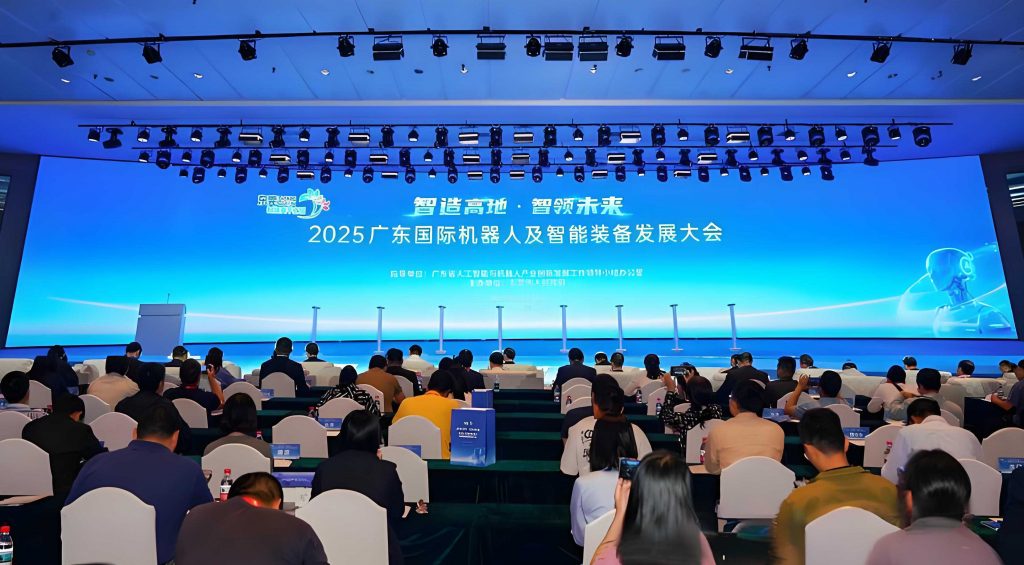
The choice of the China robot sector, specifically humanoid robotics, as a test case is highly strategic. Recognized globally as a catalyst for industrial transformation and a key frontier in national科技 strategies, the progress in China robot technology in areas like embodied intelligence and human-machine collaboration is closely watched. This makes it an ideal domain to validate a model aimed at identifying strategic high-potential technologies within the China robot innovation ecosystem.
From Data to Insight: The BERTopic-LSTM Methodology
The core of the research lies in its two-stage modeling approach. The first stage involves mining massive volumes of patent text data to uncover latent, fine-grained technology topics.
- Semantic Topic Identification with BERTopic: The process begins with collecting Chinese invention patents related to humanoid and biomimetic robots. After rigorous cleaning and preprocessing, the text data is fed into a BERTopic model. This model uses a powerful sentence transformer to create deep semantic embeddings of each patent document, capturing contextual meanings far beyond simple keyword matching. A dimensionality reduction technique (UMAP) and a density-based clustering algorithm (HDBSCAN) then group patents into coherent thematic clusters. Finally, a custom version of TF-IDF extracts the most representative keywords for each cluster, which are then interpreted and labeled by researchers to form clearly defined technology topics. This process successfully identified 25 distinct technical directions within the China robot patent landscape.
- Temporal Trend Forecasting with LSTM: After identifying the topics, the research shifts to predicting their future trajectory. For each topic, a dynamic “Vitality Index” is calculated annually. This index is a composite measure derived from two core dimensions:
- Growth Momentum: Captures the speed and trend of a topic’s expansion over time, using metrics like year-on-year growth in publication frequency.
- Ecological Potential: Measures a topic’s influence and diffusion within the broader technology network, using metrics like average citation count and the diversity of patent classifications per topic.
The time-series data of the Vitality Index for each topic then becomes the input for a Long Short-Term Memory (LSTM) neural network. Renowned for handling sequential data, the LSTM model is trained to learn the complex, non-linear patterns in each topic’s evolution and forecast its Vitality Index for future years. To ensure the prediction points to genuinely novel directions, a “Novelty” filter—based on the recency and semantic uniqueness of a topic—is applied to the forecast results.
| Model | RMSE | MAE | R² |
|---|---|---|---|
| SVM (Baseline) | 0.0841 | 0.0212 | 0.0841 |
| BP Neural Network (Baseline) | 0.0348 | 0.0182 | 0.4516 |
| Proposed LSTM Model | 0.0329 | 0.0167 | 0.5494 |
As shown in the performance comparison table, the LSTM model significantly outperformed traditional baseline models like Support Vector Machines (SVM) and Backpropagation (BP) Neural Networks across all evaluation metrics—Root Mean Square Error (RMSE), Mean Absolute Error (MAE), and the coefficient of determination (R²). This demonstrates its superior capability in modeling and forecasting the complex evolution of China robot technologies.
Strategic Mapping: The Two-Dimensional Value Assessment Matrix
A key innovation of this study is its structured framework for assessing the strategic value of predicted technologies. The forecasted values for Growth Momentum and Ecological Potential are plotted on a two-dimensional matrix, divided into four quadrants using statistical thresholds. This creates a powerful strategic map for decision-makers:
- Dominant Topics (High Momentum, High Potential): Technologies that are both rapidly growing and widely influential. They represent mature, system-level innovations ready for broad deployment and standardization.
- Breakout Topics (High Momentum, Low Potential): Technologies exhibiting explosive growth but whose wider ecosystem influence is still forming. These are typically at a critical juncture, poised for potential market disruption and are prime candidates for focused investment.
- Enabling Topics (Low Momentum, High Potential): Technologies with stable, widespread influence but slower growth. They serve as foundational components within the broader China robot ecosystem.
- Peripheral Topics (Low Momentum, Low Potential): Technologies that are currently niche or in early, uncertain stages of development. They require monitoring but carry higher short-term risk.
Empirical Findings from the China Robot Frontier
Applying the full BERTopic-LSTM model and assessment matrix to over 32,000 China robot patents from 2015-2024 yielded actionable insights. The model identified seven high-novelty emerging technology topics forecasted to maintain high vitality through 2025-2026. Their classification in the value matrix provides a clear strategic picture:
- Dominant Topic: Human Image Recognition and Motion Analysis. This topic, crucial for AI perception, shows high scores in both growth and influence, indicating its transition from an emerging to a foundational technology within the China robot stack, with applications already maturing in medical imaging and smart security.
- Breakout Topics: This category includes several high-growth areas:
- Lower Limb Rehabilitation Training Fixation Institutions: Driven by aging population needs and smart healthcare trends in China.
- Intelligent Vehicle Driving Assistance Systems: Representing a convergence of China robot autonomy with the booming electric and smart vehicle sector.
- VR User Interaction and Motion Capture: Fueled by metaverse concepts, enhancing human-robot interaction paradigms.
- Peripheral Topics: Topics like Automatic Blood Collection and Hemostasis Devices and Mechanical Arm Trajectory Control Systems showed innovation potential but lower predicted vitality, placing them in a watchlist category where development depends heavily on policy support or new application scenarios.
The alignment of these findings with real-world trends adds robust validation. The identified breakout topics directly correspond to priority areas in recent Chinese national and local policies, such as support for rehabilitation equipment, AI development, and smart manufacturing. Furthermore, industry analysis reports project massive growth in markets like rehabilitation robotics and advanced driver-assistance systems (ADAS), corroborating the model’s forecasts for these China robot application areas.
Conclusion and Implications for Global Tech Strategy
This research provides more than just a theoretical model; it offers a validated, end-to-end analytical pipeline for technology intelligence. By successfully integrating deep semantic topic modeling with dynamic temporal forecasting and a structured strategic evaluation framework, it delivers a significant upgrade over conventional foresight methods.
The empirical success in the China robot domain underscores the model’s practical utility. It enables a nuanced understanding of the technological landscape: distinguishing between foundational technologies ready for standardization, high-potential breakout candidates requiring targeted support, and niche areas needing strategic monitoring. For policymakers and corporate R&D leaders, especially within the fiercely competitive field of China robot development, this model provides a data-driven, scientifically-grounded tool for prioritizing R&D investments, forming strategic partnerships, and navigating complex innovation ecosystems.
The researchers note that future work will focus on enhancing the model’s external validation by incorporating expert panels, global patent data, and real-world market adoption metrics. Nevertheless, the current study firmly establishes the BERTopic-LSTM fusion model as a powerful new instrument for illuminating the path of technological evolution, with the China robot industry serving as a compelling proof of concept for its application.