
Over the past three years, more than half of the world’s industrial robots have been sold in China. While China may not yet be considered the technological leader in robotics, it is increasingly steering global trends within the industry. The bustling robot halls at the Shanghai Industrial Fair, also known as the China International Industrial Fair (CIIF), vividly demonstrate this pivotal shift. Despite facing what some describe as its most challenging economic climate in two decades, the fair remained vibrant and packed with attendees, underscoring the relentless dynamism of China’s manufacturing and automation sectors.
The China robot market, though experiencing a projected 20% decline in industrial robot sales for the first half of 2024—primarily due to cooling investment booms in electric vehicles (EVs), batteries, and photovoltaics—is simultaneously witnessing the emergence of new hotspots. The importance of the 3C (computers, communication, and consumer electronics) sector is resurging, while collaborative robots, or cobots, are seeing growth driven by applications in EV production and inspection. This complex landscape highlights how the China robot ecosystem is adapting and evolving, setting the pace for global robotics adoption.
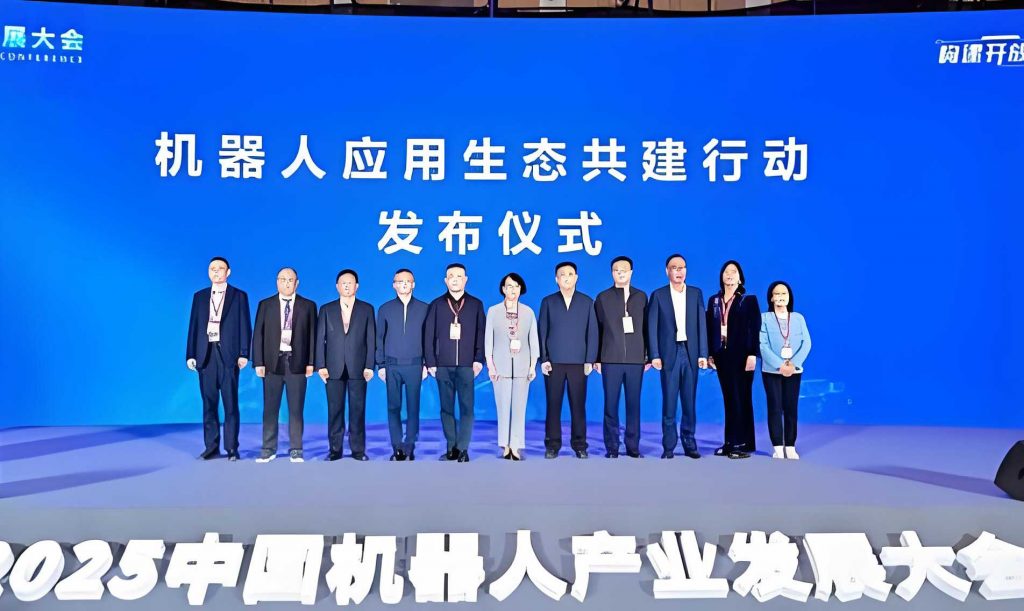
The Shanghai Industrial Fair served as a microcosm of these trends, with expansive pavilions dominated by domestic and international robotics exhibitors. The energy within these spaces contradicted broader macroeconomic concerns, pointing to a sector that, while not immune to downturns, is fiercely competitive and innovative. The scale of the China robot market remains colossal; even if it contracts by 20% this year, its size will still be approximately five times that of the United States market and three times that of the European Union’s. This sheer volume continues to attract global players and incubate local champions, fostering an environment where rapid iteration and cost-effective solutions flourish.
The narrative of the China robot industry is no longer just about mass adoption; it is increasingly about sophistication, specialization, and export ambition. From collaborative robots handling delicate assembly tasks to heavy-duty machines orchestrating logistics, Chinese companies are expanding their portfolios and technological capabilities. Meanwhile, foreign giants are grappling with the pressures of a hyper-competitive local market, forcing strategic adaptations. The following sections delve into the key themes, competitive dynamics, and future trajectories observed at the fair, painting a comprehensive picture of a sector at a critical juncture.
- Key Themes Dominating the Robotics Showcase
Leading robot manufacturers at the Shanghai Industrial Fair concentrated their displays on several interconnected themes, reflecting the current demands and future directions of the China robot market. These themes underscore the industry’s shift towards greater flexibility, intelligence, and application-specific solutions.
- FANUC (Japan): The Japanese powerhouse showcased new applications in battery production, cutting, painting, palletizing, and semiconductor manufacturing, alongside its collaborative robot offerings. However, FANUC’s strategy in the China robot market faces significant hurdles. Its pricing remains notably firm and substantially higher than that of local competitors, presenting a considerable challenge as cost sensitivity grows among Chinese manufacturers.
- Estun (Nanjing): This domestic leader presented a wide product range and industry-specific solutions, with particular emphasis on the battery, solar, and automotive sectors. Compared to its 2023 showing, Estun’s collaborative robots were far more prominent, indicating a strategic push into this high-growth segment of the China robot landscape.
- KUKA and ABB: These European giants focused on highlighting their technological advantages through advanced robot applications, aiming to differentiate themselves from local rivals. In a notable debut, ABB’s GoFa collaborative robot demonstrated ultra-precision capabilities targeted at electronics, automotive, aerospace, and metalworking industries—a direct play for high-end applications within the China robot ecosystem.
- Collaborative Robots as Growth Engines: Assembly and inspection applications within the battery and EV sectors have become primary growth drivers for collaborative robot sales. Universal Robots (UR), the cobot pioneer under Teradyne, showcased high-torque (up to 350Nm) robotic screwdriving solutions for automotive and long-arm robots (nearly 1.8m) for handling large components. Shanghai-based JAKA demonstrated its cobots performing gluing, screw locking, and surface inspection on automotive smart islands, with additional applications like automatic charging or refueling. Other players like Beijing Aubo and Shanghai Flexiv also presented specialized solutions for this domain, highlighting the intense innovation in the China robot cobot space.
- Cost-Competitive Solutions: FANUC’s offering of a complete palletizing solution featuring a collaborative robot with a 30-40kg payload, including camera, gripper, and software, at a starting price of 12,000 euros, was positioned as significantly cheaper than comparable European or American solutions. This move indicates how even established foreign players are adjusting their value propositions to compete in the price-sensitive China robot market.
- Adoption of 3D Vision and Path Planning: 3D cameras and automated path planning technologies were adopted by all major collaborative robot manufacturers. Domestic player Qianjiang Robot (acquired by cookware maker ASD years ago) showcased intelligent welding solutions, including large-scale welding for steel structures. The company claimed a single order for 2,000 units of such robots had doubled its sales, exemplifying the scale at which solutions can be deployed in the China robot scene.
- The Rise of Heavy-Duty Robots and AI Integration
Beyond collaborative robots, the fair highlighted significant advancements in heavy-payload robotics and the pervasive integration of artificial intelligence, marking another frontier for the China robot industry.
- Heavy-Duty Robotics: This direction was emphasized by major players like FANUC, ABB, Yaskawa (Japan), and Estun. Estun displayed a 220kg payload robot primarily for spot welding on automotive assembly lines. Chinese startup Mech-Mind also presented an intelligent heavy-duty robot solution utilizing 3D cameras and smart path planning to simplify battery module assembly. Robots with payloads of 300kg and above are finding increasing applications in palletizing for chemical, food and beverage, and warehousing/logistics sectors, showcasing the expanding capabilities of the China robot manufacturing base.
- Pervasive Computer Vision and AI: The application of AI and advanced vision systems was widespread. Mech-Mind demonstrated improved solutions for handling shiny and reflective surfaces, alongside an interface for its own large language model. Changzhou-based startup Weiyi Zhizao showed a method for robots to autonomously construct functional building blocks. Hikvision focused on 3D-guided welding and advanced inspection tasks, jointly exhibiting an integrated inspection solution with Estun. This solution replaces traditional fixtures, offering superior flexibility for handling scattered workpieces—a key demand in the evolving China robot market for flexible manufacturing.
- Domestic Ambition and Technological Breadth
The ambitions of China’s homegrown robotics champions were on full display, indicating a strategic push beyond low-cost manufacturing towards technological leadership and system integration.
- Inovance Technology’s Expansive Vision: Often called the “little Huawei,” Inovance Technology reaffirmed its ambitions across the industrial automation spectrum. It showcased its latest industrial robots in a white-body car manufacturing environment. Having already seized the top market share in the SCARA segment from Japanese veteran Epson, Inovance is now asserting its ambitions in the multi-axis robot domain. Although robots currently contribute less than 5% to the company’s revenue, its dominant position in industrial automation suggests this could change rapidly, further shaping the China robot competitive landscape. The company is also applying real-time industrial wireless module technology.
- The Emergence of Humanoid Robots: Humanoid robots were ubiquitous at the fair, with companies like Estun, JAKA, and many others displaying prototypes. For now, these serve more as proof of Chinese companies’ ability to rapidly produce new hardware. However, widespread commercial success and their establishment as valuable assistants in industrial settings are still considered years away. Their presence nonetheless signals the long-term innovative aspirations within the China robot sector.
- The Intensifying Sino-Foreign Competitive Landscape
The Shanghai fair also laid bare the fierce competition between foreign and domestic robotics companies, revealing both the challenges for international firms and the growing outward push of Chinese players.
- Challenges for Foreign Companies: International robot makers are feeling the pressure of a brutal competitive environment in China. Higher price points remain a significant obstacle, while a perceived lack of local engineering capability and responsiveness is another drawback. Many special requests sent to European headquarters are reportedly delayed or ignored, putting foreign firms at a disadvantage in the fast-moving China robot market.
- The Imperative to “Become More Chinese”: To succeed, foreign companies are recognizing the need to deepen their local roots. Universal Robots, for instance, recently signed a strategic partnership with Gree Intelligent Equipment in Zhuhai to address these very issues, aiming to enhance local support and development speed.
- The “Look East” Strategy Amidst Geopolitics: Contrary to political rhetoric about decoupling, many European companies are increasing procurement from China to gain greater flexibility and faster product development. Automotive suppliers, in particular, are adopting an “Eastward-looking” development strategy, sourcing equipment and robots from China to reduce investment costs in Europe. This trend presents new opportunities for the China robot industry to expand its global influence.
- Export Ambitions and Global Expansion
The intense competition within the domestic China robot market has not only driven down prices but also fostered a powerful ecosystem capable of incubating new solutions with unmatched speed and cost efficiency. Leveraging extensive field knowledge from vast domestic applications, Chinese robotics companies are beginning to look overseas.
- Building a Global Presence: More activity from Chinese robot firms is expected across Asia, the EU, and the United States. Inovance Technology has announced plans to showcase its industrial robots at the SPS automation fair in Nuremberg in November. Estun has already formulated detailed overseas expansion plans. This outward movement signifies the next phase for the China robot industry: transitioning from a massive domestic market to a significant global exporter of robotic technology and solutions.
- The Ecosystem Advantage: The China robot ecosystem’s strength lies in its ability to rapidly iterate and deploy cost-competitive, application-specific solutions. This agility, born from domestic market pressures, is now becoming a key asset for international competition.
| Market Region | Relative Market Size (Indexed) | Key Growth Drivers | Notable Challenges |
|---|---|---|---|
| China Robot Market | 5.0 (Baseline: US Market = 1.0) | EV/Battery Applications, 3C Resurgence, Cobot Adoption, Government Industrial Policy | Economic Slowdown, Overcapacity, Intense Price Competition |
| United States Robot Market | 1.0 | Reshoring, Advanced Manufacturing, Automotive & Aerospace | Higher Labor Costs, Slower Adoption in SMEs |
| European Union Robot Market | ~1.7 (Approx. 1/3 of China) | Automotive Industry, Sustainability Mandates, Precision Engineering | Regulatory Complexity, Fragmented Market, High Integration Costs |
- The Path Forward: Which Players Will Prevail?
The robotics industry in China remains fervently active, as evidenced by the grand displays at the Industrial Fair. Yet, beneath the surface, many companies are still struggling to achieve profitability. While some anticipate a sales recovery before year-end, a pervasive sense of caution remains. The central question looming over the China robot industry is one of consolidation and survival.
- Emerging Leaders: Companies like Inovance Technology and Estun have already distinguished themselves through technological breadth, integration capabilities, and clear strategic vision. Their progress suggests they are well-positioned for the future.
- The Survival Challenge: For many other players, the path is less certain. The market is crowded with competitors, and the pressure on margins is severe. The most critical question, as posed by industry observers, is who will still be standing in two to three years’ time. The evolution of the China robot market will likely see further shakeouts, mergers, and strategic pivots as companies vie for sustainable positions.
- Sustained Global Influence: Regardless of which specific companies thrive, the trajectory of the China robot industry is set to continue influencing global robotics trends. Its combination of scale, rapid innovation cycles, and an increasingly mature supply chain ensures that developments in China will resonate worldwide, affecting pricing, technology adoption rates, and competitive dynamics across all major economies.
In conclusion, the Shanghai Industrial Fair served as a powerful testament to the central role of the China robot market in the global automation narrative. It is a market characterized by paradox: softening demand in some traditional sectors yet explosive growth in others; fierce price competition alongside remarkable technological strides; and domestic challenges coexisting with burgeoning international ambition. As Chinese robotics firms deepen their technological capabilities and expand globally, and as foreign competitors adapt to local realities, the industry worldwide must pay close attention. The decisions made and battles fought within the China robot arena will undoubtedly shape the future of manufacturing and automation for years to come, solidifying China’s position not just as the world’s largest buyer of robots, but as an increasingly influential trendsetter and technology provider in its own right.