
In a remarkable demonstration of innovation and technical prowess, students from Bengbu College have secured outstanding accolades at the 27th China Robot and Artificial Intelligence Competition National Finals, held in Suzhou from August 4th to 6th. The teams from the College of Electronics and Electrical Engineering clinched two national first prizes, one second prize, and one third prize, setting a new institutional record for both the quantity and quality of awards in this prestigious national event. This achievement underscores the growing capabilities of China robot and artificial intelligence education in fostering top-tier engineering talent.
The China Robot and Artificial Intelligence Competition, recognized as an authoritative event in the “National College Student Competition Ranking,” serves as a critical platform for assessing the quality of innovative talent cultivation in higher education institutions across China. This year’s edition was characterized by its high standards and intense competition, attracting over 30,000 teams from more than 900 universities nationwide. Only 1,200 teams earned the distinction of advancing to the national finals, making the victories of Bengbu College’s students particularly noteworthy. Their success is a testament to the effective implementation of the college’s educational philosophy, which emphasizes “promoting teaching and learning through competition,” and highlights significant outcomes in the cultivation of new engineering talents.
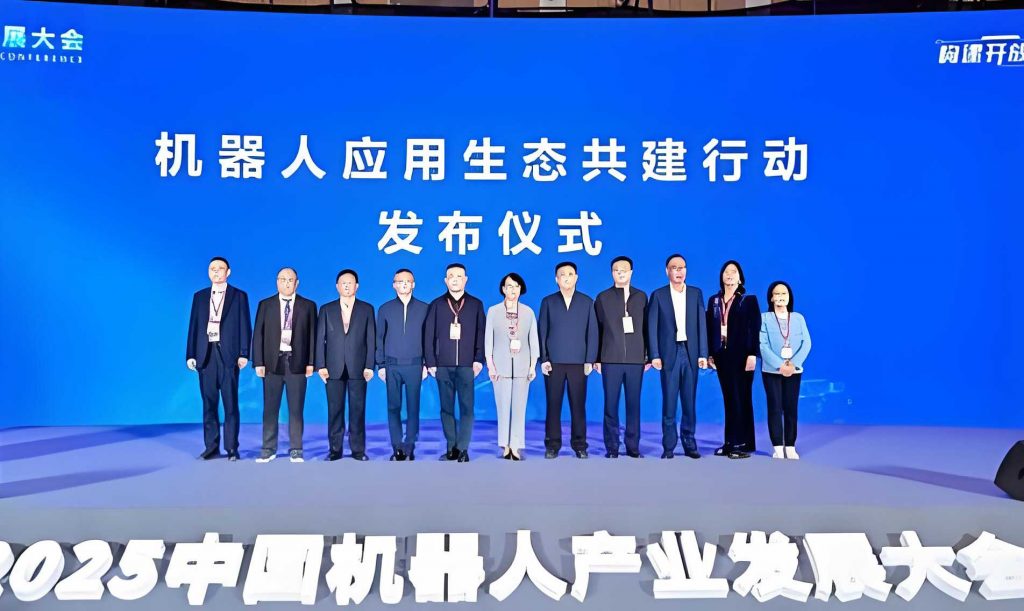
The competition landscape for China robot and AI technologies is rapidly evolving, with events like this driving forward the integration of theoretical knowledge and practical application. The achievements at Bengbu College reflect broader trends in the China robot sector, where educational institutions are increasingly aligning their programs with national strategic demands in智能制造 (smart manufacturing) and artificial intelligence. The following sections detail the specific accomplishments, the institutional support mechanisms, and the future directions inspired by this success.
Detailed Breakdown of Awards and Competitions
The awards secured by Bengbu College span two key categories within the China Robot and Artificial Intelligence Competition, each demonstrating distinct technical challenges and innovative solutions.
- Robot Competition – Create Extraordinary iLoboke Football Event: The team named “Beiming Youyu” (meaning “Northern Seas Have Fish”), guided by instructor Su Hao and comprising members Yang Shuo, Wu Mingliang, and Huang Zhishen, emerged as champions. Their victory was attributed to precise algorithm control and flexible tactical coordination, enabling them to navigate through a field of formidable opponents. This event tests the autonomous capabilities of robots in a dynamic, soccer-like environment, a core area in the China robot research community.
- Robot Application Competition – Intelligent Driving Event: The team “Ice Black Tea 3.15,” under the guidance of instructor Luo Shaoxuan and consisting of Jia Yaocong, Zhang Binbin, and Wu Rui, also secured a national first prize. Their success was driven by an innovative visual recognition system and stable path-planning capabilities, essential components for autonomous vehicles—a rapidly growing segment within the China robot industry.
- Additional Honors: Beyond the two first prizes, the college also earned one national second prize and one third prize, further solidifying its standing in this competitive arena. These results collectively represent the highest achievement in the history of Bengbu College’s participation in the China Robot and Artificial Intelligence Competition.
In-Depth Look at the Winning Teams and Their Projects
The success of Bengbu College’s teams is rooted in months of dedicated preparation, innovative design, and rigorous testing. Here, we explore the technical and strategic elements that led to their victories.
- The “Beiming Youyu” Football Robot Team: In the iLoboke football competition, robots must operate autonomously to score goals while avoiding obstacles and opponents. The team developed advanced control algorithms that enabled real-time decision-making and adaptive战术. Their robot’s ability to accurately perceive the field, predict ball trajectories, and execute coordinated movements set them apart. This project directly contributes to the advancement of multi-agent systems and robotic coordination, key research areas in the global and China robot domains.
- The “Ice Black Tea 3.15” Intelligent Driving Team: For the intelligent driving event, the team focused on creating a robust perception and navigation system. Their visual recognition system utilized deep learning techniques to identify lanes, traffic signs, and obstacles under varying conditions. The path-planning module ensured smooth and efficient navigation through predefined routes. Such innovations are crucial for the development of autonomous driving technologies, a priority in China’s robot and AI industry发展规划.
Both projects exemplify the practical application of classroom knowledge to solve real-world problems, a cornerstone of Bengbu College’s educational approach. The integration of sensor technology, software development, and mechanical design in these competitions mirrors the interdisciplinary nature of modern China robot engineering.
The Role of Institutional Support and Educational Philosophy
Bengbu College’s consistent performance in high-level competitions is no accident. It is the result of a deliberate and structured institutional strategy aimed at fostering innovation and practical skills among students.
The college has long adhered to a national strategy-oriented approach, making disciplinary competitions a core抓手 for cultivating innovative practical abilities. It has constructed a trinity training system that integrates “competition, teaching, and research.” This system ensures that students not only learn theoretical concepts but also apply them in competitive settings, thereby reinforcing their understanding and sparking creativity.
Key elements of this approach include:
- Curriculum-Competition Integration: Courses are designed to incorporate elements that prepare students for competitions. For instance, robotics and AI modules include hands-on projects that mirror competition challenges, ensuring that learning is directly relevant to real-world applications in the China robot field.
- Dedicated Faculty Guidance: Instructors like Su Hao and Luo Shaoxuan provide mentorship that goes beyond traditional teaching. They guide students through the entire project lifecycle, from ideation and design to implementation and testing, fostering a culture of innovation and resilience.
- Resource Allocation: The college invests in state-of-the-art laboratories and equipment, enabling students to experiment with the latest technologies in robotics and artificial intelligence. This infrastructure is critical for developing competitive projects that can stand out in national events like the China Robot and Artificial Intelligence Competition.
This educational model has proven effective, as evidenced by the students’ repeated successes in various high-level competitions. It aligns with broader national goals to enhance the quality of engineering education and support the growth of the China robot and智能制造 industries.
Background and Significance of the China Robot and Artificial Intelligence Competition
The China Robot and Artificial Intelligence Competition is more than just a contest; it is a barometer for the health and direction of technical education and innovation in China. Established as part of the national effort to promote scientific and technological advancement, the competition has grown into one of the most influential events in the China robot and AI calendar.
Its inclusion in the “National College Student Competition Ranking” underscores its权威. This ranking is used by educational authorities, employers, and institutions to gauge the effectiveness of talent cultivation programs. Performing well in this competition not only brings prestige to the participating colleges but also enhances the career prospects of the students involved.
The competition covers a wide range of categories, including but not limited to:
| Competition Category | Focus Area | Relevance to China Robot Industry |
|---|---|---|
| Robot Competition | Autonomous control, mobility, interaction | Directly feeds into industrial automation, service robots, and exploratory robotics. |
| Robot Application Competition | Practical implementation in scenarios like智能驾驶, healthcare, logistics | Drives innovation in applied机器人 solutions for societal and economic needs. |
| Artificial Intelligence Competition | 算法, machine learning, data analysis | Provides the cognitive backbone for intelligent机器人 systems. |
The high participation rate—over 30,000 teams in the latest edition—reflects the immense interest and investment in these fields across Chinese universities. The fact that only 1,200 teams reach the finals highlights the rigorous selection process and the elite nature of the competition. Bengbu College’s ability to secure top prizes amidst such competition is a clear indicator of its rising stature in the China robot education landscape.
Future Directions and Strategic Vision
Building on this success, Bengbu College is poised to further enhance its contributions to the China robot and artificial intelligence sectors. The college plans to leverage the “New Engineering” construction initiative as an opportunity to continuously optimize its competition management mechanisms and improve the “course-competition integration” training model.
The strategic vision includes:
- Deepening Industry-Academia Collaboration: Establishing partnerships with leading companies in the China robot industry to ensure that curriculum and competition projects are aligned with market needs and technological trends. This will provide students with exposure to real-world challenges and potential employment opportunities.
- Expanding Research and Development: Encouraging faculty and students to engage in cutting-edge research that addresses key issues in robotics and AI. This could involve areas such as human-robot collaboration, swarm intelligence, and ethical AI—all critical for the sustainable development of the China robot ecosystem.
- Enhancing International Exchange: Participating in global competitions and conferences to benchmark against international standards and foster cross-cultural innovation. While the focus remains on strengthening the domestic China robot capabilities, global perspectives can enrich the educational experience.
- Cultivating Comprehensive Talent: The ultimate goal is to培养卓越工程人才 who possess not only technical expertise but also a sense of social responsibility, innovative spirit, and practical ability. This aligns with the national call for talent that can contribute to major strategic initiatives like “Made in China 2025” and the development of the digital economy.
By focusing on these areas, Bengbu College aims to produce graduates who are well-equipped to drive forward the China robot and artificial intelligence industries, contributing to national economic transformation and technological self-reliance.
The Broader Impact on China’s Robot and AI Landscape
The achievements of Bengbu College students are indicative of a larger trend within Chinese higher education. Institutions across the country are increasingly prioritizing practical, competition-based learning to prepare students for the demands of the fourth industrial revolution. The China Robot and Artificial Intelligence Competition serves as a vital catalyst in this process, encouraging innovation and excellence.
The competition’s emphasis on hands-on problem-solving helps bridge the gap between academia and industry. Students who participate gain invaluable experience in project management, teamwork, and technical troubleshooting—skills that are directly transferable to careers in the booming China robot sector. Moreover, the visibility of such competitions inspires younger generations to pursue STEM fields, ensuring a steady pipeline of talent for the future.
From an economic perspective, the growth of the China robot industry is a key component of the national strategy to upgrade manufacturing and embrace smart technologies. Competitions like this one foster the development of homegrown innovations that can reduce reliance on foreign technology and enhance global competitiveness. The success of teams from institutions like Bengbu College demonstrates that China’s educational system is capable of producing world-class engineers and innovators.
Technical Insights and Innovation Highlights
Delving deeper into the technical aspects of the winning projects reveals the sophistication and creativity involved. These projects are not merely academic exercises; they represent tangible contributions to the field of robotics and AI.
- Algorithmic Precision in Robot Football: The “Beiming Youyu” team’s algorithm for control and战术 involved complex decision-making trees and machine learning models that allowed the robot to adapt to opponents’ strategies in real time. This level of autonomy is at the forefront of research in multi-robot systems, a hot topic in the China robot research community.
- Advanced Perception in Intelligent Driving: The visual recognition system developed by the “Ice Black Tea 3.15” team likely incorporated convolutional neural networks (CNNs) to achieve high accuracy in object detection and classification. Their path-planning algorithm probably utilized reinforcement learning or optimization techniques to ensure stability and efficiency. Such technologies are foundational for the development of autonomous vehicles, a major focus area for the China robot industry.
These innovations underscore the importance of interdisciplinary collaboration. Successful机器人 projects require expertise in computer science, electrical engineering, mechanical design, and even psychology (for human-robot interaction). Bengbu College’s integrated approach to education ensures that students develop this broad skill set, making them valuable assets to the China robot workforce.
Challenges and Overcoming Adversity
The path to victory was not without obstacles. The teams faced numerous challenges, both technical and logistical, which they had to overcome through perseverance and ingenuity.
Common challenges in such competitions include:
- Hardware Limitations: Robots must be built within certain constraints regarding size, weight, and power consumption. Teams often have to design custom components or optimize existing ones to meet these requirements while maintaining performance.
- Software Robustness: Algorithms must perform reliably under unpredictable competition conditions. This requires extensive testing and iteration to handle edge cases and failures gracefully.
- Time Management: Balancing competition preparation with academic coursework is a significant challenge. Effective time management and prioritization are essential skills that students develop through this process.
The Bengbu College teams addressed these challenges through meticulous planning, collaboration, and support from their instructors. For example, the “Beiming Youyu” team conducted hundreds of simulation runs before the competition to refine their algorithms. The “Ice Black Tea 3.15” team iterated on their sensor fusion approach to improve accuracy in varying lighting conditions. These experiences not only led to competition success but also built resilience and problem-solving capabilities that will serve the students well in their future careers in the China robot industry.
Testimonials and Reflections
To provide a personal perspective, we can infer the sentiments of those involved based on the typical outcomes of such achievements.
Students likely express a sense of accomplishment and gratitude. For instance, a team member might highlight the thrill of seeing their robot perform autonomously in a high-stakes environment and the camaraderie developed through long hours of work. Instructors probably emphasize the pride in their students’ growth and the validation of their teaching methods. College administrators may point to the institutional recognition and the enhanced reputation that such victories bring.
While specific quotes are not provided in the source material, it is clear that the success has generated positive momentum within Bengbu College, motivating current and future students to aim high in the realm of China robot and AI competitions.
Statistical Context and Comparative Analysis
To fully appreciate the scale of Bengbu College’s achievement, it is helpful to consider some statistics and comparisons.
The China Robot and Artificial Intelligence Competition has seen exponential growth in participation over the years. From a few hundred teams initially, it now attracts tens of thousands, reflecting the expanding interest in robotics and AI education. Among the 900+ participating institutions, many are top-tier universities with extensive resources and long traditions in engineering. For a college like Bengbu to secure multiple top prizes demonstrates that excellence in China robot education is not confined to elite institutions but is accessible through dedicated effort and effective strategies.
Furthermore, the competition results often correlate with regional developments in the robot industry. Areas with strong educational performance tend to attract investment and talent, creating a virtuous cycle of innovation. Bengbu College’s success could therefore contribute to the technological advancement of the Anhui province and beyond, reinforcing China’s position as a global leader in robotics and AI.
Conclusion: A Beacon of Excellence in China Robot Education
The triumph of Bengbu College at the 27th China Robot and Artificial Intelligence Competition National Finals is a shining example of how targeted educational policies and student dedication can yield extraordinary results. By winning two national first prizes and additional honors, the college has not only set a new institutional benchmark but also contributed to the vibrant ecosystem of China robot innovation.
This success story underscores the importance of competitions as drivers of educational quality and practical skill development. As Bengbu College continues to refine its “competition-teaching-research” integration model, it is poised to produce even more talented engineers who will shape the future of the China robot and artificial intelligence industries. The journey from the classrooms of Bengbu to the national stage in Suzhou is a testament to the power of innovation, perseverance, and strategic vision in the rapidly evolving world of technology.
The broader implications for China’s technological ambitions are clear: with institutions like Bengbu College nurturing the next generation of robot experts, the nation’s path toward智能制造 and AI supremacy is well-supported. The continued emphasis on such competitions will ensure that China remains at the forefront of global robotics innovation, turning strategic visions into reality through the hard work and creativity of its students and educators.