
SHANGHAI – The Chinese industrial robotics market experienced an unprecedented downturn in 2018, with overall sales declining for the first time on record. However, amidst this market-wide cooldown, domestically produced China robot brands demonstrated remarkable resilience and growth, significantly increasing their market share against foreign competitors, according to official statistics released by the China Robot Industry Alliance (CRIA).
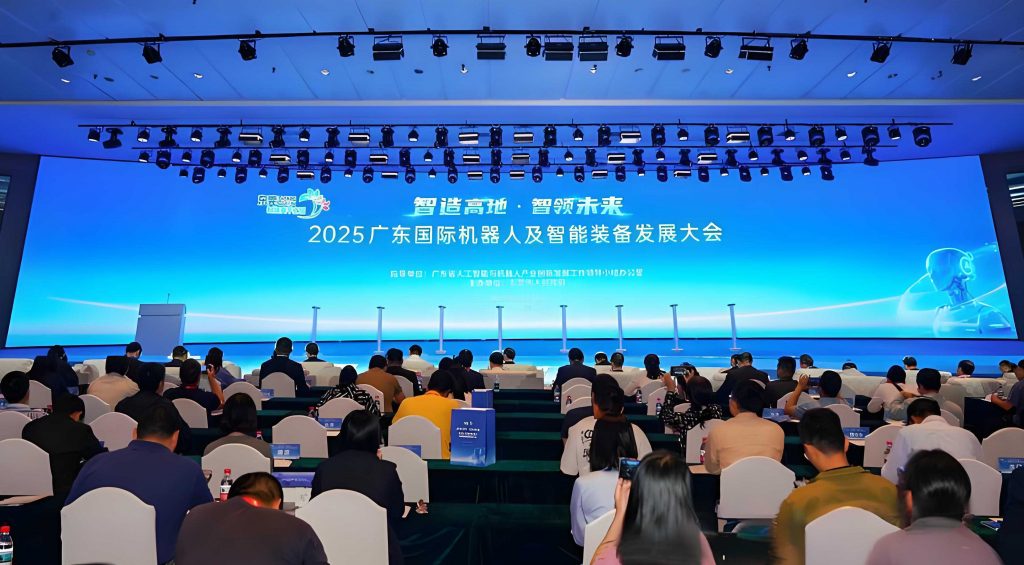
CRIA Chairman Qu Daokui presented the data at the 2019 China International Robot and Intelligent Manufacturing Development Summit Forum. The preliminary statistics, collated by CRIA and the International Federation of Robotics (IFR), reveal a nuanced picture of a pivotal year for the China robot industry.
Key Market Statistics: A Contraction with a Silver Lining
The total sales volume of industrial robots in China for 2018 was approximately 135,000 units, marking a year-on-year decrease of 3.75%. This contraction follows years of explosive growth, signaling a potential inflection point for the world’s largest market for industrial robots.
Breaking down the total sales figures reveals the divergent paths of domestic and foreign brands:
| Category | 2018 Sales (Units) | Year-on-Year Change | Market Share |
|---|---|---|---|
| Total China Robot Market | 135,000 | -3.75% | 100% |
| Domestic Brand China Robots | 43,600 | +16.2% | 32.2% |
| Foreign Brand Robots | 92,000 | -10.98% | 67.8% |
While the overall China robot market shrank, sales of China robot brands produced by domestic manufacturers grew steadily by 16.2% to 43,600 units. In stark contrast, sales of foreign robot brands fell sharply by nearly 11%. Consequently, the market share for domestic China robot brands rose by 5.5 percentage points to 32.2% of the total market.
Performance by Mechanical Structure
The market performance varied significantly across different types of robot mechanical structures, with China robot brands showing strength in key segments.
- Articulated Robots: Remained the top-selling type in the China robot market with sales of 80,500 units, though this represented an 11.7% decline. Crucially, domestic brand articulated China robot sales grew by 18.1% to 18,800 units, securing the top spot among domestic models for the second consecutive year. The market share for domestic articulated China robots increased to 23.4%, up 5.9 percentage points.
- SCARA Robots: This category was a bright spot, achieving the highest growth rate of 32.7% with sales of 29,000 units, making it the second-best-selling robot type in China. Sales of domestic brand SCARA China robots surged by an impressive 63.9%.
- Cartesian/Linear Robots: Total sales were nearly 20,000 units, down 6% year-on-year. However, sales of domestic brand Cartesian China robots grew by 4.7%.
- Delta/Parallel Robots: Saw growth from a relatively low base in the previous year.
Application Fields and Industry Breakdown
The driving forces behind robot adoption in China also shifted in 2018. The data shows changes in both the primary tasks robots perform and the industries investing in them.
By Application Field:
- Handling and Machine Tending: Remained the largest application field for robots in China, with sales of approximately 60,000 units (down 4.4%). Its share of total sales remained stable compared to 2017.
- Welding and Brazing: Sales were 34,000 units, a decrease of 4.5%.
- Assembly and Disassembly: This field showed positive growth, with sales increasing by 9.6% to 31,000 units.
It is noteworthy that domestic China robot brands maintained sales growth in major fields like handling and welding. Furthermore, domestic brands increased their market share in applications including handling, welding, assembly, coating, and cleanroom operations.
By Industry Sector:
The industry demand landscape for the China robot market experienced significant recalibration.
| Industry Sector | 2018 Robot Sales (Units) | Year-on-Year Change | Share of Total China Robot Sales |
|---|---|---|---|
| Electrical & Electronic Equipment Manufacturing | 45,000 | -8.4% | 33.5% |
| Automotive Manufacturing | ~32,000 | -25.4% | 23.8% |
| Metal Products & Machinery Manufacturing | Data Provided | -0.4% | Data Provided |
| Food Manufacturing | Data Provided | +38.1% | Data Provided |
- Electrical & Electronics: For the second year, this was the largest application industry for robots in China, though purchases fell by 8.4%.
- Automotive: This traditionally dominant sector saw a dramatic 25.4% plunge in robot purchases. This sharp decline was a primary driver of the overall downturn in the China robot market. Its share of the total market fell significantly.
- Growth Sectors: The food manufacturing industry’s procurement of China robots grew robustly by 38.1%. Various other manufacturing sectors also exhibited growth, indicating a broadening of robot adoption beyond traditional heavy industries.
The market share of domestic China robot brands increased in major industries. In the electrical and electronics sector, domestic brands held 30.9% of the market (up 2.7 points). In the automotive industry, their share reached 17.15% (a substantial increase of 7 percentage points). Furthermore, the application of domestic industrial China robots expanded to cover 47 major industry categories and 126 medium industry categories within the national economy, unlocking more diverse market demand.
Industry at a Crossroads: Short-Term Pain for Long-Term Gain
Chairman Qu Daokui offered a sober yet forward-looking analysis of the data. He noted that final sales figures for the China robot market in 2018 might be adjusted slightly upward as some manufacturers review their submissions, potentially resulting in a marginal positive growth rate of around 2%. The definitive statistics are expected to be released in September.
However, Qu emphasized that such minor adjustments would not alter the fundamental reality of a major market correction. He likened the situation to an aircraft experiencing a sudden descent from high altitude.
Qu also referenced China’s official robotics industry development plan issued in 2016 by the Ministry of Industry and Information Technology (MIIT) and other departments. The plan set a target for annual production of 100,000 units of domestic brand industrial robots by 2020, half of which should be high-end multi-joint models. Qu acknowledged that with current domestic production below half of that target, achieving the goal within two years appears unrealistic.
Despite the current challenges, Qu expressed strong optimism for the future of the China robot industry. “The surface phenomenon suggests winter has arrived for the robotics industry, but the actual situation is that we have encountered dark clouds. The tomorrow for robots will still be blue,” he stated.
He pointed to significant opportunities, including the Chinese government’s first-time mention in its annual work report of expanding “Intelligent Manufacturing +” to empower manufacturing transformation and upgrading. This policy direction is expected to create substantial demand for China robot solutions.
“Under the combined effect of multiple factors—including robots with usable performance, affordable robot prices, a shrinking labor force, and rising labor costs—the robotics industry is approaching an explosive growth period,” Qu explained.
He concluded that the China robot industry is currently undergoing the growing pains of transition from Robot 1.0 to Robot 2.0. He urged domestic China robot enterprises to leverage this market “respite period” to strengthen themselves comprehensively: “Hone internal skills to develop and grow; innovate to enhance technical levels; while expanding ‘volume,’ pay equal attention to ‘quality’ and ‘intelligence’.”