
Since humanity entered the industrial age, as the only intelligent beings on Earth, people have never ceased to envision robots. Commercial robots, research robots, educational robots, military robots, engineering robots, and even the simplest household cleaning robots… At the 2015 (Beijing) World Robot Conference, visitors had zero-distance contact with the world’s most advanced industrial, service, and special-purpose robots across multiple exhibition zones such as voice service, smart living, and future exploration. As Industry 4.0 gradually becomes clearer, robot commerce has broken through the hard sci-fi imagination of the past, truly entering people’s lives and becoming the next driving force to change the world.
Today, China has become the world’s manufacturing center for products such as automobiles, consumer electronics, communication terminals, and home appliances. Next, it is inevitably moving towards transformation with higher technological content and added value, which requires more precise processing and manufacturing methods. Andrew Goldenberg, a Fellow of the Canadian Academy of Engineering, IEEE Director, and Fellow of the American Society of Mechanical Engineers, asserts that China has become a key market for global robot commerce. With the continuous improvement of China’s industrialization level and more frequent technological updates, China’s commercial robot industry is likely to experience a major boom in the next decade. Meanwhile, in the next 10 years, China faces pressures from an aging population, rising labor costs, and industrial restructuring. The advantage of cheap labor is fading, and industrial robots replacing human labor will become the biggest development trend.
Against this backdrop, labor-intensive enterprises with increasingly high labor costs are beginning industrial transformation. Some low-end manufacturing has shifted to Southeast Asian countries like Vietnam, Cambodia, and Myanmar, while some electronic technology companies unsuitable for regional relocation, such as Foxconn, have started extensively deploying robots for automated production lines, improving technological levels and output while laying off a large number of manual workers.
1. The Growth Trajectory of China Robot Market
In 2011, China’s robot shipments reached 23,000 units, accounting for 13.8% of global shipments, ranking fourth globally, with a year-on-year growth rate of 51%. From 2004 to 2012, the compound annual growth rate of industrial robots in China was 29.7%, and from 2009 to 2012, it reached 71.9%. In 2012, domestic robot installations reached nearly 27,000 units, an increase of 19.5% compared to the previous year, higher than the predictions of the International Federation of Robotics. In 2014, new installations of industrial robots in China reached 32,000 units, a year-on-year growth of 16%, with continuously increasing growth rates. In the next three years, the China robot industry will be in an overlapping period of opportunities: national policy dividends, the release of demand for industrial transformation and upgrading, weakening demographic dividends, and growing market demand. The business opportunity for China robot is imminent; by seizing it, we can occupy the high ground of new manufacturing.
2. Defining Robots: From Concept to Reality
A robot, also known as a mechanical man. Broadly speaking, a robot is an automatic device created by humans that can mimic human actions; narrowly, a robot is a multifunctional manipulator that uses specialized devices through various programming and can be reprogrammed. Technically, by skillfully integrating computers, electronics, information technology, and control technology into traditional mechanical technology, robots are manufactured.
Therefore, robots represent “mechatronics technology.” The term “robot” was first invented by the Czechoslovak writer Karel Čapek (1890–1939), who defined robots as automatic machines similar to humans that could replace human labor. In 1921, he published a play “R.U.R.” (“Rossum’s Universal Robots”), which narrated the story of a company called Rossum marketing robots as industrial products to replace human labor, attracting widespread attention. The robots envisioned by Čapek in the play had bodies almost identical to humans, even with hairy skin. Since then, people have often viewed robots as superhumans resembling human forms.
3. Historical Development: From the U.S. to Japan
After World War II, with rapid technological advancements, the world’s first electronic computer was born in the United States in 1945. In the 1970s, Western developed countries developed supercomputers, microcomputers, and computer networks. Especially after the advent of microcomputers, computers gradually entered production and social life. Robots arrived in the world in 1961, but large-scale manufacturing and use began in 1979. In the following five years, robots “reproduced” at an average annual growth rate of over 30%.
Notably, during the 1980s, the concept of robots was still often interpreted as “industrial robots.” U.S. President Ronald Reagan used the term “industrial robots” in a speech to illustrate that American manufacturing should achieve production automation, avoid workplace accidents, and improve efficiency. As the world-renowned “Robot Kingdom,” Japan demonstrated strong industrial robot manufacturing capabilities as early as the 1985 “Tsukuba Expo,” exhibiting various robots, including painting robots that could draw portraits of guests in two minutes as gifts, friend robots that could close eyes, open mouths, and converse, and performance robots that could understand human language and move accurately. Throughout the 1990s, Japan was both the largest manufacturer and consumer of industrial robots. It can be said that Japan’s robot manufacturing philosophy influenced the development of the global machinery industry.
In Japanese academia, robots are not simple automatic machines; they resemble humans, with functions such as hands, feet, brains, senses, and vision. From a manufacturing perspective, they are products combining electronic technology with traditional mechanical industry. Given a program, they can become one type; adding another program changes them into another. They can also enable multi-variety production, from rigid to flexible production, essentially a fusion system of physical and mental labor. In robots, the computer is equivalent to the human brain, sensors are equivalent to eyes, ears, nose, and touch, and mechanical arms, drive wheels, etc., replace hands and feet. External information obtained through sensors is sent to the computer, which, after judgment, issues instructions for various actions. Thus, robots can replace humans in tasks that are difficult, dangerous, or too monotonous. For example, robotic arms on spacecraft can operate freely in the extreme environments of outer space. Robots can inspect steam, oil, and natural gas pipelines. They can move freely inside pipes, navigate sharp turns, and assess the integrity of undamaged sections. In recent years, welding, painting, and complex assembly operations have begun widely adopting robots. In fields like automobiles, shipbuilding, and home appliances, new arc welding processes are extensively used, utilizing high temperatures generated by arc discharge for joining. Arc welding is performed in harsh environments involving high temperatures, ultraviolet radiation, and toxic gases.
Although Japan is the true “Robot Kingdom,” the birthplace of robots is actually the United States. In 1927, American Westinghouse engineer J.M. Barnard created the first robot “Televox,” exhibited at the World’s Fair in New York. Televox was an electric robot equipped with a radio transmitter that could answer some questions, but it could not move. In 1928, W.H. Richards invented the first humanoid robot. This robot had built-in motor devices, enabling remote control and audio control. In 1954, American George Devol first proposed the concept of an industrial robot and filed a patent. The key point of this patent was using servo technology to control robot joints, teaching actions manually, and enabling the robot to record and reproduce movements. Based on this, in 1959, George Devol and Joseph Engelberger invented the world’s first industrial robot, named Unimate, meaning “universal automation.” Engelberger was responsible for designing the robot’s “hands,” “feet,” and “body,” i.e., the mechanical parts and operational components; Devol designed the robot’s “brain,” “nervous system,” and “muscle system,” i.e., the control and drive devices. Unimate weighed two tons and was controlled by a program on a magnetic drum. It used hydraulic actuators for drive, with a large mechanical arm on a base that could rotate around an axis, and a smaller mechanical arm extending from it that could extend or retract relative to the large arm. The small arm had a wrist that could rotate around it for pitch and yaw. At the front of the wrist was the hand, or end-effector. This robot’s functionality resembled that of a human arm. Unimate’s accuracy reached 1/10,000 inch.
In 1961, the world’s first industrial robot produced by Unimation, founded by George Devol and Joseph Engelberger, was installed and operated at General Motors in Trenton, New Jersey. This industrial robot was used to produce car doors, window handles, gearshift knobs, light fixtures, and other hardware inside automobiles. Following program instructions on a magnetic drum, Unimate’s 4,000-pound arm could sequentially stack hot-pressed metal parts. From that moment, the development of industrial robots has never stopped.
In 1962, American Machine and Foundry (AMF) manufactured the world’s first cylindrical coordinate industrial robot, named Verstran, meaning “universal transfer.” That same year, six Verstran robots produced by AMF were applied at the Ford Motor plant in Canton, USA. In 1967, a Unimate robot was installed and operated at Metallverken in Upplands Väsby, Sweden, the first industrial robot installed in Europe. In 1969, General Motors installed the first spot welding robot at its Lordstown assembly plant. Unimation robots significantly improved productivity, with over 90% of body welding operations automated by robots. Only 20%–40% of welding work in traditional plants was done manually. After this, the United States, with preliminary technological accumulation,率先 entered the field of more advanced intelligent robot production, and robot R&D was elevated to a national strategic level. Presidents Reagan, George H.W. Bush, and Clinton all introduced policies encouraging robot manufacturing, especially with rapid development in the U.S. military sector. From the Gulf War to the invasion of Iraq, the U.S. military has been using auxiliary robots for battlefield operations. For example, Boston Dynamics (now acquired by Google), spun off from MIT in 1992, successively developed military robots like the bipedal “Atlas” and quadruped all-terrain robots “BigDog” and “Cheetah,” astonishing the world. These were among the world’s first batch of quasi-military robots and are still in service in Afghanistan. With the rise of Silicon Valley and the information technology revolution, the U.S. robot market developed rapidly, becoming one of the world’s most active, technologically advanced, and complete commercial markets today.
4. Global Strategic Initiatives in Robotics
In 2013, the U.S. government released a robotics technology roadmap titled “From Internet to Robotics,” jointly published by the IEEE Robotics and Automation Society along with universities like MIT, CMU, UC Berkeley, and University of Pennsylvania, detailing plans for robot development in five areas: manufacturing, healthcare, services, space exploration, and defense.
The Japanese government, in its “Manufacturing White Paper” (2014 edition) released in June, announced the “Robot Strategy,” proposing three core goals: “World Robot Innovation Hub,” “World’s No. 1 Robot Utilization Society,” and “Leading the World into the New Robot Era.” To achieve these three core goals, the strategy established a five-year plan to ensure Japan’s world-leading position in robotics.
Meanwhile, South Korea, which has caught up in robot R&D, formulated the “Intelligent Robot Basic Plan” (2014–2018). This plan aims to enhance South Korea’s robot R&D capabilities, promote robots across industries, foster an open robot industry ecosystem, and build a robot industry convergence system, particularly highlighting research and development in robot healthcare facilities, showing great foresight.
5. Current State of China Robot Industry
Although China’s current robot stock is considerable, the quality is relatively low. China’s industrial robots started in the early 1970s, with development经历ing the萌芽 period in the 1970s, development in the 1980s, and practical application in the 1990s. After decades, it has begun to take shape. Currently, some key robot components have been produced, and industrial robots such as arc welding, spot welding, palletizing, assembly, handling, injection molding, stamping, and painting have been developed. A number of domestic industrial robots are already serving production lines of many Chinese enterprises, and a group of robot technology research talents has emerged. Some related research institutions and enterprises have mastered optimization design and manufacturing technology for industrial robot manipulators; hardware design technology for robot control and drive systems; software design and programming technology; kinematics and trajectory planning technology; and development and preparation technology for arc welding, spot welding, and large robot automated production lines with peripheral equipment. Some key technologies have reached or are接近 world levels.
Currently, compared to countries like the U.S., Japan, and South Korea, China’s robot density is still very low. In 2011, the data was only 21 robots per 10,000 workers, less than the world average of 55 per 10,000. Even after excluding incomparable factors, there is significant room for improvement in China’s robot density, indicating huge market potential for industrial robots in China.
In recent years, in the Chinese market, besides increasing installations, the industries applying robots are continuously expanding.
The automotive industry remains the largest application field for robots in China, accounting for 41%, primarily using six-axis universal robots; consumer electronics, electronics/electrical industries, and semiconductors (i.e., the 3C industry) are labor-intensive sectors,大量 using SCARA and low-payload articulated robots (e.g., desktop robots), collectively accounting for 21%; the metal products industry also mainly uses six-axis universal robots, accounting for 17%. Food, beverage, and personal care industries are also areas with relatively high usage, increasingly adopting parallel robots for rapid loading and unloading of goods in recent years.
From the perspective of growth rates across sectors, the 3C industry has the highest增速, with the consumer electronics industry’s commercial robots having a compound annual growth rate of 20.2%, while automobiles, as the traditional largest usage area, have the lowest growth rate in the coming years.
| Year | Robot Shipments (units) | Global Share | Growth Rate | Installations (units) |
|---|---|---|---|---|
| 2011 | 23,000 | 13.8% | 51% | N/A |
| 2012 | N/A | N/A | N/A | ~27,000 |
| 2014 | N/A | N/A | 16% | 32,000 (new installations) |
The reasons for this trend, based on China’s current manufacturing level, the decisive factors for the explosion of robot commerce are threefold: First, rising labor costs and the gradual disappearance of demographic dividends. Increasing labor costs stimulate enterprises’ demand for robots to replace human labor. Second, declining labor supply. In the mid-1990s, China’s manufacturing employment dropped significantly. During 1998–1999, there was a crisis of layoffs in state-owned enterprises, with traditional manufacturing like textiles bearing the brunt. After joining the WTO in 2001, China’s manufacturing employment slowly recovered. However, entering the second decade of the new century, the post-80s and post-90s labor force became mainstream, unwilling to engage in大量 monotonous, repetitive, and poor-environment jobs. Labor shortages in low-end industries in regions like the Yangtze River Delta and Pearl River Delta became apparent. Finally, manufacturing industry upgrading and national policy support. Popularizing robots is not merely about replacing labor but also an important means to enhance manufacturing efficiency and flexibility.
6. Competitive Landscape and Foreign Dominance
As early as the early 1990s, when China’s reform and opening-up showed实效, international robot giants began scrambling to enter the Chinese market. Foreign robot enterprises represented by the four major families—ABB, KUKA, Yaskawa Electric, and Fanuc—once occupied over 90% of the China robot market share.
Of this 90% market share, the four families—ABB, Fanuc, Yaskawa, and KUKA—accounted for 57.5%. The next three major manufacturers, OTC, Panasonic, and Kawasaki Heavy Industries, accounted for 16%. Domestic robot manufacturers had relatively small market shares, with statistics from 2012 showing that local brands in China held only 8% of the market, with individual enterprises普遍存在ing issues like small scale and weak innovation capabilities.
This competitive格局 is related to most robots in China being used in the automotive industry. Foreign robot manufacturers typically绑定 with large automotive enterprises. For example, Volkswagen only uses KUKA robots, often purchasing 1,000–2,000 KUKA robots for a new factory; General Motors mainly uses Fanuc; European car brands also prefer ABB. Domestic automotive enterprises have their preferences; for instance, Great Wall uses Yaskawa’s Motoman, and Jianghuai Automobile uses ABB. Domestic robot enterprises cannot compete with foreign products in the automotive industry. The advantage of foreign robot enterprises in the automotive sector is because foreign countries still retain automobile manufacturing, while other manufacturing capacities have shifted to China.
The best robot本体 are still European products, with KUKA being the top tier. After ABB robots were国产化, quality somewhat declined. Japanese brands like Yaskawa, Fanuc, Nachi-Fujikoshi, and Panasonic, compared to欧美 products, are of good quality and affordable, better meeting Chinese customer needs. South Korea’s Hyundai robots are mainly used internally by Hyundai Group’s Hyundai Heavy Industries and Hyundai Motors, with relatively fewer external sales.
Japanese robot enterprises like Yaskawa and Fanuc attach great importance to the Chinese market. Taking Yaskawa as an example, it initially cooperated with Shougang on robot本体, and recently collaborated with Hangzhou Kaierda on robot本体. Moreover, Yaskawa has done an excellent job in market布局 in China in recent years, with offices in almost every important market. If no domestic enterprise can produce good本体 in the future, it is estimated that Japanese enterprises will occupy most of the China robot market share.
The four major robot families all highly value the Chinese market, investing in building factories in China. However, only ABB has truly achieved localization in R&D and production; others like KUKA and Fanuc have not truly国产化. While foreign robot enterprises seize the market, they have cultivated talents and a relatively complete supplier system for the domestic robot industry.
7. China Robot Industry Chain and Challenges
Regarding China’s current robot market, its industry chain mainly includes four segments: core component production, robot本体 manufacturing, system integration, and industry application. Currently, the真正 profitable business for Chinese robot enterprises is system integration. Key components have not been truly国产化, resulting in domestic robot本体 costs being much higher than foreign counterparts, making it difficult to scale. Taking reducers as an example, the price domestic enterprises pay for reducers is nearly five times that of foreign enterprises. Prices for servo motors, controllers, and other key components, as well as corresponding open-source software prices and R&D costs, are also significantly higher than foreign同类 products. This requires breakthroughs in key components, robot本体, and system integration in China’s robot industry.
8. Policy Support and Future Outlook
For China’s manufacturing sector, the most重磅 policy since 2015 has been the “Made in China 2025” action plan, which mentions that China must vigorously promote breakthrough development in key areas, targeting新一代 information technology, high-end equipment, new materials, biomedicine, etc., to rapidly develop robots in advantageous and strategic industries. Focusing on application needs for industrial robots and special robots in industries like automobiles, machinery, electronics, hazardous goods manufacturing, national defense, chemicals, and light industry, as well as service robots in healthcare, home services, and education entertainment.
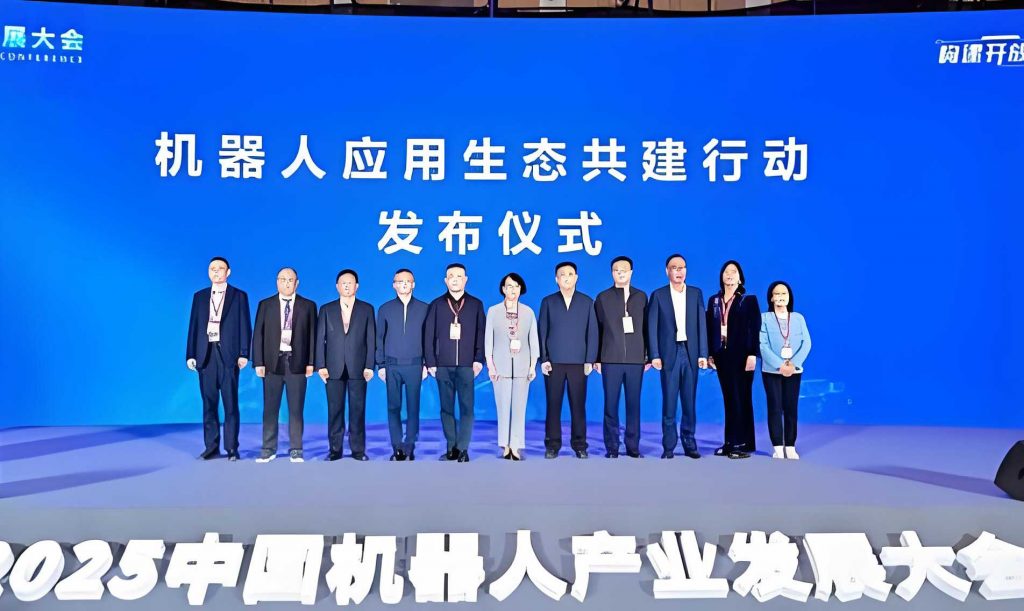
To implement President Xi Jinping’s speech精神 at the两院院士大会 on robot industry development, actively promote the innovation-driven development strategy, and achieve跨越 development in robot technology and industry in China, approved by the State Council, the China Association for Science and Technology, Ministry of Industry and Information Technology, and Beijing Municipal Government jointly organized the 2015 (Beijing) World Robot Conference. On November 23, President Xi Jinping sent a congratulatory message to the conference, pointing out that the智能 industry represented by robot technology is booming, becoming an important symbol of modern technological innovation. China has included robots and intelligent manufacturing in the national priority areas for technological innovation. Premier Li Keqiang, in his批示 on the 2015 World Robot Conference, stated that China is implementing the innovation-driven development strategy, vigorously promoting mass entrepreneurship and innovation, Internet Plus, and Made in China 2025, which will strongly促进 the growth of the emerging robot market, creating the world’s largest robot market.
This World Robot Conference involved 12 international robot organizations and 58 domestic research institutions. Over 100 experts and scholars from more than 10 countries and regions including Hong Kong, Macao, and Taiwan participated in keynote reports and专题 forums. Over 100 domestic and foreign enterprises participated in the robot expo,集中展示ing a large number of robot products. Youth teams from 16 countries and regions participated in the two-day World Youth Robot Invitational Competition.
This year’s conference was unprecedented in scale and the number of participating enterprises and countries, fully demonstrating the bright prospects of China robot commerce. Technologies like robots and 3D printing, under the背景 of intelligent manufacturing and driven by artificial intelligence technology, will undergo significant changes. Robots will truly have the ability to receive information, process information, communicate and interact with humans, and handle many non-fixed模式 challenges. Traditional robots will gradually evolve from单纯的 automation equipment to advanced human assistants and tools, not just production tools but also生活 tools.
In the Robot Industry 1.0 era, the main goal was to replace humans in heavy physical labor, liberating大量 industrial workers from production lines. The Robot Industry 2.0 era,即 the intelligent era of the robot industry (also the next generation of robots), is the product of integrating traditional robot technology with众多 advanced technologies like big data, cloud computing (massive service backends), the Internet of Things (internet and precision sensing technology), and information technology (network and computer technology). We must increase research on artificial intelligence technology, promote breakthroughs in speech recognition and image recognition, advance高精密度 sensing technology, encourage machine deep learning, and foster integrated innovation in information processing technology and breakthroughs in machine brain technology. The United States began布局 the Robot Industry 2.0 era as early as 20 years ago. The new generation of robot industry represented by Google robots is rapidly rising and will重新 lead global robot industry development in the Robot 2.0 era.
The Robot Industry 2.0 era is a全新的 era for the robot industry. Service platforms and terminals built with information technology support will rewrite numerous service and business models combining robots and intelligence. Our robot enterprises and research institutions should尽早 participate in research for the Robot Industry 2.0 era, actively seize the business opportunities of China robot, and ultimately achieve the great transformation of intelligent manufacturing, namely Industry 4.0.
In conclusion, the China robot market stands at a critical juncture, with immense potential driven by technological advancements, policy support, and evolving economic needs. By addressing challenges in core components and fostering innovation, China can harness the power of automation to lead the next wave of industrial revolution, ensuring sustainable growth and global competitiveness in the years to come.