
China has remained the world’s largest market for industrial robots for many consecutive years. Domestic robot本体 manufacturers, core component manufacturers, and robot system integrators are rapidly rising, while international robot giants are also increasing their investments in the China robot market, establishing manufacturing facilities, application technology centers, and R&D centers. In 2020, the application of collaborative robots, parallel robots, and autonomous mobile robots (AMRs) grew rapidly, with forklift-type AGVs becoming a market hotspot. As an authoritative media in China’s intelligent manufacturing field, Digital Enterprise Network (e-works) has analyzed and forecasted the current status, market characteristics, and application trends of China’s industrial robot industry.
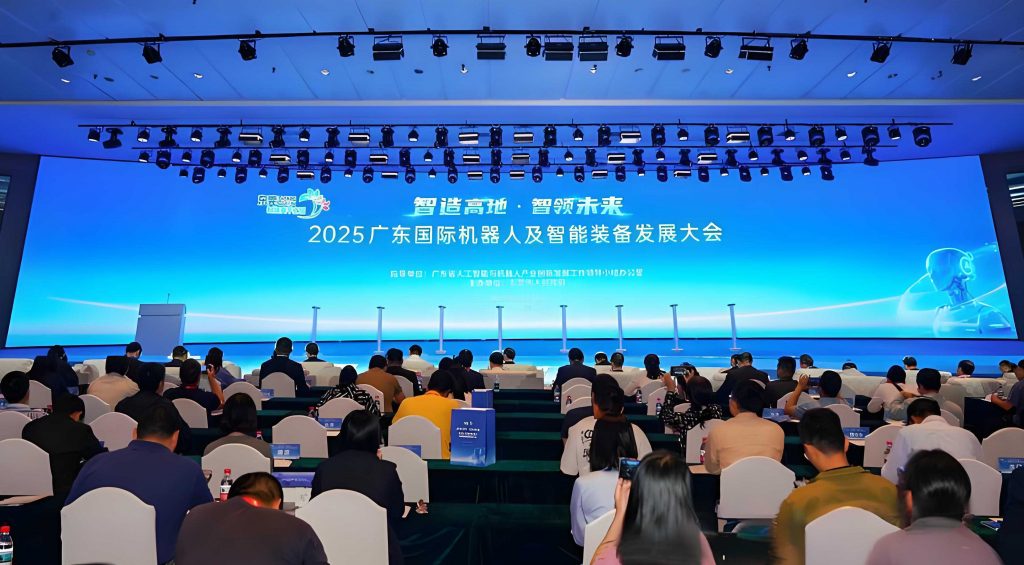
The following report delves into the development status, distinctive features, and future prospects of the China robot industry, highlighting its pivotal role in global manufacturing transformation.
1. Development Status of China’s Industrial Robot Industry and Market
In 2020, the COVID-19 pandemic exerted a profound impact on the global economy. However, due to China’s swift containment of the virus, multiple industries experienced a surge in the latter half of the year, leading to a noticeable increase in demand for industrial robots. Data released by the National Bureau of Statistics and the Ministry of Industry and Information Technology show that from January to November 2020, the total output of industrial robots from large-scale industrial enterprises nationwide reached 206,851 units, a year-on-year increase of 22.2%. The operating revenue of large-scale industrial robot manufacturing enterprises reached 45.33 billion yuan, up 3.4% year-on-year. In 2021, sales of industrial robots in China are expected to shift from a decline to positive growth again.
The robust growth of the China robot market is reflected in several key areas:
- Growth in Sales of International Major Players in the China Market: According to public reports, FANUC saw a sharp increase in robot sales in the China market in 2020, with year-on-year growth exceeding 30%, and the total new installations reaching a historical peak.
- Sustained Optimism for the China Market, with New Technologies and Products Premiering in China: Due to the global spread of COVID-19, major international exhibitions could not proceed as scheduled. The 2020 Shanghai Industrial Fair, held as the first national-level industrial exhibition under normalized epidemic prevention and control in China, not only saw the participation of all major industrial robot manufacturers but also featured the display and release of their latest products and technologies. A batch of new industrial robot products, including global and China premieres, and those developed in China, were unveiled. For instance, KUKA globally premiered the KR 4 AGILUS robot independently developed by its China team; ABB’s globally premiered IRB 1300 robot was also designed locally in China; FANUC首次 exhibited its new-generation CRX-10iA collaborative robot product, and so on.
- Increased Investment by International Major Players in the China Market: In 2020, leading international industrial robot manufacturers significantly ramped up their investments in the China robot market. For example, the new Siasun Robot R&D and production base in Tianjin Port Free Trade Zone officially commenced operations in August 2020, with Siasun planning to establish it as the national headquarters for industrial robots. ABB’s new robot “Future Factory” in Shanghai is progressing as planned and, upon completion, will produce robots better suited to the needs of Chinese enterprises. STEP’s factory in Shanghai, with an annual capacity of 10,000 robot units, officially began production in December 2020.
- Frequent Financing in the Industrial Robot Sector and Emergence of New Players: In 2020, driven by increased application demand and market recovery in the robot industry, financing activities were frequent, with numerous leading investment institutions entering the field, raising its热度. Data from Qichacha shows that in 2020, China’s robot industry witnessed 242 investment and financing events, with a total amount of approximately 26.77 billion yuan. Among these, industrial robot financing accounted for the highest proportion at 33%, with over 30 financing events and a total disclosed financing amount exceeding 1.46 billion yuan.
- Continuous Expansion of Application Industries and Fields for Industrial Robots: On one hand, demand for robots in the automotive industry has stabilized and is extending into general industries. Statistics indicate that in 2020, the incremental demand for robots primarily came from the 3C, new energy, and metal machinery sectors, which collectively contributed over 60% of the demand growth. On the other hand, industrial robot manufacturers are exploring applications in specific industries and scenarios, launching dedicated industrial robots. Additionally, driven by the pandemic, industrial robot manufacturers have also ventured into applications in the medical industry.
- Increased Market Share of Domestic Brand Robots and Complete Industry Chain Layout: Although the China industrial robot market is still dominated by foreign brands, as domestic industrial robot manufacturers achieve technological breakthroughs and gain recognition, the market share of自主品牌 industrial robots is gradually increasing, narrowing the gap with foreign brands. Moreover, China has formed a relatively complete industrial robot产业链, possessing full industrial chain capabilities from upstream core components to midstream本体制造 to downstream system integration.
The following table summarizes the market performance of major industrial robot manufacturers in 2020, underscoring the vitality of the China robot market:
| Manufacturer Name | Market Performance in 2020 |
|---|---|
| FANUC | Robot sales in the China market surged, with year-on-year growth exceeding 30%, and new installations hitting a record high. |
| KAWASAKI (Chongqing) Robot Co. | After the outbreak of the pandemic, signed a major order for 500 robots worth 1 billion yuan, with annual robot output exceeding 2,000 units, a significant increase compared to 2019. |
| ABB | Global order value in Q3 2020 decreased by 9% year-on-year, but得益于 China’s orderly resumption of work, order value in the China market increased by 7% year-on-year in the same period. |
| YASKAWA Electric | In the first half of FY2020, the China market stood out, with revenue from March to August increasing by 6.5% year-on-year. |
| KUKA | Order volume in the China market in Q3 2020 doubled to 111.7 million euros, compared to 55.9 million euros in Q3 2019. |
| ESTUN | Achieved revenue of 1.763 billion yuan in the first three quarters, up 82.23% year-on-year; aimed to complete shipments of 5,000–6,000 units for the full year 2020, compared to nearly 4,000 units sold in 2019, representing growth over 25%. |
| EFORT | Operating revenue in the first three quarters was 800 million yuan, down 14.3% year-on-year, but Q3 2020 revenue was 340 million yuan, up 11.0% year-on-year. |
| SIASUN | In the first half of 2020, despite the impact of COVID-19, overall order volume continued to grow, with an increase of 28%. |
| STEP | Q3 2020 revenue reached 1.105 billion yuan, up about 20% year-on-year; revenue for the first three quarters was 2.82 billion yuan, up 9.57% year-on-year. |
Furthermore, the production output of industrial robots in China from January to November 2020 demonstrated consistent growth, as illustrated in the data below. The China robot industry’s resilience is evident in these figures, highlighting its critical role in the manufacturing sector’s recovery.
| Month | Production (sets) | Year-on-Year Growth (%) |
|---|---|---|
| Jan-Feb | 21,292 | -19.4 |
| March | 17,241 | 12.9 |
| April | 19,257 | 26.6 |
| May | — | 16.9 |
| June | — | 29.2 |
| July | 17,794 | 19.4 |
| August | 20,761 | 32.5 |
| September | 21,170 | 51.4 |
| October | 20,663 | 31.7 |
| November | 23,194 | 38.5 |
Note: Data for May and June production volumes were not specified in the source, but growth rates indicate recovery. Data sourced from National Bureau of Statistics.
2. Characteristics of Industrial Robot Industry Development and Application in China
The China robot industry exhibits distinct features across market development, industry application, and technological advancement.
2.1 Market Development Characteristics
- Core Component Enterprises, Especially Mainstream Precision Reducer Manufacturers, Becoming Industry Chain Leaders: Reducers, servo systems, and controllers are the three core components of industrial robots, accounting for approximately 70% of the cost of the complete robot and directly determining its performance, reliability, and load capacity. With domestic manufacturers in the core component领域 achieving varying degrees of technological breakthroughs, the localization process is accelerating. In reducers, the国产化 of harmonic reducers is progressing rapidly, with domestic manufacturers like Leader Harmonious Drive and Laifu Harmonic achieving mass production, and key performance indicators reaching international advanced levels. The国产化 rate of RV reducers remains low, but domestic manufacturers such as Nantong Zhenkang, Shuanghuan Transmission, and Qinchuan Machine Tool have also achieved批量销售. In servo systems, over 20 domestic manufacturers now possess large-scale自主生产能力 for servo motors. For controllers, domestic manufacturers like Huazhong Numerical Control and Siasun have接近 international advanced levels in hardware manufacturing, but gaps remain in underlying software architecture and core control algorithms compared to international brands.
- Rise of New Forces in China’s Industrial Robot Sector: The China robot market has seen the emergence of new players. For example, in the parallel robot field, domestic manufacturers like QKM Robotics, BOKEN, and Huasheng Kong have appeared. In the collaborative robot领域, new锐厂商 such as Jaka Robotics, AUBO Robotics, and Elite Robots are active, and furthermore, Gree and Han’s Laser have entered the collaborative robot领域. In the mobile robot field, new players including Standard Robots, Geek+, and JAKA Technology have emerged, contributing to the diversity of the China robot ecosystem.
- Differences in Manufacturing Models and Product Positioning Among International Major Players: In terms of manufacturing models, FANUC has consistently坚持 manufacturing industrial robot本体 in Japan. Although it also has factories in China, they primarily engage in the R&D and manufacturing of industrial robot system integration. Its日本 headquarters maintains a high-volume, series-based, and standardized production model, thereby achieving robot assembly by robots. Other international major players also engage in industrial robot本体制造 but tend to adopt more build-to-order and human-machine结合, collaborative manufacturing models. The “robots制造 robots” model is being adopted by an increasing number of industrial robot manufacturers. For instance, at the 2020 Industrial Fair, collaborative robot manufacturer AUBO Robotics搬上 a smart flexible production line on its booth, demonstrating how collaborative robots can produce collaborative robots. In product positioning, differences exist among industrial robot manufacturers. Some focus on specific领域 and markets, such as BLIZX specializing in parallel robots and Universal Robots focusing on collaborative robots.
- Rapid Development of Industrial Robot System Integrators: Industrial robot system integration is located downstream in the industrial robot产业链, primarily面向终端 users and market applications.由于 system integration规模要远远大于本体市场, technical barriers are relatively lower, and本土化 service competitive advantages exist, domestic enterprises have纷纷涌入 system integration领域, leading to迅猛发展 of industrial robot system integrators. Data indicates that there are nearly 5,000 industrial robot manufacturers in China, with system integrators comprising the largest number, exceeding 65%.
2.2 Industry Application Characteristics
- Diverse Structural Types and Installation Methods, with Multi-Robot Collaborative Applications Becoming Mainstream: Different industries and fields have diverse and specific demands for industrial robots, resulting in多样性 in structural forms and installation methods. In terms of structural types, industrial robots currently applied in factories include multi-joint robots, Cartesian robots, parallel robots, SCARA robots, gantry robots (also called桁架式机械手), and mobile robots, among others. In installation methods, common vertical installations exist, as well as robot + rail installations. Additionally, there are倒挂安装, side-mounting, and机械臂 + AMR/AGV mobile platform installations. Moreover, multi-robot collaborative applications have become mainstream. This is because, in actual factory applications, such as in automotive body喷涂 and welding scenarios, multiple robots are often required to work collaboratively at a single workstation. Currently, leading industrial robot manufacturers have纷纷推出 multi-robot collaborative application solutions, enhancing the flexibility of China robot deployments.
- Continuous Expansion of Application Industries and Scenarios: The automotive industry is the sector with the widest application range, highest application standards, and maturity for industrial robots. However, driven by intelligent manufacturing demands in general industries and against the backdrop of overall downturn in the automotive sector, industrial robot applications are expanding into general industries, with application scenarios continuously deepening. In terms of application industries, they have rapidly expanded from automotive to 3C electronics, metal processing, chemical, rubber, plastics, and food processing industries. In specific application scenarios, industrial robot applications include welding,喷涂, polishing and grinding, gluing, loading and unloading, deburring, handling, palletizing, assembly, sorting, packaging, and inspection. Simultaneously, industrial robot manufacturers are beginning to explore applications in specific fields and scenarios, launching dedicated industrial robots tailored for the China robot market.
2.3 Technological Development Characteristics
- Intellectualization of Industrial Robots: Industrial robots themselves are not intelligent; they need to协同应用 with machine vision, even stereoscopic vision, as well as force sensing, tactile sensing, and other sensors to become smarter. To perform more complex tasks, industrial robot manufacturers are currently exploring the协同应用 of industrial robots with machine vision, force sensing, and tactile sensors. This trend is pushing the China robot industry towards greater adaptability and autonomy.
- Collaborative Robots Evolving from “Human-Robot Collaboration” to “Human-Robot Integration”: Currently, types of collaborative robots are多样化, including single-arm collaborative robots, dual-arm collaborative robots, and复合型 collaborative robots (mobile collaborative robots). There is collaboration not only among multiple collaborative robots but also between humans and robots. Moreover, with the development of machine vision, intelligent sensing, and other technologies, collaborative robots are advancing towards “human-robot integration.” “Human-robot integration” refers to the evolution from a master-servant relationship to a cooperative partnership between humans and robots, where they can understand, perceive, and assist each other, work in the same natural space, closely coordinate, autonomously improve their skills, interact naturally, and ensure safety. Currently, some collaborative robot manufacturers have launched共融机器人 products, marking a significant step for the China robot industry in human-centric automation.
- Development Focus in Mobile Robots: AMRs, Forklift AGVs, and Case-Handling Robots: With the rise of smart logistics, AMRs, forklift AGVs, and case-handling robots have become focal points in the mobile robot领域, with各主流厂商纷纷推出 related products. AMRs (Autonomous Mobile Robots) can be seen as upgraded versions of traditional AGVs. Currently,基于 SLAM technology, AMR autonomous navigation can be divided into two categories: laser SLAM and visual SLAM. Laser SLAM has been applied earlier, is relatively mature technologically, and is the mainstream application. It融合诸如 inertial navigation (IMU)等其他导航方式 to enable robot positioning and navigation in complex environments. Forklift AGVs, also known as unmanned forklifts, compared to普通 AGVs, can not only complete point-to-point material handling but also achieve logistics transportation对接多个生产环节. They excel not only in three major scenarios—high-bay warehouses, outdoor receiving areas, and production line transfers—but also play irreplaceable roles in heavy-load and special handling scenarios. Case-handling robots are a hotspot in the mobile robot领域. Since case-handling仓储机器人 pick and transport货箱而不是货架, their “货箱到人” characteristic can提高存储密度, save space, thereby reducing warehouse rental costs, and are more suitable for大部分已建仓储的情况, with lower改造难度 and better flexibility and compatibility, hence becoming a focus for各主流厂商布局 in the China robot market.
The following table outlines the domestic representative manufacturers across the China robot industrial chain, showcasing the comprehensive ecosystem that supports the industry’s growth:
| Industrial Robot Industry Chain Segment | Domestic Representative Manufacturers |
|---|---|
| Core Components – Reducers | Harmonic Reducer: Leader Harmonious Drive, Laifu Harmonic, Beijing Harmonic, Hongyuan Harmonic, Zhongjikemei, Shuanghuan Transmission, Han’s Harmonic Drive, Julong Technology, Wuzhi Electromechanical, Shaoneng Group, Shandong Shuaike, etc. |
| RV Reducer: Zhongda Lide, Nantong Zhenkang, Qinchuan Machine Tool, Hengfengtai, Like Precision, Aoyi Precision Machinery, Julun Intelligent, Wuzhi Electromechanical, Shaoneng Group, Shandong Shuaike, Zhitong Technology, etc. | |
| Core Components – Servo Systems | Delta, ESTUN, Inovance Technology, STEP, Guangzhou CNC, Huazhong Numerical Control, Invt, Xinjie Electric, Kyland Technology, Beichao Servo, Qingneng Dechuang, Hollysys, etc. |
| Core Components – Controllers | Huazhong Numerical Control, Siasun, STEP, Guangzhou CNC, Googol Technology, Leisai Intelligent, Inovance Technology, Invt, Kanou Nuobo, EFORT, ESTUN, Delta, Advantech, Hollysys, Zhichang Group, etc. |
| Robot本体制造 – Parallel Robots | BOKEN, Huasheng Kong, Yifei Automation, AtomRobot, QKM Robotics, Risi Robot, Siasun, Guangzhou CNC, ESTUN, Huazhong Numerical Control, Topstar, RoboTer, Qianjiang Robot, etc. |
| Robot本体制造 – SCARA Robots | Zhongweixing, Inovance Technology, Delta, Siasun, ESTUN, Topstar, Peitian Robot, QKM Robotics, BOKEN, Huasheng Kong, Turing, Hailing, Linhou Robot, Guangzhou CNC, Huazhong Numerical Control, Topstar, Tiantai Robot, etc. |
| Robot本体制造 – Multi-Joint Robots | Siasun, ESTUN, EFORT, STEP, Huazhong Numerical Control, HIT Robot Group, Guangzhou Qifan, Guangzhou CNC, Qianjiang Robot, Peitian Robot, Huanyan Robot, Turing, Locksi, Borunte, etc. |
| Robot本体制造 – Collaborative Robots | Jaka Robotics, AUBO Robotics, Siasun, Techman Robot, Jitri Intelligent Manufacturing, Yangtian Technology, Elite Robots, Locksi Robot, Linhou Robot, HIT Robot Group, Maihe Robot, MegaRobo, Tongchuan Technology, Han’s Robot, Gree Robot, etc. |
| Robot本体制造 – Mobile Robots | Siasun, Kinship Intelligent, Geek+, Hikrobot, Yifeng Robot, Guozi Robot, Standard Robots, Jingsong Intelligent, Haitun Star, Muxing Intelligent, JAKA Technology, Xian Gong Intelligent, Lingdong Technology, Lanxin Technology, Longbo Technology, Quicktron, Jiateng, AGV, Youi Zhihuo, Jupiter Intelligence, Shansu Robot, HIT Robot Group, etc. |
| Robot本体制造 – Heavy-Duty Robots | Siasun, Wodi Intelligent, ESTUN, Huanyan Robot, Turing, Julun Intelligent, etc. |
| System Integration | Beijing Automation Research Institute, Siasun, ESTUN, EFORT, Huazhong Numerical Control, Topstar, Liyuanheng, HIT Intelligent, Kedat Intelligent, Wodi Intelligent, Bosi Automation, Bozhong Precision, Mingluo Equipment, Pingyuan Intelligent, Coretronic Technology, Dayilong, Dalian Zhiyun, CRRC Ribot, Junpu Intelligent, Sanfeng Intelligent, Today International, Dongjie Intelligent, Noli Intelligent, Changyuan Group, etc. |
3. Outlook for the Development and Application of China’s Industrial Robot Industry
The future of the China robot industry appears promising, driven by several factors that ensure sustained growth and innovation.
- Broad Market Space and Prospects for China’s Industrial Robot Market: As the world’s largest and fastest-growing application market for industrial robots, the China robot market still has vast space and前景. On one hand, although the number of robots installed per 10,000 people in China is gradually increasing, the density of industrial robot installations remains far behind that of developed countries, leaving significant room for improvement in the future. On the other hand, as the pandemic enters a normalized prevention and control phase, manufacturing enterprises’ demand for building smart factories has been stimulated, which will also drive the development of the entire industrial robot industry. The China robot market is poised to benefit from these trends.
- Accelerated Localization Process and Expansion into More Segmented Industries and Fields: The low国产化 rate of industrial robots has一直 been a challenge for the development of China’s industrial robot industry. The application level of domestic core components is increasing, and currently, the recognition and market share of domestic自主 industrial robots are also improving, with巨大提升空间 remaining in the future. In terms of application fields, following the automotive and 3C电子 industries, general industrial sectors such as sanitary ceramics, metal processing, furniture, and home appliances are也开始 becoming main growth points for the China industrial robot market. This diversification underscores the adaptability of China robot solutions.
- Integrated Robots as a Future Development Direction: Currently, industrial robots still show deficiencies in flexibility and intelligent decision-making capabilities, mainly表现在 weaker perceptual abilities, limiting them to executing various deterministic tasks in structured environments. Based on this, “integrated robots” capable of autonomously adapting to complex dynamic environments and协同作业 have emerged. Currently, traditional industrial robots通常协同应用 with machine vision, force sensing, tactile sensing, and other sensors to advance towards intellectualization; collaborative robots have begun to advance towards “human-robot integration.” The China robot industry is at the forefront of this evolution towards more autonomous and adaptive systems.
- Rise of Cloud-Based Robots and Industrial Robot Cloud Platforms: In smart manufacturing production场景, industrial robots need self-organizing and协同 capabilities to meet flexible production demands, bringing about the need for cloud-based robots (with robot brains in the cloud) and industrial robot cloud platforms. Compared to traditional robots, cloud-based robots need to通过网络连接到云端的控制中心, based on ultra-high computing power platforms, and通过大数据 and artificial intelligence to conduct real-time operational control of the production manufacturing process. In fact, some manufacturers have already begun布局 in cloud-based robots and industrial robot cloud platforms, indicating a future where China robot systems are increasingly connected and intelligent.
- Continued Rapid Growth of Mobile Robots: In 2020, against the backdrop of global economic downturn and the spread of the COVID-19 pandemic, China’s mobile robot market demonstrated relatively强劲发展势头, primarily得益于 the trend towards unmanned operations, national policy promotion, and application expansion into multiple industries. In the future, China’s mobile robots are expected to continue maintaining rapid growth momentum. Additionally, overseas markets cannot be ignored. It can be anticipated that as overseas疫情得到控制, demand certainty strengthens, it will also drive the development of Chinese mobile robot manufacturers, and the market share of industry龙头厂商 will further increase. The China robot industry’s global footprint is set to expand.
Looking ahead, the development and application prospects for China’s industrial robot industry are bright. This is primarily得益于 China’s comprehensive and vast manufacturing sector, the巨大市场潜力 of manufacturing transformation and upgrading, and the increased initiative and demand for digital transformation and intelligent manufacturing in the post-pandemic era, with rapid growth towards automation, digitalization, and intelligence. Simultaneously, as emerging technologies such as 5G, artificial intelligence, big data,云计算, and intelligent sensing integrate with robot technology, they will推动 industrial robots towards more intelligent and flexible directions. The China robot industry stands to benefit immensely from these technological synergies, solidifying its position as a global leader in industrial automation.
In conclusion, the China robot industry is not only a critical driver of domestic manufacturing advancement but also a significant contributor to the global robotics landscape. With continuous innovation, strategic investments, and expanding applications, the future of China’s industrial robots promises to be dynamic and transformative, shaping the next era of intelligent manufacturing worldwide.