
The global robotics landscape is undergoing a seismic shift, with humanoid robots rapidly transitioning from conceptual prototypes to central figures in technological roadmaps. In China, this transformation is particularly intense, drawing in a diverse array of players from consumer electronics titan Xiaomi and artificial intelligence leader iFlytek to electric vehicle pioneer Xpeng, all converging on the ambitious goal of creating advanced human-like machines. This unprecedented convergence of capital, talent, and ambition is accelerating the commercialization of humanoid robots, compelling the industry to ask: has the era of their scalable, widespread application truly begun? The answer, resonating from policy halls to factory floors across the China robot ecosystem, is a resounding and affirmative evolution.
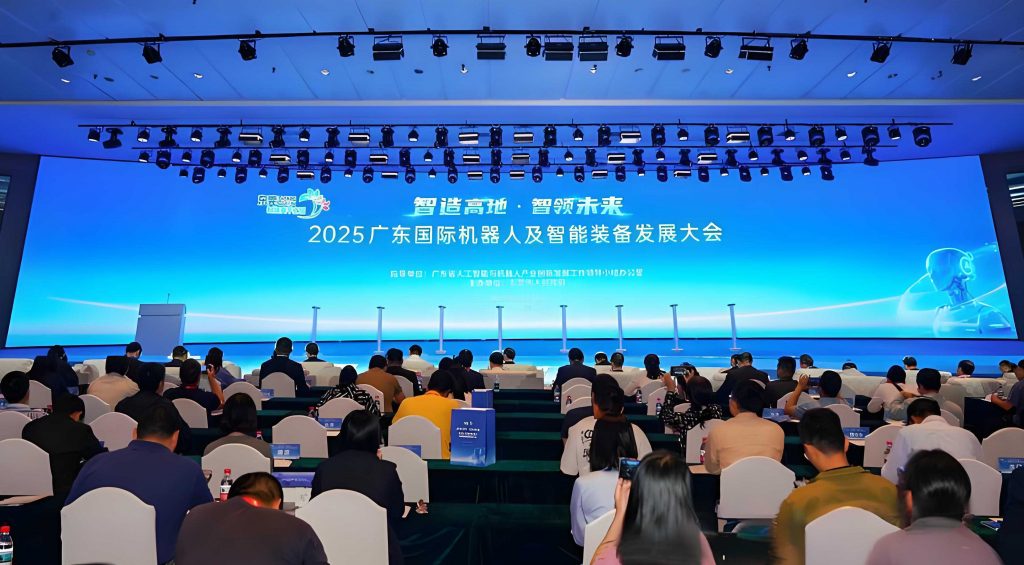
In November 2023, China’s Ministry of Industry and Information Technology (MIIT) provided a decisive policy framework with the release of the “Guiding Opinions on the Innovative Development of Humanoid Robots.” This document charts a clear course for the China robot industry, specifying that by 2025, complete humanoid robot products should achieve international advanced levels and attain batch production capabilities. It further mandates demonstration applications in critical sectors such as hazardous environments, manufacturing, and public services, alongside the exploration of effective governance mechanisms. This top-down endorsement signals a future where robots are poised to integrate seamlessly into the socioeconomic fabric of China, a vision that is galvanizing both domestic and international investment in the China robot market.
The propulsion behind this vision is technological maturation. Breakthroughs in key components like servo drives, high-precision sensors, and control algorithms have dramatically enhanced the operational accuracy, reliability, and overall performance of robotic systems. This progress has catapulted frontier segments, including humanoid robots, into the spotlight of commercial viability. Concurrently, China’s sustained commitment to opening its markets has created a fertile ground for global technology firms to deepen their roots. These companies are increasing investments, localizing innovation, and fostering collaboration across the entire industrial chain, thereby injecting powerful momentum into the growth trajectory of the China robot industry. Standing prominently among these global enablers is Texas Instruments (TI), a semiconductor pioneer whose strategic focus on sensing, communication, and control technologies is meticulously aligned with the evolving needs of the dynamic China robot market.
1. The Unparalleled Scale and Dynamics of the China Robot Market
China’s dominance in the global robotics arena is an established fact. For nine consecutive years, it has remained the world’s largest consumer of industrial robots, a testament to its massive manufacturing base, relentless drive for automation, and supportive industrial policies. The China robot market is characterized by immense potential, ferocious innovation vitality, and robust, long-term growth drivers. This attractive landscape continues to aggregate a comprehensive ecosystem of upstream component suppliers, mid-tier integrators, and end-user enterprises from across the globe. The resulting scale effects are increasingly pronounced, and the industrial ecosystem is maturing rapidly. Furthermore, China’s consistent optimization of its business and investment environment has nurtured a generation of highly capable domestic robot companies, intensifying competition and raising the bar for technological excellence within the China robot sector.
This competitive ferment, however, is viewed by many global players not merely as a challenge but as a historic opportunity. The China robot market represents a unparalleled testing ground and adoption engine for next-generation robotic solutions. Success in this market requires more than just advanced technology; it demands a deep understanding of local application scenarios, cost sensitivities, and strategic partnership models. For international semiconductor leaders like Texas Instruments, the approach has shifted from simple component export to becoming an embedded innovation partner and a strategic enabler within the China robot value chain.
2. Texas Instruments: From “First-Time Guest” to Strategic Enabler in China
Texas Instruments’ journey in China spans over three decades, a period marked by consistent investment in local manufacturing, research support, and talent development. This long-term commitment was vividly showcased during the sixth China International Import Expo (CIIE), where TI curated a dedicated exhibition zone focused on robotics. The display traversed the spectrum from fundamental semiconductors and sensors to complete, operational robot systems, offering a tangible narrative of TI’s technological contributions. Notably, this event marked TI’s third participation in CIIE, a symbolic evolution from “first-time attendee” to “trusted regular,” reflecting a broader trend of foreign enterprises solidifying their commitment to the opportunities within China’s open market.
“Our history in China is defined by a singular focus: to provide exceptional local support that helps our customers solve their most difficult design challenges and achieve success,” emphasized Jiang Han, Vice President and President of Texas Instruments China. This philosophy transcends commerce; it is about building capability. An informational timeline at TI’s booth detailed this journey—highlighting factory establishments, design center expansions, and educational partnerships—painting a picture of a company deeply integrated into China’s technological advancement, particularly within the burgeoning China robot industry.
Shi Ying, Technical Support Director of TI China, further elaborated on this enabling role: “We are dedicated to leveraging TI’s broad semiconductor portfolio to make our customers’ products in China more economical, reliable, and high-performing. This empowerment allows them to create greater value across various industries, with the vibrant China robot sector being a primary area of focus.” In a market where domestic suppliers are rapidly advancing their technological prowess and cost-effectiveness, TI’s strategy is not confrontational but collaborative. It centers on a profound attentiveness to customer pain points and aspirations within the China robot market.
“Our primary lens is customer需求,” Shi Ying stated. “We strive to understand precisely what technological capabilities they need to differentiate their products and where they seek critical breakthroughs. We then apply our systems expertise and semiconductor innovation to help them excel.” This customer-centric,赋能者 (enabler) posture involves continuous market engagement, sustained investment in research and development, and a commitment to delivering卓越的产品力—the exceptional product performance that allows both TI and its partners to thrive in the competitive China robot landscape.
3. Decoding the Core Trends: Intelligence and Safety in the China Robot Ecosystem
Navigating the breakneck pace of innovation in the China robot industry requires a clear compass. According to TI’s analysis, the evolutionary path for robots, irrespective of their form factor, coalesces around two non-negotiable pillars: enhanced intelligence and guaranteed safety. The rapid adoption of collaborative robots (cobots), designed to work alongside humans in shared spaces, perfectly embodies the convergence of these two trends. For the China robot market, where applications are expanding from structured factory floors to dynamic, unstructured environments like hospitals, logistics hubs, and homes, these attributes are paramount.
Achieving higher levels of intelligence and safety is not a monolithic task but a multidimensional engineering endeavor. Texas Instruments breaks down this challenge into four interconnected technological domains that are critical for the next generation of robots in China:
- Precision Control: The foundation of robotic actuation and movement.
- Distributed Computing: The brainpower for real-time perception and decision-making.
- Multimodal Perception: The sensory apparatus for understanding the environment.
- Resilient Communication: The nervous system for coordination and data exchange.
4. Technological Pillars Powering the Advance of Robots in China
4.1. Precision Motor Control and Actuation
“As robot technology advances, sophisticated motor control has cemented its role as a core enabling technology,” Shi Ying noted. “From heavy-duty industrial arms to delicate surgical robots, motor control techniques are in constant evolution.” In the industrial segments of the China robot market, the demand is for high-performance, high-power-density motor drives that enable speed, precision, and energy efficiency. Texas Instruments addresses this spectrum with a comprehensive suite of motor drive solutions, including highly integrated drivers, gate drivers, and microcontrollers (MCUs) with dedicated control peripherals. These components help China robot manufacturers design systems that achieve smoother motion, higher torque accuracy, and more compact form factors, which are essential for applications ranging from automated assembly to precise logistics handling.
4.2. Edge Computing for Real-Time Autonomy
The ability to process data locally at the “edge” is revolutionizing robot capabilities. For robots operating in the dynamic and sometimes connectivity-constrained environments prevalent in the China robot market, edge computing reduces decision-making latency, enhances operational privacy and security, and ensures functionality even with intermittent network access. This is crucial for applications like autonomous mobile robots (AMRs) in warehouses or inspection robots in remote areas. TI’s TDA4x processor family is engineered for this very purpose. Combining powerful Arm Cortex cores with dedicated accelerators for computer vision and deep learning, the TDA4x serves as a functional safety-capable, single-chip brain for robots. It can simultaneously process streams from multiple cameras, radar, lidar, and inertial sensors while executing complex motion control algorithms. This integrated processing power enables robots in the China robot market to perceive their surroundings, make intelligent navigation decisions, and execute precise actions—all in real time.
4.3. Advanced Sensing for Situational Awareness
A robot’s ability to interact safely and effectively hinges on its perception of the world. Sensors are its eyes, ears, and skin. Texas Instruments provides a diverse portfolio of sensing technologies critical for the China robot industry. A standout example is its family of intelligent millimeter-wave radar sensors. These single-chip devices integrate an RF front-end, processor, and memory, capable of detecting not just large objects but also sub-millimeter movements. “The sensitivity is such that it can detect the subtle chest movement of a person breathing,” Shi Ying explained. In a collaborative workspace within the China robot ecosystem, such a sensor can continuously monitor the proximity of humans, triggering an immediate safety stop if a preset boundary is breached. Beyond radar, TI’s sensing solutions span current and magnetic sensors for motor control, temperature sensors for system health monitoring, and ultrasonic sensors for proximity detection, providing China robot designers with a toolkit to build comprehensive situational awareness.
4.4. Robust and Secure Communication Links
Modern robots are rarely islands. They are nodes in a larger network, requiring constant communication between internal subsystems (e.g., a sensor to the main processor), between multiple robots in a swarm, and with central cloud platforms for data analytics and fleet management. “Ensuring these communications are accurate, real-time, deterministic, and secure is a fundamental challenge for robot system architects,” Shi Ying emphasized. For the China robot market, where large-scale deployments are becoming common, reliable communication is a scalability prerequisite. Texas Instruments supports this need with a wide array of wired and wireless connectivity solutions, including robust industrial Ethernet protocols, CAN FD for in-vehicle robotics, and Wi-Fi and Bluetooth for service robots. These technologies ensure that robots, whether on a smart factory floor in Shenzhen or providing delivery services in a Shanghai neighborhood, remain connected and controllable.
5. Innovating at the Component Level: Addressing System-Level Challenges
The pursuit of more capable, efficient, and compact robots in the China robot market drives innovation down to the fundamental physics of semiconductors. Texas Instruments is actively pioneering in two key areas that address overarching system challenges: power density and maintenance.
The adoption of wide-bandgap semiconductors like Gallium Nitride (GaN) is a game-changer for power electronics. GaN-based devices can switch faster and operate at higher efficiencies and temperatures than traditional silicon, enabling smaller, cooler, and more powerful motor drives and power supplies. Market projections indicate explosive growth for GaN power devices, a trend directly relevant to the high-performance demands of the China robot industry. Texas Instruments has introduced integrated GaN motor drive solutions specifically targeting collaborative and service robots. These solutions reduce system size and weight—critical for mobile or articulated robots—while improving thermal performance and reliability, directly contributing to the safety and longevity of robots in the China robot market.
Attention to granular details can unlock significant operational benefits. For instance, the accumulation of dust, moisture, or debris on optical sensors and camera lenses can severely degrade a robot’s perception system, especially in challenging environments common in industrial and outdoor applications in China. Texas Instruments has developed a solid-state ultrasonic lens cleaning solution. This system uses piezoelectric transducers to generate high-frequency vibrations that create surface acoustic waves across a lens, effectively dislodging and removing contaminants. This self-cleaning capability can dramatically improve the reliability and uptime of vision-based robots, reducing the need for manual maintenance and ensuring consistent operational performance—a valuable advantage for large-scale deployments in the China robot sector.
6. The Road Ahead: Humanoid Robots and the Pursuit of Generality
The future evolution of the China robot market points toward greater generality—machines that can perform a wider variety of tasks in diverse environments. Humanoid robots, with their anthropomorphic design intended to navigate human-centric spaces and use human tools, represent the apex of this trend. “Humanoid robots introduce a unique set of challenges,” Shi Ying observed. “They require even finer-grained perception for delicate object manipulation, exquisitely precise and coordinated motion control across many degrees of freedom, and advanced AI models often supported by cloud computing.” However, he also notes that these platforms face the same universal industry pressures: the constant demand for smaller, more power-dense electronics, higher computational efficiency, and unwavering functional safety and reliability.
These shared challenges create a common innovation agenda for the entire China robot industry. Whether the end product is a simple automated guided vehicle (AGV) or a sophisticated humanoid, the underlying need for better semiconductors—smarter processors, more sensitive sensors, more efficient power stages, and more robust communication interfaces—remains constant. Texas Instruments, by focusing on these foundational technologies, positions itself not as a builder of robots for the China robot market, but as a critical architect of the silicon foundations upon which China’s robotic future will be built.
7. Conclusion: A Partnership Grounded in Empowerment
In the face of the vast and dynamic China robot market, populated by ambitious domestic champions and formidable global contenders, Texas Instruments exhibits a calibrated strategy. It is a blend of deep customer intimacy, strategic technical foresight, and meticulous attention to engineering detail. The company operates with the agile, innovative spirit of a startup yet demonstrates the mature, collaborative poise of an industry stalwart. Its role is defined not by competition for end-product glory, but by a steadfast commitment to empowerment.
The journey into the age of intelligent robots, especially within the high-stakes arena of the China robot market, is one of exploration. Every participant, from the newest startup to the most established conglomerate, is in many ways a trailblazer. In such a landscape, sustainable success is not solely about speed but about consistent, grounded progress. By providing the reliable, innovative semiconductor bedrock that enables its partners to innovate boldly, Texas Instruments is not just叩开 the door to the China robot market—it is helping to build the very foundation upon which the future of robotics in China will stand, ensuring that the industry advances on a path that is both ambitious and稳健致远 (steady and far-reaching).