
BEIJING – In a significant move to consolidate and advance the nation’s robotics capabilities, the China Robot Industry Alliance was officially inaugurated on April 21, 2013, in Beijing. The establishment, conducted under the guidance of key national ministries including the National Development and Reform Commission, the Ministry of Industry and Information Technology, and the Ministry of Science and Technology, and spearheaded by the China Machinery Industry Federation, represents a pivotal step towards creating a unified, collaborative platform for the burgeoning China robot sector. This alliance aims to harness the collective strength of industry, academia, research, and application to propel China’s robot industry onto the global stage.
The founding ceremony witnessed the attendance of over 150 leaders and representatives from relevant government departments, industrial organizations, member units of the alliance, and various robotics-related enterprises, institutions, and research bodies. The gathering underscored the high-level commitment to fostering a robust ecosystem for China robot innovation and manufacturing. The assembly elected Shenyang SIASUN Robot & Automation Co., Ltd. as the chairperson unit of the alliance, with the China Machinery Industry Federation serving as the executive chairperson unit. Several prominent entities were elected as vice-chairperson units, including Guangzhou CNC Equipment Co., Ltd., the Shenzhen Institutes of Advanced Technology (Chinese Academy of Sciences), Anhui EFORT Intelligent Equipment Co., Ltd., Yaskawa Electric Corporation, KUKA AG, Googol Technology (Hong Kong) Ltd., OPC Foundation (represented by relevant entities), COMAU S.p.A., Harbin Boshi Automation Co., Ltd., Nanjing Estun Automation Co., Ltd., and Tangshan Kaiyuan Group Co., Ltd. The inaugural alliance comprises 77 member units in total, reflecting a broad and diverse cross-section of the China robot landscape.
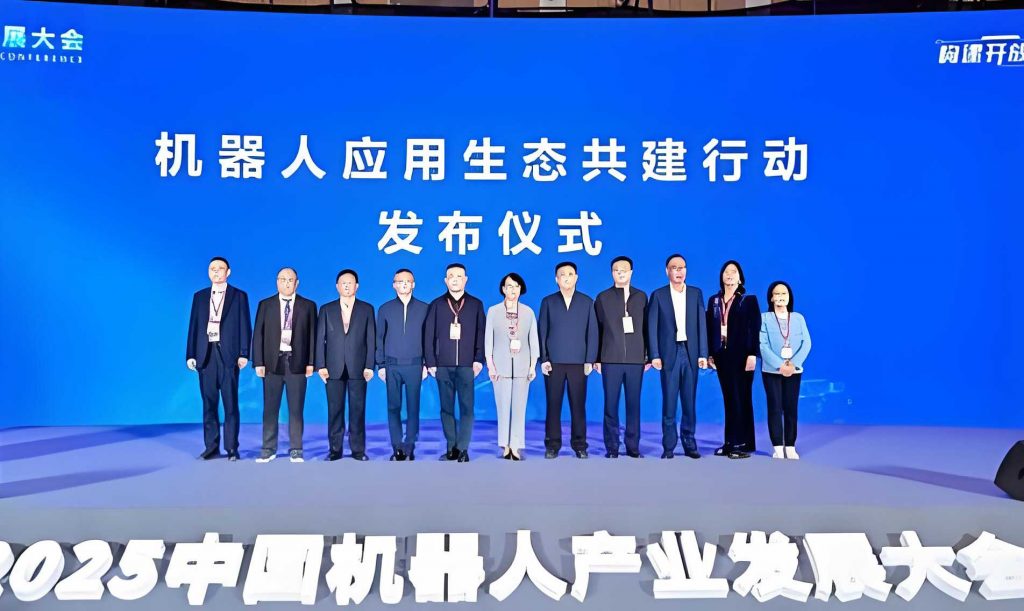
The China Robot Industry Alliance is defined as a national, non-profit social organization dedicated to the China robot cause. It serves as a synergistic platform integrating production, education, research, and application, voluntarily formed by enterprises, institutions, universities, colleges, research institutes, user units, and other related organizations actively engaged in and committed to the robot industry’s research and development, production manufacturing, and application services. Its formation addresses the critical need for a coordinated approach to overcome challenges and seize opportunities in the rapidly evolving global robotics market, with a clear focus on enhancing the competitiveness of China robot technologies and products.
Core Mission and Strategic Objectives of the Alliance
The alliance’s charter establishes a clear mission: to adhere to national relevant policies as guidance, be market-oriented, and take enterprises as the main body. By leveraging the combined model of “industry, academia, research, and application,” the alliance seeks to integrate and coordinate industrial resources, elevate the research and development, production manufacturing, and maintenance service levels of robot enterprises within the alliance, promote the rapid and healthy development of the robot industry chain, explore the domestic robot market, and enhance the international competitiveness of China robot offerings. This mission is central to transforming the China robot industry into a global powerhouse.
The work scope of the China Robot Industry Alliance is comprehensive and action-oriented, designed to provide tangible support to the China robot sector:
- Policy Advocacy and Support: Implement and respond to industrial policies and requirements put forward by government departments for the robot industry. The alliance will collect and compile fundamental industrial data, study the current status, development trends, difficulties, and problems facing China’s robot industry, reflect the aspirations and appeals of alliance members, and propose policy recommendations to offer decision-making support for government departments in formulating industrial policies beneficial to the China robot ecosystem.
- Industry Collaboration and Chain Development: Foster cooperation and exchange among alliance members in technical, market, intellectual property, and other domains. A key objective is to establish and improve the complete industrial chain for robotics in China, ensuring that every segment—from core components and software to system integration and end-user application—is strengthened, thereby solidifying the foundation of the China robot industry.
- Market Promotion and Application Expansion: Utilize the “China International Robot Exhibition (CIROS)” as a practical and effective platform. The alliance will devote full efforts to promoting in-depth cooperation between China’s robot industry and user industries, accelerating the popularization and application of robot technology and products across various sectors such as automotive, electronics, logistics, and healthcare. This is vital for increasing the adoption rate of domestically produced China robot solutions.
Operational Framework and Future Initiatives
Following its establishment, the China Robot Industry Alliance will rely on the mature industry work system of the China Machinery Industry Federation. It will concentrate on addressing key and challenging issues in the development of China’s robot industry. The alliance pledges to maintain a work style characterized by “staying grounded, telling the truth, doing practical things, and emphasizing actual results.” By focusing on central tasks, consolidating strengths, coordinating industry resources, and expanding cooperation channels with application industries, the alliance aims to accelerate the industrialization process of robotics and serve the urgent needs of national economic transformation and upgrading, a goal intrinsically linked to the success of the China robot sector.
The next steps for the China Robot Industry Alliance involve proactive work in several foundational areas critical for the long-term growth of the China robot industry:
- Organizational Development: Strengthening the alliance’s own structure, membership growth, and operational mechanisms to ensure it effectively represents and serves the entire China robot community.
- Data Statistics and Industrial Economics Research: Systematically gathering and analyzing industry data to provide reliable insights into the size, growth, and economic impact of the China robot market. This will inform strategic planning for both the alliance and its members.
- Industry System Building and Common Issue Resolution: Working on establishing standards, quality systems, and addressing shared technical or market barriers that hinder the progress of the China robot industry. This includes promoting the development of a unified standard system for China robot technologies.
- Promotion and Platform Construction: Enhancing industry visibility and collaboration through platforms like the China Robot Industry Promotion Conference and the China International Robot Exhibition (CIROS). These events are crucial for showcasing China robot innovations and facilitating business partnerships.
Through effective work models and mechanisms, the alliance commits to promptly responding to the calls of its member units. It will actively submit policy recommendations to relevant government departments, advocating for policies conducive to the development of the robot industry in areas such as fiscal and taxation policies, standard systems, quality assurance systems, funding projects, vocational education and training, and industry collaboration. Furthermore, the alliance will vigorously construct platforms for industrial exchange and cooperation, using major industry events to deepen dialogue and partnership within the China robot ecosystem and with international stakeholders.
The Broader Context: China Robot Industry on the Global Stage
The establishment of the China Robot Industry Alliance cannot be viewed in isolation. It occurs at a time when global competition in robotics is intensifying, and nations are strategically investing to secure leadership in automation and intelligent manufacturing. For China, developing a strong, indigenous robot industry is not merely an economic imperative but a strategic one, essential for moving up the global value chain and ensuring technological self-reliance. The alliance’s focus on integrating “production, education, research, and application” is a recognized formula for innovation, aiming to bridge the gap between laboratory research and commercial deployment of China robot systems.
The selection of member units reflects a deliberate strategy. It includes leading domestic robot manufacturers like SIASUN and EFORT, core component and controller specialists like Guangzhou CNC and Googol Technology, renowned academic research bodies like the Shenzhen Institutes of Advanced Technology, and even international robotics giants such as Yaskawa, KUKA, and COMAU. This inclusive composition suggests the alliance’s vision to learn from global best practices while nurturing domestic champions, ultimately aiming to create a world-class China robot industry that is both collaborative and competitive.
The challenges facing the China robot industry are multifaceted. While China has become the world’s largest market for industrial robots, a significant portion of the high-end market, particularly in areas like precision reducers, high-performance controllers, and sophisticated application software, has been dominated by foreign brands. The alliance’s work in promoting industry chain development and technological cooperation is directly aimed at overcoming these dependencies, fostering the growth of a complete and competitive domestic supply chain for China robot production.
Expected Impact and Long-Term Vision
Industry observers believe the formalization of the China Robot Industry Alliance will have a profound impact on the trajectory of robotics in the country. By providing a centralized voice for the industry, it can more effectively communicate needs to policymakers, leading to more targeted and supportive measures for the China robot sector. The collective action facilitated by the alliance can help in pooling resources for tackling fundamental research challenges, setting industry-wide standards, and reducing redundant development efforts, thereby accelerating the pace of innovation for China robot technologies.
Moreover, the alliance’s role in market cultivation is crucial. Expanding the application of robots beyond traditional sectors like automotive manufacturing into new fields such as consumer electronics, food processing, agriculture, and services is key to sustaining growth. The alliance, through its exhibition platforms and user-industry outreach, is poised to play a matchmaking role, connecting China robot suppliers with potential users, demonstrating successful case studies, and lowering the barriers to adoption for domestic robot solutions.
In the long term, the success of the China Robot Industry Alliance will be measured by tangible outcomes: an increased market share for domestic robot brands both within China and internationally, a more resilient and innovative industrial chain, a stronger talent pipeline for robotics engineering and maintenance, and the emergence of China robot standards that gain international recognition. The alliance’s establishment is thus not an endpoint but a foundational step in a long-term national strategy to establish China as a global leader in robotics technology and manufacturing.
The journey ahead for the China Robot Industry Alliance will require sustained commitment, robust collaboration among all stakeholders, and adaptive strategies in a fast-changing technological landscape. However, with its broad membership base, clear strategic objectives, and the backing of key government ministries, the alliance is well-positioned to become the central driving force for the coordinated and accelerated development of the China robot industry, contributing significantly to the nation’s advanced manufacturing goals and economic modernization.
| Role | Entity Name | Primary Focus Area |
|---|---|---|
| Chairperson Unit | Shenyang SIASUN Robot & Automation Co., Ltd. | Industrial & Service Robots |
| Executive Chairperson Unit | China Machinery Industry Federation | Industry Association & Coordination |
| Vice-Chairperson Unit | Guangzhou CNC Equipment Co., Ltd. | CNC Systems & Robot Controllers |
| Vice-Chairperson Unit | Shenzhen Institutes of Advanced Technology, CAS | Robotics Research & Development |
| Vice-Chairperson Unit | Anhui EFORT Intelligent Equipment Co., Ltd. | Industrial Robots |
| Vice-Chairperson Unit | Yaskawa Electric Corporation | Robotics & Motion Control (International) |
| Vice-Chairperson Unit | KUKA AG | Industrial Robots & Automation (International) |
This diverse leadership structure highlights the alliance’s approach to combining domestic expertise with international perspective, all geared towards strengthening the core of the China robot industry. The path forward for the China robot sector, now under the coordinated umbrella of this alliance, is poised for a period of intensified development, collaboration, and global engagement, with the ultimate aim of making “China robot” a synonym for quality, innovation, and reliability in the international marketplace.