
As China navigates the profound economic and social shifts brought on by its rapidly aging population, a critical question emerges: can technological innovation, specifically the adoption of industrial and service robots, counteract the impending labor supply crisis? A seminal research study conducted by academics from leading Chinese institutions provides a data-driven answer, estimating the substitution capacity of robots and forecasting their impact through 2050. The findings suggest that the so-called “robot dividend” could substantially mitigate workforce deficits, offering a new lens for policy formulation in the era of automation. This analysis delves into the research methodology, empirical results, and future projections, highlighting the pivotal role of China robot integration in sustaining economic growth.
-
The Demographics Dilemma: China’s Aging Population and Shrinking Workforce
China officially entered an aging society in 1999, and over the past two decades, the trend has accelerated markedly. The elderly dependency ratio, which measures the number of people aged 65 and above relative to the working-age population (15-64 years), climbed from 11.9% in 2010 to 16.8% in 2018, positioning China among the forefront of nations at similar development levels facing demographic pressures. Concurrently, the proportion of the working-age population within the total population has declined from 74.5% in 2010 to 71.2% in 2018. This dual phenomenon of a growing elderly cohort and a contracting labor force poses a significant threat to sustainable economic development, prompting urgent explorations into alternative sources of labor input. The potential of China robot adoption to fill this gap forms the core of this investigation.
-
Robotics on the Rise: From Manufacturing Floors to Economic Theory
The global proliferation of robotics, documented by organizations like the International Federation of Robotics (IFR), has sparked intense academic and policy debate. Prior research presents a nuanced picture: while robots undoubtedly enhance productivity and economic output, their effect on labor markets is complex, involving both substitution and job creation. The central inquiry for China is whether the net effect of robot adoption can compensate for the labor hours lost due to demographic aging. Traditional micro-level approaches estimate the technical feasibility of automating specific tasks, but they often overlook broader economic, cost, and structural factors. This new study adopts a macro-level perspective, directly estimating the average substitution capacity of robots across economies to provide a more holistic and realistic assessment relevant to China’s robot strategy.
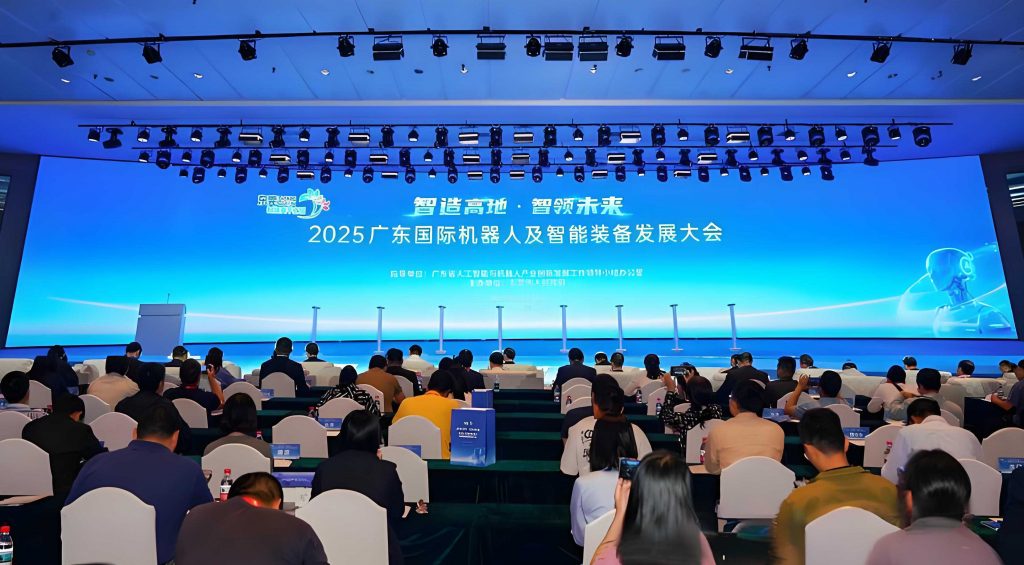
The image above illustrates the growing presence of automation in industrial settings, a visual testament to the ongoing technological shift that underpins this research. The integration of China robot solutions is not merely a speculative trend but an observable reality in modern manufacturing and beyond.
-
Estimating the “Robot Power”: A Novel Macro-Economic Methodology
To quantify how much labor a robot can replace, the researchers constructed a theoretical model based on a modified Cobb-Douglas production function. This framework explicitly incorporates robots as a production factor that can substitute for human labor. The key innovation lies in introducing a parameter, μ (mu), which represents the substitution capacity—specifically, how many units of labor (measured in work hours) one robot can replace annually. By applying logarithmic transformations and first-order approximations, the model translates into an estimable regression equation using national-level macroeconomic data. This approach captures the aggregate outcome of all micro-level factors—including technological feasibility, labor costs, and industrial policies—therein reflecting the real-world substitution effect of China robot deployment more accurately than task-based assessments.
The core estimating equation relates a country’s total output to its robot density (robots per labor hour), total labor hours, capital stock, and control variables like high-tech export share, industrial output proportion, and aging level. By analyzing the coefficients from this regression, the study derives the value of μ, revealing the average global substitution capacity of a single robot.
-
Empirical Evidence: How Much Labor Can One Robot Really Replace?
The study utilized a robust dataset spanning 58 countries from 2000 to 2015, combining robot stock data from IFR with macroeconomic indicators from the Penn World Table and World Bank. After controlling for country-specific fixed effects and potential confounding variables, the fixed-effects model yielded consistent and significant results.
The regression analysis confirmed a strong positive relationship between robot density and economic output. Crucially, the estimated coefficients allowed for the calculation of μ. The results indicate that, on average, one industrial robot can substitute for approximately 60,000 to 83,000 hours of human labor per year. To contextualize this figure, assuming an average annual work hours of 1,800 per laborer (based on the sample data), this translates to one robot replacing the workload of roughly 33 to 46 human workers. This finding establishes a concrete benchmark for the “robot dividend.”
The study further fortified its conclusions through rigorous econometric testing. An instrumental variables approach using lagged differences was employed to address potential endogeneity concerns, such as past economic conditions influencing current robot investment. The results from this Generalized Method of Moments (GMM) model aligned closely with the baseline estimates, affirming that one robot replaces about 72,000 labor hours annually. Additional robustness checks, including using robot density per worker (instead of per hour) and incorporating a term to account for robots’ potential synergistic effects on total factor productivity, consistently supported the core finding, with the substitution capacity ranging from 60,000 to 83,000 hours. This range provides a reliable basis for projecting the impact of China robot expansion.
Summary of Robot Substitution Capacity Estimates Model Specification Estimated Substitution Capacity (Hours/Robot/Year) Equivalent Full-Time Workers (Approx.)* Key Takeaway Baseline Fixed-Effects Model 60,000 – 83,000 33 – 46 Core estimate of robot labor replacement. Instrumental Variable (GMM) Model ~72,000 ~40 Confirms result after addressing endogeneity. Robustness Check (With Synergy Effect) ~60,000 ~33 Lower bound estimate when considering productivity spillovers. *Based on 1,800 annual work hours per worker.
This table synthesizes the key empirical findings, demonstrating the convergence of evidence on the substantial substitution capacity of robots, a metric directly applicable to forecasting the role of China robot integration.
-
Forecasting the Future: Modeling China’s Robot Density Through 2050
Understanding the current substitution capacity is only half the story. To assess whether robots can alleviate future labor shortages, one must predict how many robots will be deployed. The study adopted a technology diffusion model, specifically a logistic S-curve, which is widely accepted for modeling the adoption of innovations. The model posits that robot density growth follows a slow-start, rapid-acceleration, and eventual saturation pattern.
The model cleverly links the saturation level of robot diffusion in a country to its aging level—an exogenous factor that influences demand for automation but is not easily reversed by robot adoption itself. Empirical estimation using the international panel data confirmed a strong positive correlation between aging and robot density. The model’s parameters were then used to project China’s future robot density. The analysis incorporates demographic projections from authoritative sources like the United Nations, which estimate China’s population in 2050 at around 1.36 billion, with the working-age population (15-64 years) shrinking to approximately 815 million (about 60% of the total) and the elderly population (65+) rising to about 359 million (26.3%).
Based on these aging projections and the diffusion model, the study forecasts that by 2050, China’s industrial robot density will reach about 0.0037 robots per person in the labor force. With an estimated working-age population of 815 million, this translates to a stock of roughly 2.98 million industrial robots operating in China. This projection forms the basis for calculating the potential “robot dividend.”
-
The “Robot Dividend”: Quantifying the Offset to Labor Shortage
Combining the forecasted robot stock with the estimated substitution capacity allows for a direct calculation of how much labor robots could effectively provide by 2050. Using the conservative to mid-range estimate of 60,000 to 83,000 hours of labor replaced per robot per year, the aggregate “robot labor” supplied annually would be immense.
- With 2.98 million robots, the total labor hours replaced annually ranges from 178.8 billion to 247.3 billion hours.
- Dividing by the average 1,800 work hours per year per worker, this equates to providing the workload of approximately 99 million to 137 million full-time equivalent workers.
This projected “robot dividend” of 100 to 140 million worker-equivalents must be compared against the anticipated labor shortfall. From 2018 to 2050, China’s working-age population is projected to decrease by around 180 million individuals. Therefore, the labor supply gap attributable to demographic aging is roughly 180 million workers. The analysis suggests that the labor provided by robots could offset between 55% and 78% of this shortage, significantly cushioning the economic impact of population aging. It is critical to note that this calculation focuses on the substitution effect of China robot adoption; the concurrent job creation effect of new tasks and industries, while potentially positive, is not subtracted here, meaning the net impact on employment numbers may be different, but the compensation for total labor input is substantial.
The projection considers only industrial robots due to data availability. The ongoing and expected expansion of service and specialized robots in China’s economy would likely augment this “dividend” further, potentially bringing the offset closer to fully counterbalancing the demographic-driven labor decline.
-
Policy Implications: Navigating the Age of Automation and Demography
The study’s findings carry significant implications for China’s strategic policy framework. As population policies, including incentives for higher fertility, yield uncertain results, harnessing the “robot dividend” offers a viable complementary pathway.
- Embrace and Accelerate Automation: Policymakers should actively foster an ecosystem conducive to robotics and automation through R&D incentives, infrastructure support, and industry-academia collaboration. Enhancing the efficiency and substitution capacity of China robot technologies should be a national priority to maximize the future dividend.
- Implement Equitable Transition Policies: While robots may alleviate overall labor input shortages, they will inevitably disrupt specific jobs and sectors. Proactive measures are needed to manage the transition, including robust social safety nets, continuous vocational training, and education system reforms focused on skills complementary to automation (e.g., creativity, problem-solving).
- Guide Fair Income Distribution: Increased automation tends to raise the share of income going to capital. To ensure social stability and inclusive growth, policy must guide equitable distribution mechanisms, such as adjusting tax structures or exploring models like universal basic income, to share the gains from the China robot-driven productivity boom.
- Integrate Demographic and Technology Strategies: Population policies and technology development strategies should be formulated in a coordinated manner. Rather than relying solely on reversing demographic trends, planning should strategically leverage the compensatory potential of robotics, as quantified in this study.
-
Conclusion: A New Paradigm for Addressing Demographic Challenges
The research presents compelling evidence that robotics hold substantial promise for mitigating one of the most pressing consequences of population aging: labor shortage. By establishing that a single robot can replace the annual work of dozens of individuals and forecasting a vast deployment of robots in China by mid-century, the study introduces the concept of a “robot dividend” that can compensate for a majority of the projected decline in human labor supply. This insight shifts the policy discourse from solely managing demographic headwinds to actively catalyzing and harnessing technological tailwinds. The successful integration of China robot solutions into the economic fabric, coupled with thoughtful policies to manage the transition, can pave the way for sustained growth and stability in the face of demographic change. Future research, as data improves, should refine these estimates by incorporating service robots and dynamically modeling the interplay between automation’s substitution and job creation effects.
The journey of China robot adoption is not just an industrial upgrade but a demographic imperative. As the nation strides toward 2050, the synergy between intelligent machines and human capital will likely define its economic resilience, offering a model for other aging societies worldwide.