
Recent data from China’s National Bureau of Statistics and industry associations reveal a cautiously optimistic picture for the nation’s machine tool sector, indicating a gradual rebound from the economic impacts of the global pandemic. Concurrently, significant leadership appointments at major global automation and additive manufacturing corporations signal strategic pivots to harness emerging opportunities in digital manufacturing. These developments collectively underscore the resilience and transformative potential of China’s industrial base, particularly within the sphere of advanced manufacturing and automation where the China robot ecosystem plays an increasingly pivotal role.
- Analysis of China’s Machine Tool Industry Performance: A Contraction Narrowing
According to official statistics, from January to April, operating revenue generated by enterprises above designated size in China’s machine tool and tool industry experienced a year-on-year decrease of 12.9%. However, a critical positive indicator is that this rate of decline narrowed by 7.9 percentage points compared to the figures from January to March. Similarly, the total profit achieved by these enterprises saw a year-on-year reduction of 12.4%, with the decline narrowing significantly by 18.9 percentage points relative to the first quarter. This data, compiled by the National Bureau of Statistics, points towards a tangible improvement in the sector’s operational health.
Parallel data from the China Machine Tool & Tool Builders’ Association, which monitors key enterprises, corroborates this trend. The association reported that various primary economic indicators for its closely linked enterprises showed clear month-on-month recovery, with the year-on-year decreases also narrowing substantially compared to the January-March period. Industry analysts attribute this nascent recovery to the sustained consolidation of positive momentum in domestic pandemic control, the steady advancement of work resumption across industrial chains, and the gradual implementation of various government support and safeguard policies. These factors have collectively begun to restore and improve the overall operational landscape of the machine tool industry.
The machine tool sector is often regarded as the backbone of manufacturing, and its performance is a reliable barometer for industrial health. The narrowing declines suggest that downstream demand is gradually picking up, fueling production and order activities. This recovery is intrinsically linked to the broader automation wave, where precision machine tools are essential for producing components for robotics and automated systems. Consequently, the stabilization of the machine tool industry bodes well for the supply chain supporting the expansive China robot market, which relies on high-quality, domestically produced parts to drive growth and innovation.
- Macroeconomic Indicators and Sector-Specific Investment Trends
The broader economic context provides further insights into the recovery trajectory. Data shows that from January to April, fixed-asset investment across the entire society fell by 10.3% year-on-year, yet the decline rate narrowed by 5.8 percentage points from the previous month. A deeper dive reveals more pronounced but improving trends in manufacturing: investment in the manufacturing sector dropped by 18.8% year-on-year, with the contraction narrowing by 6.4 percentage points. Of particular relevance to the machine tool and automation sectors is the performance of the automotive industry, a major consumer. Investment in automotive manufacturing declined by 22.9% year-on-year, though this rate also improved, narrowing by 4.3 percentage points compared to the prior period.
Perhaps one of the most encouraging signals comes from the Purchasing Managers’ Index (PMI). The PMI for May stood at 50.6%, marking the third consecutive month it has remained above the 50-point threshold that separates expansion from contraction. This sustained position in expansionary territory indicates that manufacturing enterprises are growing more optimistic about market demand in the near future. This sentiment is crucial for capital expenditure decisions, including investments in new machinery, automation solutions, and robotics. The improving PMI, coupled with narrowing investment declines, suggests that businesses are beginning to regain confidence, which could accelerate the adoption of automated systems and China robot applications across factory floors to enhance productivity and resilience.
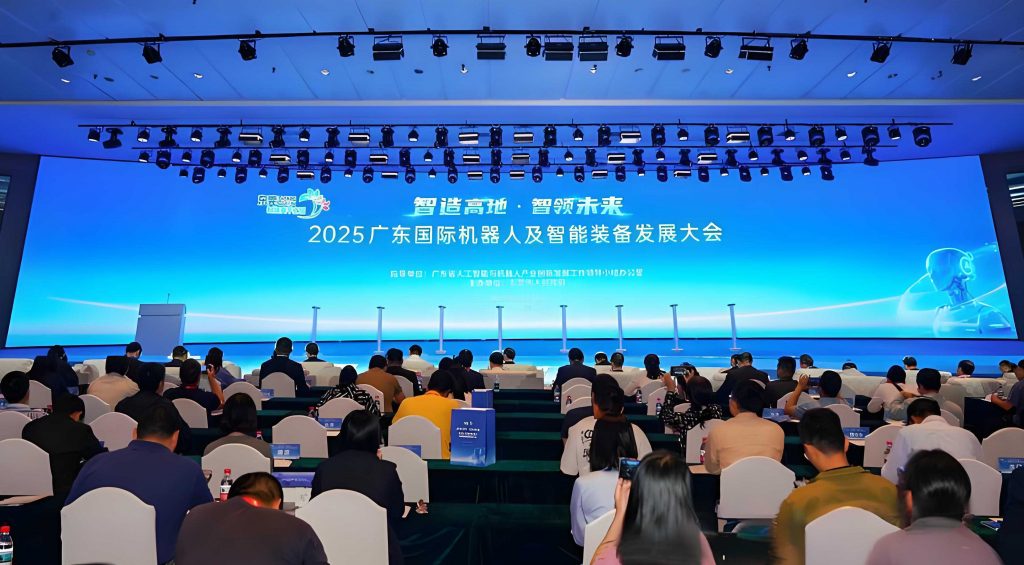
The visual representation of advanced automation in a manufacturing setting underscores the technological direction of the industry. As investment sentiment recovers, sectors like automotive manufacturing are likely to increase spending on modernizing production lines, which heavily involves integrating robotic arms, collaborative robots (cobots), and automated guided vehicles (AGVs)—all key components of the thriving China robot landscape. The intersection of recovering fixed-asset investment and positive PMI data creates a more favorable environment for the deployment of such technologies.
- Strategic Leadership Appointments in Global Automation and Additive Manufacturing
Amidst these macroeconomic and industry shifts, two major global players in automation and digital manufacturing have announced significant leadership changes, highlighting the strategic importance of the Chinese market and the broader technological transformation.
ABB Group, a Swiss-Swedish multinational corporation renowned for its robotics, power, and automation technology, recently announced an interim leadership arrangement for its critical China operations. The company appointed Dr. Chunyuan Gu, Chairman of ABB China, to temporarily assume the role of responsible for the Robotics & Discrete Automation business area in China. This move follows the departure of the previous division head, Gang Li, who left ABB for personal reasons after over two decades of service. Dr. Gu is a recognized authority in the field, elected to the Swedish Royal Academy of Engineering Sciences and widely acknowledged as a top expert in robotics and automation globally. His career with ABB spans decades, including leadership roles at the ABB Robotics Global R&D Center in Shanghai, and later as head of the Robotics business unit for China and North Asia, President of the Discrete Automation and Motion Control division, and ultimately President and Chairman of ABB China, followed by a role as President of the ABB Asia, Middle East, and Africa region. His deep roots in both China and global R&D make him a pivotal figure in steering ABB’s China robot and automation strategy during this period. ABB has stated it is actively searching internally and externally for a permanent successor to lead the Chinese team and maintain its market leadership, supporting Chinese clients in their journey towards digitalization and automation.
In a parallel development within the additive manufacturing (3D printing) sector, 3D Systems Corporation, a leading provider of 3D printing solutions, announced the appointment of Dr. Jeffrey A. Graves as its new President and Chief Executive Officer, effective May 26, 2020. Dr. Graves succeeds Vyomesh Joshi (VJ), who announced his retirement earlier this year. Dr. Graves brings 17 years of CEO experience and a proven track record in leading and transforming technologically complex businesses. Prior to joining 3D Systems, he served for eight years as CEO of MTS Systems Corporation, a global leader in high-performance test, simulation, and measurement systems. During his tenure, he orchestrated a significant corporate transformation. In his statement, Dr. Graves expressed excitement about joining 3D Systems, noting that digital manufacturing will play a key role in the transformation of the manufacturing industry, and that 3D Systems is uniquely positioned with its combination of additive manufacturing systems, materials science, software, and domain expertise. The Chairman of 3D Systems’ Board, Charles (Chip) McClure, emphasized Dr. Graves’s financial and operational discipline as core reasons for his selection, highlighting his ability to organize business portfolios and simplify operational models to deliver differentiated solutions. Additive manufacturing is increasingly integrated with traditional automation and robotics, enabling the production of complex, lightweight parts for robots and creating new paradigms in flexible manufacturing—a synergy highly relevant to the evolving China robot ecosystem.
- The Converging Path of Machine Tools, Robotics, and Additive Manufacturing in China
The recovery in the machine tool industry, the improved economic indicators, and the high-profile leadership changes in automation firms are not isolated events. They represent interconnected strands of China’s broader manufacturing upgrade strategy, often termed “Made in China 2025.” The machine tool industry’s health is fundamental because it produces the capital equipment required for modern manufacturing. As this sector stabilizes, it enables higher precision and efficiency in producing components for various industries, including the rapidly growing robotics sector. The China robot market, encompassing industrial robots, service robots, and specialized automation solutions, is a primary beneficiary of a robust domestic machine tool industry, as it reduces dependency on imported precision components and shortens supply chains.
Furthermore, the leadership appointments at ABB and 3D Systems signal a strong focus on leveraging advanced technologies to serve the Chinese market. ABB’s interim leadership under Dr. Gu, a veteran with deep ties to China’s robotics R&D, suggests a continued commitment to localizing innovation and catering to the specific needs of Chinese manufacturers adopting automation. The China robot market demands solutions that are not only technologically advanced but also cost-effective and adaptable to diverse industrial environments. ABB’s search for a permanent leader underscores the long-term strategic importance of this market. Similarly, 3D Systems’ new CEO, with his transformation experience, is poised to steer the company towards greater integration in digital manufacturing workflows. Additive manufacturing complements robotic automation by allowing for on-demand production of tools, grippers, jigs, and even end-use parts within automated cells, enhancing the flexibility and responsiveness of China robot applications. This convergence is critical for smart factories and flexible production lines that are central to China’s industrial future.
The timing of these developments is also noteworthy, coinciding with the conclusion of China’s annual National People’s Congress and Chinese People’s Political Consultative Conference sessions. These meetings symbolized the country’s socio-economic life returning to a normal rhythm post the initial pandemic wave. However, the external environment remains challenging. The ongoing global pandemic, still not under effective control in many regions, continues to exert significant negative pressure on foreign trade and international cooperation, introducing substantial uncertainties. The overall economic downturn pressure has increased due to these global headwinds. In this context, industry enterprises are urged to fully utilize available government扶持 policies (support policies), overcome difficulties, transform crises into opportunities, and maintain stable operations. For the robotics and automation sector, this means navigating supply chain disruptions while capitalizing on domestic demand driven by the automation imperative.
- Future Outlook: Challenges and Opportunities for Automation in China
Looking ahead, the path for China’s manufacturing and automation sectors is one of cautious optimism tempered by global uncertainties. The narrowing declines in the machine tool industry and fixed-asset investment are positive early signs, but a full recovery to pre-pandemic levels will require sustained demand and continued policy support. The Purchasing Managers’ Index remaining above the boom-bust line for three consecutive months is a strong psychological boost, likely encouraging more businesses to proceed with automation investments that had been postponed.
The strategic importance of robotics and automation, or the China robot domain, has been magnified by the pandemic. The need for social distancing, coupled with labor shortages in some periods, has accelerated the adoption of automation to ensure business continuity. This trend is expected to persist, driving long-term growth in demand for industrial robots, collaborative robots, and associated software and services. The leadership stability and strategic direction at major suppliers like ABB will be crucial in meeting this demand. Moreover, the integration of additive manufacturing, as championed by firms like 3D Systems under its new leadership, offers new tools for manufacturers to innovate and adapt quickly, further empowering the China robot ecosystem by enabling more customized and agile production solutions.
However, challenges remain. The global economic slowdown may dampen export-oriented demand, affecting industries that are major users of automation. The automotive sector, a traditional driver of robot adoption, while showing improved investment figures, still faces a significant year-on-year decline. Its recovery pace will directly impact robotics sales. Furthermore, technological self-reliance and supply chain security have become heightened priorities, potentially leading to increased investment in domestic R&D for core robot components and control systems within the China robot industry.
In conclusion, the data from the first four months of the year paints a picture of a Chinese machine tool industry on the mend, supported by improving macroeconomic indicators. Simultaneously, the leadership transitions at ABB and 3D Systems highlight the dynamic nature of the global automation and digital manufacturing landscape, with a clear focus on capturing opportunities in China. The interconnectedness of these sectors—machine tools, robotics, and additive manufacturing—will be pivotal in driving the next phase of industrial upgrading. For stakeholders in the China robot market, the current period represents a critical juncture to leverage policy support, forge strategic partnerships, and innovate to build more resilient, efficient, and intelligent manufacturing systems for the future. The continued emphasis on developing a robust domestic China robot capability, supported by a recovering foundational industry and global technology leaders adapting their strategies, sets the stage for accelerated automation adoption across China’s vast industrial base in the coming years.