
In a striking display of technological prowess, the China robot sector has captured the global spotlight at the recently concluded Consumer Electronics Show 2026 (CES 2026). A formidable “army” of Chinese robotics companies, including Unitree Robotics, Zhiyuan, Fourier, Galaxy General, DeepCloud, Zhongqing, Songyan Power, Keenon Robotics, Luming Robot, and Youliqi, unveiled their latest innovations, drawing widespread attention and securing substantial orders. Beijing Accelerated Evolution Technology reported that dozens of its Booster K1 robots exhibited at the show were fully reserved before the event ended, while Shanghai Keenon Intelligent revealed that its commercial humanoid robot prototypes were sold out on the spot. This enthusiastic reception underscores the burgeoning global demand for advanced China robot solutions and marks a pivotal moment in the industry’s international ascent.
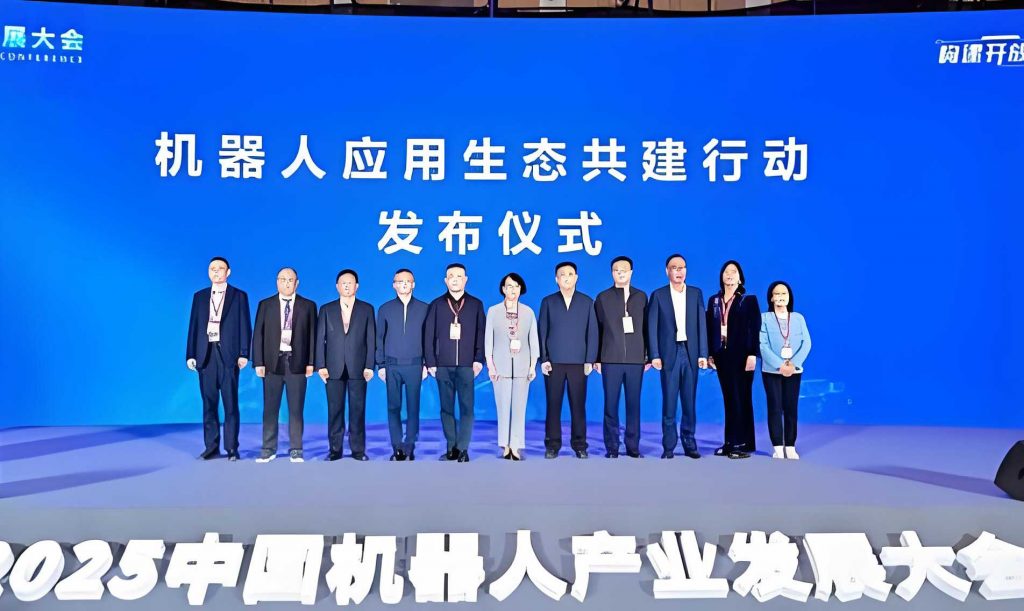
The momentum extends beyond trade shows, as solid data confirms the explosive growth of China robot exports. According to figures released by the General Administration of Customs on January 14, China’s industrial robot exports surged by 48.7% in 2025, with export volumes surpassing imports for the first time, transforming China into a net exporter of industrial robots. This milestone reflects the deepening competitiveness and scalable manufacturing capability of the China robot ecosystem on the world stage.
Pan Helin, a member of the Expert Committee on Information and Communication Economy at the Ministry of Industry and Information Technology, commented to International Business News that the remarkable presence of China robot at CES is both a demonstration of technical strength and proof of real-world application. Intelligent robots, he noted, have evolved from synchronized group performances to marathon runners on the track, and have infiltrated production lines, hotel lobbies, and logistics networks, quietly reshaping work and life across diverse scenarios. By proactively “going global” to expand overseas channels, the China robot industry has showcased its capabilities to the world, earning recognition and securing orders. This achievement, Pan emphasized, is the result of coordinated efforts in technological breakthroughs, industrial application, and policy guidance within China.
The China robot narrative is no longer just about manufacturing scale; it is about comprehensive, full-scenario penetration and technological leadership. The following sections delve into the key facets of this global emergence.
-
1. CES 2026: A Comprehensive Showcase of China Robot Versatility and Advanced Capabilities
The CES floor served as a dynamic proving ground for the multifaceted applications of China robot technology. In the industrial applications zone, the Beijing Humanoid Robot Innovation Center’s “Embodied Tiangang 2.0 Pro” robot acted as a “super worker,” demonstrating a fully autonomous parts sorting task. Leveraging its Unified Visuomotor Characterization (UVMC) technology, this China robot can instantaneously translate visual information into instinctive physical reactions, adeptly handling unexpected situations in sorting scenarios. With a high-frequency control capability exceeding 60 Hz, it achieves high-speed, dynamic, and precise grasping. Its dual-arm collaboration mechanism allows one arm to compensate promptly if the other makes an error, ensuring continuous and reliable task execution. This fully autonomous, highly generalized sorting ability can flexibly adapt to changes in object posture, background environment, and spatial position, offering efficient solutions for high-intensity, repetitive operation scenes like industrial manufacturing and logistics sorting.
Meanwhile, in another part of the hall, Weita Power’s quadruped robot dog “Big Head Bobo” attracted crowds of onlookers. Comparable in size to a medium-sized dog, this China robot product not only supports real-time English dialogue with visitors but also features intelligent navigation and autonomous follow functions without remote control, allowing attendees to experience the fun of “cyber dog-walking.” Reports indicate that “Big Head Bobo” can reach a maximum speed of 13.3 km/h and carry a maximum load of 12 kg. It possesses autonomous movement, environmental understanding, and task execution capabilities, enabling it to play roles such as an outdoor companion, home manager, security guard, or even a child’s playmate in daily life.
A representative from Weita Power disclosed that as an embodied intelligent product priced in the ten-thousand-yuan range, “Big Head Bobo” set a record in the domestic market by selling over a thousand units within 52 minutes of its launch. Its global version is currently under intensive development and is expected to be released simultaneously in multiple markets including North America, Europe, and the Middle East in the second quarter of this year, marking another significant step for the China robot brand overseas.
Further diversifying the China robot portfolio, Teeni.AI, a Beijing-based innovator focused on the youth market with multi-modal large language model portable intelligent agents, made its CES debut. The company brought its AI-powered portable robot for teenagers, Mooni Pro, to global users. Mooni Pro assists children in recording fragments of life. Memorable outings or favorite objects can be encoded and decoded by Mooni Pro into content understandable to young children. This content then accumulates as a record of growth for reminiscence, becoming continuously updated and extended material for family communication. This application highlights the China robot industry’s expansion into niche, lifestyle-enhancing domains.
-
2. Conquering the Home: China Robot Brands Lead the Global Smart Cleaning Revolution
The ambition of China robot companies in the consumer space stretches far beyond floor cleaning. The concept of “full-scenario cleaning” is now a reality, targeting liberation of users’ hands from indoor corners and high shelves to outdoor lawn care and pool maintenance. At CES, stair-climbing vacuum robots, lawnmower robots equipped with robotic arms, and intelligent devices for autonomous pool cleaning were prominently featured, underscoring the comprehensive vision of China robot manufacturers.
Data from the “Global Smart Home Cleaning Robot Equipment Market Quarterly Tracker Report” for the first half of 2025 solidifies this leadership. In the global market share ranking for扫地机器人 (sweeping robots), China robot brands occupied four of the top five spots. Specifically, Roborock led with a 20.7% market share, followed by Ecovacs, Dreame, and Xiaomi. Collectively, these four China robot brands commanded 57% of the global market, demonstrating their dominant position.
At CES, Ecovacs exhibited its constant-pressure live water mopping robot, whose roller was lengthened by 50% compared to the previous generation to 26 cm, enabling larger single-pass cleaning coverage and significantly improved efficiency. Another China robot leader, Narwal, showcased a new generation of扫地机器人 capable of identifying more objects and supporting dedicated modes for infants and pets. It can switch to ultra-quiet mode when approaching a crib and quickly locate household pets. These innovations exemplify how China robot products are evolving through enhanced intelligence and contextual awareness to meet sophisticated consumer needs worldwide.
-
3. The Foundation of Success: Unrivaled Supply Chain and Cost-Performance Edge of China Robot
The impressive scene deployments and market acceptance are underpinned by the continuously solidifying hard power of the China robot industry. When competing with overseas enterprises, the cost and performance advantages of China robot products have become increasingly pronounced. Li Tong, founder and CEO of Keenon Robotics, highlighted this shift: “Previously, exported China robot products could achieve about 70% of the performance of advanced overseas products at 50% of the price. Now, they compete with 150% of the performance at 80% of the price. China robot products are becoming more competitive and cost-effective.” This statement captures the dramatic leap in the value proposition offered by the China robot sector.
The cornerstone of this advantage is a complete and robust supply chain ecosystem. Chen Bing, Vice Dean and Professor at the Law School of Nankai University and a special researcher at the Chinese Academy of New Generation Artificial Intelligence Development Strategies, explained that from the perspective of domestic industrial development stages, China possesses advantages including a complete robotics industry chain, a continuously optimized innovation environment, and rich application scenario data accumulation. Particularly in the fields of industrial robots and service robots, China has formed manufacturing capabilities characterized by scale, low cost, and rapid iteration. This full-industry-chain advantage enables China to quickly form industrial clusters and achieve modular combined production, a critical factor for the scalable global expansion of China robot products.
Research from Omdia’s report, “General Purpose Embodied Intelligent Robots 2026,” provides quantitative evidence of this scaling prowess. The report indicates that the global humanoid robot market entered a phase of rapid growth in 2025, with annual shipments estimated at approximately 13,000 units. China robot manufacturers are standout performers in terms of mass production and shipment volumes. Among them, Zhiyuan led with annual shipments exceeding 5,100 units, capturing 39% of the global market share, ranking first globally in both shipment volume and market share. Unitree followed with annual shipments of 4,200 units and a 32% share, while Ubtech recorded shipments of 1,000 units, holding a 7% share. The report explicitly states that “Chinese manufacturers are setting the benchmark for mass production,” highlighting the end-to-end capabilities of the China robot industry from R&D to volume manufacturing.
The following table summarizes the key data from the Omdia report, illustrating the leading positions of China robot companies in the humanoid robot segment:
China Robot Manufacturer Annual Shipments (2025, Units) Global Market Share (2025) Zhiyuan >5,100 39% Unitree 4,200 32% Ubtech 1,000 7% Total for Top 3 China Robot Makers >10,300 ~78% This data unequivocally demonstrates that the China robot industry is not merely participating in the global market but is actively defining its standards and pace in critical emerging categories like humanoid robots.
-
4. From Components to Systems: The Integrated Ecosystem Empowering China Robot Leadership
The success of the China robot industry is a systemic achievement, built upon deep integration across the value chain. From core components like reducers, servo motors, and controllers to advanced sensors and AI chips, domestic supply capabilities have matured significantly. This localization reduces dependence on foreign suppliers, mitigates geopolitical risks, and allows for faster iteration cycles and cost optimization. For instance, the development of proprietary robotic operating systems and middleware by Chinese firms enables better hardware-software co-design, a key factor in achieving the high performance benchmarks seen in products like “Embodied Tiangang 2.0 Pro.”
Furthermore, the vast and diverse domestic application market within China serves as an unparalleled testing and refinement ground for China robot technologies. Deployment in complex environments—from busy restaurants and hospitals to sprawling warehouses and modern factories—generates massive, real-world data. This data fuels the iterative improvement of algorithms for navigation, manipulation, and human-robot interaction, creating a virtuous cycle where products are hardened domestically before succeeding globally. This ecosystem advantage is a unique asset for the China robot sector, allowing it to tackle a wider range of use cases with proven reliability.
Government policy and strategic planning have also played a facilitative role. National and local initiatives focused on intelligent manufacturing, industrial internet, and AI development have provided a favorable environment for R&D investment and talent cultivation in robotics. While the industry’s growth is fundamentally market-driven, this supportive backdrop has accelerated the maturation of the China robot innovation landscape.
-
5. Global Implications and Future Trajectory: The China Robot Phenomenon Reshapes Industries
The rise of the China robot “army” carries profound implications for global technology and manufacturing landscapes. For international competitors, the combination of superior performance and attractive pricing from China robot suppliers creates intense pressure to innovate and optimize costs. For global adopters—be they manufacturing plants in Germany, logistics centers in the United States, or hospitals in the Middle East—the availability of high-quality, affordable China robot solutions lowers the barrier to automation, potentially accelerating digital transformation across sectors.
Looking ahead, the trajectory of the China robot industry points toward deeper specialization and ecosystem expansion. Key trends to watch include:
- Enhanced AI Integration: The fusion of large language models and embodied AI will make China robot systems more intuitive, capable of understanding natural language instructions and adapting to unstructured environments with minimal programming.
- Collaborative Robotics (Cobots) Proliferation: Expect wider deployment of China robot cobots designed to work safely alongside humans in small and medium-sized enterprises, further democratizing automation.
- Vertical-Specific Solutions: China robot companies will likely develop even more tailored solutions for healthcare, agriculture, retail, and elderly care, moving beyond general-purpose platforms.
- Sustainability Focus: As ESG concerns grow, China robot innovations in energy-efficient designs, recyclable materials, and robots for environmental monitoring and renewable energy maintenance will gain prominence.
- Strengthened Global Partnerships: To navigate local regulations and market nuances, China robot firms will increasingly form strategic joint ventures, distribution partnerships, and R&D collaborations with overseas entities.
The journey of the China robot sector from domestic manufacturing to global technology leadership is a testament to sustained investment, entrepreneurial drive, and strategic execution. The commanding presence at CES 2026 and the landmark export data are not isolated events but indicators of a structural shift. As the industry continues to leverage its supply chain strength, cost-performance edge, and growing innovation momentum, the global footprint of China robot is set to expand further, redefining the very paradigm of automation and intelligent machines for years to come. The world is witnessing not just the export of robots from China, but the export of a new standard in robotics—a standard forged in the competitive fires of a vast domestic market and now poised to transform industries worldwide.
In conclusion, the narrative of China robot is one of remarkable and accelerating global ascendance. From dominating trade show floors with cutting-edge humanoid and quadruped robots to leading the smart home cleaning market and achieving net exporter status in industrial robotics, the evidence is overwhelming. The synergy of technological breakthroughs, a formidable supply chain, aggressive overseas market expansion, and a data-rich domestic ecosystem has positioned the China robot industry at the forefront of the global robotics revolution. As these companies continue to innovate and scale, their impact will resonate across global supply chains, productivity metrics, and daily life, solidifying the era of China robot as a defining force in 21st-century technology.