
As the new round of technological revolution and industrial transformation deepens globally, the robotics industry has entered a period of development opportunity characterized by intensive and active technological innovation and profound expansion of product applications. Multiple domains, including agricultural production, industrial operations, life and health, living services, and national defense and military affairs, are poised to enter an entirely new stage where robots serve as the key支撑. The global landscape is rapidly evolving, with China emerging as a pivotal force in shaping the future of robotics.
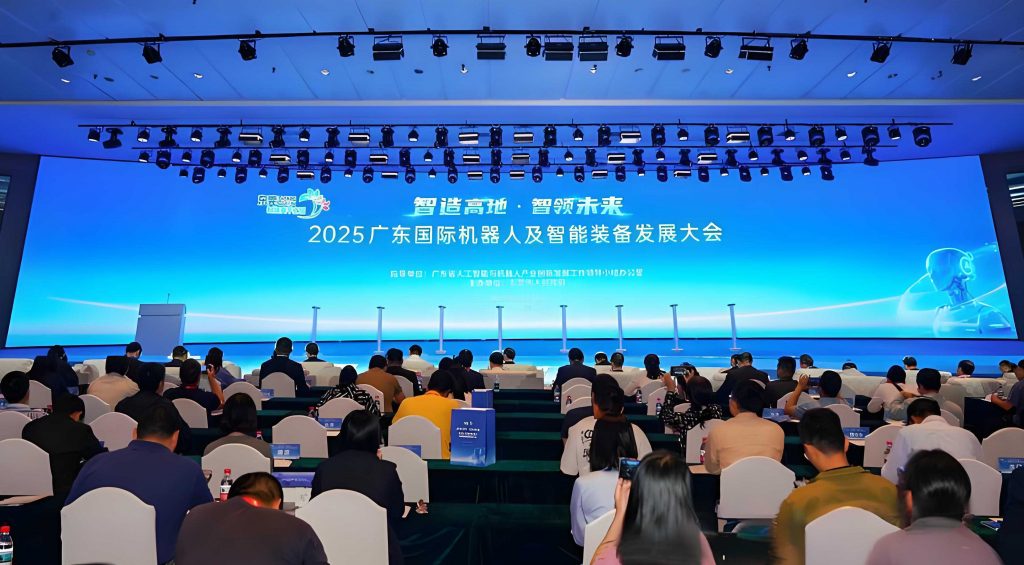
The global robotics arena is witnessing unprecedented dynamism, driven by strategic national initiatives and fierce technological competition. This comprehensive report, based on the analysis presented at the 2023 World Robot Conference, delves into the current trends, China’s pivotal role, and the future outlook for the robot industry worldwide, with a particular focus on the meteoric rise of the China robot sector.
-
Global Robotics Technology and Industry Development Trends
Robots, hailed as the “shining pearl” of technological innovation, are a crucial metric for measuring a nation’s scientific and technological创新能力. Major industrial nations worldwide regard robotics as a strategic high ground for global technological competition. They are accelerating strategic layouts, enriching technological reserves, and完善 industrial ecosystems. Possessing robust robotics technological innovation capabilities has become an essential condition for building a world-leading scientific and technological power.
In terms of the global policy environment, major industrial countries currently view robotics as a key direction for their own technological and industrial development. They formulate national robotics development strategies and action plans, issue relevant policies, and actively promote the layout of the robotics industry from a national level. The strategic focus on robotics is universal, underscoring its perceived critical role in future economic and technological supremacy.
Regarding technological development trends, robotics technological innovation has remained highly active in recent years. Patent applications show a strong growth momentum. Notably, China’s patent application volume ranks first in the world and maintains an upward trajectory. Leading enterprises attach great importance to global patent布局, making globalization competition increasingly intense. This patent surge is a clear indicator of where the center of gravity for robotics research and development is shifting, with the China robot innovation ecosystem at the forefront.
In the context of industrial development格局, as an important标志 of a country’s scientific and technological innovation and high-end manufacturing level, the robotics industry has attracted significant attention. All major global economies utilize the robotics industry as a vital means to enhance the competitive advantage of their manufacturing sectors. The race is not just about innovation but also about industrialization and scale.
Concerning market applications, with the迅猛 development of robot technology and the持续迸发 of market potential, the global robotics industry maintains a growth trajectory. China has become a significant driving force for the development of the global robotics industry. The automotive and electronics industries remain the fields with the highest degree of robot application. Furthermore, humanoid robots are developing rapidly, opening new frontiers for the China robot market and its global counterparts.
Global Robotics Patent Leadership (Representative Data) Region/Country Key Trend in Patent Activity Notable Characteristic China Patent application volume ranks first globally, upward trend. Strong focus on模块化与重构, multi-task planning,智能控制, information perception. Other Major Industrial Nations Active专利申请, emphasis on global patent布局. Intense全球化竞争 among领军企业. -
Current State of China Robot Technology and Industry Development
The development of the China robot industry is a story of remarkable progress, characterized by enhanced innovation capabilities, burgeoning industrial clusters, and rapidly diversifying application scenarios. The “14th Five-Year Plan” for Robot Industry Development provides a clear framework, advocating for strengthened research in前沿 and共性技术, accelerated transfer of innovation achievements, and the construction of an effective industrial technological innovation chain.
-
Enhanced Innovation Capability in China Robot Technology
Technological innovation capability is a标志 of the development level and scientific strength of China’s robotics science and technology, and is the core of the competitiveness of the China robot industry. Currently, the China robot industry requires the聚合 of relevant research resources from both industry and academia in some共性技术 and关键技术 to form跨界合力 and jointly carry out key攻关 to promote the high-end development of the industry. Patent data analysis reveals that China has accumulated a batch of patent achievements in technologies such as robot modularization and reconfiguration, multi-task planning and intelligent control, and information perception and navigation. This solid foundation is propelling the China robot sector forward.
In recent years, frontier technologies such as artificial intelligence, biotechnology, new materials, and brain-computer interfaces have developed rapidly. Robots, as carriers and platforms for these前沿技术, are accelerating their deep integration with them. This融合 has a profound impact on the形态, functionality, and application scenarios of robots. Chinese universities and related research institutions have accelerated R&D, achieving大量基础创新成果. The synergy between these cutting-edge fields and the core China robot industry is creating unprecedented possibilities.
-
Growth and Expansion of China Robot Industrial Clusters
At present, the overall development level of China’s robotics industry is稳步提升. The scope of application scenarios has明鲜扩展, the localization process of core components is不断加快, and the advantages of products such as collaborative robots, logistics robots, and special robots are不断增强. A large number of innovative enterprises have emerged. At the 2023 World Robot大会, 60 new products and components were showcased, with participation from over 160 enterprises, demonstrating the vibrant activity within the China robot ecosystem.
An analysis of the distribution of national-level “专精特新” “little giant” enterprises and listed enterprises in the China robot field shows that high-quality robot enterprises are mainly distributed in the Beijing-Tianjin-Hebei region, the Yangtze River Delta, and the Pearl River Delta region. This has formed industrial clusters represented by cities such as Beijing, Shenzhen, Shanghai, Dongguan, Hangzhou, Tianjin, Suzhou, Foshan, Guangzhou, and Qingdao. Under the leadership and带动 of local high-quality enterprises, a group of new锐 enterprises with strong competitiveness in细分领域 have emerged. The strength of the China robot industry is most robust in Beijing, Shenzhen, and Shanghai. The robot industries in Dongguan, Hangzhou, Tianjin, Suzhou, and Foshan are逐步发展壮大, while Guangzhou and Qingdao also show considerable potential for later development. The specific characteristics of the China robot industry in various locations are as follows:
China Robot Industrial Clusters and Their Specializations City/Cluster Region Primary Focus in China Robot Industry Beijing Anchoring the intelligent robot industry. Shenzhen Building a service robot cluster. Shanghai Focusing on industrial robot applications. Dongguan 主攻 robot core components. Hangzhou Promoting the development of集成应用. Tianjin Developing the special robot industry. Suzhou Attracting renowned domestic robot enterprises. Foshan Accelerating layout in the midstream and downstream of the industrial chain. Guangzhou Leading in industrial robot R&D and manufacturing. Qingdao Accelerating the纵深拓展 of “robot +” applications. This diversified and specialized cluster development is a hallmark of the mature and strategic growth of the China robot landscape, ensuring resilience and comprehensive capability across the value chain.
-
Highlights in China Robot Application Scenarios
China possesses a vast market for robot applications. With the steady implementation of the “Robot +” Application Action Implementation Plan, the fields of robot application are加速拓展. Applications in new energy vehicles, medical technology, power inspection, photovoltaic, and other fields are不断走深走实,有力地支撑ing the digital transformation and intelligent升级 of industries. The penetration of China robot solutions is becoming ubiquitous.
In the field of new energy vehicles, China robot applications are accelerating their expansion into charging and maintenance环节. In the field of medical surgery, the capability of robots to assist in surgical implementation has大幅提升. In the power inspection field, robots are accelerating their application across the entire process of smart grids. In the photovoltaic component field, robots are释放ing application value in power station operation and maintenance环节. In the logistics and warehousing field, robot clusters助力 the automation of warehouse system operations. In the outdoor delivery field, unmanned delivery vehicles have achieved safe operation in specific areas. In the fire rescue field, robots赋能 the upgrade of intelligent emergency救援. In the commercial service field, cloud platforms助推 a substantial improvement in robot service quality. Each of these scenarios underscores the practical and transformative impact of the China robot industry on real-world challenges and economic sectors.
-
Enhanced Innovation Capability in China Robot Technology
-
Future Outlook for the China Robot Industry
Robotics共性技术 and other前沿技术 are developing迅猛. A vast array of scientific technologies in electronics, machinery, biology, materials, and more are相互交融 and相互促进 in their development. Integrated innovation, high-end development, intelligence, and ecosystem construction have become the keywords for the future development of China robot. Looking ahead, the development of the China robot industry will focus on efforts from five key aspects, shaping its trajectory for years to come.
-
Accelerated Breakthroughs in New Technology Integration and Innovation
The convergence of robotics with AI, IoT, 5G, and advanced materials will continue at a rapid pace. The China robot industry is expected to be at the forefront of these融合创新 trends, developing more adaptive, resilient, and capable robotic systems. The foundational research conducted by Chinese institutions will be critical in driving these breakthroughs, ensuring that the next generation of China robot products are not only competitive but also defining new standards.
-
Continuous Expansion of China Robot Application Scenarios
The implementation of the “Robot +” strategy will further deepen. Beyond the current highlights, China robot applications are anticipated to penetrate更深 into traditional industries like agriculture, construction, and mining, while also creating entirely new service domains. The vast and diverse domestic market provides an unparalleled testing ground for scaling and refining China robot applications before global deployment.
-
Large Models Becoming the Intelligent “Brain” for Robots
The advancement of large-scale AI models will revolutionize robot intelligence. These models will endow China robot with enhanced perception, decision-making, and autonomous learning capabilities, moving beyond pre-programmed tasks to true contextual understanding and interaction. This will be a game-changer for the sophistication of China robot systems, particularly in unstructured environments.
-
Robots as Catalysts for Industry Digital Transformation
China robot will play an increasingly pivotal role as a key enabler and physical manifestation of digital transformation across all economic sectors. By automating complex processes, collecting real-time data, and enabling flexible production, China robot solutions will be integral to building the smart factories, smart logistics, and smart cities of the future, driving overall industrial upgrade and economic efficiency.
-
Accelerated Co-development and Symbiosis in the Robot Ecosystem
The future will see an acceleration in the共融共生 of the robot ecosystem. This involves closer collaboration between hardware manufacturers, software developers, component suppliers, system integrators, and end-users within the China robot sphere. Standardization, open-source platforms, and shared innovation networks will be strengthened, lowering barriers to entry and fostering a more vibrant and sustainable China robot industry cluster that can compete and collaborate effectively on the global stage.
The path forward for the China robot industry is clear: it is one of sustained innovation, strategic application, and ecosystem leadership. As global trends converge and technology advances, the China robot sector is not merely participating but is increasingly setting the agenda, promising to be a cornerstone of the next phase of global industrial and technological evolution.
-
Accelerated Breakthroughs in New Technology Integration and Innovation
In conclusion, the narrative of global robotics is being rewritten, with the China robot industry emerging as a central author. From commanding the heights of patent innovation to cultivating world-class industrial clusters and pioneering transformative applications, the progress is steady and the ambition is clear. The integration of frontier technologies, the expansion into new scenarios, the embrace of AI large models, the drive for digital transformation, and the focus on ecosystem symbiosis collectively chart a course for the China robot industry that is both ambitious and achievable. The world is watching as the China robot phenomenon continues to unfold, promising to redefine possibilities in automation, intelligence, and human-machine collaboration for decades to come. The era of the China robot is undoubtedly here, and its impact will resonate across every facet of the global economy and society.