
Since the birth of the first robot in the United States half a century ago, robotics technology has evolved dramatically, not only with industrial robots demonstrating remarkable capabilities but also giving rise to a vast new family of service robots. Advances in the economy and society have created new demands for robots, while technological progress has provided the necessary foundation for their development. Robots are now entering a golden age, increasingly influencing people’s work and lives, and are poised to significantly contribute to smart manufacturing in China, meeting the essential needs of the population.
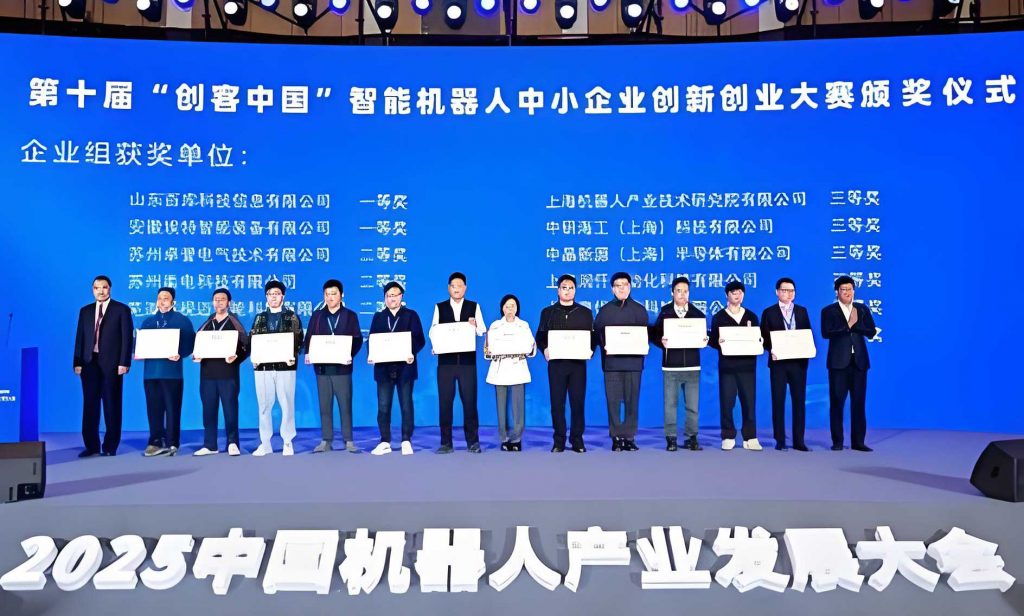
The global landscape of robotics is shifting rapidly, with China emerging as a central player. The growth of the China robot sector is not just a national phenomenon but a critical component of worldwide technological advancement. This article explores the multifaceted development of robotics, with a particular focus on the China robot industry, its expanding demand, technological leaps, ongoing challenges, and future directions toward human-robot collaboration.
1. Global Emphasis on Robotics Development
Over the past decade, discussions about robots have continuously surfaced, recognizing them as one of the four technologies influencing human production and life, a technology leading the third industrial revolution, one of the 12 disruptive technologies driving global economic transformation, and among the top 10 technologies of 2015 worldwide. Numerous countries, including developed nations and emerging economies, have prioritized robots in national strategies and deployment plans. For instance, the United States released a robotics roadmap report, equating the current significance of robots to that of the internet in the 20th century. The European Union launched SPARC, the world’s largest civilian robotics research and development program, planning to invest 28 billion euros by 2020 to create 240,000 jobs. Japan formulated a long-term development strategy for robotics technology, listing the robot industry as one of seven key sectors to support under its “New Industrial Development Strategy.” South Korea established the “Intelligent Robot Basic Plan” and announced the “Robot Future Strategy 2022,” focusing policies on expanding the domestic robot industry and supporting local robot companies in entering overseas markets.
The strategic importance of robotics is underscored by these initiatives, reflecting a global consensus on its transformative potential. In this context, the China robot industry is gaining momentum, aligning with international trends while addressing local needs. The integration of robotics into national agendas worldwide highlights the competitive and collaborative dynamics shaping the future of automation, where the China robot market is set to play a pivotal role.
2. Expanding Demand for Robots in China
During the same period, China has experienced rapid growth in robot imports. According to statistics from the International Federation of Robotics (IFR), China imported only 380 industrial robots in 2000, but this number surged to 36,860 by 2013—an increase of two orders of magnitude over 13 years. Globally, industrial robot sales reached approximately 179,000 units in 2013, a historic high representing a 12% year-on-year growth. Among these, sales in China accounted for about 37,000 units, ranking first worldwide with a 60% increase. The China robot market constituted one-fifth of the global market in 2013 and rose to one-quarter by 2014, solidly reflecting the soaring demand for robots in China and establishing it as the largest consumer of robots globally.
The economic development trajectory in China drives this demand. Currently, labor shortages in manufacturing and rising wages have increased human costs, prompting businesses to seek alternatives. Robots are often the preferred choice due to their ability to enhance labor productivity. Since the reform and opening-up, China’s manufacturing output has grown rapidly, yet labor productivity remains relatively low. The number of robots per 10,000 industrial workers in China is still far below the world average. The transformation and upgrading of the manufacturing sector present immense demand for robots. In the long term, a new wave of technological progress is inevitable. Smart manufacturing is recognized as the primary direction for manufacturing technology, with robots serving as a key technical support—a consensus shared by countries worldwide.
Industrial robots in China possess vast market potential, and service robots similarly offer significant growth opportunities. Various types of service robots, including special-purpose robots for diverse needs, rehabilitation and assistive robots for the elderly and disabled, and medical auxiliary robots, show clear demand in China. Policies promoting “mass entrepreneurship and innovation” are expected to incentivize the creation of robots for various applications, further fueling the expansion of the China robot ecosystem.
| Year | Number of Industrial Robots Imported | Notes |
|---|---|---|
| 2000 | 380 | Baseline year showing minimal adoption. |
| 2013 | 36,860 | Peak import year, reflecting rapid market expansion. |
This table illustrates the dramatic rise in China robot imports, underscoring the accelerating adoption of automation technologies. The China robot market’s growth is not just a statistical trend but a fundamental shift in industrial strategy, positioning China as a global leader in robotics consumption and innovation.
3. Leapfrog Progress in China Robot Research and Development
After years of effort, China has mastered industrial robot design technology and accumulated application experience. Many domestic institutions have achieved results in robotics research that are now applied in practice. For example, the Shenyang Institute of Automation (SIA) under the Chinese Academy of Sciences is one of the earliest units engaged in robot technology research, hailed as the cradle of China’s robotics cause. It currently serves as the supporting unit for the “National Engineering Research Center for Robot Technology” and the “State Key Laboratory of Robotics.” The industrial robots and AGVs (Automated Guided Vehicles) developed here initiated the industrialization of robots in China. Additionally, rescue and anti-terrorism mobile robots, rotary-wing flying robots, five-degree-of-freedom high-pressure water jet cutting robots, laser processing robots, as well as achievements like long-range autonomous underwater robots for extreme environments such as deep-sea and polar scientific exploration, Arctic observation robots for underwater ice cover monitoring, Antarctic polar research robots, and the 6,000-meter unmanned untethered submersible “Qianlong一号” have played irreplaceable roles in practical applications, creating many firsts in China’s robotics endeavors.
Moreover, robotics technology from Harbin Institute of Technology has been adopted across various regions and has achieved outstanding application results in aerospace fields. The neurosurgical assistant robot from Beihang University has been successfully used in medical practice. Several nuclear power plant robots developed by China General Nuclear Power Group have been effectively applied in nuclear power construction. These advancements highlight the robustness of China robot research, with institutions pushing boundaries in both foundational and applied robotics.
Pioneering enterprises in China’s robotics sector have largely embarked on independent and sustainable development paths. For instance, Shenyang Siasun Robot & Automation Co., Ltd., after successfully listing on the ChiNext board in 2009 as one of the first companies, now boasts a market capitalization of 500 billion RMB, establishing itself as a leader in domestic robot automation. Meanwhile, China’s industrial robot products have filled multiple domestic gaps. Cleanroom (vacuum) robots have repeatedly broken foreign technological monopolies and blockades, substantially replacing imports. Mobile robot products have been listed as key procurement targets by numerous internationally renowned enterprises. Special-purpose robots have been batch-applied in critical national defense areas. Guangzhou CNC Equipment Co., Ltd., besides producing robot products, is also a supplier of complete machine tool numerical control systems. Companies like Guangzhou Qifan, Nanjing Estun, Anhui Effort, and Shanghai Step also have distinctive features, gradually exploring sustainable development models suitable for themselves and playing important roles in China’s robot industry. Notably, Shenzhen DJI Innovations Technology Co., Ltd. is a global leader in developing and producing unmanned aerial vehicle control systems and drone solutions, with customers in over 100 countries worldwide, achieving dazzling performance.
The progress in China robot development is evident across academia and industry, showcasing a collaborative effort to advance technological frontiers. The integration of research breakthroughs with commercial applications is strengthening the China robot ecosystem, making it a formidable force in the global robotics arena.
4. Continuous Efforts Needed in China Robot Research and Development
Overall, China’s industrial robot manufacturing enterprises still have relatively small scales, with market share remaining comparatively low. The quality of some key components lags behind international advanced products, and technological innovation capabilities are still developing. Large-scale industries for service robots are few.
As emphasized by national leadership, China is set to become the largest market for robots, but the question remains whether domestic technology and manufacturing capabilities can meet this competition. The goal is not only to enhance the level of robots in China but also to capture as much market share as possible. To this end, weaknesses must be addressed, and enterprises strengthened. Simultaneously, to boost future competitiveness, it is essential to monitor robotics development trends, conduct research, and build technical reserves.
Currently, product life cycles in manufacturing are shortening, and user demands for customization are intensifying. This necessitates flexible manufacturing systems, requiring significant reductions in the time needed for production line reconfiguration. For production systems comprising wireless communication, conveyors or AGVs, robots, and other processing machines, future systems should be reconfigured within days rather than weeks or months as is common today. After connecting various components, they should achieve “plug-and-play” functionality without lengthy debugging. To meet such demands, robots must improve their motion capabilities and rapid programming abilities. Current industrial robots suffer from low absolute positioning accuracy, making fast and high-precision calibration a challenge. Moving forward, employing information technology for rapid and high-precision three-point positioning will become a key technology.
The China robot industry must focus on these technological hurdles to maintain its growth trajectory. Investments in R&D, talent development, and international collaborations will be crucial for bridging gaps and ensuring that China robot innovations keep pace with global standards. The journey ahead requires persistent effort, but the foundations laid so far provide a strong platform for future achievements.
5. Interdisciplinary Integration Fostering Human-Robot Collaboration
Humans invented machines to replace labor, not to exclude themselves. In the future, robots will be able to coexist with humans. Currently, in many manufacturing sectors such as aircraft and shipbuilding, components are processed by highly automated precision equipment, but tasks like aircraft assembly and ship welding still rely heavily on manual labor, lacking flexible equipment assistance. Many manual tasks in labor-intensive manufacturing remain unsuitable for current robots. Due to robots’ inferior online perception capabilities compared to humans, inability to receive abstract commands, inefficient communication with humans, and lack of appropriate safety mechanisms, robots often remain mechanical entities isolated from humans. Future human-robot collaboration is poised as the optimal solution to such problems. Robots capable of cooperating with humans are ideal operational equipment. For robots to serve humans effectively, they must integrate seamlessly with people. The degree of human-robot integration will be a significant benchmark for robotics development.
Advances in related fields will continually propel robot technology forward. For example, developments in artificial intelligence and internet technology will provide robots with powerful “back-end brains,” enhancing their intelligence. With progress in materials science, robots made from artificial muscles and other components, known as “soft robots,” could revolutionize the field. Integration with brain science may enable some robot behaviors to be directly controlled by humans. Combining with life sciences could lead to bio-inspired or life-like robots.
There is every reason to believe that the robotics industry faces a bright tomorrow. The China robot sector, in particular, stands at the forefront of this transformation, leveraging domestic demand and innovation to shape a future where robots enhance productivity, improve quality of life, and drive sustainable growth. As the China robot market expands and technologies mature, the synergy between human creativity and robotic precision will unlock new possibilities, solidifying China’s role as a global leader in the age of automation.
The journey of the China robot industry is a testament to resilience and ambition. From initial imports to cutting-edge research, the path forward involves embracing challenges and harnessing opportunities. With continued focus on innovation, collaboration, and integration, the China robot ecosystem will not only meet domestic needs but also contribute to global advancements, making the vision of human-robot coexistence a reality.