
As I reflect on the global industrial landscape, I am captivated by the meteoric rise of the China robot market. In 2013, China surpassed Japan to become the world’s largest purchaser of industrial robots, a testament to its explosive demand for automation. This shift is not merely a statistical blip but a profound transformation signaling China’s full-throttle entry into the robot era. The China robot phenomenon is reshaping manufacturing, challenging technological frontiers, and redefining competitive dynamics worldwide. From the bustling factories of the Pearl River Delta to strategic government initiatives, the narrative of the China robot industry is one of immense opportunity coupled with significant hurdles. In this analysis, I will delve into the drivers, data, and dilemmas of this revolution, employing tables and formulas to crystallize key insights, while repeatedly underscoring the pivotal role of the China robot ecosystem.
The sheer scale of demand in the China robot market is staggering. According to reports, China purchased over 36,000 units in 2013 alone—a number that underscores an unprecedented national appetite for automation. The International Federation of Robotics forecasts continued growth, projecting global industrial robot installations to reach significant heights. Let me encapsulate this growth trajectory in a table to clarify the projections.
| Metric | Projection | Context Relative to China Robot Demand |
|---|---|---|
| Global Industrial Robot Stock | Approx. 200,000 units | China robot acquisitions are a major contributor to this stock. |
| Annual Robot Sales Value | $17 billion | The China robot market represents a substantial portion of this revenue. |
| Processing and Support Market Scale | $50 billion | China’s manufacturing upgrade fuels this ancillary market for robot integration. |
This data hints at a fundamental economic equation driving the China robot boom: the rising cost of labor versus the falling cost of robotics. From 2004 to 2013, the average wage in Chinese manufacturing soared, with an annual growth rate around 15%. Conversely, robot prices have been declining at approximately 30% per year. This creates a compelling cost-benefit argument for automation. We can express the net economic incentive for adopting robots in China with a simple formula:
$$ \text{Net Incentive}(t) = \int_{0}^{t} \left( C_L(\tau) – C_R(\tau) \right) d\tau $$
Where \( C_L(t) \) represents the labor cost per unit time, \( C_R(t) \) represents the robot operational cost per unit time (including depreciation), and \( t \) is the payback period. Given the trends, \( C_L(t) \) increases exponentially, while \( C_R(t) \) decreases, making the integral positive for many enterprises within a short timeframe, often 1 to 3 years. This calculus is why companies, from appliance giants to electronics assemblers, are investing heavily in robot-driven production lines. The vision of a nearly unmanned factory, as seen in some advanced Chinese manufacturers, is becoming an attainable reality, fundamentally altering the production system within a year or two.
The application of China robot technology is most visible in labor-intensive sectors. A prime example is the 3C industry (computers, communication, consumer electronics), where China concentrates about 70% of global production capacity. Yet, automation penetration remains relatively low, creating a unique, massive latent demand for the China robot market. The automation of processes like casing, glass handling, and final assembly is just the beginning. I project that future integration will deepen, driven by the need for precision and efficiency. Consider the following breakdown of potential robot utilization in a typical 3C production chain:
| Production Stage | Current Automation Level | Future Potential for China Robot Integration | Key Driver |
|---|---|---|---|
| Component Manufacturing (e.g., shells, glass) | Moderate (Robots common) | High (Full automation) | Precision and yield improvement |
| PCB Assembly | Low (Manual/Semi-auto) | Very High (Collaborative robots) | Miniaturization and complexity |
| Final Product Assembly | Low to Moderate | Extreme (Flexible robotic cells) | Labor cost and “用工荒” (labor shortage) |
| Testing and Packaging | Moderate | High (Vision-guided robots) | Speed and consistency |
The “labor shortage” phenomenon, often cited by companies like Foxconn with its ambitious robot procurement plans, is a powerful catalyst for the China robot expansion. However, this shift raises societal questions about employment. While robots address specific sectoral shortages, they may exacerbate systemic job pressures, particularly for routine manual roles. The demand for jobs is increasingly skewing towards management and coordination, with intelligent China robot systems taking over execution. This transition can be modeled by a labor displacement function:
$$ L_d = \alpha \cdot R_{adopt} + \beta $$
Where \( L_d \) is the labor displacement, \( R_{adopt} \) is the rate of robot adoption in the China robot market, and \( \alpha, \beta \) are parameters representing technological efficiency and baseline automation. As \( R_{adopt} \) grows—predicted by CITIC Securities Research to have a CAGR exceeding 30% over five years—\( L_d \) increases, necessitating workforce reskilling.
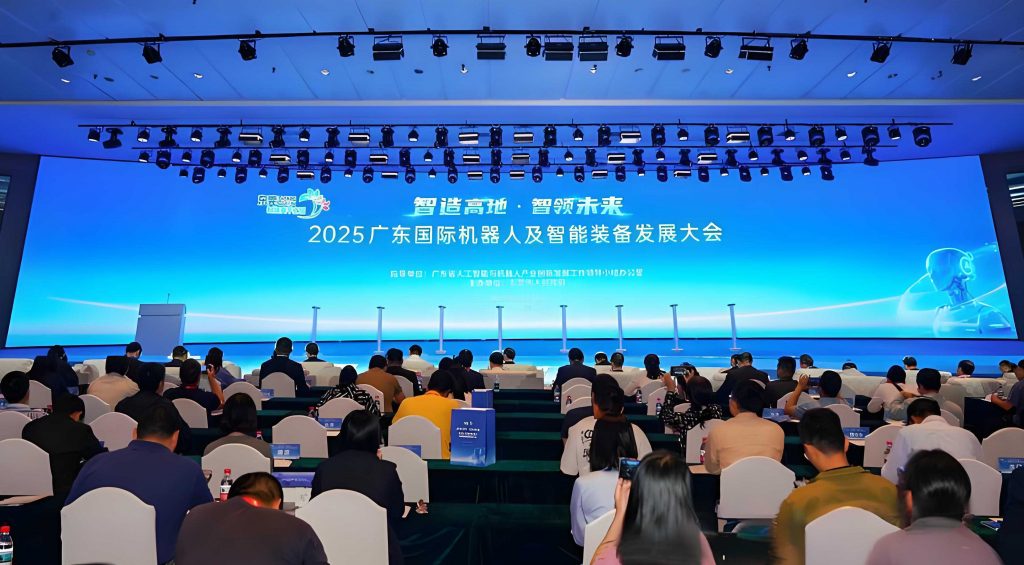
Beyond traditional arms, the China robot evolution is fueled by convergence with新一代信息技术 (new-generation IT). Big data, cloud computing, and mobile internet are merging with robotics, while 3D printing and artificial intelligence accelerate innovation. Modern China robot systems are gaining “eyes” and “brains”—capable of perception, adaptive response, and even learning. This ushers in applications like collaborative robots (cobots) for electronics, food processing, and healthcare, which work safely alongside humans. The technological stack enabling this can be summarized by a layered formula:
$$ \text{Robot Capability} = f(\text{Sensing}, \text{AI}, \text{Connectivity}) $$
$$ \text{Sensing} = \sum_{i} ( \text{Vision}_i + \text{Force/Torque}_i ) $$
$$ \text{AI} = \text{Machine Learning} \times \text{Data from China robot deployments} $$
$$ \text{Connectivity} = \text{Cloud} \oplus \text{Edge Computing} $$
This synergy is pushing the China robot frontier beyond factories into domains like autonomous vehicles, drones, and service robots.
Yet, for all its market size, the China robot industry faces stark technological challenges. Being the world’s largest robot market does not automatically confer leadership in robot制造 (manufacturing). A critical weakness lies in core components. Foreign robot manufacturers dominate approximately 90% of the Chinese market, with giants like Fanuc, Yaskawa, KUKA, and ABB holding around 65% combined. Domestic China robot players, such as Siasun, Anhui Effort, and Guangzhou CNC, are in their infancy. The crux of the issue is the inability to self-produce key parts like precision reducers and servo motors, leading to cost disadvantages. Let’s quantify this gap:
| Component | Cost Share in Robot | Domestic China Robot Producer Cost (Indexed) | International Robot Producer Cost (Indexed) | Disadvantage Factor |
|---|---|---|---|---|
| Reducer (e.g., RV, harmonic) | ~35% | 100 | 20-30 | 3-5x higher |
| Servo Motor and Drive | ~25% | 80 | 25 | ~3x higher |
| Controller | ~15% | 60 | 20 | ~3x higher |
| Integration & Software | ~25% | Varies | Lower due to scale | Significant |
The formula for total cost for a domestic China robot manufacturer can be approximated as:
$$ C_{domestic} = \sum_{i \in \text{core components}} (k_i \cdot C_{intl,i}) + C_{assembly} $$
Where \( k_i \) is the disadvantage factor (often 3 to 5 for reducers), making \( C_{domestic} \) substantially higher. This hampers competitiveness. Moreover, many domestic firms focus on non-standard, customized robots for SMEs, which inhibits economies of scale. The mindset has sometimes been short-term, favoring imitation over deep innovation. However, I see signs of change: some end-users, after gaining experience, start building their own robots, indicating a grassroots technological absorption. Yet, without mastering core technologies, this can lead to market fragmentation rather than consolidated strength.
Government and corporate strategies are aligning to address these gaps. Regions like Shanghai, Guangzhou, and Chongqing are formulating robot industry plans, emphasizing collaborative innovation, talent development, and industrial clusters. The focus is on mastering robot本体 (robot本体), key零部件 (components), and system integration. The strategic goal for the China robot sector can be expressed as an optimization problem:
$$ \max \text{Global Competitiveness} = \int \left( \text{Innovation}(t) + \text{Market Share}(t) \right) dt $$
Subject to constraints: \( \text{Innovation}(t) = R\&D \text{ Investment} \times \text{IP Portfolio} \), and \( \text{Market Share}(t) \) depends on cost and quality. Initiatives aim to build robot industrial bases, funds, and training centers, fostering a holistic ecosystem for the China robot industry.
Looking ahead, the competition transcends industrial robots. The battle is shifting to the frontiers of artificial intelligence and general-purpose robotics, where companies like Google are making bold moves. Google’s “Moonshot” projects, including Boston Dynamics, Nest, and DeepMind acquisitions, sketch a vision of intelligent, mobile robots capable of operating in human environments. This represents a long-term technological储备 (reserve) that could eventually leverage big data for physical services. In contrast, while Chinese firms like Baidu are following suit (e.g., autonomous car research), the gap in sustained R&D and strategic foresight remains considerable. The China robot market must not only catch up in industrial automation but also prepare for this next wave. The convergence can be modeled as:
$$ \text{Future Robot Value} = \underbrace{\text{Industrial Productivity}}_{\text{Current China robot focus}} + \underbrace{\text{AI} \cdot \text{Data Network Effects}}_{\text{Next-gen competition}} $$
Google’s approach suggests that future robots will be data-collection and service-delivery platforms, expanding beyond factory floors.
In conclusion, the China robot era is characterized by colossal demand, rapid adoption, and a pressing need for technological sovereignty. The market’s growth, with a CAGR potentially over 30%, presents a vast “industrial cake” that global and domestic players are vying for. However, to truly ascend and grasp the “gem on the crown of manufacturing,” the China robot industry must overcome core component dependencies, foster innovation, and cultivate a long-term strategic vision. This involves not just replacing labor but re-engineering production lines, investing in R&D, and embracing the integration of AI and IT. As I see it, the trajectory of the China robot revolution will significantly influence global manufacturing dynamics. By leveraging its market scale as a testing ground and accelerating indigenous innovation, China can transition from being the world’s largest robot consumer to a leading creator and exporter of advanced robotic technologies. The journey is fraught with challenges, but the potential to later居上 (come from behind) is real, provided there is a concerted, patient effort to build a robust and innovative China robot ecosystem from the ground up.
To further illustrate the quantitative aspects, let me provide additional formulas and tables. The adoption rate of robots in China can be modeled using a logistic growth function, common in technology diffusion:
$$ N(t) = \frac{K}{1 + e^{-r(t – t_0)}} $$
Where \( N(t) \) is the number of robots deployed in China at time \( t \), \( K \) is the carrying capacity (market saturation point), \( r \) is the growth rate (linked to that 30%+ CAGR), and \( t_0 \) is the inflection point. Given the explosive growth since 2013, \( r \) is high, but \( K \) is enormous due to the vast manufacturing base.
Another critical metric is the return on investment (ROI) for a typical China robot installation. This can be detailed as:
| Item | Year 0 (Initial) | Year 1 | Year 2 | Year 3 | Notes |
|---|---|---|---|---|---|
| Robot System Cost (CapEx) | $50,000 | – | – | – | Cost of China robot unit and integration |
| Annual Labor Cost Saved | – | $25,000 | $26,250 | $27,562 | Assuming 5% annual wage inflation |
| Annual Operating Cost (Robot) | – | $5,000 | $4,500 | $4,050 | Maintenance, energy, depreciation (10% decline yearly) |
| Net Annual Savings | – | $20,000 | $21,750 | $23,512 | Labor saved minus operating cost |
| Cumulative Cash Flow | -$50,000 | -$30,000 | -$8,250 | $15,262 | Payback achieved between Year 2 and 3 |
The net present value (NPV) for such an investment, considering a discount rate \( i \), is:
$$ NPV = -C_0 + \sum_{t=1}^{3} \frac{S_t}{(1+i)^t} $$
Where \( C_0 \) is the initial robot cost, and \( S_t \) is the net savings in year \( t \). With \( i \) around 10%, NPV remains positive, justifying the adoption. This economic logic fuels the China robot demand across sectors like logistics and engineering machinery, where tipping points are nearing.
Finally, the technological readiness of the China robot industry can be assessed through a capability matrix. While core components are weak, integration and application software are areas of growing competence. The path forward requires balancing immediate market needs with long-term research. As the China robot market continues to expand, it will inevitably attract more global collaboration and competition, pushing the entire industry toward greater intelligence and flexibility. The ultimate formula for success in the China robot era is a combination of market force, innovation persistence, and strategic vision—a combination that will determine whether China can indeed later居上 and claim its place as a leader in the global robotics revolution.