
In recent years, the push for intelligent mining operations has accelerated globally, with a particular focus on enhancing safety and efficiency in underground environments. As a professional involved in mining engineering, I have observed firsthand the critical role that conveyor systems play in coal transportation. Belt conveyors are the backbone of material handling in mines, yet they operate under harsh conditions, including high loads, dust, moisture, and uneven cargo distribution. These factors contribute to common failures such as belt misalignment, material spillage, breakage, and longitudinal tearing. Traditional protection systems, reliant on sensors and mechanical devices, often fall short due to environmental interference, leading to frequent malfunctions and inadequate monitoring. This has spurred the adoption of advanced technologies like inspection robots and AI-based video surveillance systems. In this article, I will delve into a comparative study of these two approaches, emphasizing the advantages of AI video systems in complex mining settings. Throughout this discussion, I will highlight how robot technology has evolved and where it stands in relation to modern AI solutions, using formulas and tables to quantify key aspects.
Traditional protection systems for belt conveyors typically incorporate various sensors, such as proximity switches, temperature detectors, and vibration monitors, to detect anomalies. However, these systems are prone to failures caused by coal dust accumulation, humidity, and mechanical wear. For instance, sensors may provide false alarms or miss critical events due to reduced sensitivity. The reliability of such systems can be modeled using failure rate analysis. Let the failure rate of a sensor be denoted by $\lambda_s$, and the mean time between failures (MTBF) be given by $MTBF = \frac{1}{\lambda_s}$. In practice, $\lambda_s$ increases in harsh environments, leading to a higher probability of undetected faults. The overall system reliability $R_s(t)$ over time $t$ can be expressed as $R_s(t) = e^{-\lambda_s t}$, indicating an exponential decay. This underscores the limitations of traditional methods, which often require frequent maintenance and recalibration, resulting in operational downtime and increased costs.
The emergence of robot technology in mining has introduced inspection robots as a potential solution. These autonomous or semi-autonomous devices are designed to traverse conveyor routes, collecting data on parameters like temperature, noise, and visual anomalies. Initially, robot technology in mining drew inspiration from other industries, such as power utilities, where wheeled and suspended-line robots were common. Wheeled robots offer flexibility in navigating uneven terrain, while suspended-line robots rely on fixed cables but suffer from stability issues. In coal mines, however, these designs face unique challenges. For example, the weight of a typical inspection robot exceeds 75 kg, leading to significant battery consumption. The battery life $B_l$ can be approximated by $B_l = \frac{C_b}{P_r}$, where $C_b$ is the battery capacity and $P_r$ is the power consumption rate. Given that $P_r$ is high due to locomotion and sensor operation, $B_l$ often necessitates frequent recharging, creating gaps in monitoring coverage. This intermittent operation contrasts with the need for continuous surveillance in safety-critical applications.
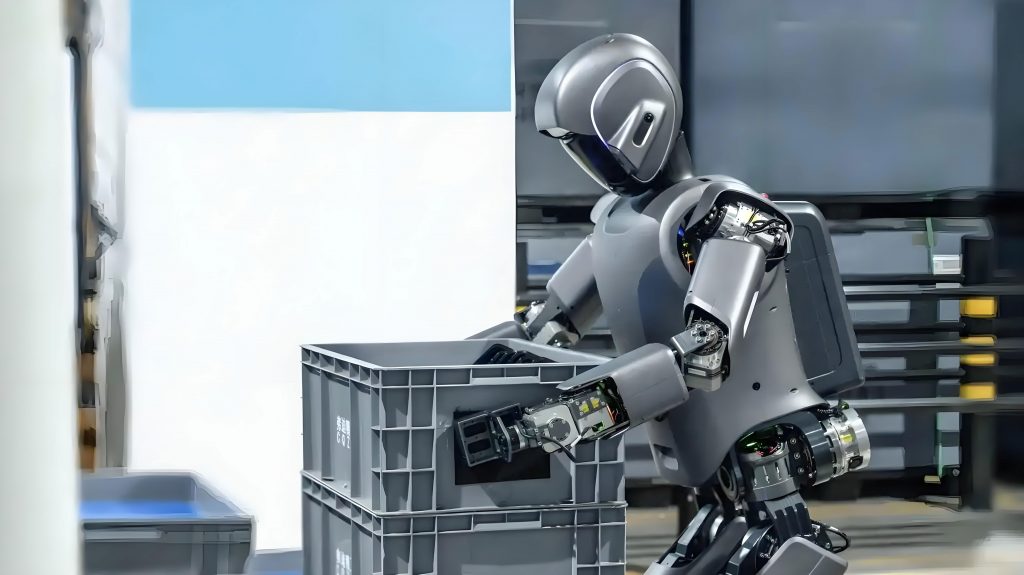
To address these limitations, researchers have explored alternative robot technology, such as rope-driven systems that reduce the onboard power load. In such designs, the robot is towed by a wire rope controlled by an external motor, while internal batteries only power sensors. This approach extends operational time and improves scalability on steep inclines. The force required for towing $F_t$ can be calculated as $F_t = m_r g \sin(\theta) + \mu m_r g \cos(\theta)$, where $m_r$ is the robot mass, $g$ is gravitational acceleration, $\theta$ is the incline angle, and $\mu$ is the friction coefficient. Although this enhances performance, it introduces complexities like synchronization issues in multi-robot setups and higher installation costs. Moreover, in dynamically changing mine environments, such as those with significant roof deformation, fixed轨道 systems may become misaligned, reducing effectiveness. Thus, while robot technology has advanced, it still grapples with practical constraints in widespread deployment.
In contrast, AI video surveillance systems represent a paradigm shift in conveyor monitoring. These systems leverage high-resolution cameras equipped with infrared and visible light sensors, deployed along the conveyor route. The video data is transmitted via high-speed networks, such as 10-gigabit Ethernet, to a central platform where AI algorithms analyze it in real-time. Key functionalities include detecting belt misalignment, foreign objects, temperature anomalies, smoke, and unsafe human behavior. For instance, thermal cameras can monitor roller temperatures, triggering alerts if values exceed a threshold $T_{max}$. The heat transfer model for a roller can be described by Newton’s law of cooling: $\frac{dT}{dt} = -k(T – T_{amb})$, where $T$ is the roller temperature, $T_{amb}$ is the ambient temperature, and $k$ is the cooling coefficient. By integrating this with computer vision, the system achieves comprehensive coverage without physical movement, eliminating battery-related downtime.
The architecture of an AI video system typically includes front-end devices like explosion-proof cameras, transmission infrastructure, and a central analysis platform. In a case study from a mining operation with a 2,000-meter conveyor, cameras were strategically placed at the head, tail, and intermediate points. Each camera covers approximately 50 meters, enabling full-length monitoring. The system employs machine learning models, such as convolutional neural networks (CNNs), for anomaly detection. The accuracy $A_{det}$ of such a model can be expressed as $A_{det} = \frac{TP + TN}{TP + TN + FP + FN}$, where $TP$ is true positives, $TN$ is true negatives, $FP$ is false positives, and $FN$ is false negatives. With training on diverse datasets, $A_{det}$ can exceed 95%, outperforming traditional sensors. Additionally, features like self-cleaning lenses mitigate dust interference, ensuring consistent performance in dusty environments.
When comparing inspection robots and AI video systems, several factors come into play, including cost, reliability, coverage, and adaptability. The following table summarizes a quantitative comparison based on empirical data from mining applications:
| Parameter | Inspection Robot | AI Video Surveillance |
|---|---|---|
| Initial Cost ($C_i$) | High (e.g., $100,000+ per unit) | Moderate (e.g., $50,000 for full system) |
| Maintenance Cost ($C_m$ per year) | $10,000 – $20,000 | $5,000 – $10,000 |
| Coverage Continuity | Intermittent (due to charging) | Continuous (24/7 monitoring) |
| Detection Latency (seconds) | 30 – 60 (during巡检 intervals) | Near real-time (< 5 seconds) |
| Reliability ($R$ at t=1 year) | 0.85 – 0.90 | 0.95 – 0.98 |
| Adaptability to Deformation | Low (fixed轨道 issues) | High (flexible camera placement) |
From a mathematical perspective, the total cost of ownership (TCO) over time $t$ can be modeled as $TCO = C_i + C_m \cdot t + C_d \cdot D(t)$, where $C_d$ is the cost per downtime event and $D(t)$ is the number of downtime events. For inspection robots, $D(t)$ is higher due to battery swaps and mechanical failures, whereas AI systems minimize $D(t)$ through redundant designs. Furthermore, the probability of detecting a fault $P_d$ can be derived for each system. For robots, $P_d$ depends on the巡检 frequency $f_r$ and coverage area $A_c$, giving $P_d = 1 – e^{-f_r A_c \lambda_f}$, where $\lambda_f$ is the fault rate. In contrast, AI systems offer $P_d \approx 1$ for covered areas, as monitoring is constant.
Another critical aspect is the integration of robot technology with existing infrastructure. While inspection robots can be equipped with advanced sensors, their mobility constraints limit data fusion capabilities. AI video systems, however, seamlessly integrate with other monitoring systems, such as environmental sensors and control networks. This enables data叠加, where video feeds are overlayed with parameters like conveyor speed or motor temperature. For example, the system can correlate thermal images with acoustic data to predict bearing failures using a fusion model: $S_{fusion} = w_v S_v + w_a S_a$, where $S_v$ and $S_a$ are scores from video and audio analysis, and $w_v$, $w_a$ are weights optimized via machine learning. Such integration enhances predictive maintenance, reducing unplanned outages.
In terms of scalability, AI video systems outperform robots in long-distance conveyors. For a conveyor of length $L$, the number of cameras required $N_c$ is $N_c = \lceil \frac{L}{d_c} \rceil$, where $d_c$ is the coverage distance per camera (e.g., 50 meters). The cost scales linearly with $N_c$, whereas for robots, multiple units may be needed, leading to quadratic cost increases due to coordination complexities. Moreover, AI systems benefit from centralized updates; for instance, improving detection algorithms requires only software changes, whereas robots may need hardware modifications. This agility is crucial in adapting to new threats, such as emerging fault patterns.
Despite the advancements in robot technology, my experience in mining engineering confirms that AI video surveillance offers superior reliability in geologically complex areas. In regions where roof convergence and floor heave deform tunnels, fixed robot轨道 can become misaligned, causing blind spots. AI cameras, mounted on flexible supports, maintain alignment and can be easily repositioned. Additionally, the energy efficiency of AI systems is notable; power consumption $P_{ai}$ is primarily from cameras and servers, calculated as $P_{ai} = N_c \cdot P_c + P_s$, where $P_c$ is per-camera power and $P_s$ is server power. This is often lower than the cumulative power of robots, which includes locomotion energy. As mining moves toward greener practices, this efficiency gain aligns with sustainability goals.
In conclusion, the comparison between inspection robots and AI video surveillance systems for belt conveyor protection reveals distinct advantages for AI-based approaches. While robot technology has made strides in automation and data collection, its limitations in battery life, adaptability, and cost hinder widespread adoption in dynamic mining environments. AI video systems, with continuous monitoring, high reliability, and seamless integration, provide a more robust solution. As I reflect on industry trends, it is clear that the future of conveyor monitoring lies in intelligent video analytics, complemented by occasional robotic interventions for specific tasks. This synergy could define the next generation of mining safety, where robot technology evolves to support rather than replace pervasive AI networks.