
We live in an age of profound technological transformation, where aspirations once confined to millennia of human imagination are steadily materializing into reality. While contemporary “intelligence” remains largely specialized, far from achieving general-purpose capability, the dawn of true intelligent robotics is unmistakably upon us. For China, this represents not merely a wave of change but a pivotal strategic juncture. The critical question is how to harness this momentum, transforming vast potential into tangible, sustainable leadership. The convergence of unparalleled scale, accelerating innovation, and deliberate strategy positions China uniquely to shape the coming intelligent robotics era.
Reflecting on the journey provides crucial context. Research into artificial intelligence in China began in earnest in the late 1980s. At that time, constrained by technological backwardness and fundamental hardware limitations, the prospect of developing viable AI seemed a distant, almost futile dream. The subsequent decades, however, witnessed an astonishing acceleration in algorithm sophistication, computational power, and data availability. This rapid evolution has fundamentally altered the calculus, turning intelligent robots from a speculative fantasy into an imminent industrial and societal reality. This historical shift underscores a key principle: technological leadership is less about a single point of origin and more about the capacity to capture and lead a wave at its inflection point.
Every economic epoch has its defining manufactured product. The Industrial Age was epitomized by the automobile, mastery of which propelled nations like the United States, Germany, Japan, and South Korea to economic prominence. The emerging Intelligent Age, however, will have a new flagship: the intelligent robot. In the enterprise of the future, the “quality” of a firm will be measured not only by the caliber of its human workforce but also by the capability and integration of its robotic counterparts. Similarly, household status, once signaled by the make of one’s car, will increasingly be reflected in the sophistication of domestic service robots. Intelligent robotics promises to become ubiquitous, permeating every layer of productive and personal life. Observers increasingly posit that the coming decades will see China and the United States emerge as the two superpowers in this domain. This projection is rooted not in fantasy but in observable, accelerating trends across demand, supply, and ecosystem development.
The Unmatched Demand Engine: Scale as a Primary Catalyst
China’s most immediate and powerful advantage lies in the sheer scale and urgency of its domestic demand. This demand manifests across multiple vectors, creating a powerful pull for innovation and deployment.
First, and foremost, is manufacturing. China stands as the world’s largest manufacturing base, with its total output value exceeding the combined sum of the United States and Japan. This colossal industrial ecosystem is undergoing a decisive “machine replacement” phase, driving explosive growth in industrial robot adoption. China has consistently been the world’s largest market for industrial robots for several years. The transition from automated machines to truly intelligent, adaptive robots is the logical next step. The demand here can be modeled as a function of scale, labor dynamics, and technological maturity:
$$D_{robot}^{mfg} = α \cdot G_{mfg} + β \cdot (C_{labor} – P_{robot}) + γ \cdot T_{adopt}$$
Where \(D_{robot}^{mfg}\) is manufacturing robot demand, \(G_{mfg}\) is the scale of manufacturing GDP, \(C_{labor}\) is rising labor costs, \(P_{robot}\) is the decreasing price/performance ratio of robots, and \(T_{adopt}\) represents technological adoption rates. All parameters (α, β, γ) are positively correlated and amplified by China’s unique scale.
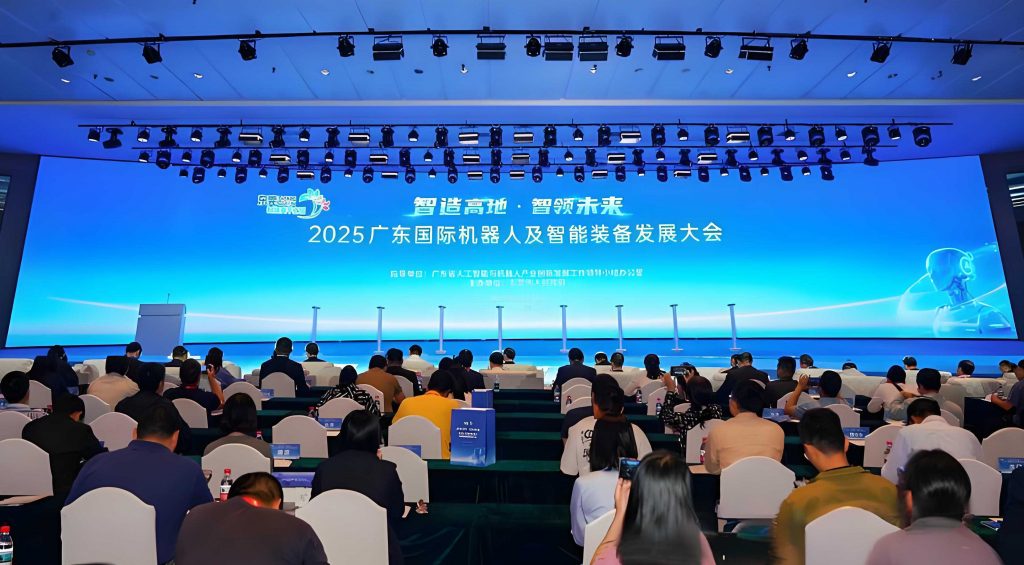
Second, the structure of the Chinese economy amplifies this demand. With over 100 million market entities, including more than 30 million registered enterprises—a number surpassing the total in the U.S., EU, and Japan combined—the need for productivity-enhancing tools is immense. The informatization era saw “white-collar” knowledge workers gradually replacing “blue-collar” manual roles. The intelligent era is now catalyzing a new trend: the “no-collar” worker—the intelligent robot—displacing certain white-collar functions. In fields such as translation, accounting, diagnostics, and customer service, AI-driven systems are already matching or exceeding human performance. This expands the demand for China robot solutions from the factory floor into the office, clinic, and service center.
Third, the demographic scale of nearly 1.4 billion people unlocks vast demand in the consumer and service sectors. From elderly care and household assistance to education and entertainment, the potential market for personal and professional service robots is staggering. This diverse demand portfolio is summarized in the table below:
| Demand Sector | Key Drivers | Estimated Scale & Growth | Primary China Robot Type |
|---|---|---|---|
| Advanced Manufacturing | Labor cost, precision, 24/7 operation, supply chain resilience | World’s largest base; >30% CAGR for intelligent variants | Collaborative Robots (Cobots), Autonomous Mobile Robots (AMRs), AI-enhanced industrial arms |
| Enterprise & Services | Process automation, data analysis, cost efficiency, “no-collar” displacement | 30M+ enterprises; vast service industry | Process Automation Software, Intelligent Customer Service Agents, Logistics & Sorting Robots |
| Consumer & Social | Aging population, urbanization, rising income, convenience culture | 1.4B population; rapidly growing middle class | Elderly Companion Robots, Educational Robots, Domestic Helper Robots |
| Public Sector & Infrastructure | Smart city initiatives, public safety, healthcare system support | Government-led mega-projects (e.g., Smart Cities) | Surveillance & Inspection Robots, Surgical Robots, Public Service Guides |
Structural Advantages: The Foundation for Leadership
Beyond demand, China possesses a set of structural advantages that provide a formidable foundation for building a leading China robot ecosystem. These are not transient conditions but deeply embedded characteristics of the modern Chinese economy.
1. The Most Complete Industrial Supply Chain and System: China’s manufacturing prowess is underpinned by the world’s most comprehensive and diversified industrial supply chain. This network, encompassing everything from raw materials and basic components to advanced sub-assemblies, drastically reduces the time and cost for prototyping and scaling robot production. A robot innovator in China can source motors, sensors, gears, castings, and electronic controls within a dense regional cluster, enabling rapid iteration. This ecosystem elasticity is a critical non-linear advantage.
2. Surging Innovation Investment: According to OECD statistics, China’s gross domestic expenditure on R&D now ranks second globally and is on track to parallel that of the United States in the coming years. This investment is systemic, flowing from government-led national science and technology programs into corporate labs and vibrant startup ventures. The focus on strategic technologies like AI, semiconductors, and advanced robotics ensures that the China robot sector is fuel-rich for innovation.
3. Rich and Diverse Application Scenarios: Scale begets diversity. China’s vast geography, layered economic development (from mega-cities to rural counties), and varied industrial mix create a living laboratory for robotic applications. A robot tested in a Shenzhen electronics factory, a Chongqing automotive plant, a Zhejiang textile mill, and a Shanghai hospital faces a wider range of challenges and edge cases than one developed in a more homogenous market. This accelerates evolutionary learning, a concept formalized later.
4. A Dynamic, Adaptive Regulatory Environment: The Chinese state has adopted a notably pragmatic approach to emerging technologies, often characterized as “inclusive and prudential.” This philosophy allows new business models and technologies like intelligent robotics space to grow before establishing comprehensive regulations. This stands in contrast to the more precautionary principle often seen in regions like the EU. While regulations are continually being refined to address safety, ethics, and security, the initial environment has been conducive to rapid experimentation and commercialization, particularly in internet and AI-based services, providing a template for robotics.
The Path Forward: Open Innovation and the Learning Curve Imperative
Possessing advantages is one thing; leveraging them effectively is another. The strategic imperative for China is clear: pursue open innovation and accelerate applied learning. The intelligent robotics industry is inherently global and intricately specialized. The supply chain for a single high-performance chip involves thousands of firms across continents. No single nation, not even the most technologically advanced, can monopolize all critical knowledge and production nodes.
Therefore, the strategy cannot be one of autarkic self-sufficiency. Instead, China must leverage its comprehensive advantages to form a dominant industrial China robot ecosystem—a gravitational hub that attracts global talent, capital, and components, integrates them with domestic capabilities, and drives rapid, large-scale application. The core objective is not to control every link but to ensure the most efficient and innovative ecosystem thrives within and connects from China.
This leads to the most critical mechanism: the learning curve effect. In traditional industry, the learning curve describes how costs decrease with cumulative production experience: \(C(t) = C_0 \cdot X(t)^{-b}\), where \(C(t)\) is cost at time \(t\), \(C_0\) is initial cost, \(X(t)\) is cumulative output, and \(b\) is the learning elasticity. For intelligent robots, this concept is exponentially more powerful because the “learning” is not just about manufacturing efficiency but about the cognitive and functional capability of the robots themselves. We can propose an Intelligent Robot Learning Law:
$$P(t) = P_0 \cdot e^{λ \cdot A(t)}$$
Where \(P(t)\) is the performance (e.g., task success rate, adaptability) at time \(t\), \(P_0\) is initial performance, \(λ\) is a learning coefficient dependent on algorithm and data infrastructure, and \(A(t)\) is the cumulative volume of meaningful real-world applications and interactions. This variable \(A(t)\) is the crucial differentiator. By deploying robots earlier and in greater variety across its immense application landscape, China can maximize \(A(t)\), creating a powerful positive feedback loop: more applications → more data → smarter robots → more viable applications → even more data.
This principle dictates the core strategic action: deploy, deploy, deploy. Policy, financial, and research efforts must be geared towards lowering barriers to adoption across all sectors—manufacturing, small and medium enterprises, services, and homes. Subsidies, demonstration zones, standards development, and data-sharing frameworks (with privacy and security safeguards) should all aim to amplify \(A(t)\).
A Comparative Lens: China’s Position in the Global AI & Robotics Landscape
While the potential is immense, a clear-eyed view acknowledges the current landscape, where the United States remains the overall leader in foundational AI research and breakthrough innovation. However, the gap is narrowing rapidly in applied domains critical to robotics. The following table provides a snapshot of key comparative metrics, illustrating China’s trajectory and specific strengths that directly benefit the China robot ecosystem.
| Metric / Area | United States (Current Status) | China (Current Status & Trajectory) | Implication for Intelligent Robotics |
|---|---|---|---|
| Foundational AI Research | Leader in novel algorithms, seminal papers, top-tier conference dominance. | Rapidly closing gap; high volume of papers; strong in computer vision and perception AI. | US leads in core “brain” design; China strong in “eyes” and integration, crucial for robot interaction. |
| Semiconductor & AI Chips | Dominates design (e.g., NVIDIA, AMD) and advanced manufacturing equipment. | Significant lag in cutting-edge design & fab; massive investment and progress in mature nodes & specialized AI chips. | Critical vulnerability for China; drives intense R&D and policy focus. Self-reliance in robotics-specific chips is a key goal. |
| Software & Development Ecosystems | Dominant frameworks (TensorFlow, PyTorch), cloud AI platforms. | Strong parallel ecosystems (PaddlePaddle), massive developer base, rapid adoption. | Healthy competition; China’s vast developer pool is a key asset for China robot software innovation. |
| Data Availability & Scale | Large, high-quality datasets; growing regulatory constraints. | Unmatched scale of industrial, commercial, and urban data; fewer operational constraints on use. | China’s data advantage fuels the learning law \(A(t)\), accelerating robotic intelligence in specific domains. |
| Venture Capital & Startup Scene | Deep, mature markets focused on deep tech. | Very large, rapidly growing; highly focused on AI applications and hardware-software integration. | Ample fuel for China robot startups across the value chain. |
| Manufacturing & Hardware Integration | Strong in high-end, low-volume precision; reliant on global supply chains. | Unrivaled in scale, speed, and cost for volume manufacturing and hardware iteration. | China’s decisive edge. Critical for turning robot prototypes into affordable, deployable products globally. |
The trajectory suggested by these metrics is one of convergence through complementary strengths. The future is unlikely to be characterized by one pole of absolute dominance but by a dynamic, competitive, and interdependent duopoly. China’s pathway to leadership in intelligent robotics runs not through directly out-inventing the U.S. in every foundational aspect tomorrow, but through leveraging its scale, manufacturing agility, and rich application soil to achieve an unassailable position in the rapid iteration, deployment, and real-world learning cycle of robots.
Conclusion: Towards a “Stronger Gets Stronger” Equilibrium
The analysis presents a compelling strategic equation. China possesses the world’s largest demand engine across multiple sectors (\(D_{robot}\)) and the most fertile ground for real-world application (\(A(t)\)). It is backed by a complete industrial ecosystem for rapid hardware iteration and scaling, and bolstered by skyrocketing R&D investments. The strategic choice of open innovation ensures it remains connected to the global wellspring of knowledge while avoiding the pitfalls of isolation.
The compounding effect of these factors can lead to a “stronger gets stronger” dynamic in the China robot domain. Early and widespread deployment feeds data, which improves performance, which lowers costs and expands applications, attracting more investment and talent into the ecosystem. This virtuous cycle, rooted in the Intelligent Robot Learning Law, is the key to transcending current technological gaps.
Therefore, if China maintains its strategic focus on ecosystem cultivation, aggressive application promotion, and global collaboration, it is not merely possible but probable that China will emerge as a preeminent leader in the global intelligent robotics revolution. The age of intelligent robots is coming. Through a combination of unparalleled scale, strategic acumen, and relentless execution, China is poised not just to participate in this age, but to actively define its contours and direct its course, becoming home to one of the world’s most advanced and pervasive China robot ecosystems.