
The evolution of robotics has reached a pivotal stage where singular functionality is no longer sufficient for complex, real-world tasks. In response, a new class of intelligent systems has emerged: the composite robot. As a key driver in this field, the China robot ecosystem is at the forefront of developing these machines, which integrate diverse robotic forms and functionalities. A composite robot, at its core, is a synergistic system combining a mobile platform with one or more manipulators, often augmented with advanced perception and cognition modules. This integration bestows upon it the unified capabilities of a “hand-foot-eye-brain,” enabling it to perform a wide array of tasks such as autonomous navigation, precise grasping, manipulation, and collaborative work in dynamic environments. The “AGV/AMR + Robotic Arm” configuration is the most prevalent form, merging the flexible mobility of automated guided vehicles with the dexterous operation of industrial arms. A more advanced iteration, the Mobile Collaborative Robot (MCR), embodies a higher level of intelligence by integrating the mobile base, a collaborative robotic arm, vision systems, and an intelligent control system into a cohesive unit.
The versatility of the China robot philosophy is evident in the diverse morphologies of composite robots. While wheeled, single-arm designs are common, more specialized forms have been developed. Wheel-track composite robots combine the speed of wheels on flat terrain with the obstacle-crossing capability of tracks for rugged, outdoor environments, making them suitable for exploration and rescue. Dual-arm composite robots feature two coordinated manipulators, allowing for complex, bimanual operations essential in precision assembly and laboratory automation. Further customizations, such as mobile platforms integrated with weapon systems or serial-parallel hybrid mechanisms, underscore the adaptability of the composite robot concept to highly specific domain requirements.
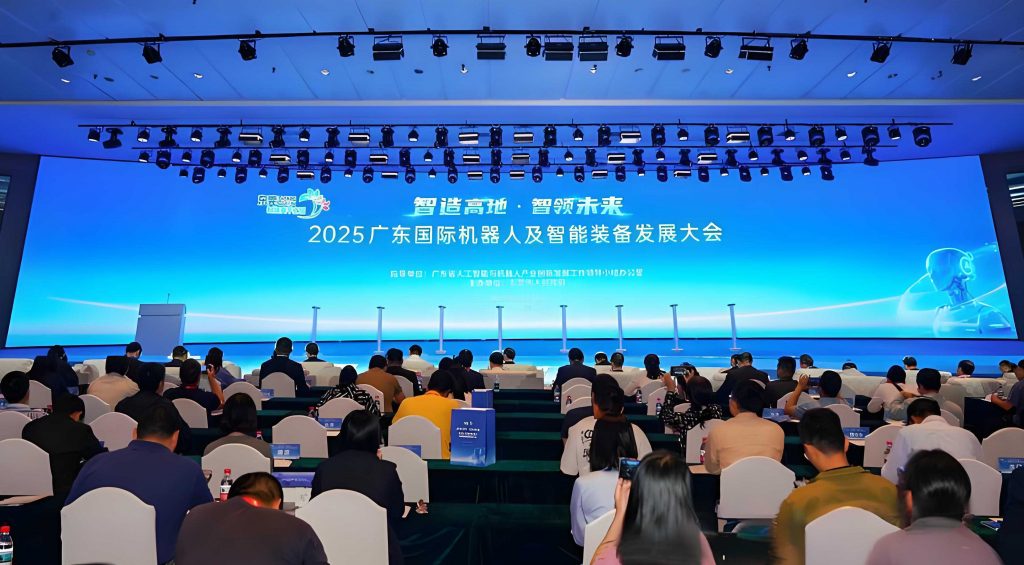
Core Enabling Technologies for Advanced China Robot Systems
The sophisticated performance of modern composite robots is underpinned by a confluence of advanced technologies. The development of the China robot industry is heavily invested in mastering and innovating within these key areas.
1. Autonomous Navigation and SLAM
Navigation is the cornerstone of mobile autonomy. It encompasses environment perception, localization, mapping, path planning, and motion control. For indoor China robot applications, common methods include magnetic tape, QR code, laser, and visual navigation. For outdoor operations, inertial navigation systems (INS) and global navigation satellite systems (GNSS) are prevalent. However, Simultaneous Localization and Mapping (SLAM) has become a foundational technology, allowing robots to construct a map of an unknown environment while simultaneously tracking their location within it. The evolution involves sophisticated sensor fusion, combining data from LiDAR, cameras, and inertial measurement units (IMUs), and the application of deep learning to improve robustness in dynamic settings. The core SLAM problem can be framed as a Bayesian estimation problem:
$$ P(x_{1:t}, m | z_{1:t}, u_{1:t}) $$
where \( x_{1:t} \) represents the robot’s trajectory, \( m \) is the map, \( z_{1:t} \) are sensor observations, and \( u_{1:t} \) are control inputs. Modern graph-based SLAM optimizes a pose graph to find the most consistent map and trajectory. Path planning, a critical component, often employs algorithms like A* or rapidly-exploring random trees (RRT) to find an optimal or feasible path from start \( q_{start} \) to goal \( q_{goal} \) while avoiding obstacles in configuration space \( \mathcal{C} \). The objective can be to minimize a cost function \( c(\tau) \) over a path \( \tau \):
$$ \tau^* = \arg\min_{\tau} \int_{0}^{T} c(\tau(t)) dt $$
2. Target Perception, Localization, and Tracking
For a composite China robot to interact with its environment, it must reliably detect, locate, and follow objects of interest. This capability is crucial for tasks like picking items from a bin or tracking a moving part on a conveyor. Techniques are multi-modal:
- Visual Tracking: Utilizes 2D/3D cameras and computer vision algorithms (e.g., YOLO, SSD for detection; KCF, SORT for tracking). It is rich in information but sensitive to lighting and occlusion.
- LiDAR Tracking: Uses point cloud data for precise 3D positioning, offering high accuracy and robustness.
- Sensor Fusion: The trend is towards fusing visual, LiDAR, and sometimes depth (RGB-D) or tactile sensor data to create a more robust perception system. Deep learning models are extensively used for 6D pose estimation (predicting 3D translation and 3D rotation) of objects.
The pose estimation problem for a target object can be formulated as finding the transformation \( \mathbf{T} \in SE(3) \) that best aligns the object model \( \mathcal{M} \) with the sensor observation \( \mathcal{O} \):
$$ \mathbf{T}^* = \arg\min_{\mathbf{T}} \mathcal{L}(\mathcal{O}, \mathbf{T}(\mathcal{M})) $$
where \( \mathcal{L} \) is a loss function measuring alignment error.
3. Dexterous End-Effectors and Adaptive Grasping
The end-effector is the robot’s interface with the physical world. Beyond standard grippers and suction cups, the China robot research community is pioneering soft robotics and adaptive grasping. Soft grippers, made from compliant materials, can safely handle fragile or irregularly shaped objects without complex control. Adaptive or underactuated grippers can conform to an object’s shape with a single actuator. Intelligent grasping involves selecting a stable grasp point \( g \) from a set of candidates \( \mathcal{G} \) based on a quality metric \( Q \) that considers object geometry, friction, and task constraints:
$$ g^* = \arg\max_{g \in \mathcal{G}} Q(g; \mathcal{O}, \mathcal{T}) $$
where \( \mathcal{O} \) is the object observation and \( \mathcal{T} \) is the task context.
4. Human-Robot Interaction (HRI) and Collaboration
Safe and intuitive HRI is vital for composite robots working alongside humans. Technologies include:
- Natural Language Processing (NLP): For voice command understanding and conversational interaction.
- Gesture and Pose Recognition: Allowing control and intent signaling through human movement.
- Force/Torque Sensing and Impedance Control: Enabling physical collaboration where the robot can sense contact forces and adjust its motion compliantly to work with a human partner. The dynamics can be modeled as:
$$ \mathbf{M}(\mathbf{q})\ddot{\mathbf{q}} + \mathbf{C}(\mathbf{q}, \dot{\mathbf{q}})\dot{\mathbf{q}} + \mathbf{g}(\mathbf{q}) = \boldsymbol{\tau}_{cmd} + \mathbf{J}^T\mathbf{F}_{ext} $$
where \( \mathbf{F}_{ext} \) is the external force from human interaction, and impedance control modifies \( \boldsymbol{\tau}_{cmd} \) to achieve a desired dynamic relationship between force and motion.
The frontier of HRI for China robot systems involves multi-modal interaction systems powered by large foundation models, which can integrate voice, gesture, and context for more natural collaboration.
5. Cloud-Edge Collaborative Intelligence
Processing the vast amount of sensor data and running complex AI models requires a distributed computing architecture. Cloud-edge synergy is a key technological framework for scalable China robot solutions. Edge devices (on the robot or nearby gateways) handle time-critical, low-latency tasks like real-time obstacle avoidance and immediate control. The cloud provides virtually unlimited computational power for non-real-time but intensive tasks like large-scale map management, fleet-wide optimization, and AI model training. The coordination can be seen as an optimization problem for task offloading:
$$ \min_{x_i} \sum_{i} \left( t_i^{edge}(x_i) + t_i^{cloud}(1-x_i) \right) \quad \text{s.t.} \quad E_{total} \leq B, \quad x_i \in \{0,1\} $$
where \( x_i \) is a binary decision to process task \( i \) on the edge (1) or cloud (0), \( t \) represents processing time, \( E_{total} \) is total energy or bandwidth cost, and \( B \) is a constraint.
| Technology Category | Key Components/Methods | Primary Function | Trends & Challenges |
|---|---|---|---|
| Navigation & SLAM | LiDAR, Visual Odometry, IMU, Graph Optimization, Deep Learning | Environment mapping, self-localization, path planning | Multi-sensor fusion, long-term autonomy in dynamic scenes, semantic SLAM |
| Perception & Tracking | 2D/3D Vision, Point Cloud Processing, Deep Neural Networks | Object detection, 6D pose estimation, visual servoing | Multi-modal fusion, few-shot learning for new objects, robust tracking under occlusion |
| Manipulation & Grasping | Soft Robotics, Force Control, Grasp Planning Algorithms | Adaptive, stable, and task-oriented grasping | Learning-based grasp synthesis, in-hand manipulation, tactile sensing integration |
| Human-Robot Interaction | NLP, Gesture Recognition, Force/Torque Sensors, Impedance Control | Safe physical collaboration, intuitive command interface | Multi-modal large models, affective computing, explainable AI for trust |
| System Architecture | Edge Computing, Cloud Platforms, ROS/ROS2, IoT Protocols | Distributed computation, data management, fleet coordination | Cloud-native robotics, digital twins, federated learning for privacy |
Research and Development Landscape of China Robot Academia and Industry
The progress in composite robotics is fueled by significant research from academic institutions and vigorous development by innovative companies within the China robot sector.
Academic Research Highlights
Chinese universities are conducting pioneering research across all aspects of composite robotics:
- Mobility and Navigation: Institutions are developing advanced platforms like hydraulic wheel-legged robots for all-terrain rescue and micro-drone swarms capable of autonomous navigation in complex, GPS-denied environments. Research in long-term visual SLAM focuses on distinguishing static, semi-static, and dynamic map elements to maintain robustness over extended periods.
- Manipulation and Collaboration: Work includes the development of lightweight carbon-fiber collaborative arms for mobile platforms, and innovative gripper designs such as rigid-soft hybrid hands that can adaptively grasp objects of varying fragility. Research in autonomous systems like tomato-harvesting robots showcases the application of advanced phenotyping and pose estimation in agriculture.
For instance, research teams at leading universities focus on integrated systems. One team’s work encompasses experimental robots for lab automation, using reinforcement learning to optimize procedures; intelligent sorting robots employing deep learning for grasp point detection in cluttered scenes; and cloud-edge协同 enabled logistics robots for flexible material handling in workshops. These efforts exemplify the move towards fully integrated “hand-foot-eye-brain” systems.
| Research Focus | Example Institution/Work | Key Innovation/Contribution |
|---|---|---|
| All-Terrain Mobility | Wheel-Leg-Track Hybrid Platforms | Dynamic transition between mobility modes for unstructured environments |
| Swarm Robotics & Navigation | Autonomous Micro Flying Robot Swarms | Decentralized control, obstacle avoidance, and cooperative tasking in wild |
| Long-term Autonomy | Bayesian Persistence Filter-based SLAM | Robust mapping in dynamic environments by modeling scene change over time |
| Advanced Manipulation | Dual-Mode Hybrid Grippers, Soft Robotics | Adaptive grasping with tunable stiffness for objects with diverse fragilities |
| Integrated Application Systems | Autonomous Harvesting, Lab Automation Robots | Full-stack solution integrating navigation, perception, manipulation for specific verticals |
Market Development and Industrial Applications
The China robot market for composite robots has experienced robust growth. According to industry analysis, sales have surged from a base of hundreds of units to well over a thousand in a recent five-year period, reflecting a compound annual growth rate of approximately 45%. The vendor landscape is primarily led by mobile robot companies, followed by robotic arm manufacturers and system integrators. While the market is specialized, collaboration between mobility and manipulation specialists is becoming more common to create optimized solutions. Leading companies are deploying composite robots across critical sectors:
- Manufacturing & 3C Electronics: For CNC machine tending, assembly, and precision part handling.
- Semiconductor & PV: In cleanrooms for wafer and cell transportation, loading/unloading.
- Healthcare & Laboratories: For transporting medical supplies, specimens, and automating experimental processes.
- Energy & Inspection: Performing autonomous equipment inspection, meter reading, and thermal imaging in plants and substations.
- Logistics & Warehousing: For mixed-case picking, goods-to-person operations, and inventory management.
| Industry Sector | Primary Tasks | Key Technical Requirements | Example China Robot Solutions |
|---|---|---|---|
| Advanced Manufacturing | Machine tending, part transfer, assembly, screw driving | High repeatability, tool changing, force control, integration with PLC/MES | Mobile robot + collaborative arm with tool rack, integrated vision for part alignment |
| Semiconductor & Electronics | Wafer cassette transfer, SMT line feeding, component testing | Cleanroom compliance (Class 1-100), ultra-precise positioning, vibration dampening | Magnetic-guided or SLAM-based AMR with vibration-isolated platform and cleanroom-grade arm |
| Smart Logistics | Mixed-SKU order picking, pallet handling, inventory cycle counting | Dynamic path planning, dense clutter grasping, high-speed vision recognition | Mobile manipulator with top-mounted 3D camera and vacuum/gripper end-effector, linked to WMS |
| Laboratory Automation | Sample transport, instrument operation, plate handling, process execution | Dexterous manipulation of labware, protocol programming, data logging | Mobile base with sensitive collaborative arm and specialized grippers, executing pre-defined or AI-optimized protocols |
| Power & Facility Inspection | Autonomous patrol, instrument reading, thermal imaging, anomaly detection | Long endurance, all-weather sensors, autonomous charging, AI-based analytics | Rugged mobile platform with PTZ camera, thermal imager, gas sensor, and optionally a manipulator for interaction |
Future Trajectories and Concluding Perspectives
The future development of composite robots, particularly within the vibrant China robot ecosystem, is poised to follow several interconnected trajectories:
1. Hyper-Modularity and Customization: The design paradigm will shift towards highly modular architectures, where mobile bases, manipulators, perception heads, and end-effectors can be rapidly configured and reconfigured. This plug-and-play philosophy, supported by standardized interfaces (mechanical, electrical, data), will drastically reduce deployment time and cost, allowing a single China robot platform to be adapted for multiple roles across a factory or facility.
2. Cognitive Intelligence and Embodied AI: The next leap will be from automated robots to truly cognitive collaborators. This involves integrating large foundation models and embodied AI, enabling robots to understand high-level natural language instructions (“tidy up the workbench”), reason about tasks with common sense, learn from few demonstrations, and recover autonomously from errors. The robot’s decision-making model will evolve to a more general form:
$$ \pi^* = \arg\max_{\pi} \mathbb{E} \left[ \sum_{t} \gamma^t R(s_t, a_t) | \pi, \mathcal{M}, \mathcal{G} \right] $$
where \( \pi \) is the policy, \( \mathcal{M} \) is a world model, and \( \mathcal{G} \) is a high-level goal specified in natural language or through demonstration.
3. Proliferation of Swarm and Multi-Robot Systems: The focus will expand from single robot units to coordinated fleets. Cloud-based fleet management systems will orchestrate dozens of composite robots, dynamically assigning tasks based on real-time demand, location, and capability. This requires advances in multi-agent path finding (MAPF), communication protocols, and distributed task allocation algorithms to maximize overall system throughput and resilience.
4. Expansion into New Verticals: Beyond industrial and logistics strongholds, composite China robot solutions will permeate new sectors. In healthcare, they could assist in patient mobility, sterile supply delivery, and even remote physical therapy. In retail, they may handle shelf restocking and in-store inventory. In agriculture, beyond harvesting, they could perform precise crop monitoring, targeted spraying, and delicate fruit handling. In homes and public spaces, they may evolve into versatile domestic and service assistants.
5. Cost Reduction and Accessibility: As core technologies mature, supply chains stabilize, and production scales, the total cost of ownership for composite robots will see a steady decline. This democratization will make advanced automation accessible to small and medium-sized enterprises (SMEs), further accelerating adoption and innovation across the entire China robot industrial base.
In conclusion, the composite robot represents a synthesis of mobility, manipulation, and intelligence, marking a significant evolution in robotics. The China robot community, through concerted efforts in fundamental research, technological innovation, and industrial application, is playing a leading role in shaping this field. The convergence of modular design, cognitive AI, and cloud-edge协同 promises a future where these versatile machines become ubiquitous partners, enhancing productivity, safety, and capabilities across the full spectrum of human endeavor. The journey from dedicated automated tools to adaptive, collaborative partners is well underway, and composite robots are at its vanguard.