
As an observer deeply immersed in the technological transformation sweeping through industrial sectors, I have witnessed firsthand the rapid evolution of the China robot ecosystem. The narrative that automation inevitably leads to widespread unemployment is, in my view, a profound misconception. Instead, the integration of robotics heralds a shift in labor dynamics, where workers displaced from manufacturing roles can transition into tertiary industries such as modern services, which often offer superior working conditions. This transition is not merely theoretical; it is a tangible outcome of the strategic deployment of China robot systems across various domains. The health and safety benefits are substantial, particularly in hazardous environments like high-temperature settings, where robots can operate seamlessly, reducing工伤 rates and occupational disease incidence. This underscores a fundamental principle: job displacement stems not from technological advancement per se, but from skills obsolescence. Thus, the rise of the China robot is intrinsically linked to workforce upskilling and economic restructuring.
The operational advantages of robots over human labor are quantifiable and multifaceted. Robots can function in extreme conditions—be it高温, radiation, or confined spaces—with minimal spatial requirements and reduced costs. For instance, certain models of China robot consume as little as 1 kWh per hour, highlighting their energy efficiency. To encapsulate these benefits, consider the following comparative analysis:
| Parameter | China Robot Systems | Human Workers |
|---|---|---|
| Operational Environment | Wide range (e.g.,高温,辐射) | Limited by safety thresholds |
| Space Utilization | Minimal footprint | Requires larger work areas |
| Hourly Energy Consumption | As low as 1 kWh | Varies based on tasks |
| Cost Efficiency | High over long term | Subject to wage inflation |
| Health Risk Mitigation | Eliminates exposure to hazards | Prone to occupational illnesses |
This table illustrates how China robot technologies enhance productivity while safeguarding human well-being. Moreover, the economic implications can be modeled using cost-benefit formulas. For example, the total cost of ownership (TCO) for a China robot system over time can be expressed as:
$$ TCO = C_i + \sum_{t=1}^{n} \frac{M_t + E_t}{(1 + r)^t} $$
where \( C_i \) is the initial investment, \( M_t \) is maintenance cost at time \( t \), \( E_t \) is energy consumption cost, \( r \) is the discount rate, and \( n \) is the operational lifespan. Comparing this to human labor costs, which include wages, benefits, and health-related expenses, often reveals that China robot deployments yield significant savings in the long run.
At the heart of any robotics system lies the control system, akin to the “思维” or cognitive core of the machine. This component dictates precision, adaptability, and intelligence. In the context of China robot development, mastering control systems is paramount. The mechanical本体,外观, and arms, often constructed from铸铁件, are driven by servo motors at each joint. The prowess in servo motor technology, a domain where international leaders have set benchmarks, directly influences the performance of China robot units. Historically, collaborations through joint ventures have facilitated technology transfer, yet challenges such as tariff adjustments have sometimes skewed cost dynamics, making imported components more expensive than完整 units. This has prompted a strategic pivot among domestic players toward focusing on application-layer development and system integration, rather than mere assembly. The current industrial landscape in China is characterized by a “枣壶状” disparity—excellence in cutting-edge research coexists with gaps in mass production quality. This duality shapes the trajectory of the China robot industry.
To quantify technological progress, we can model the innovation index for China robot systems. Let \( I(t) \) represent the innovation level at time \( t \), influenced by factors like R&D investment (\( R \)), market demand (\( D \)), and policy support (\( P \)). A simplified growth model might be:
$$ \frac{dI}{dt} = \alpha R + \beta D + \gamma P – \delta I $$
where \( \alpha, \beta, \gamma \) are coefficients denoting the impact of each factor, and \( \delta \) is a decay constant accounting for obsolescence. This equation underscores that sustained advancement in China robot capabilities hinges on balanced inputs from research, market forces, and governance.
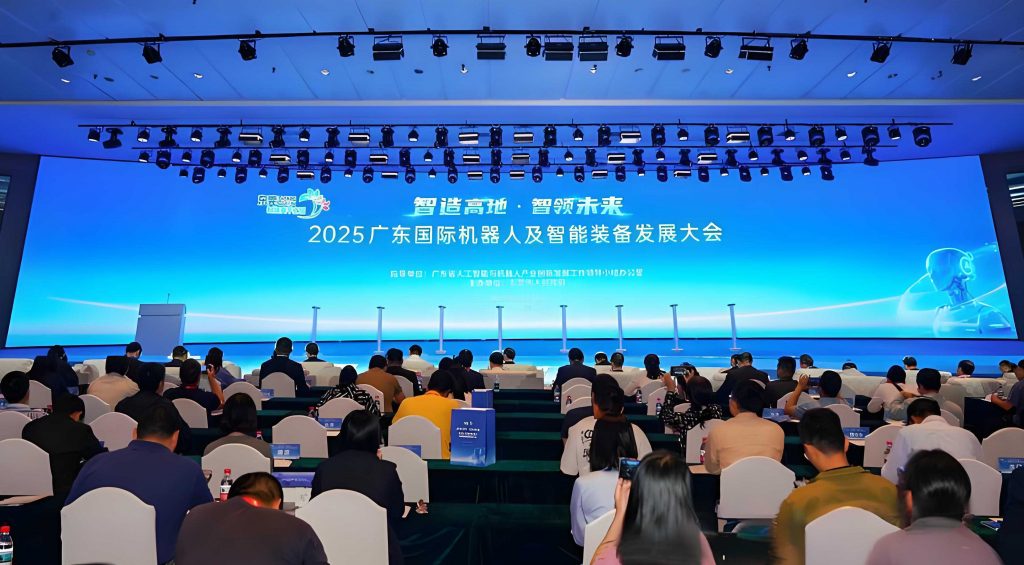
The competitive arena for China robot solutions is intensifying. Local manufacturers, once reliant on price advantages, now face narrowing margins as global brands adjust strategies to penetrate the Chinese market. This competition drives innovation but also exposes vulnerabilities in domestic supply chains. Market forces, rather than short-term incentives like tax breaks or land policies, are the ultimate arbiters of enterprise success. While policy扶持 is necessary, especially in nascent stages, it should not perpetuate dependency. In my assessment, the current policy framework for the China robot sector risks overreach; instead of ubiquitous support for industrial parks, targeted assistance to典型性 enterprises engaged in foundational research and自主研发 would yield higher returns. The essence of business sustainability lies not in capital infusion alone but in product quality and market acceptance. A China robot that merely meets functional specifications without robust reliability will struggle globally, as evidenced by parallels in the automotive industry.
Reflecting on the broader ecosystem, the state of industrial automation in China approximates levels seen in developed nations during the 1980s, with pockets of excellence amid overall catch-up. This gap is partly attributable to a scarcity of researchers dedicated to基础研究. The ethos of scientific inquiry must prioritize脚踏实地 efforts over shortcuts. Moreover, educational reforms emphasizing STEM (science, technology, engineering, and mathematics) are crucial to cultivating talent for the China robot revolution. The interplay between education, research, and industry can be summarized in a systems dynamics framework. For instance, the talent pipeline for China robot engineering can be modeled as:
$$ T_{output} = f(E_{investment}, C_{curriculum}, I_{internships}) $$
where \( T_{output} \) is the number of skilled graduates, \( E_{investment} \) is funding for tech education, \( C_{curriculum} \) is the relevance of coursework, and \( I_{internships} \) is industry-academia collaboration intensity. Optimizing these variables is essential for long-term competitiveness.
The future growth trajectory of the China robot industry appears promising, with projections indicating accelerated expansion over the next three years. This optimism is tempered by structural challenges, including the “两头尖” phenomenon—where尖端科技 leads globally, yet product quality consistency lags. To navigate this, a multipronged strategy is required. Below is a table outlining key focus areas for advancing the China robot domain:
| Pillar | Description | Expected Impact |
|---|---|---|
| 自主研发 (Independent R&D) | Invest in core technologies like control systems and AI integration for China robot platforms. | Reduces import dependency; enhances innovation cycles. |
| Market-Led Expansion | Allow consumer and industrial demand to guide production scales and feature development for China robot solutions. | Ensures relevance and scalability; fosters organic growth. |
| Policy Precision | Target subsidies and incentives to select high-potential China robot firms rather than broad-based support. | Maximizes resource efficiency; avoids market distortions. |
| Quality Assurance | Implement stringent testing protocols to elevate the reliability and durability of China robot products. | Builds brand trust; increases export competitiveness. |
| Education & Training | Reform curricula to emphasize robotics engineering and continuous upskilling for the China robot workforce. | Addresses skills gaps; fuels long-term innovation. |
From a macroeconomic perspective, the integration of China robot systems into manufacturing can be analyzed through productivity gains. The Cobb-Douglas production function can be adapted to include robotics capital. Let output \( Y \) be a function of labor \( L \), traditional capital \( K \), and China robot capital \( R \):
$$ Y = A \cdot L^\alpha \cdot K^\beta \cdot R^\gamma $$
where \( A \) is total factor productivity, and \( \alpha, \beta, \gamma \) are output elasticities. Empirical studies suggest that \( \gamma \) is rising in China, indicating the growing contribution of robotics to economic output. This shift also affects employment elasticity, which can be modeled as:
$$ \epsilon_L = \frac{\partial L}{\partial Y} \cdot \frac{Y}{L} $$
Initially, \( \epsilon_L \) may decline as automation substitutes labor, but over time, it can stabilize or rise as new service-sector jobs emerge—a pattern consistent with the evolution of the China robot economy.
In exhibitions and industry forums, the consensus among stakeholders is that自主研发 remains the linchpin for localized rapid development of China robot technologies. Market orientation, coupled with prudent policy formulation and enhanced investment in科技教育, forms the necessary ecosystem for sustained progress. The journey ahead is not without hurdles; for instance, the cost structures influenced by tariffs and global supply chains necessitate agile business strategies. Companies that initially aimed for localization through assembly have adapted by specializing in system integration and application engineering, a testament to the dynamism of the China robot sector. This adaptability is crucial in a landscape where technological obsolescence is rapid, and customer expectations evolve continuously.
Looking forward, the China robot industry stands at a pivotal juncture. The convergence of AI, IoT, and advanced materials promises to unlock new capabilities, from collaborative robots (cobots) to autonomous mobile units. However, realizing this potential demands a holistic approach. Research institutions must deepen their engagement in fundamental studies, moving beyond applied projects to explore core algorithms and materials science for next-generation China robot systems. Simultaneously, policymakers should foster environments where innovation thrives without creating bubbles—eschewing the temptation to prop up non-viable enterprises. The ultimate metric of success will be the global market share and technological leadership of China robot brands, which in turn will influence standards and best practices worldwide.
In conclusion, the ascent of the China robot is a multifaceted phenomenon intertwined with economic resilience, technological prowess, and social adaptation. By leveraging comparative advantages, addressing structural imbalances, and fostering a culture of quality and innovation, China can not only catch up but also set benchmarks in the global robotics arena. The narrative is no longer about mere automation; it is about shaping a future where humans and machines collaborate synergistically, driven by the relentless advancement of China robot technologies. As this journey unfolds, continuous reflection and adjustment will be key, ensuring that growth is inclusive, sustainable, and transformative for all stakeholders involved.