
As we reflect on the development of aerial robotics in China, the China Robot competitions, particularly the Aerial Robotics Competition of China (ARCC), stand as a testament to our collective efforts in advancing autonomous systems. From its inception, these events have aimed to foster innovation, collaboration, and practical education in the field of robotics. In this article, I will delve into the intricacies of these competitions, highlighting their rules, technological challenges, and profound implications for the China robot ecosystem. We will explore how these platforms serve as crucibles for nurturing talent and pushing the boundaries of what China robot technologies can achieve.
The China robot competitions, such as ARCC, emerged from a recognition of the gap in international participation and technological prowess. Initially, China robot initiatives lagged behind global standards, but through dedicated efforts, we have established a framework that encourages autonomous flight, target recognition, and complex task execution. These competitions are not merely contests; they are driving forces for the China robot industry, integrating multiple disciplines like mechanical engineering, electronics, computer science, automation, and aerodynamics. The essence of the China robot spirit—embodied in slogans like “自主翱翔、放飞理想” (Autonomous Soaring, Releasing Ideals)—emphasizes autonomy, innovation, collaboration, and transcendence, which are core to our mission.
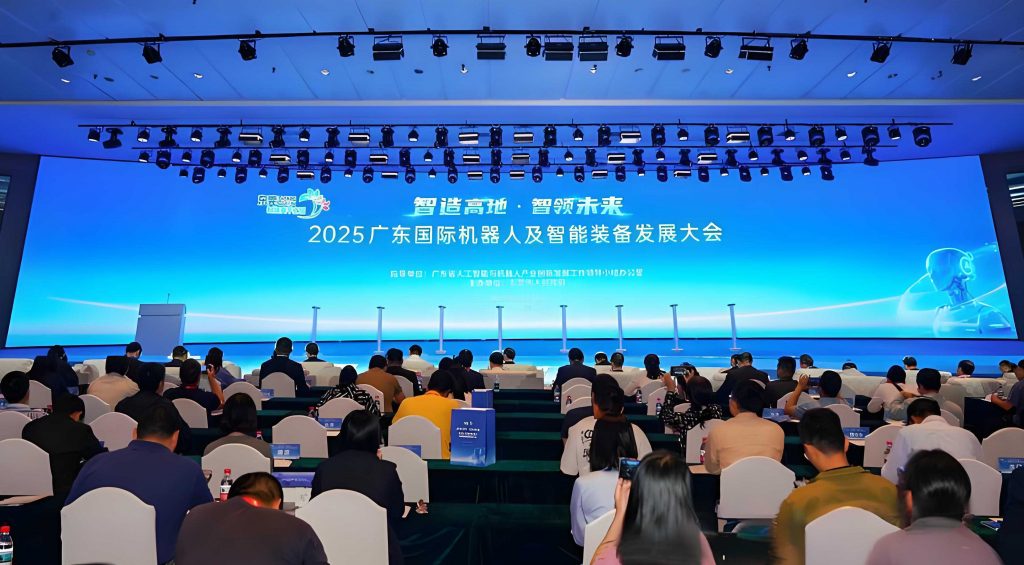
To understand the structure of China robot competitions, let’s examine the rules and tasks that define these events. The competitions typically divide participants into fixed-wing and rotorcraft categories, each with mandatory and optional tasks. For instance, autonomous flight is a fundamental requirement, with specific time thresholds that test the reliability of China robot systems. Below is a table summarizing key aspects of the competition rules:
| Aspect | Fixed-Wing Category | Rotorcraft Category |
|---|---|---|
| Maximum Weight | 15 kg (including onboard equipment) | 15 kg (including onboard equipment) |
| Mandatory Task | Autonomous flight (≥5 minutes) | Autonomous hover (≥30 seconds) and flight (≥2 minutes) |
| Optional Tasks | Autonomous takeoff/landing, target search (e.g., white circle, stationary convoy), target recognition | Autonomous takeoff/landing, target search (e.g., planar icons, 3D icons), target grasping |
| Scoring Components | Task completion (up to 650 points) and paper submission (up to 100 points) | |
In China robot competitions, the autonomous flight task involves navigating through waypoints defined by latitude and longitude coordinates. The waypoints are distributed over an area not exceeding 4 square kilometers, and teams must preset their flight paths based on data provided before the competition. This challenges the China robot systems’ ability to handle real-time navigation and environmental uncertainties. The scoring system is designed to reward complexity and success, as shown in another table:
| Task Type | Maximum Points | Details |
|---|---|---|
| Mandatory Task | 100 | Penalties for time shortfalls (e.g., -20 points per minute below threshold) |
| Optional Task 1 (Takeoff/Landing) | 200 | 100 points each for autonomous takeoff and landing |
| Optional Task 2 (Target Search) | 150 | Graduated scoring based on target difficulty (e.g., 100 to 150 points) |
| Custom Task | 200 | Points awarded based on innovation and difficulty |
| Paper Submission | 100 | Starts at 50 points, with increments for quality and insights |
The technological core of China robot competitions lies in the algorithms for control and perception. For autonomous flight, we often rely on equations that model flight dynamics. For example, the motion of a China robot in a 2D plane can be described using kinematic equations: $$ \dot{x} = v \cos(\theta), \quad \dot{y} = v \sin(\theta), \quad \dot{\theta} = \omega $$ where \( x \) and \( y \) represent position, \( v \) is velocity, \( \theta \) is heading angle, and \( \omega \) is angular velocity. These equations are foundational for path planning in China robot systems. Additionally, for target recognition, image processing algorithms involve convolutional neural networks (CNNs), which can be represented as: $$ f(I) = \sigma(W * I + b) $$ where \( I \) is the input image, \( W \) are weights, \( b \) is bias, \( * \) denotes convolution, and \( \sigma \) is an activation function. Such mathematical formulations are crucial for advancing China robot capabilities in tasks like searching for white circles or 3D icons.
Beyond the technical aspects, China robot competitions serve as a vital testbed for innovation. Participants, often from universities and research institutes, must design and build systems that integrate hardware and software. For instance, in the fixed-wing category, teams might develop custom flight controllers using PID control laws: $$ u(t) = K_p e(t) + K_i \int_0^t e(\tau) d\tau + K_d \frac{de(t)}{dt} $$ where \( u(t) \) is the control output, \( e(t) \) is the error signal, and \( K_p, K_i, K_d \) are tuning parameters. This hands-on experience with real-world China robot applications enhances problem-solving skills and fosters creativity. The competitions encourage teams to push boundaries, such as by incorporating machine learning for autonomous decision-making, which is key to the future of China robot technologies.
The impact of China robot competitions on practical education cannot be overstated. By engaging students in multidisciplinary projects, these events bridge theory and practice. A typical China robot team might include members specializing in aerodynamics, embedded systems, and computer vision, all collaborating to achieve a common goal. This synergy is essential for the growth of the China robot field. To quantify the educational benefits, consider the following table that outlines skill development areas:
| Skill Area | Description | Relevance to China Robot |
|---|---|---|
| System Integration | Combining mechanical, electronic, and software components | Critical for building reliable China robot platforms |
| Algorithm Design | Developing control and perception algorithms | Enables autonomous behaviors in China robot systems |
| Team Collaboration | Working across disciplines to solve complex problems | Fosters innovation and efficiency in China robot projects |
| Project Management | Planning and executing within time and resource constraints | Ensures successful participation in China robot competitions |
Moreover, China robot competitions inspire a sense of national pride and purpose. Participants often realize the potential applications of their work in fields like anti-terrorism reconnaissance, forest fire monitoring, and infrastructure inspection. This awareness motivates them to contribute to the China robot industry, driving advancements that can reduce reliance on imported technologies. For example, by developing indigenous flight control systems, China robot initiatives can promote cost-effective solutions. The competitions also highlight the importance of reliability, which is quantified through metrics like mean time between failures (MTBF): $$ \text{MTBF} = \frac{\text{Total Operational Time}}{\text{Number of Failures}} $$ Improving such metrics is essential for practical deployment of China robot systems.
Looking ahead, the future of China robot competitions is bright. We envision these events evolving to include more complex tasks, such as swarm robotics or AI-driven autonomy. The integration of advanced sensors, like LiDAR and multispectral cameras, will further enhance the capabilities of China robot platforms. We also anticipate closer alignment with international standards, fostering global collaboration. As China robot technologies mature, competitions will serve as accelerators for innovation, potentially leading to breakthroughs in autonomous delivery, environmental monitoring, and beyond. The iterative nature of these events encourages continuous improvement, modeled by feedback loops: $$ y_{n+1} = f(y_n, u_n) $$ where \( y \) represents system performance, \( u \) is control input, and \( f \) is the innovation function driven by competition insights.
In conclusion, China robot competitions like ARCC are pivotal for nurturing talent and advancing technological frontiers. Through rigorous tasks, interdisciplinary collaboration, and a focus on practical education, they embody the spirit of the China robot movement. As we continue to innovate, these platforms will undoubtedly play a crucial role in shaping the future of robotics in China and beyond. The journey of the China robot is one of perseverance and creativity, and we are excited to be part of this transformative era.