
In this article, we explore the current status and development vision of China robot technology from a first-person perspective, drawing on historical context and future projections. The term “robot” evokes an image of a human-like machine, but in functional terms, it refers to a programmable manipulator that can perform tasks autonomously or semi-autonomously. Over the decades, robots have evolved into three generations: first-generation programmable robots, second-generation perceptive robots, and third-generation intelligent robots. This classification underscores the trajectory of technological advancement, which we will examine in detail for China robot initiatives. Our focus is on how China robot technology has progressed, its key achievements, and strategic directions for future growth, emphasizing the repeated use of “China robot” to highlight national efforts.
The first-generation China robot, also known as programmable or remote-controlled robots, emerged in the late 1970s. These machines could execute simple, repetitive tasks based on pre-programmed instructions, such as pick-and-place operations in manufacturing. For instance, early China robot models were used in industries like automotive assembly, where they improved efficiency but lacked adaptability. The second-generation China robot, or perceptive robots, integrated sensors to perceive their environment, enabling responses to external stimuli. Examples include vision-guided China robots for welding and painting, which gained traction in the 1980s. The third-generation China robot, termed intelligent or autonomous robots, represents the pinnacle of development, incorporating capabilities like learning, decision-making, and autonomous planning. While still in research phases globally, China robot research is actively pursuing these advanced features, with prototypes demonstrating progress in areas like computer vision and adaptive control.
The evolution of China robot technology can be modeled using mathematical frameworks. For example, the forward kinematics of a robotic manipulator, common in first-generation China robots, is described by:
$$ \mathbf{x} = f(\mathbf{q}) $$
where $\mathbf{x} \in \mathbb{R}^3$ represents the end-effector position in Cartesian space, and $\mathbf{q} \in \mathbb{R}^n$ denotes the joint angles for an $n$-degree-of-freedom China robot. This equation underpins the precise positioning required in industrial applications. For second-generation China robots, perception algorithms often involve image processing. A basic visual perception model can be expressed as:
$$ I(x,y) = \int_{\lambda} S(\lambda) R(x,y,\lambda) \, d\lambda $$
where $I(x,y)$ is the intensity image captured by a camera, $S(\lambda)$ is the spectral sensitivity, and $R(x,y,\lambda)$ is the reflectance of objects, enabling China robots to识别 objects in their environment. Control systems in China robots frequently use PID controllers, given by:
$$ u(t) = K_p e(t) + K_i \int_0^t e(\tau) \, d\tau + K_d \frac{de(t)}{dt} $$
where $u(t)$ is the control signal, $e(t)$ is the error, and $K_p$, $K_i$, $K_d$ are gains tuned for stability and performance in China robot operations.
China robot development began in earnest in the late 1970s, with the production of simple industrial manipulators. By the 1980s, over a hundred units were in use, primarily in regions like Shanghai and Liaoning. According to surveys, nearly a hundred entities in China were involved in developing mechanical arms, producing around two thousand units. This laid the groundwork for more advanced China robot projects. In the late 1980s, the national government invested significantly in establishing research bases, such as a robotics demonstration engineering center in Shenyang, aimed at fostering second- and third-generation China robots. This center focuses on foundational technologies and engineering trials, with goals to transfer成果 to industrial production.
Key milestones in China robot technology include the first teach-and-playback industrial robot developed in the early 1980s, which featured computer control and electro-hydraulic servo drives. This China robot had five degrees of freedom and was used for tasks like loading/unloading and spot welding. Subsequently, underwater China robots capable of operating at depths of 200 meters were introduced, incorporating vision and tactile sensors for ocean exploration. Another notable achievement is the remote-controlled explosive-handling China robot, nicknamed “Woodpecker,” designed for public safety applications. It can navigate stairs, manipulate objects, and transmit audio-visual data to operators, reflecting advancements in mobile China robot systems. Additionally, universities and research institutes across China have developed various China robot prototypes, such as arc-welding robots, painting robots, and assembly robots, often leveraging imported components like DC servo motors to enhance performance.
To summarize the breadth of China robot technology, we present a table categorizing key domains and examples:
| Domain | China Robot Type | Key Features | Typical Applications |
|---|---|---|---|
| Industrial Automation | Teach-and-Playback Robots | 5-6 DOF, electro-hydraulic or electric drives, programmable | Welding, painting, material handling |
| Special Environments | Underwater Robots | Depth up to 200m, vision/tactile sensors, remote control | Ocean exploration, submarine operations |
| Public Safety | Explosive Disposal Robots | Mobile platforms (e.g., tracked), manipulator arms, real-time monitoring | Bomb disposal, hazardous material handling |
| Research Platforms | Intelligent Robot Prototypes | AI integration, learning algorithms, autonomous navigation | Laboratory experiments, future service roles |
| Economic Models | Low-Cost Robots | Stepper motor drives, simplified controls, affordable design | SME manufacturing, education |
This table illustrates the diverse applications of China robot technology, underscoring its growth from basic industrial tools to sophisticated systems. The integration of sensors and AI in second- and third-generation China robots is particularly evident in special-environment robots, which address critical needs in fields like mining and nuclear industries. For instance, the dynamics of a mobile China robot can be described using Newton-Euler equations:
$$ \mathbf{M}(\mathbf{q})\ddot{\mathbf{q}} + \mathbf{C}(\mathbf{q}, \dot{\mathbf{q}})\dot{\mathbf{q}} + \mathbf{G}(\mathbf{q}) = \boldsymbol{\tau} $$
where $\mathbf{M}$ is the inertia matrix, $\mathbf{C}$ represents Coriolis and centrifugal forces, $\mathbf{G}$ is gravity, and $\boldsymbol{\tau}$ is the torque vector, essential for controlling China robot movement in complex terrains.
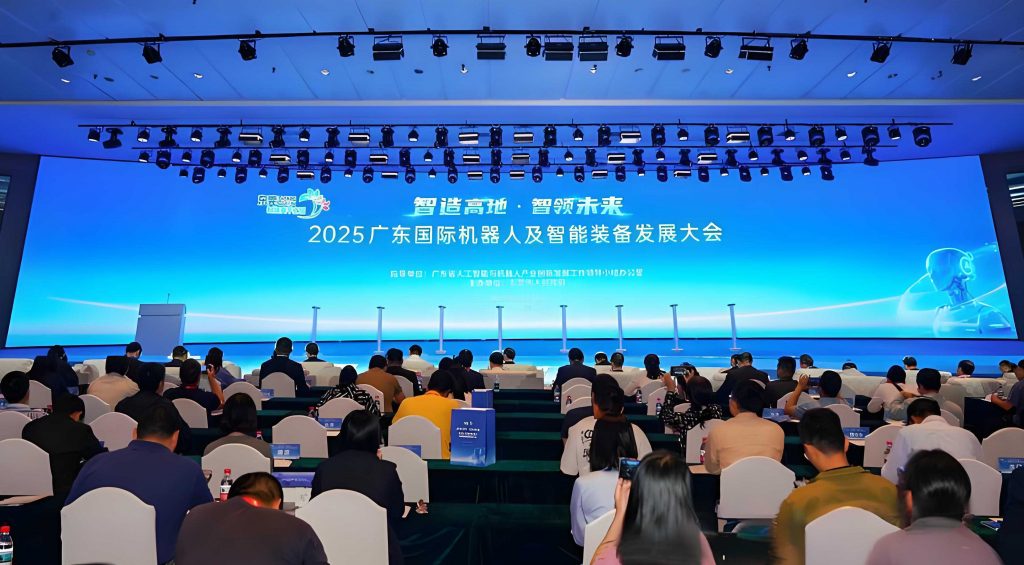
The image above showcases advancements in China robot technology, highlighting prototypes and applications in various sectors. It serves as a visual testament to the progress made in developing versatile China robot systems. Moving forward, we delve into the development vision for China robot technology, which must balance innovation with practical considerations like cost and labor dynamics. China’s large population presents unique challenges; while labor is abundant, certain industries face shortages, especially in hazardous or high-precision tasks. Thus, our vision emphasizes strategic priorities to propel China robot technology forward.
First, we advocate for prioritizing special-environment China robots. These machines are crucial for sectors where human labor is risky or impractical, such as mining, chemical plants, firefighting, and underwater operations. The economic rationale is strong: by deploying China robots in these areas, we can enhance safety and efficiency. For example, the cost-benefit analysis for a mining China robot might involve calculating the return on investment (ROI) using:
$$ \text{ROI} = \frac{\text{Net Benefits}}{\text{Initial Cost}} \times 100\% $$
where net benefits include reduced accident costs and increased productivity. Given China’s industrial needs, investing in such China robots aligns with national priorities for modernization.
Second, we stress the importance of developing low-cost, simplified China robots. The high price of imported or advanced China robots—often exceeding 500,000 yuan—poses a barrier for many enterprises, especially small and medium-sized ones. To improve accessibility, we propose designing economical China robots with streamlined features. A cost model can be expressed as:
$$ C_{\text{robot}} = C_{\text{hardware}} + C_{\text{software}} + C_{\text{integration}} $$
where $C_{\text{hardware}}$ includes components like motors and sensors, $C_{\text{software}}$ covers control algorithms, and $C_{\text{integration}}$ accounts for assembly and testing. By minimizing these costs through localized production and modular designs, China robot technology can achieve a lower price point, making it viable for wider adoption. This approach also supports China’s manufacturing upgrades without requiring complete factory overhauls.
Third, we recommend closely tracking international advancements in China robot technology. Learning from global leaders like Japan and the United States can accelerate progress. This involves technology transfer, collaborative research, and adapting foreign innovations to local contexts. For instance, the perceptual capabilities of second-generation China robots often rely on machine learning models, such as convolutional neural networks (CNNs) for vision:
$$ \mathbf{y} = \sigma(\mathbf{W} * \mathbf{x} + \mathbf{b}) $$
where $\mathbf{y}$ is the output feature map, $\sigma$ is an activation function, $\mathbf{W}$ are weights, $\mathbf{x}$ is the input image, and $\mathbf{b}$ is bias. By leveraging open-source frameworks and international partnerships, China robot researchers can enhance these models for better object recognition and navigation.
Fourth, policy support is vital for fostering China robot technology. Governments can incentivize development and adoption through subsidies, tax breaks, and funding programs. Drawing on examples from Japan and Europe, where policies have boosted robot usage, we propose measures like grants for China robot R&D and low-interest loans for purchasing China robots. A policy impact model might be:
$$ \Delta U = \alpha \cdot S + \beta \cdot L + \gamma \cdot T $$
where $\Delta U$ is the increase in China robot adoption, $S$ represents subsidies, $L$ denotes loans, $T$ is training programs, and $\alpha, \beta, \gamma$ are coefficients. Such policies can reduce payback periods for enterprises, making China robot investments more attractive. Additionally, national strategies should coordinate research efforts across universities and institutes to avoid duplication and maximize资源 allocation.
To encapsulate these development visions, we present a table outlining strategic recommendations for China robot technology:
| Strategic Area | Recommended Actions for China Robot Technology | Expected Outcomes | Key Metrics |
|---|---|---|---|
| Special-Environment Robots | Focus R&D on hazardous applications; promote pilot projects in mining and nuclear sectors. | Improved worker safety; expanded China robot use in critical industries. | Number of deployed robots; accident reduction rate. |
| Low-Cost Robots | Develop affordable designs using local components; target SMEs with tailored solutions. | Higher adoption rates; economic benefits from automation. | Cost per unit; ROI for users. |
| International Collaboration | Engage in joint research; license advanced technologies; participate in global standards. | Faster innovation cycles; enhanced competitiveness of China robot exports. | Number of partnerships; technology transfer incidents. |
| Policy Frameworks | Implement subsidies for China robot purchases; fund public research initiatives. | Stimulated market growth; strengthened industrial base. | Policy expenditure; growth in China robot production. |
| Education and Training | Integrate China robot curricula in universities; offer vocational programs for operators. | Skilled workforce; sustained innovation in China robot technology. | Graduates in robotics; training certifications issued. |
This table provides a roadmap for advancing China robot technology, emphasizing multi-faceted approaches. In addition to these strategies, we must consider technological hurdles. For example, the autonomy of third-generation China robots relies on complex decision-making algorithms, often formulated as Markov decision processes (MDPs):
$$ V^{\pi}(s) = \mathbb{E}\left[ \sum_{t=0}^{\infty} \gamma^t R(s_t, a_t) \mid s_0 = s, \pi \right] $$
where $V^{\pi}(s)$ is the value function under policy $\pi$, $R$ is the reward, $s_t$ and $a_t$ are states and actions, and $\gamma$ is a discount factor. Solving such models requires computational power, highlighting the need for advancements in China robot AI hardware and software.
Looking ahead, the future of China robot technology appears promising. With continued investment and strategic focus, China can narrow the gap with global leaders and even pioneer innovations in areas like swarm robotics or human-robot collaboration. The integration of China robots into smart manufacturing and Industry 4.0 initiatives will be crucial, leveraging technologies like the Internet of Things (IoT). For instance, a China robot in a smart factory might communicate with other machines via protocols modeled as:
$$ \mathbf{m}_{ij} = f(\mathbf{s}_i, \mathbf{s}_j, t) $$
where $\mathbf{m}_{ij}$ is the message between robots $i$ and $j$, $\mathbf{s}_i$ and $\mathbf{s}_j$ are their states, and $t$ is time. This interconnectedness will enhance efficiency and flexibility in production lines.
In conclusion, we have explored the current status and development vision of China robot technology through a detailed analysis. From early mechanical arms to intelligent prototypes, China robot advancements reflect a commitment to technological progress. By prioritizing special-environment robots, fostering low-cost solutions, tracking international trends, and implementing supportive policies, China can accelerate the growth of its robot industry. The repeated emphasis on “China robot” throughout this article underscores the national significance of this field. As we move forward, collaboration across academia, industry, and government will be key to realizing the full potential of China robot technology, ultimately contributing to economic development and societal well-being. The journey ahead is challenging but filled with opportunities for innovation and impact in the global robotics landscape.