
From the bustling factory floors to the check-in counters of international airports, two powerful narratives are defining China’s evolving economic relationship with the world. On one front, the nation is undergoing a profound industrial metamorphosis, aggressively automating its manufacturing base and emerging as the undisputed epicenter of the global robotics market. Concurrently, its citizens are traversing the globe in unprecedented numbers, their purchasing power reshaping tourism economies worldwide. This dual ascent—a surge in technological capital within and a surge of human capital flowing out—presents a fascinating study in modern economic dynamics. In this analysis, I will explore the drivers, scale, and future trajectory of these two phenomena, arguing that they are not isolated trends but interconnected facets of China’s developmental leap.
The statistics surrounding the China robot market are nothing short of staggering. In 2013, China consumed 36,000 industrial robots, accounting for over one-fifth of global sales and claiming the title of the world’s largest market for the first time. This was not a fleeting moment. By 2014, sales surged to approximately 56,000 units, solidifying its top position. The International Federation of Robotics (IFR) projected that by 2016, the number of newly installed industrial robots in China would again lead the world. The growth rate itself is a key indicator of momentum; in 2014, sales of China robot units grew by 54% year-on-year, far outpacing the global average growth of 27%.
This explosive growth in the China robot sector can be attributed to a confluence of powerful factors. Primarily, it is a strategic response to broader economic forces: rising labor costs, an aging demographic profile, and the national strategic push towards high-value manufacturing under initiatives like “Made in China 2025.” The traditional model of relying on a vast, low-cost workforce is becoming increasingly untenable. Automation via China robot systems offers a solution to maintain competitiveness in global manufacturing. Furthermore, the changing employment preferences of the younger generation, who are often less inclined toward repetitive factory work, are accelerating the adoption of automation. The formula for this transformative pressure could be conceptualized as:
$$
\text{Automation Imperative} (AI) = \frac{\Delta \text{Labor Cost} + \text{Demographic Shift} + \text{Policy Drive}}{\text{Labor Supply Willingness}}
$$
Where a high AI score directly correlates with accelerated robotics adoption.
However, to truly understand the market’s potential, one must look beyond total sales volume to a more telling metric: robot density. This is defined as the number of industrial robots per 10,000 employees in the manufacturing industry. It is here that the narrative of the China robot market reveals its most compelling chapter—not of achieved dominance, but of immense, untapped potential. The most recent comparative data paints a clear picture:
| Country | Robots per 10,000 Workers | Multiple of China’s Density | Key Market Features |
|---|---|---|---|
| South Korea | 437 | 14.6x | World leader, driven by electronics and automotive sectors. |
| Japan | 323 | 10.8x | Robust automation in automotive and electronics; major robot producer. |
| Germany | 282 | 9.4x | High-tech manufacturing hub, cornerstone of Industry 4.0. |
| United States | 152 | 5.0x | Strong resurgence in manufacturing automation. |
| China | ~30 | 1x (Baseline) | Largest market by volume, but lowest density among major economies; highest growth rate. |
This density gap, ranging from a factor of 5 to nearly 15, is the single most important indicator of the future growth trajectory for the China robot industry. It signifies that despite leading in annual installations, the penetration of automation across the entire manufacturing base is still in its early stages. The IFR estimated that China’s stock of operational industrial robots would double from 200,000 to 400,000 by 2017, a prediction that underscored this catch-up phase. The growth in stock can be modeled as a compound function of annual sales (S) minus a depreciation rate (δ) of the existing stock (K):
$$
K_{t} = K_{t-1} + S_{t} – \delta K_{t-1}
$$
For China, S has been exceptionally high and δ relatively low (due to many new installations), leading to a rapid exponential increase in K.
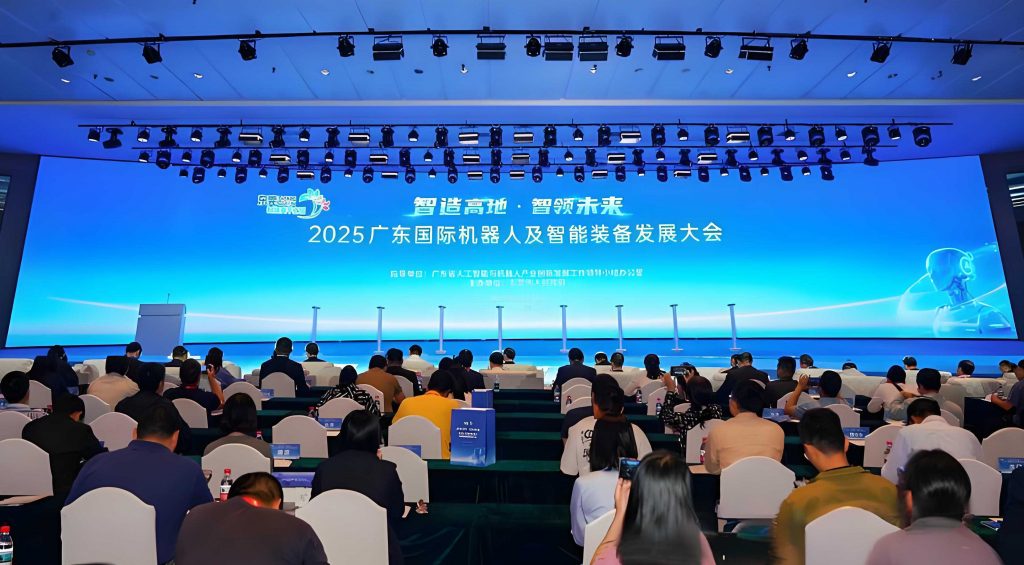
The application landscape for China robot technology, while broadening, initially centered on two major industries: automotive and electronics. These sectors, characterized by high precision, complex assembly, and intense global competition, were natural first adopters. However, the wave of automation is now rippling outwards. Significant inroads are being made in rubber and plastics, metal fabrication and machinery, food and beverage processing, pharmaceutical manufacturing, and even in specialized sectors like aerospace and defense. This diversification is critical for sustained growth as the automotive and electronics sectors mature in their automation cycles. The market share evolution can be summarized as follows, showing the gradual dispersion of China robot applications:
| Industry Sector | Adoption Phase | Primary Robot Applications | Growth Potential |
|---|---|---|---|
| Automotive | Mature / High Saturation | Welding, painting, assembly, material handling. | Steady, driven by model changes and EV production. |
| Electronics | High Growth / Expanding | PCB assembly, testing, pick-and-place, cleanroom tasks. | Very High, due to product miniaturization and complexity. |
| General Industry (Metals, Plastics) | Rapid Growth | Machine tending, casting, grinding, polishing. | High, as SMEs begin automating. |
| Consumer Goods (Food, Pharma) | Emerging Growth | Packaging, palletizing, sorting, sterile manipulation. | Very High, driven by hygiene and labor shortage concerns. |
Paralleling this quiet revolution on the factory floor is a far more visible movement: the unprecedented outflow of Chinese tourists. For over a decade, the number of outbound trips has soared, surpassing 70 million annual journeys. This massive flow of people represents a correspondingly massive flow of capital. The world has not only taken notice but has actively recalibrated its immigration and tourism policies to attract this lucrative demographic. The recognition is simple: Chinese tourists are high spenders, and their expenditures can significantly bolster local retail, hospitality, and service economies.
This has triggered a global “visa facilitation race.” Nations across Asia, Europe, and the Americas have rolled out a suite of measures designed specifically to lower the barrier to entry for Chinese visitors. The toolkit of policy incentives is extensive and targeted:
- Visa-on-Arrival & Waiver Programs: Removing the need for pre-approval for short stays.
- Extended Validity for Multi-Entry Visas: Offering visas valid for 5 or 10 years with multiple entries to encourage repeat travel.
- Streamlined Documentation: Drastically reducing bureaucratic hurdles. A prime example is the shift from requiring property deeds, car registrations, and fixed deposits to simply requesting a recent bank statement.
- Implementation of E-Visas: Allowing online applications and approvals, as seen with India’s 30-day e-tourist visa requiring only 4 days’ advance notice.
- Reduced Processing Times: Accelerating turnaround, such as Argentina’s move to cut processing to 10 working days for individuals and 5 for groups.
- Fee Reductions or Waivers: Directly lowering the cost of obtaining a visa.
The collective impact of these policies from dozens of countries, including Japan, Turkey, Australia, Singapore, Italy, France, Germany, Thailand, Indonesia, Chile, and Malaysia, is the creation of a powerfully enabling environment for outbound travel. The economic impact of this tourist flow can be modeled as a multiplicative function:
$$
\text{Tourism Economic Impact} (E) = N \times A \times P
$$
Where:
- $N$ = Number of outbound tourists (e.g., 70+ million)
- $A$ = Average expenditure per tourist per trip
- $P$ = Policy Facilitation Index (a quantitative measure of visa ease, ranging from 0 to 1)
As $P$ increases due to simplified visas, it directly stimulates an increase in $N$, thereby amplifying $E$.
The synchronized easing of visa regulations acts as a powerful catalyst. Industry analysts rightly predict that under these favorable conditions, the outbound tourism market is poised for new peaks. Each new policy announcement creates a buzz, expands destination consideration sets, and makes spontaneous or repeat travel more feasible for millions.
While the China robot revolution and the outbound tourism boom appear to operate in separate spheres—one dealing with capital goods and industrial policy, the other with consumer services and leisure—they are, in fact, deeply interconnected threads of the same economic fabric. They represent two sides of the same coin of China’s rising GDP per capita and economic restructuring.
The drive to automate, symbolized by the rise of the China robot, is a direct response to the rising cost of labor. This rise in labor costs is itself a function of economic development and improved living standards, which have put more disposable income in the pockets of citizens. This disposable income is what fuels the demand for international travel and luxury goods abroad. Thus, the success of the industrial upgrade partly finances the tourism boom.
Conversely, the experiences and expectations gained from international travel feed back into the domestic economy. Chinese tourists exposed to high levels of service, quality brands, and technological convenience abroad return with elevated expectations for domestic goods and services. This creates indirect pressure on Chinese companies, including manufacturers, to improve quality, efficiency, and innovation—goals often achieved through further automation and technological investment, again circling back to the adoption of China robot solutions.
Furthermore, both trends reflect China’s shifting position in global value chains. In manufacturing, it is moving from being the “world’s factory” reliant on manual assembly to becoming the “world’s most automated factory,” a hub for advanced manufacturing. In services, it is transforming from a recipient of inbound tourism to the world’s most influential source market for outbound tourism, wielding significant economic clout.
Looking ahead, the trajectory for both sectors points toward continued expansion. For the China robot market, the low robot density is a multi-decade growth driver. The focus will shift from volume to sophistication—integrating AI, machine vision, and collaborative robots (cobots) into smarter, more flexible work cells. The formula for future market value will increasingly incorporate technology complexity (C) and software integration (I):
$$
\text{Future Robot Market Value} \propto \text{Unit Sales} \times C \times I
$$
Simultaneously, outbound tourism will continue to grow in scale and sophistication. Destinations will compete not just on visa policies but on tailored experiences, digital payment integration, and cultural connectivity. The next frontier may see Chinese robotics companies themselves becoming a draw for “industrial tourism” or business delegations, showcasing the very technology driving the domestic transformation.
In conclusion, China’s ascendancy in industrial robotics and its dominance as a source of global tourists are two of the most definitive economic stories of our time. The China robot narrative is one of strategic catch-up and transformation, fueled by necessity and ambition, with decades of growth still ahead as it seeks to close the density gap with other industrialized powers. The outbound tourism narrative is one of unleashed consumer power, reshaping global travel and retail landscapes. Together, they illustrate a nation in dynamic transition: building a more technologically intensive, productive economy at home while its people explore, connect with, and contribute to economies around the world. Their simultaneous rise is no coincidence but a coherent manifestation of China’s complex and impactful journey into a new stage of development.
| Aspect | Industrial Robotics Market | Outbound Tourism | Convergent Indicator |
|---|---|---|---|
| Primary Driver | Rising labor costs, demographic change, industrial policy (“Made in China 2025”). | Rising disposable income, growing middle class, desire for international experience. | Increasing GDP per capita and economic maturity. |
| Global Position | #1 market by annual sales volume since 2013. | World’s largest source of outbound tourists and tourism expenditure. | From participant to dominant market leader. |
| Growth Metric | Robot density (~30/10k workers); 54% sales growth (2014). | Annual traveler volume (70M+); Year-on-year growth in departures. | Compound Annual Growth Rate (CAGR). |
| Key Limiter / Enabler | Technology integration capability, skilled workforce for maintenance/programming. | Visa and travel policy restrictions of destination countries. | Policy environment (industrial & foreign). |
| Future Catalyst | Diversification beyond automotive/electronics; AI and IoT integration. | Proliferation of visa facilitation policies (e-visas, multi-year visas, simplifications). | Global economic interdependence and digitalization. |
| Ultimate Economic Impact | Increased manufacturing productivity, quality, and technological sovereignty. | Export of consumer spending, soft power influence, global economic stimulus. | Reconfiguration of global trade and capital flows (goods vs. services). |
The data and trends presented here lead to an inescapable conclusion: the story of the China robot and the story of the Chinese traveler are both chapters in the larger story of global economic rebalancing. One speaks to the future of making things, the other to the future of consuming experiences. As China continues to navigate this dual path, its decisions will resonate far beyond its borders, influencing manufacturing competitiveness, global tourism revenues, and the very patterns of 21st-century globalization.