
As we observe the rapid evolution of robotics globally, the rise of China robot technologies stands as a testament to strategic integration of industrial prowess and academic rigor. In recent years, collaborative efforts between multinational corporations and domestic research institutions have propelled advancements that not only enhance technological frontiers but also cultivate a new generation of engineers and innovators. This article, from my perspective as an active participant in this ecosystem, delves into two pivotal developments: the involvement of a global industrial leader in fostering entrepreneurship through high-stakes competitions, and breakthroughs in assistive robotics from a prominent Chinese research institute. The synergy between education and research is crucial for sustaining the momentum of China robot initiatives, aiming to address societal challenges such as an aging population while driving digital transformation in manufacturing.
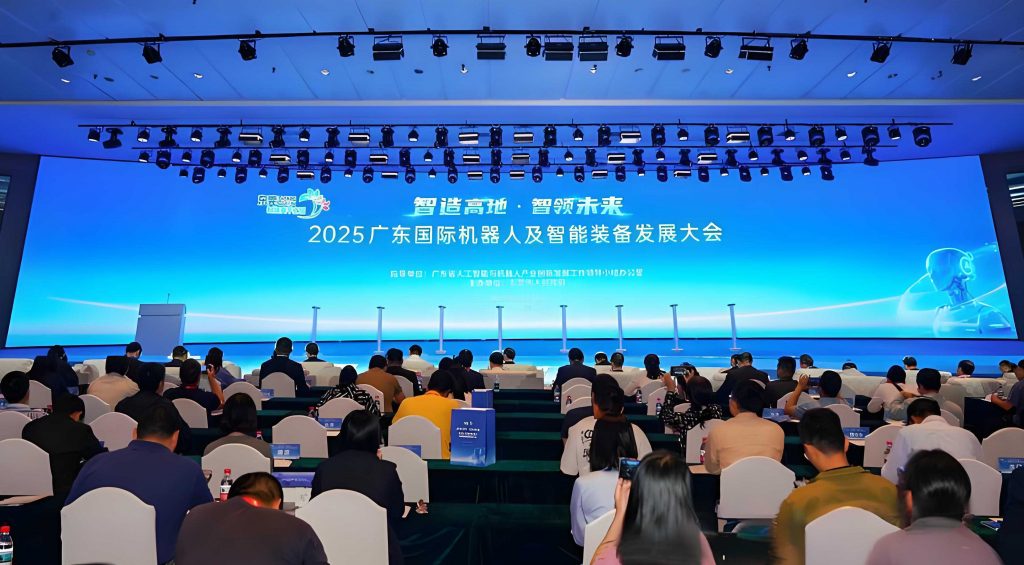
The landscape of China robot development is increasingly shaped by cross-sector partnerships. A notable example is the engagement of Siemens, a German industrial conglomerate, in China’s premier innovation contest—the China International “Internet Plus” College Student Innovation and Entrepreneurship Competition. By contributing industrial propositions to the newly established industry track, Siemens leverages its expertise in Industry 4.0 to bridge the gap between academia and real-world challenges. This initiative, following the longstanding “Siemens Cup” China Intelligent Manufacturing Challenge, underscores a commitment to nurturing talent for the China robot domain and beyond. The competition, co-organized by multiple governmental bodies, has seen participation exceeding seven million, reflecting its scale and impact on China’s innovation-driven growth.
From my experience, such collaborations are instrumental in addressing technical bottlenecks in China robot applications. Siemens’ propositions focus on core areas like industrial control and digitalization, evaluating teams across six dimensions: implementation, innovation, team dynamics, business viability, employment potential, and educational leadership. To encapsulate these criteria, we can formalize an assessment framework. Let the overall score $S$ for a project be a weighted sum of these dimensions:
$$ S = w_i I_i + w_n I_n + w_t I_t + w_b I_b + w_e I_e + w_l I_l $$
where $I_i$, $I_n$, $I_t$, $I_b$, $I_e$, and $I_l$ represent scores for implementation, innovation, team, business, employment, and education leadership, respectively, with weights $w_i, w_n, w_t, w_b, w_e, w_l$ satisfying $\sum w = 1$. This quantitative approach ensures holistic evaluation, aligning with the goals of China robot talent development.
The impact of such educational endeavors is profound. Since initiating its education cooperation program in China in 2005, Siemens has established over 400 laboratories, trained 4,000 instructors, and published more than 50 engineering textbooks. These efforts contribute directly to the pipeline of skilled professionals for China robot and automation sectors. The table below summarizes key milestones in this collaboration, highlighting its role in advancing China robot education:
| Year | Initiative | Outcome | Relevance to China Robot |
|---|---|---|---|
| 2005 | Launch of education cooperation | Foundation for industry-academia ties | Early exposure to automation concepts |
| 2016 | Memorandum with Ministry of Education | Framework for talent cultivation under Sino-German cooperation | Focus on intelligent manufacturing and robotics |
| 2020 | Cumulative achievements | 400+ labs, 4000+ teachers, 50+ textbooks | Enhanced infrastructure for China robot research and training |
| 2021 | Participation in “Internet Plus” competition | Industry propositions for innovation challenges | Direct injection of industrial insights into China robot projects |
Parallel to these educational strides, research in China robot technologies has achieved significant breakthroughs, particularly in the realm of wearable assistive devices. At a leading automation research institute in Shenyang, progress in exomuscle robots—a subclass of China robot systems designed for human augmentation—has been marked by novel methods for motion recognition and adaptive control. These advancements are critical for applications in smart healthcare and elderly care, addressing the needs of China’s aging society, where over 260 million people are aged 60 and above. The exomuscle robot, by employing artificial muscle strands attached to human tendons, offers precise assistance to target muscle groups, promoting functional recovery in a less intrusive manner than exoskeletons.
However, the tight human-robot coupling in China robot exomuscle systems introduces challenges in adaptability. Deviations in robot decision-making can affect wearer motion, necessitating rapid adaptation to human state changes. The research team addressed this by drawing inspiration from human lower-limb motor characteristics, specifically state-driven and rhythmic/central pattern generator (CPG) drives. Their work revolves around two core innovations: a high-generalization motion recognition method and a step-frequency-insensitive control system. These contributions are encapsulated in mathematical formulations that enhance the China robot’s interactive capabilities.
For motion recognition, the concept of phase plane and phase curves is employed. Given a human motion trajectory, we define the phase plane with position $x$ and velocity $\dot{x}$. The phase curve $\phi(t)$ represents the trajectory in this plane. The similarity between two phase curves $\phi_1$ and $\phi_2$ is invariant under certain transformations, enabling recognition across different subjects and gait patterns. Let the similarity metric $SIM$ be defined as:
$$ SIM(\phi_1, \phi_2) = \frac{1}{T} \int_0^T \exp\left(-\frac{\|\phi_1(t) – \phi_2(t)\|^2}{\sigma^2}\right) dt $$
where $T$ is the time period, $\|\cdot\|$ denotes Euclidean distance, and $\sigma$ is a scaling parameter. This invariant property allows the China robot system to classify movements reliably, even for individuals with motor impairments, facilitating quantitative assessment of motor function—a boon for China robot applications in rehabilitation.
Regarding control, the system adapts to human step frequency variations by incorporating rhythmic dynamics. The control law for the exomuscle robot can be modeled as a coupled oscillator system. Let $\theta_h$ represent the human limb phase and $\theta_r$ the robot actuator phase. The dynamics are given by:
$$ \dot{\theta}_h = \omega_h + \epsilon_h \sin(\theta_r – \theta_h) $$
$$ \dot{\theta}_r = \omega_r + \epsilon_r \sin(\theta_h – \theta_r) + u(t) $$
where $\omega_h$ and $\omega_r$ are intrinsic frequencies, $\epsilon_h$ and $\epsilon_r$ are coupling strengths, and $u(t)$ is an adaptive control input designed to minimize phase error $e = \theta_h – \theta_r$. By tuning $u(t)$ based on real-time feedback, the China robot achieves rapid synchronization with human gait, enhancing adaptability to changes in step frequency, environment, and human-robot coupling dynamics. This approach exemplifies how fundamental human motor principles can inform China robot design, yielding more intuitive and effective assistive systems.
The implications of this research extend beyond laboratory settings. In practice, China robot exomuscle devices could revolutionize elderly care by providing personalized mobility support, thereby improving quality of life and social integration. The table below contrasts key features of exomuscle robots with traditional exoskeletons, underscoring the advantages for China robot adoption in healthcare:
| Feature | Exoskeleton Robots | Exomuscle Robots (China Robot Focus) |
|---|---|---|
| Structural Rigidity | High, rigid frames | Low, flexible artificial muscles |
| Assistance Precision | Broad joint-level assistance | Targeted muscle/tendon-level assistance |
| Wearability | Bulky, may limit natural motion | Lightweight, less intrusive |
| Adaptability | Often requires extensive calibration | High, via phase-based control |
| Primary Application | Heavy-duty rehabilitation or industrial use | Precision assistive care, especially for aging population |
Furthermore, the research team has explored broader applications in rehabilitation robotics and brain-muscle signal processing, with findings published in prestigious journals such as IEEE Transactions on Human-Machine Systems and IEEE Transactions on Automation Science and Engineering. Supported by national grants like the National Natural Science Foundation of China and key research programs, these efforts solidify China robot as a frontier in biomedical engineering. The integration of adaptive algorithms into China robot systems not only boosts auxiliary efficiency but also paves the way for widespread deployment in smart hospitals and homes.
Looking ahead, the convergence of education and research will continue to drive China robot innovation. Initiatives like the “Internet Plus” competition foster entrepreneurial mindsets, while cutting-edge studies on exomuscle robots address pressing societal needs. To quantify the progress, we can model the growth trajectory of China robot capabilities. Let $C(t)$ denote the overall capability index at time $t$, influenced by educational inputs $E(t)$ and research outputs $R(t)$. A simplified differential equation captures this synergy:
$$ \frac{dC}{dt} = \alpha E(t) + \beta R(t) – \gamma C(t) $$
where $\alpha$ and $\beta$ are positive coefficients representing the impact of education and research, respectively, and $\gamma$ accounts for obsolescence. Solving this under initial conditions $C(0) = C_0$ yields:
$$ C(t) = e^{-\gamma t} \left( C_0 + \int_0^t e^{\gamma \tau} [\alpha E(\tau) + \beta R(\tau)] d\tau \right) $$
This model underscores how sustained investments in both domains amplify China robot advancements, ultimately contributing to global leadership in robotics.
In conclusion, the narrative of China robot is one of harmonious collaboration between industry and academia. Siemens’ role in sculpting future engineers through competitive platforms complements the groundbreaking research from institutes like the one in Shenyang on exomuscle robotics. Together, they address dual imperatives: cultivating talent for the digital era and developing technologies for an aging society. As we move forward, the emphasis on adaptive, human-centric designs will define the next generation of China robot systems, ensuring they are not only technologically sophisticated but also socially impactful. The journey of China robot, from educational workshops to clinical applications, exemplifies a holistic approach to innovation—one that holds promise for a more interconnected and assisted future.